Printable Habit Trackers
Free printable habit trackers as PDFs. Monthly grids and weekly layouts, blank so you choose the habits. No sign-up, no email.
⬇ Download all 4 as one PDF — free, no sign-upA habit tracker is a grid of small boxes and a slightly irrational unwillingness to break a run of filled ones. That is the whole mechanism, and it is why the format has survived every productivity fashion of the last decade. These are blank sheets rather than a system: write your own habits down the side, fill a box each day you do one, and keep the page somewhere you will actually see it. Fewer habits tracked properly beats a full page tracked for nine days.
Monthly habit grids with a blank habit column and 31 day columns, weekly layouts for a shorter commitment, and a single-habit sheet with larger boxes for one thing you are serious about. Boxes are sized for a check, a cross or a color fill. Printed black on white, one tracker per US Letter page.
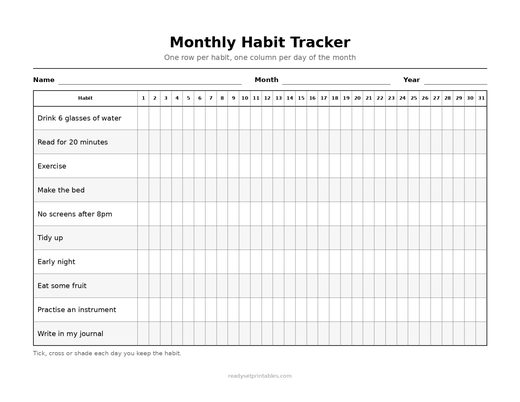 Charts Trackers S Habit TrackerDownload PDF ↓
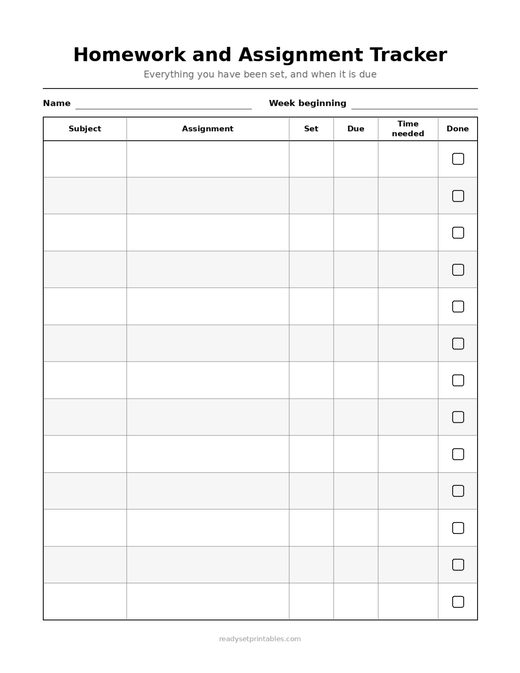 Charts Trackers S Homework TrackerDownload PDF ↓
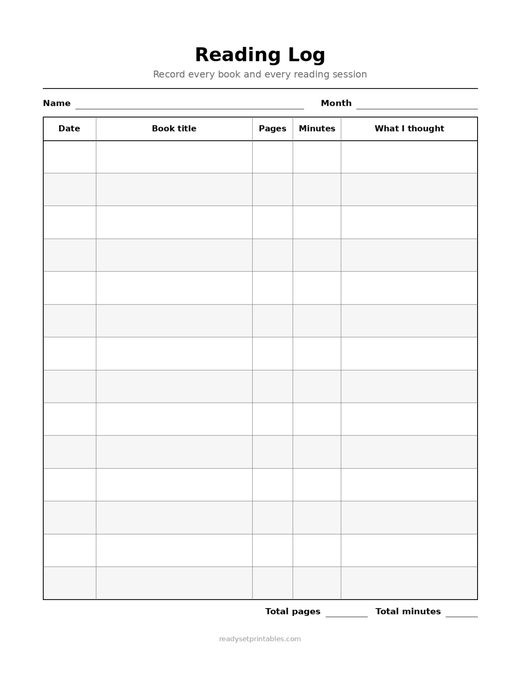 Charts Trackers S Reading LogDownload PDF ↓
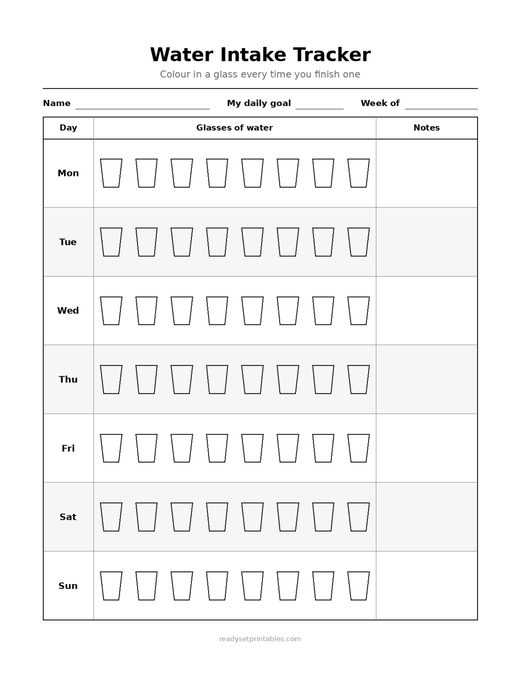 Charts Trackers S Water TrackerDownload PDF ↓