Addition Within 20 Worksheets
Free printable addition within 20 worksheets as PDFs. Facts to 20 including bridging through ten. No sign-up and no email.
⬇ Download all 10 as one PDF — free, no sign-upAddition within 20 is a bigger jump than addition within 10, because it is the first time a child has to cross a ten. Adding 8 and 3 is not a matter of counting on if you want it to be fast — it is 8 plus 2 to make ten, then one more. These sheets give plenty of practice on the facts that do not cross, so confidence stays high, and then concentrate deliberately on the ones that do, since those are the facts that decide whether mental arithmetic ever becomes fluent.
Addition facts within 20 in both horizontal and vertical formats, sheets that separate the crossing-ten facts from the rest, missing-addend rows where the total is given, and a few pages using ten frames or number lines to show the bridging step. Layouts are open with generous spacing. One worksheet per US Letter page, black and white.
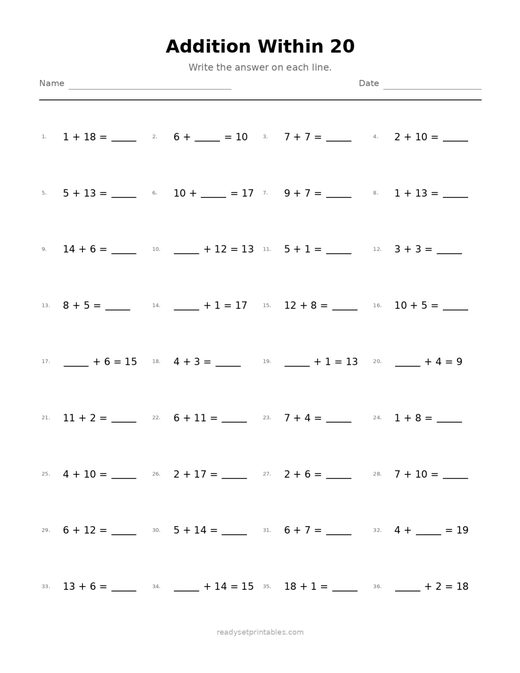 Addition Within 20 01Download PDF ↓
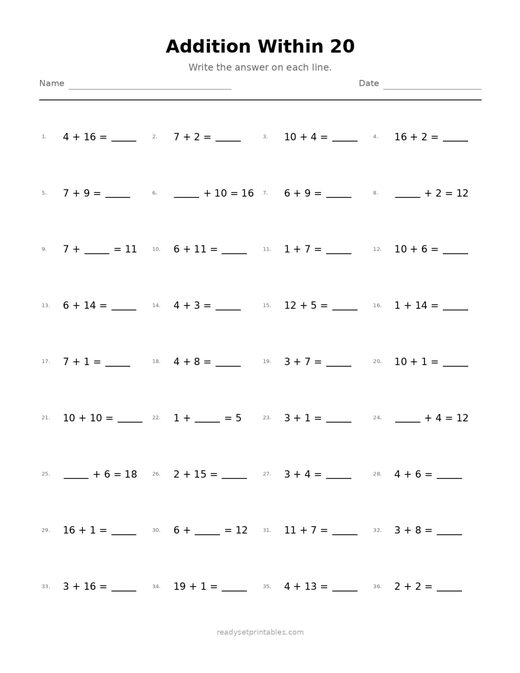 Addition Within 20 02Download PDF ↓
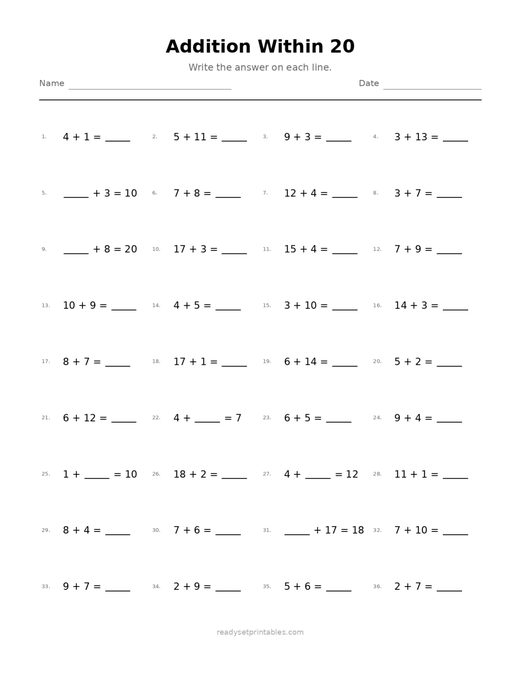 Addition Within 20 03Download PDF ↓
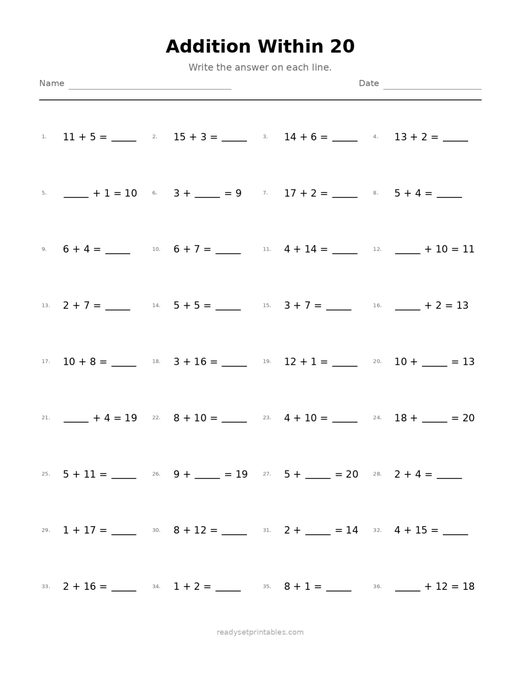 Addition Within 20 04Download PDF ↓
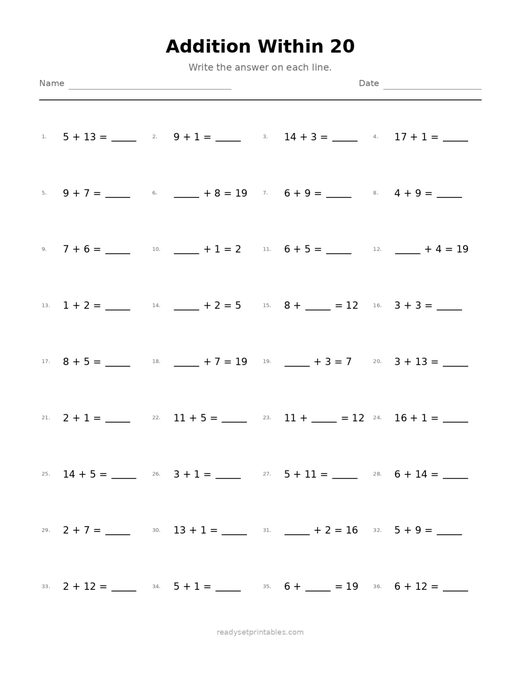 Addition Within 20 05Download PDF ↓
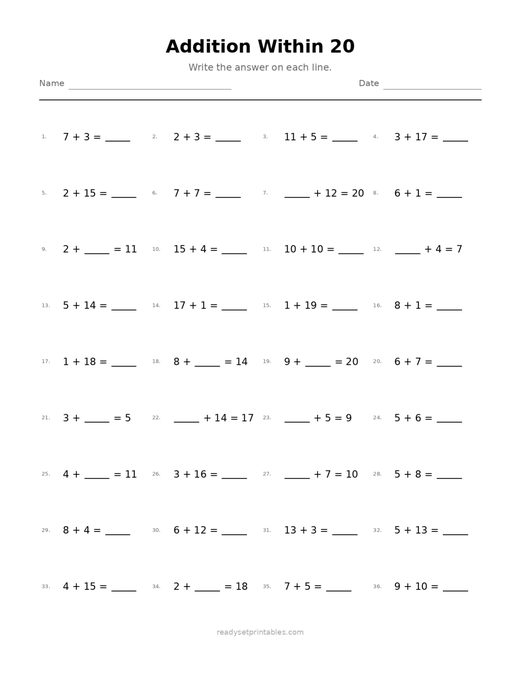 Addition Within 20 06Download PDF ↓
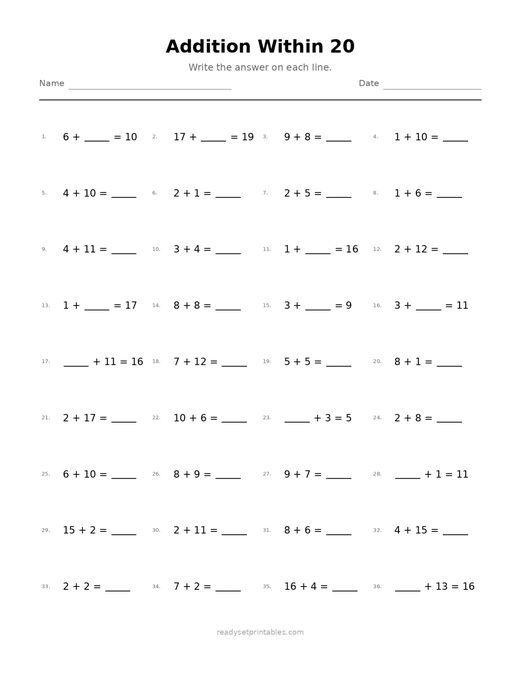 Addition Within 20 07Download PDF ↓
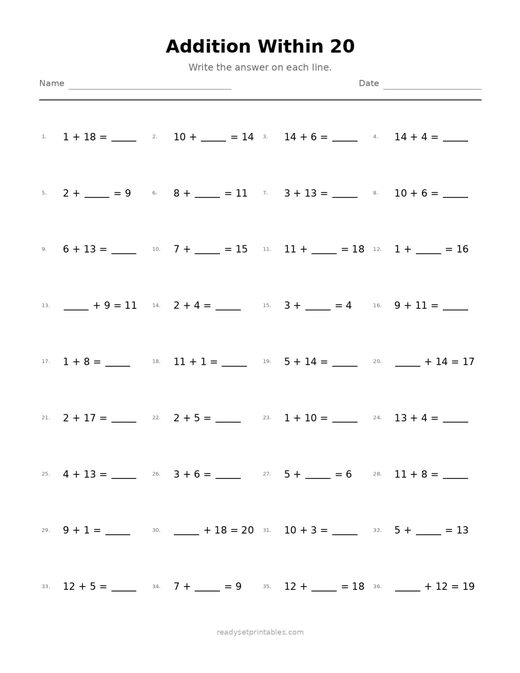 Addition Within 20 08Download PDF ↓
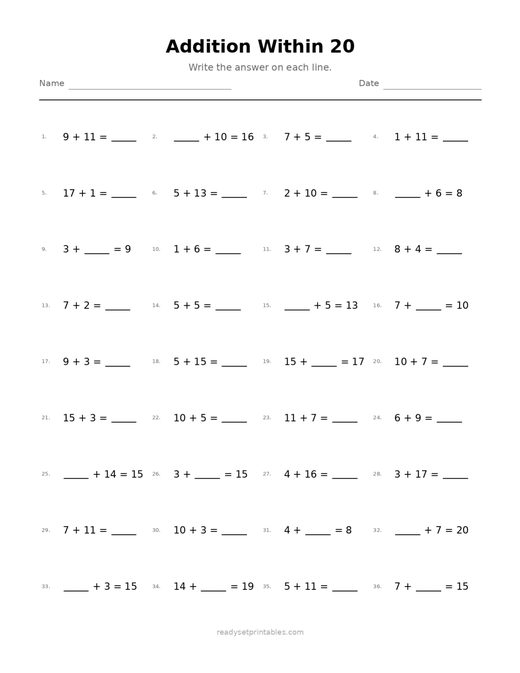 Addition Within 20 09Download PDF ↓
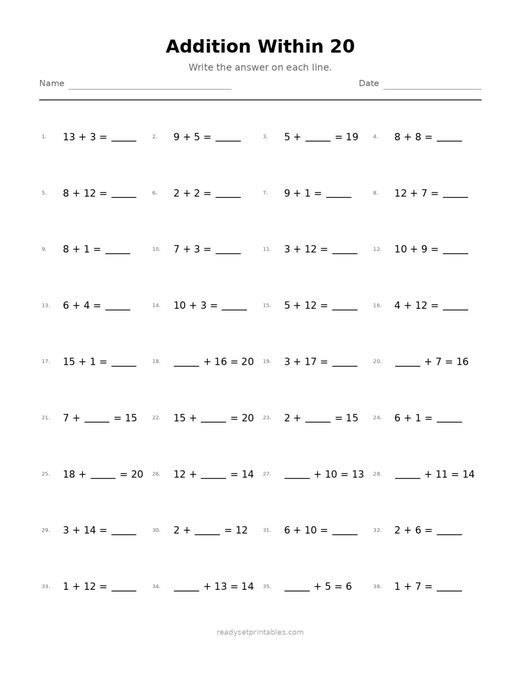 Addition Within 20 10Download PDF ↓