Skip Counting Worksheets
Free printable skip counting worksheets as PDFs. Count by 2s, 3s, 5s and 10s with number lines and fill-in rows. No sign-up.
⬇ Download all 10 as one PDF — free, no sign-upSkip counting is where multiplication starts, long before the word is used. Counting 5, 10, 15, 20 builds the same number sequence a child will later meet as the five times table, and doing it forwards and backwards makes the pattern something they own rather than something they recite. These sheets go beyond the usual twos, fives and tens into threes, fours and sixes, and include counting on from a number other than zero — which is much harder and much more useful.
Fill-in-the-gap rows counting by 2s, 3s, 4s, 5s, 6s and 10s, marked number lines with missing labels, and counting-backwards sheets. Some pages start the count from a number other than zero, and others use pictures grouped in equal sets so the link to multiplication is visible. One worksheet per US Letter page, black and white.
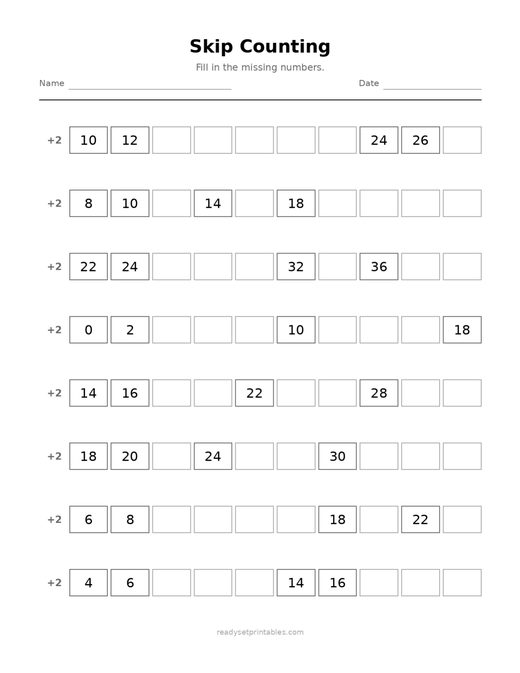 Skip Counting 01Download PDF ↓
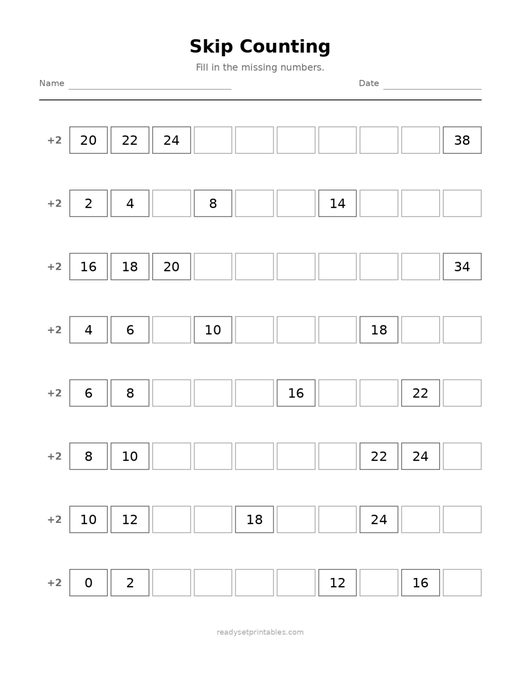 Skip Counting 02Download PDF ↓
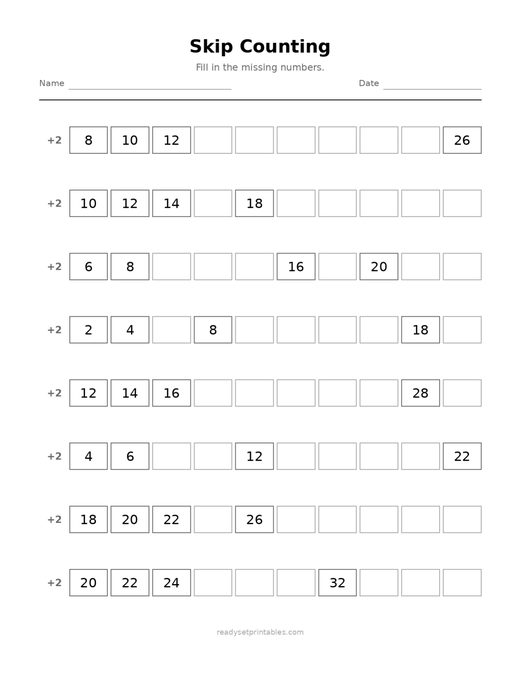 Skip Counting 03Download PDF ↓
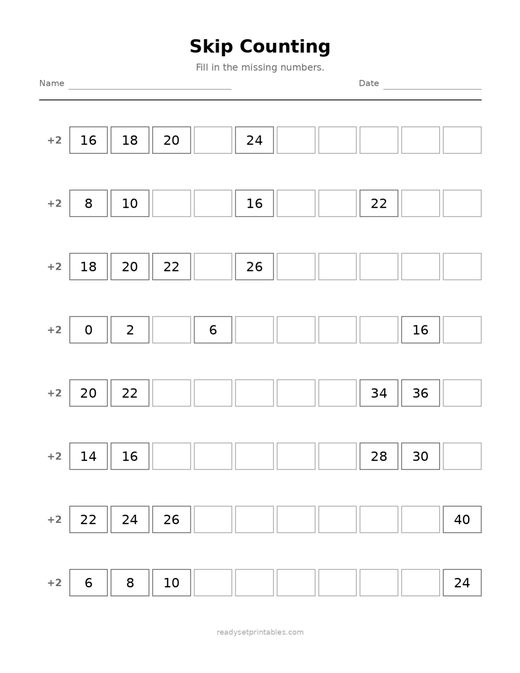 Skip Counting 04Download PDF ↓
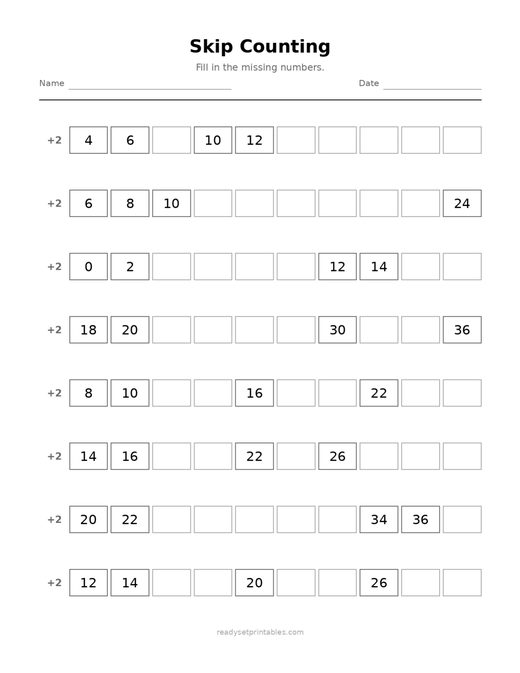 Skip Counting 05Download PDF ↓
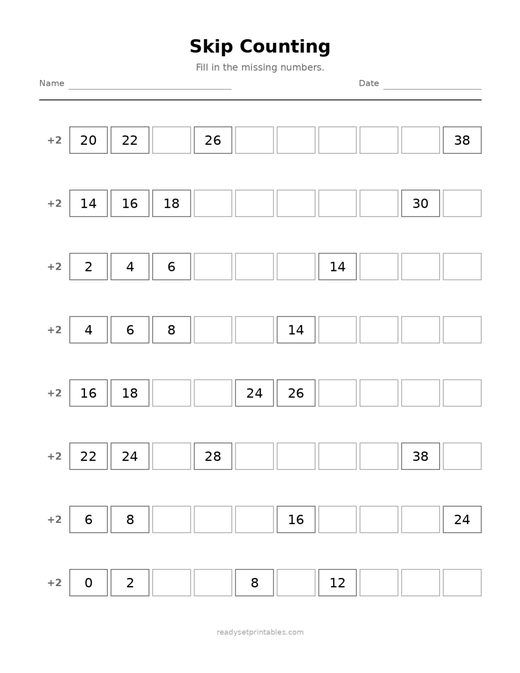 Skip Counting 06Download PDF ↓
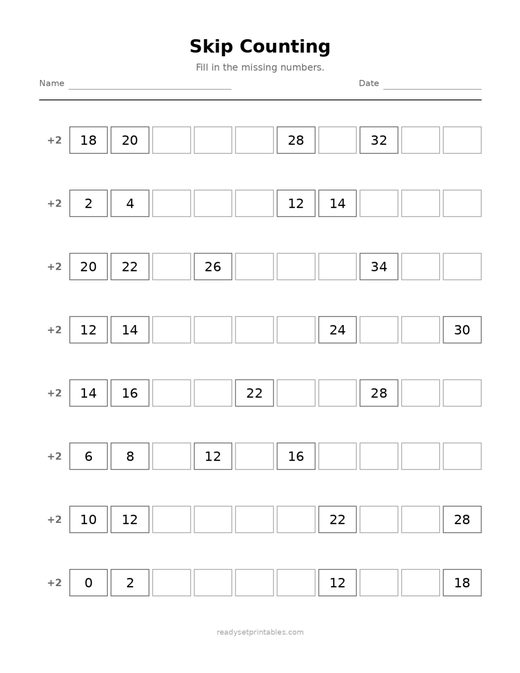 Skip Counting 07Download PDF ↓
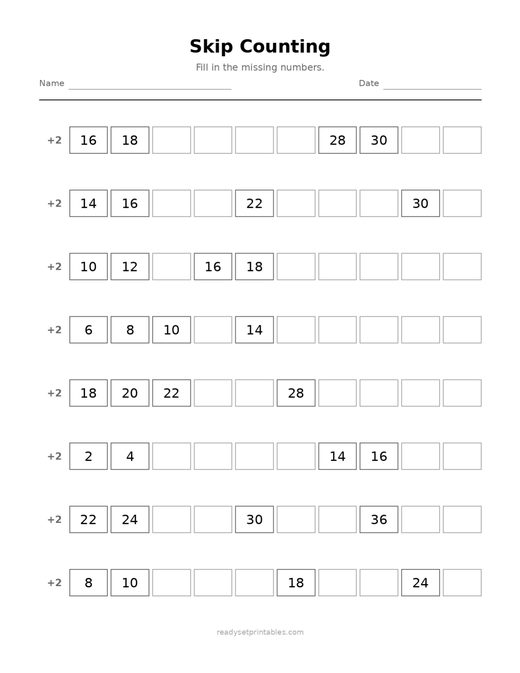 Skip Counting 08Download PDF ↓
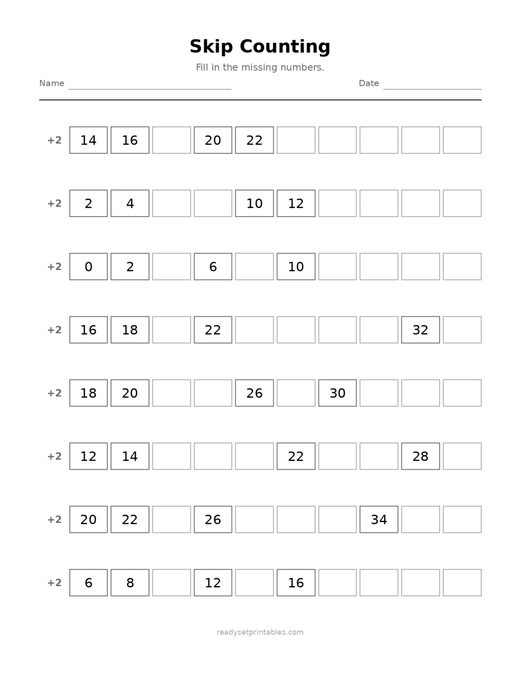 Skip Counting 09Download PDF ↓
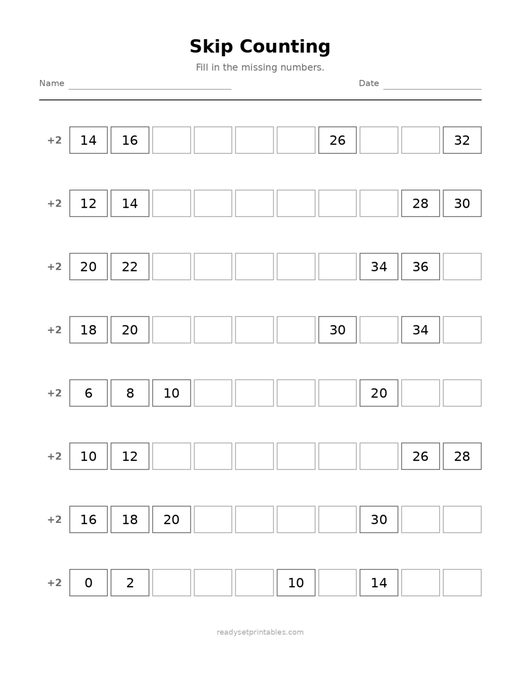 Skip Counting 10Download PDF ↓