Binary Puzzles — 10x10
Free printable 10x10 binary puzzles as PDFs with answer pages. Five 0s and five 1s per line for experienced solvers. No sign-up.
⬇ Download all 10 as one PDF — free, no sign-upAt 10x10 the puzzle stops giving anything away. Five of each digit per line means you can fill four cells of a row before the count tells you anything, so most of the early work comes from chasing pairs and gaps across the grid and letting one deduction feed the next. Solvers who like the moment when a single forced cell cascades into half a row will get several of those per puzzle here. Expect fifteen minutes or so, longer on your first few.
One 10x10 binary puzzle per page, printed with clear cell divisions and given digits in a distinct weight so the starting position stays readable throughout. Each puzzle has an answer page with the completed grid. All sheets are black and white and fit a single US Letter page with margins that survive a borderless-off printer setting.
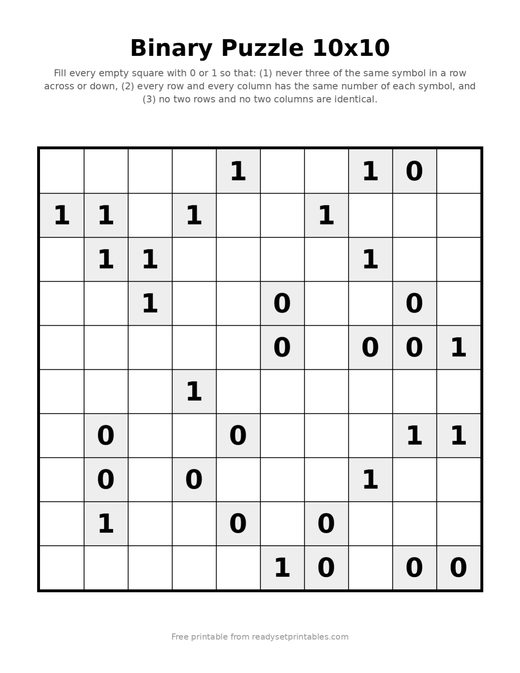 Binary Puzzles 10x10 Medium 01Download PDF ↓
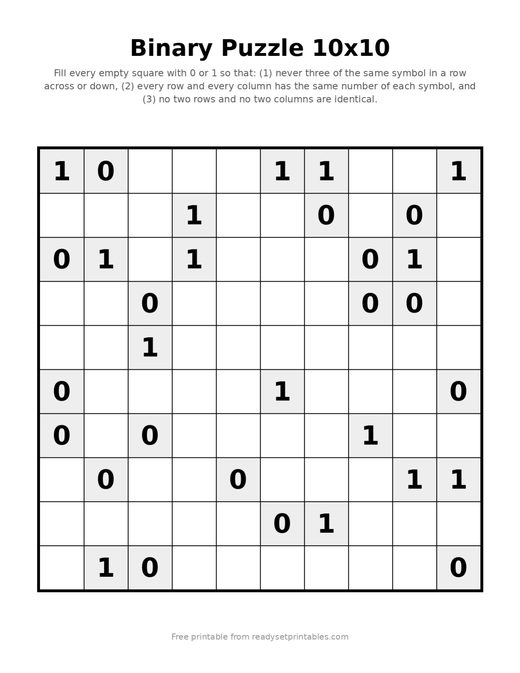 Binary Puzzles 10x10 Medium 02Download PDF ↓
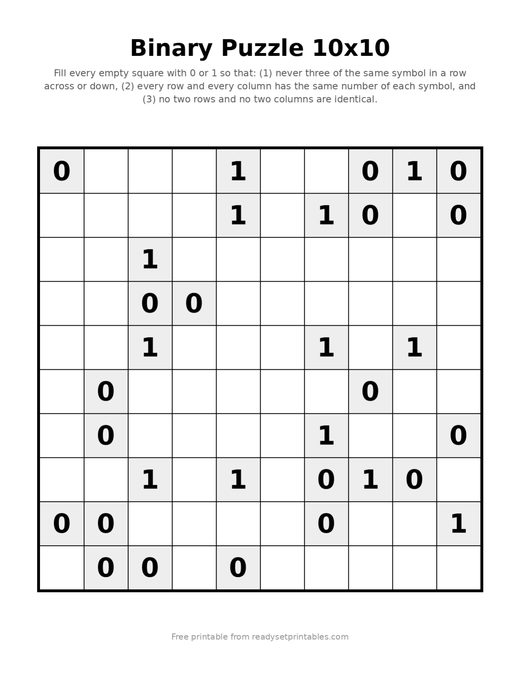 Binary Puzzles 10x10 Medium 03Download PDF ↓
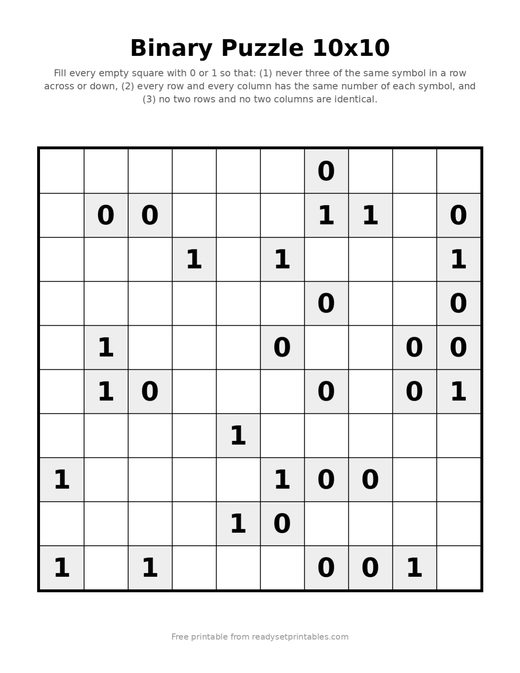 Binary Puzzles 10x10 Medium 04Download PDF ↓
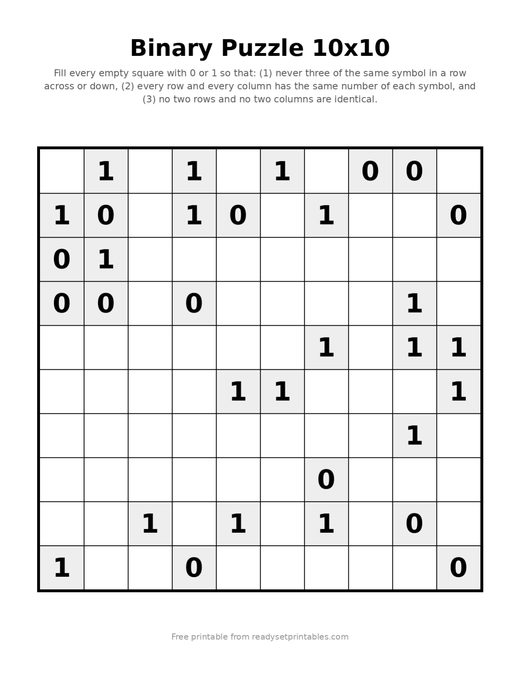 Binary Puzzles 10x10 Medium 05Download PDF ↓
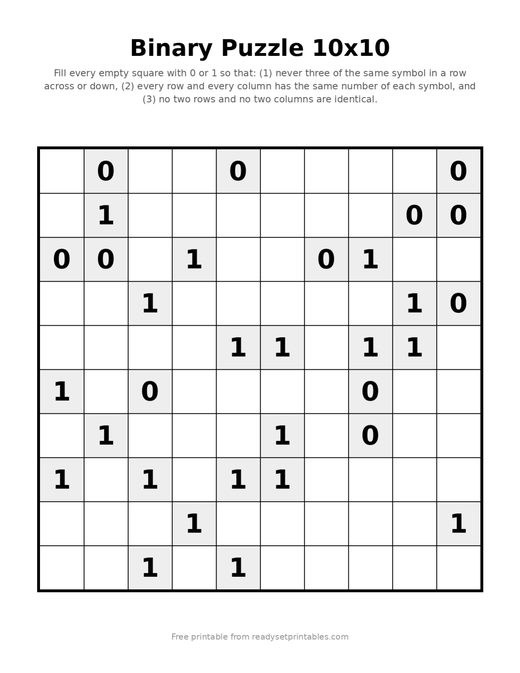 Binary Puzzles 10x10 Medium 06Download PDF ↓
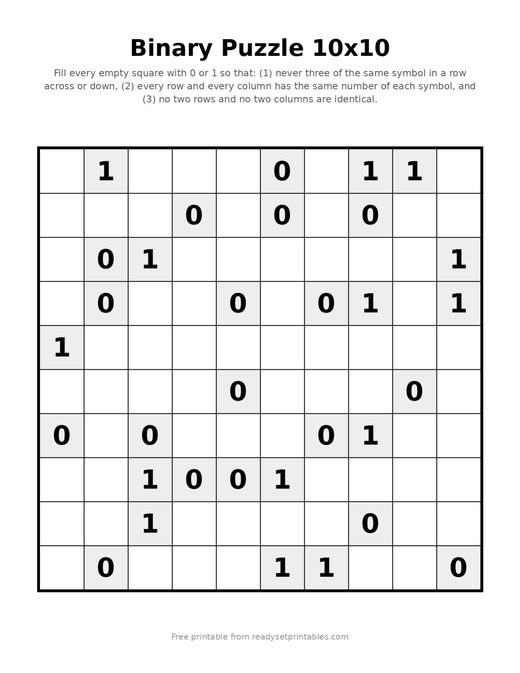 Binary Puzzles 10x10 Medium 07Download PDF ↓
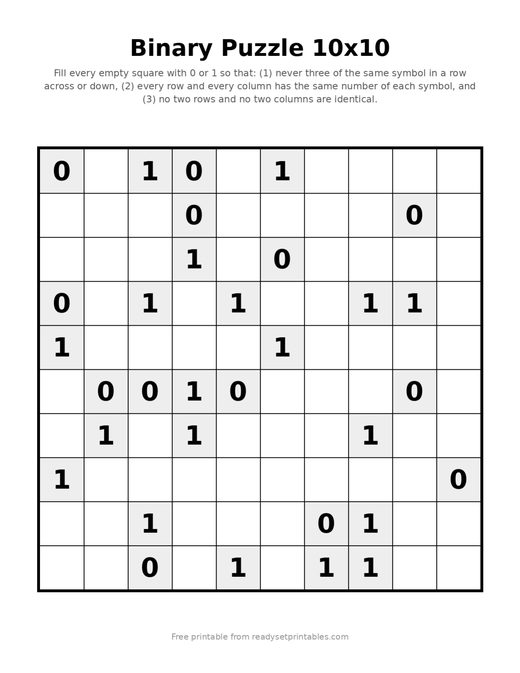 Binary Puzzles 10x10 Medium 08Download PDF ↓
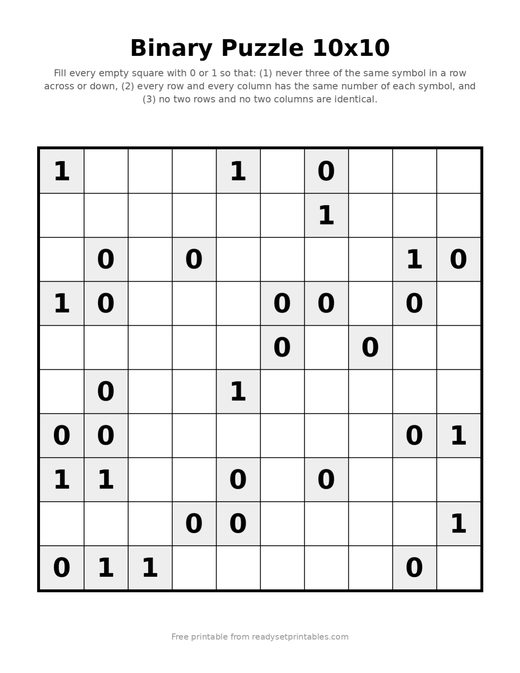 Binary Puzzles 10x10 Medium 09Download PDF ↓
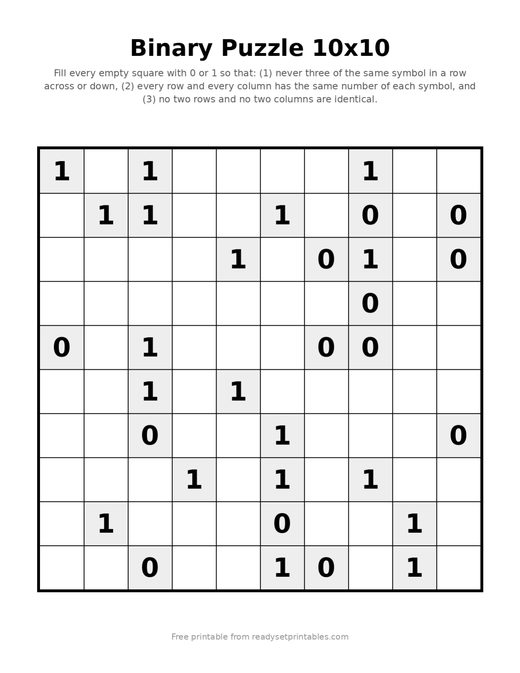 Binary Puzzles 10x10 Medium 10Download PDF ↓