Binary Puzzles — 12x12
Free printable 12x12 binary puzzles as PDFs with answer pages. The largest size here, six of each digit per line. No sign-up, no email.
⬇ Download all 10 as one PDF — free, no sign-upTwelve by twelve is the biggest binary grid on the site and the one where the duplicate-line rule earns its keep. With six of each digit needed per line, counting rarely finishes a row on its own, and the pair-and-gap patterns thin out as the grid empties in the middle. What gets you through is comparing lines against each other — twelve rows means eleven possible comparisons for every unfinished one, and somewhere in there is usually a cell that only has one legal value.
Each page holds one 12x12 binary puzzle, laid out to keep cells writable at that grid size, with given digits weighted so they never get confused with your own entries. Every puzzle is matched by an answer page showing the completed grid. Black and white, no shaded fills, one puzzle per US Letter sheet.
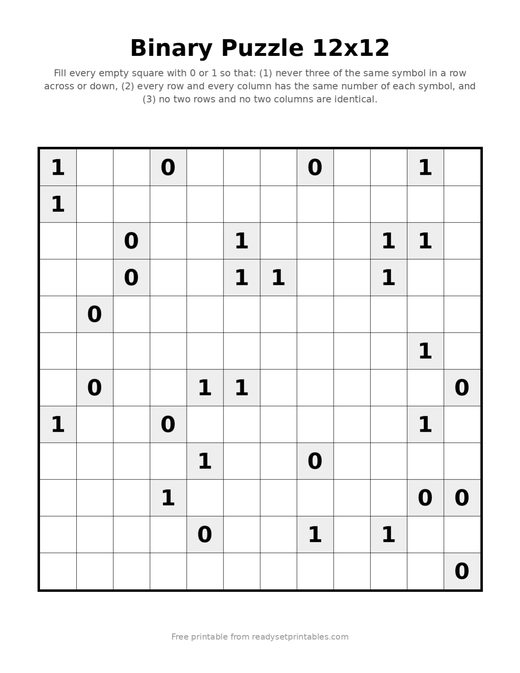 Binary Puzzles 12x12 Hard 01Download PDF ↓
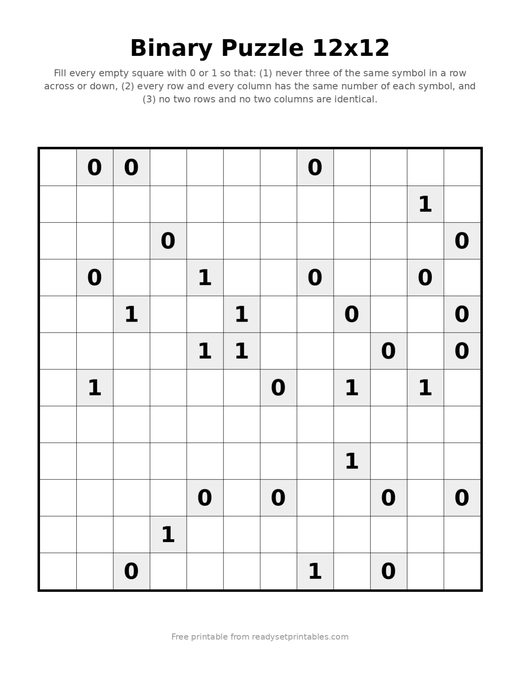 Binary Puzzles 12x12 Hard 02Download PDF ↓
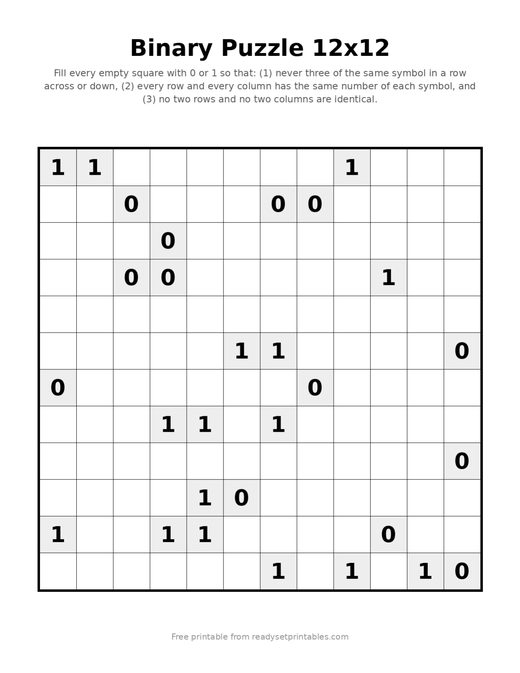 Binary Puzzles 12x12 Hard 03Download PDF ↓
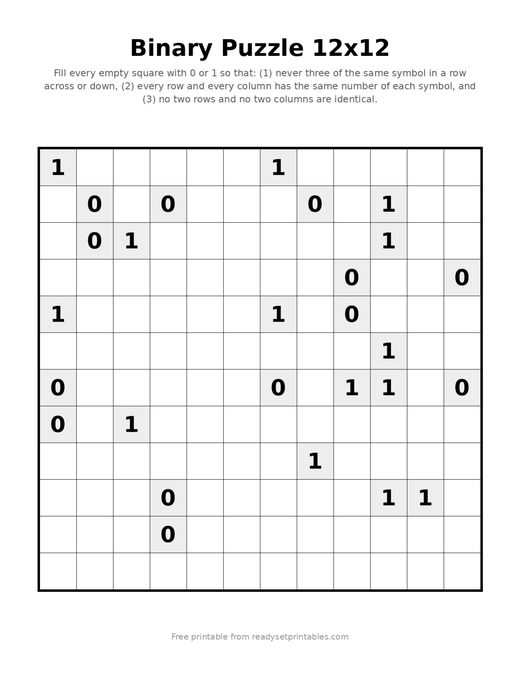 Binary Puzzles 12x12 Hard 04Download PDF ↓
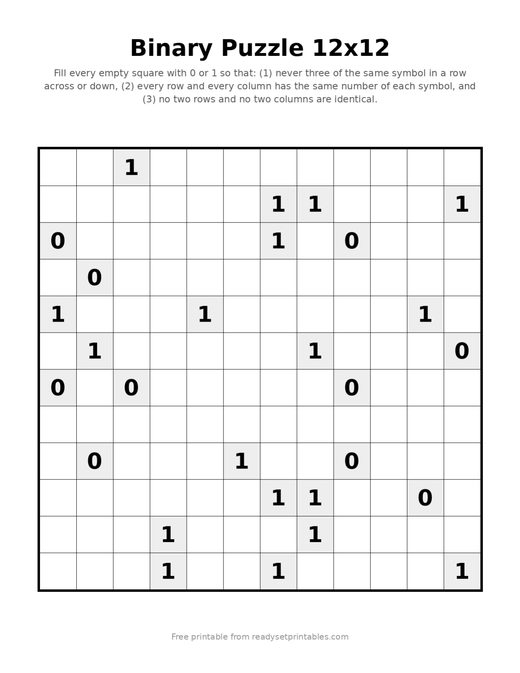 Binary Puzzles 12x12 Hard 05Download PDF ↓
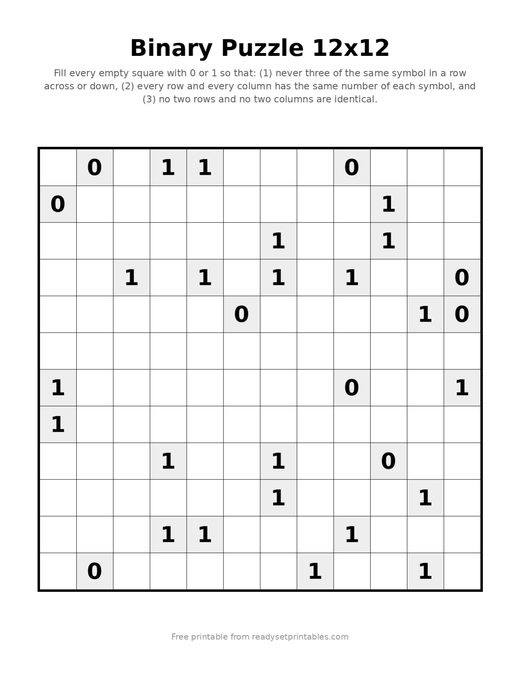 Binary Puzzles 12x12 Hard 06Download PDF ↓
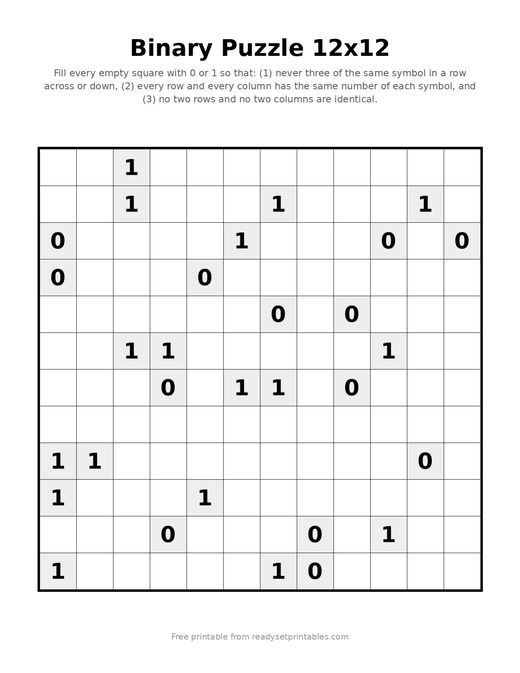 Binary Puzzles 12x12 Hard 07Download PDF ↓
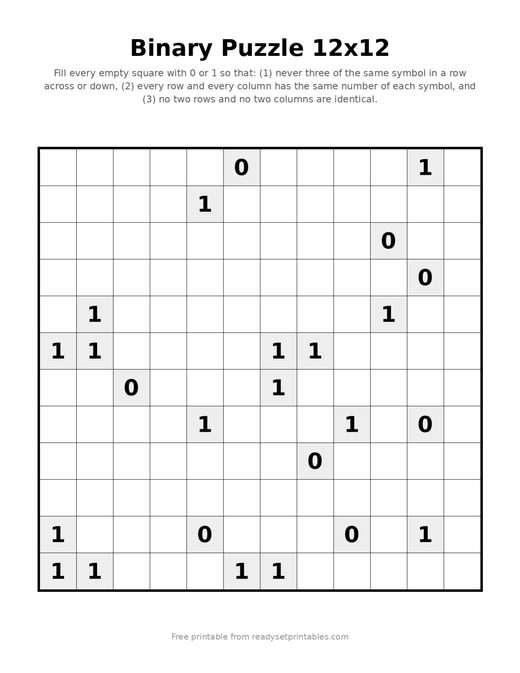 Binary Puzzles 12x12 Hard 08Download PDF ↓
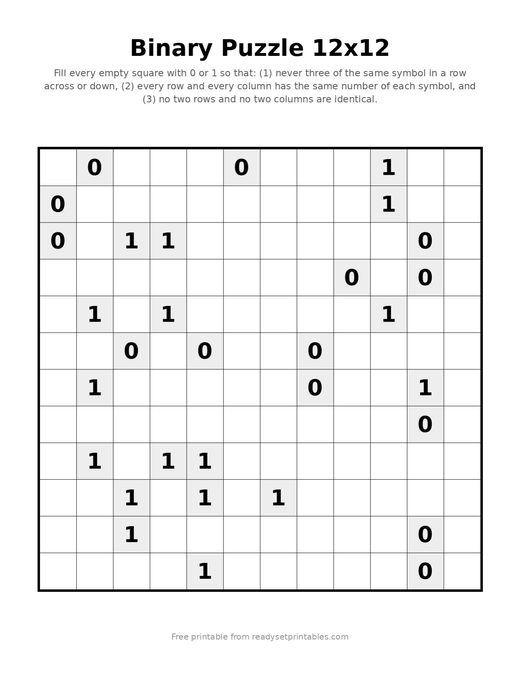 Binary Puzzles 12x12 Hard 09Download PDF ↓
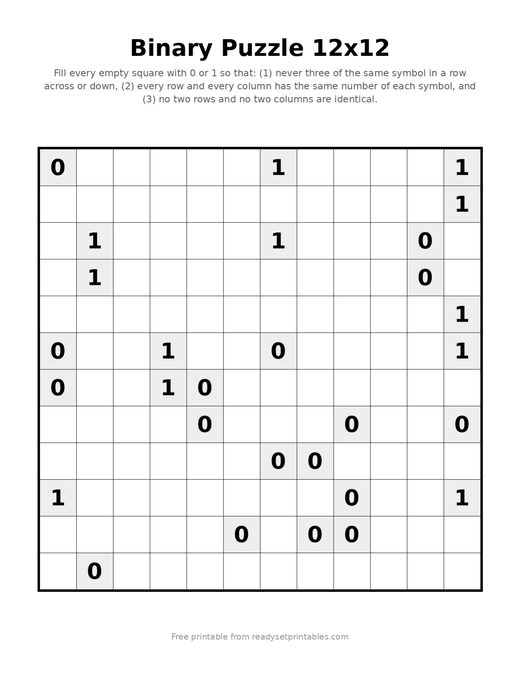 Binary Puzzles 12x12 Hard 10Download PDF ↓