Binary Puzzles — 8x8
Free printable 8x8 binary puzzles in PDF with answer pages. Four 0s and four 1s per line, longer chains than 6x6. No sign-up.
⬇ Download all 10 as one PDF — free, no sign-upMoving from 6x6 to 8x8 changes the puzzle more than the extra two rows suggest. Each line now needs four of each digit rather than three, so the counting shortcut fires later and you have to lean harder on the no-three-in-a-row rule to make early progress. This is also the first size where the duplicate-line rule genuinely helps rather than just catching mistakes: comparing a nearly finished row against a completed one will often fill the last two cells outright.
Each page carries one 8x8 binary grid with given digits set in a heavier weight than the surrounding rule lines, so the puzzle reads cleanly even part-filled. Cells are sized for comfortable handwriting. Every puzzle is paired with an answer page showing the finished grid. Black and white, one puzzle per US Letter page.
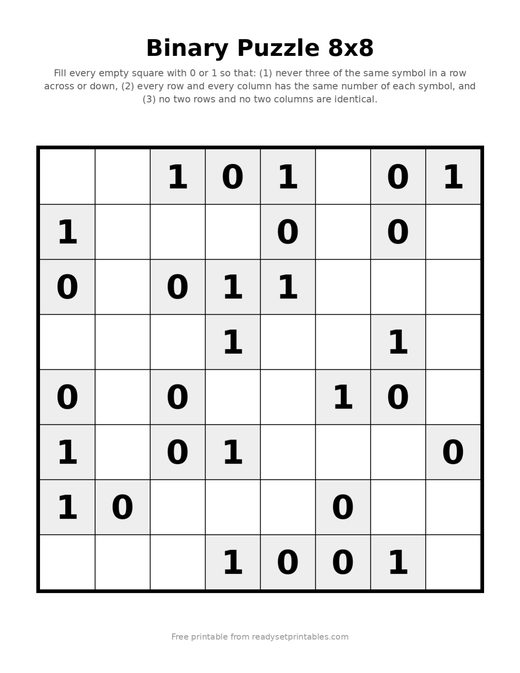 Binary Puzzles 8x8 Easy 01Download PDF ↓
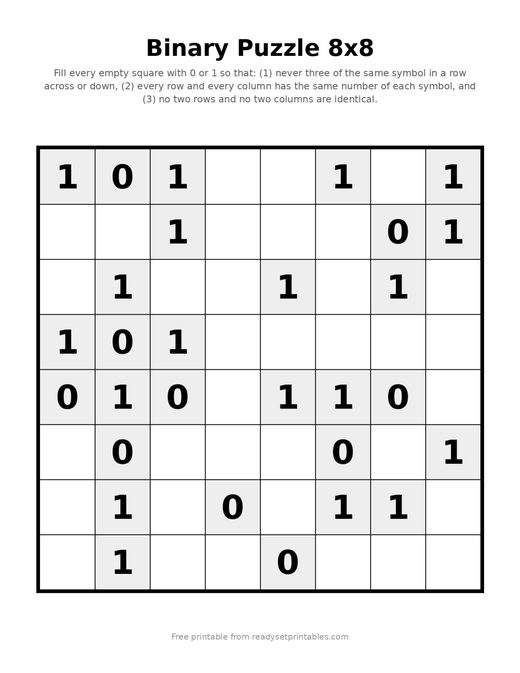 Binary Puzzles 8x8 Easy 02Download PDF ↓
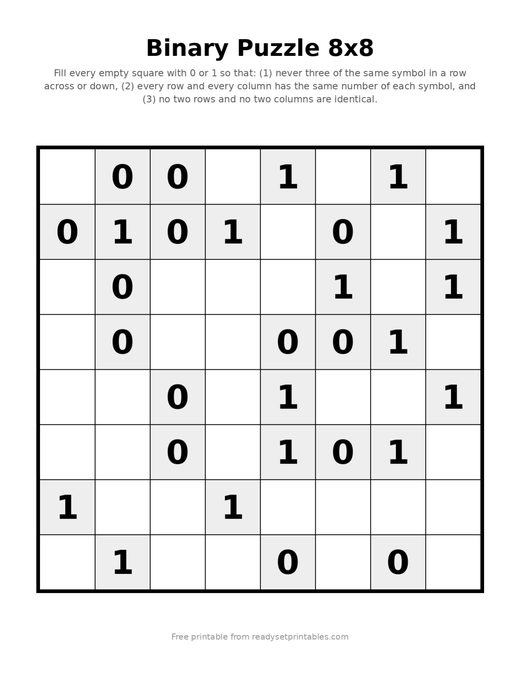 Binary Puzzles 8x8 Easy 03Download PDF ↓
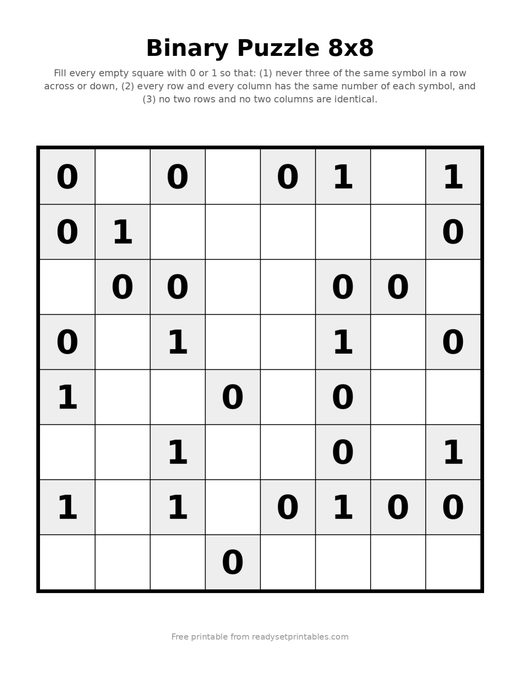 Binary Puzzles 8x8 Easy 04Download PDF ↓
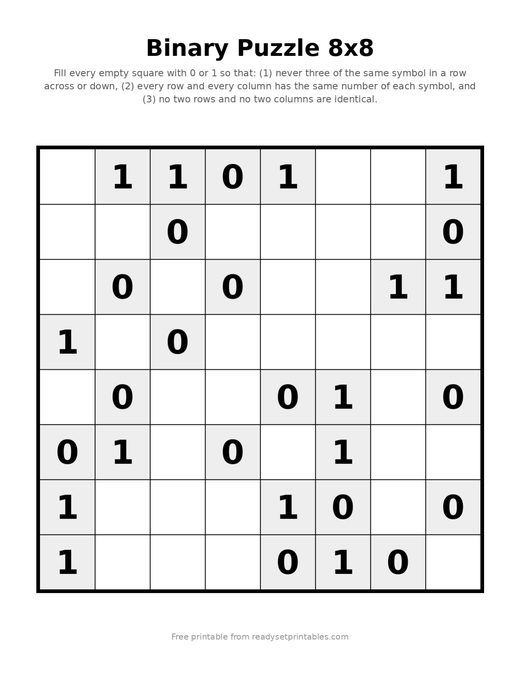 Binary Puzzles 8x8 Easy 05Download PDF ↓
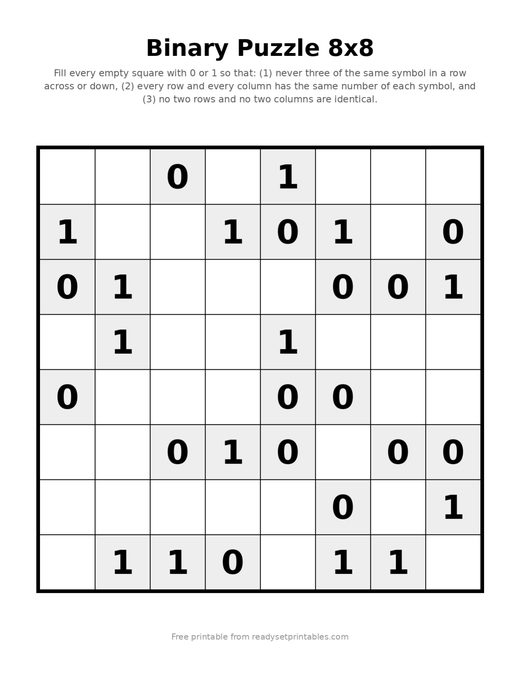 Binary Puzzles 8x8 Easy 06Download PDF ↓
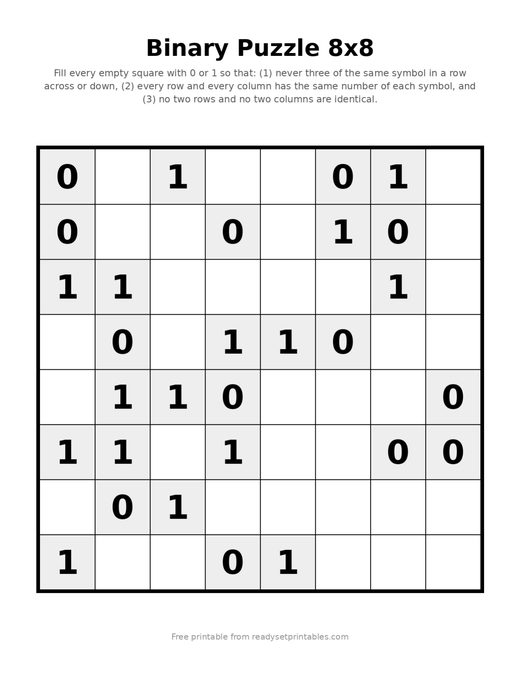 Binary Puzzles 8x8 Easy 07Download PDF ↓
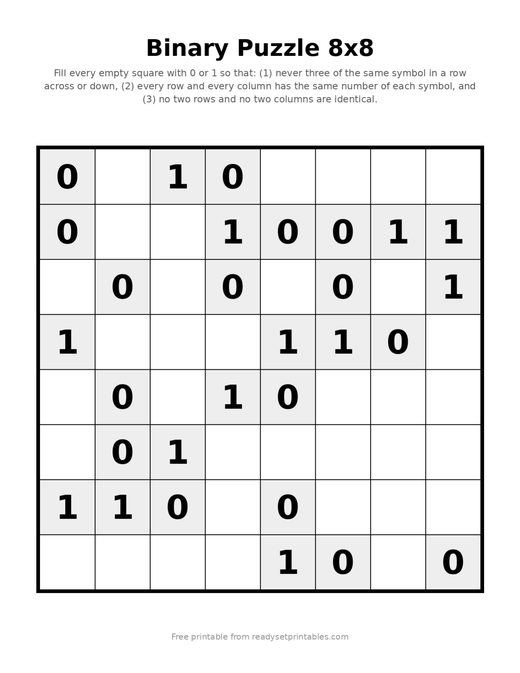 Binary Puzzles 8x8 Easy 08Download PDF ↓
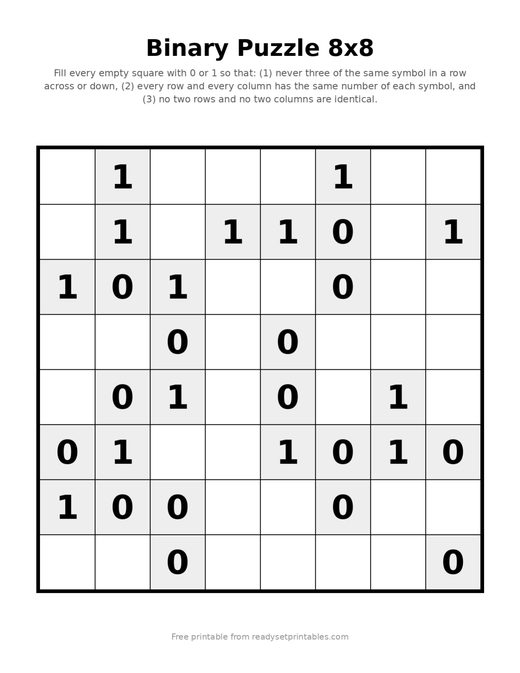 Binary Puzzles 8x8 Easy 09Download PDF ↓
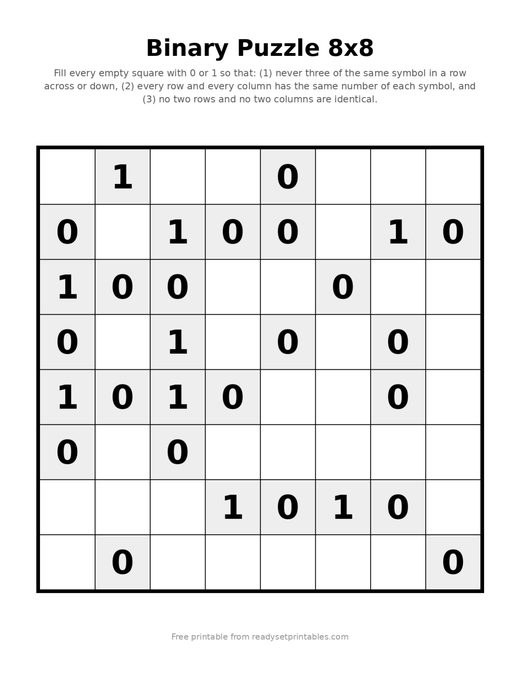 Binary Puzzles 8x8 Easy 10Download PDF ↓