Futoshiki Puzzles — 4x4
Free printable 4x4 futoshiki puzzles as PDFs with answer pages. Greater-than and less-than logic on a small grid. No sign-up.
⬇ Download all 10 as one PDF — free, no sign-upFutoshiki puts the numbers 1 to 4 into a 4x4 grid with no repeats in any row or column, and then adds the twist that gives it its name: the greater-than and less-than signs printed between some pairs of cells must be obeyed. On a grid this small the signs do nearly all the work. A chain of three signs pointing the same way settles three cells outright, because only one arrangement of 1, 2, 3 and 4 can keep increasing. It is a genuinely good first inequality puzzle.
One 4x4 futoshiki grid per page with the inequality signs printed clearly between cells and enough space around them that a written digit never sits on top of a sign. Every puzzle has an answer page with the completed grid. Black and white on US Letter, one puzzle per sheet, so a set for a whole class is a single print job.
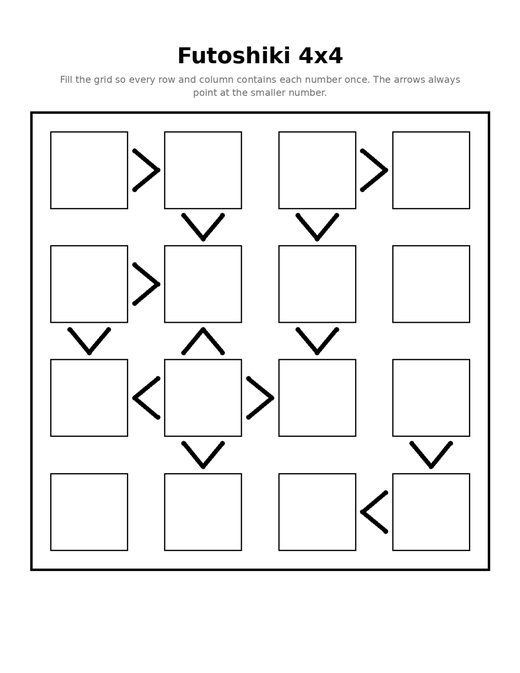 Futoshiki 4x4 01Download PDF ↓
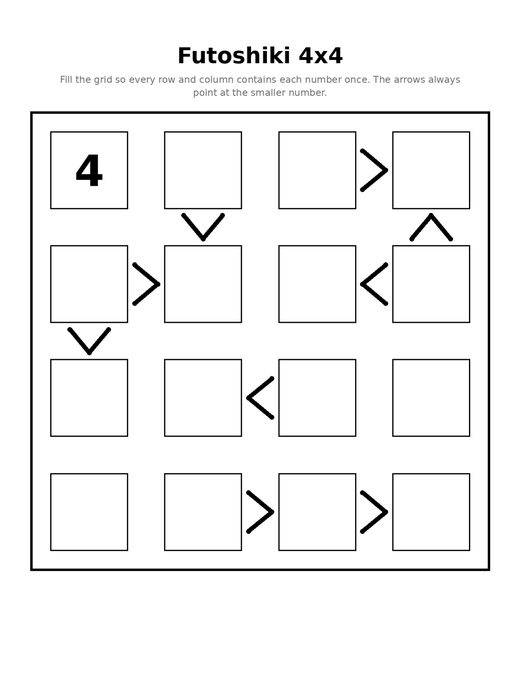 Futoshiki 4x4 02Download PDF ↓
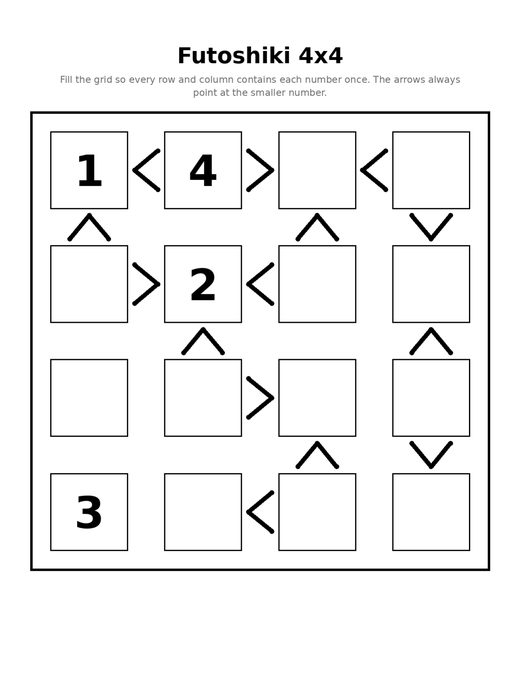 Futoshiki 4x4 03Download PDF ↓
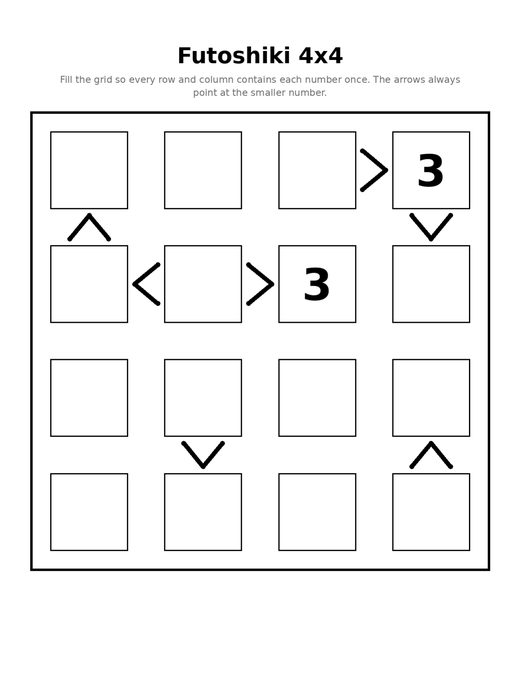 Futoshiki 4x4 04Download PDF ↓
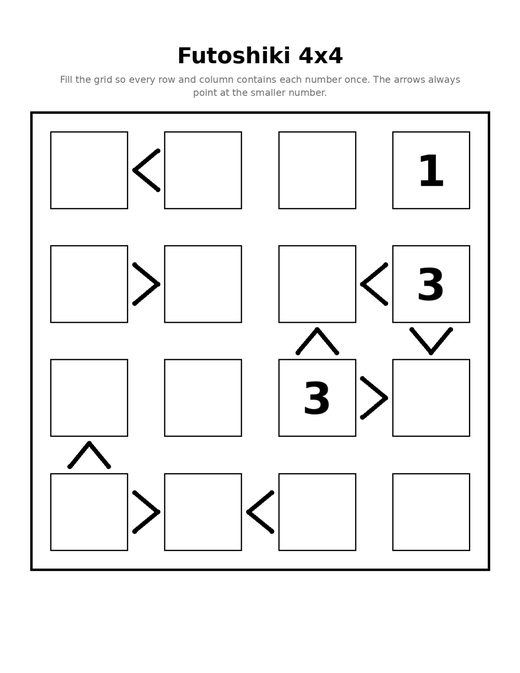 Futoshiki 4x4 05Download PDF ↓
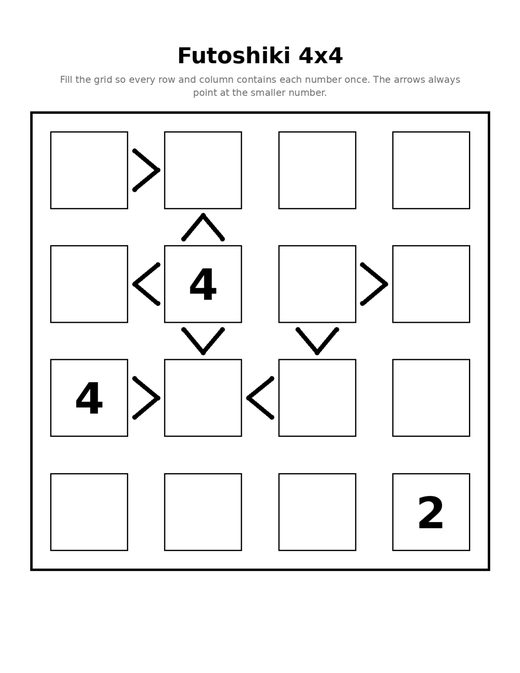 Futoshiki 4x4 06Download PDF ↓
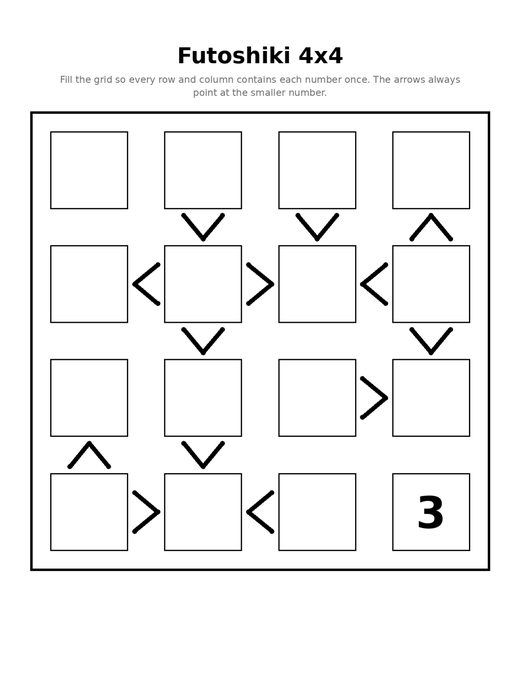 Futoshiki 4x4 07Download PDF ↓
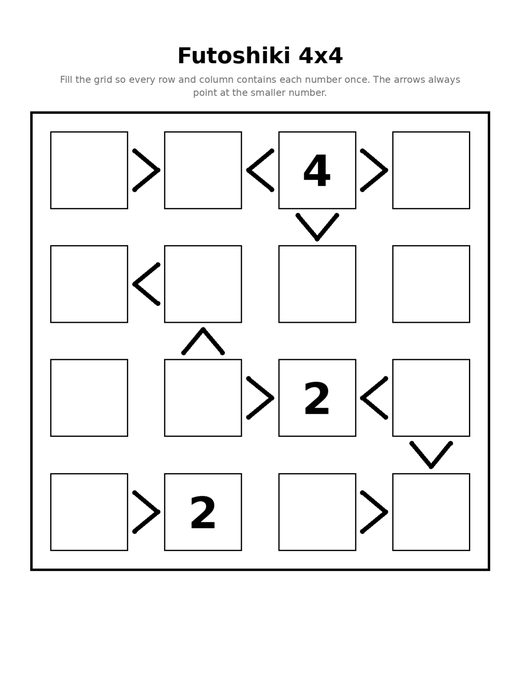 Futoshiki 4x4 08Download PDF ↓
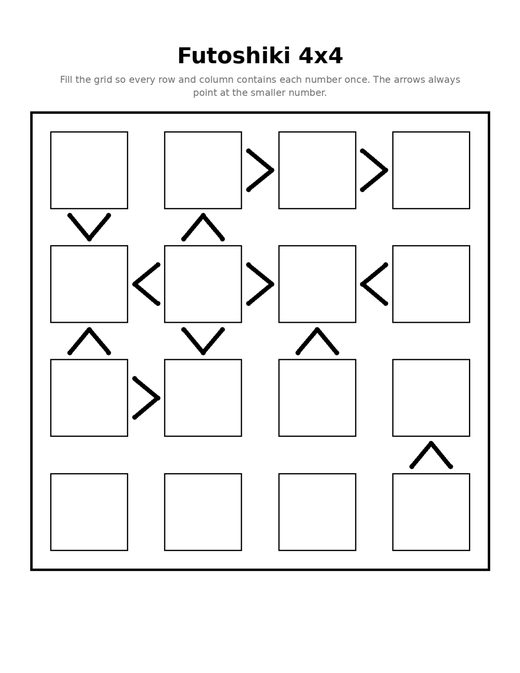 Futoshiki 4x4 09Download PDF ↓
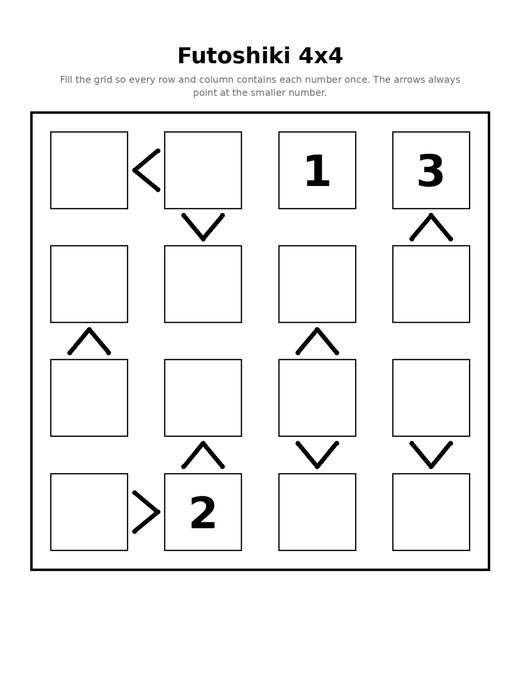 Futoshiki 4x4 10Download PDF ↓