Futoshiki Puzzles — 7x7
Free printable 7x7 futoshiki puzzles as PDFs with answer pages. The largest futoshiki size here, for experienced solvers. No sign-up.
⬇ Download all 10 as one PDF — free, no sign-upSeven by seven is about as large as futoshiki gets before the bookkeeping outweighs the fun, and these are built for solvers who want that edge. With seven candidates per cell and no box regions to lean on, you will be pencilling candidate lists rather than solving in your head, and the breakthroughs come from noticing that a chain has quietly reduced a whole column's options. It is a slow, deliberate puzzle — closer in feel to a hard kakuro than to a newspaper sudoku.
One 7x7 futoshiki per page, laid out with cells wide enough for a full row of pencilled candidates and inequality signs that stay distinct at that scale. Each puzzle is matched with an answer page showing the completed grid. All PDFs print black on white with no heavy fills, one puzzle per US Letter page.
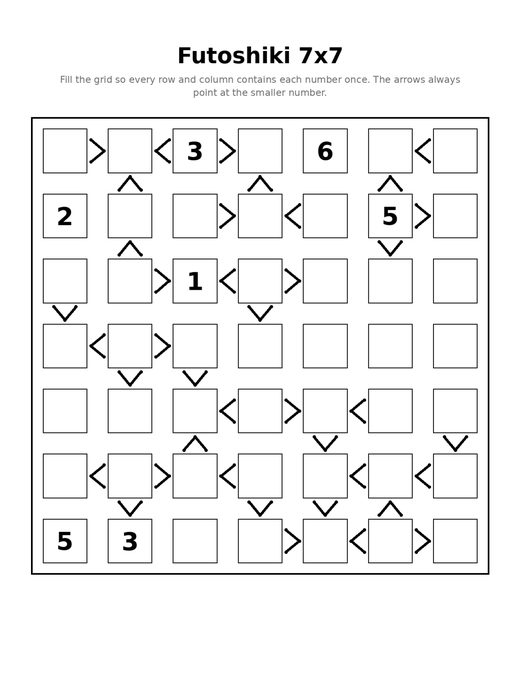 Futoshiki 7x7 01Download PDF ↓
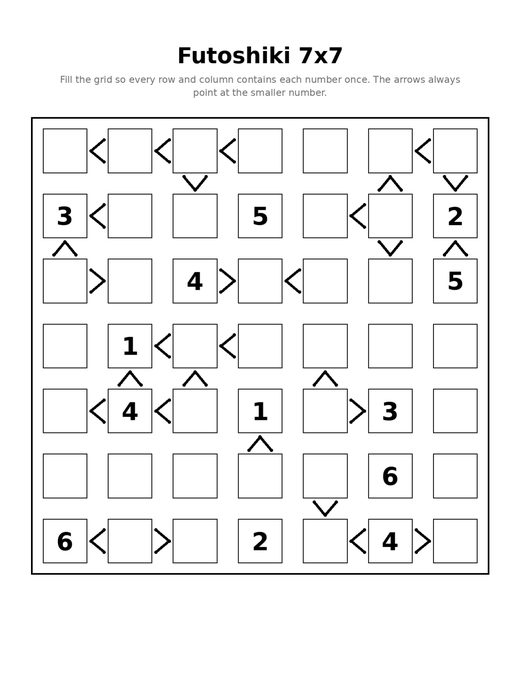 Futoshiki 7x7 02Download PDF ↓
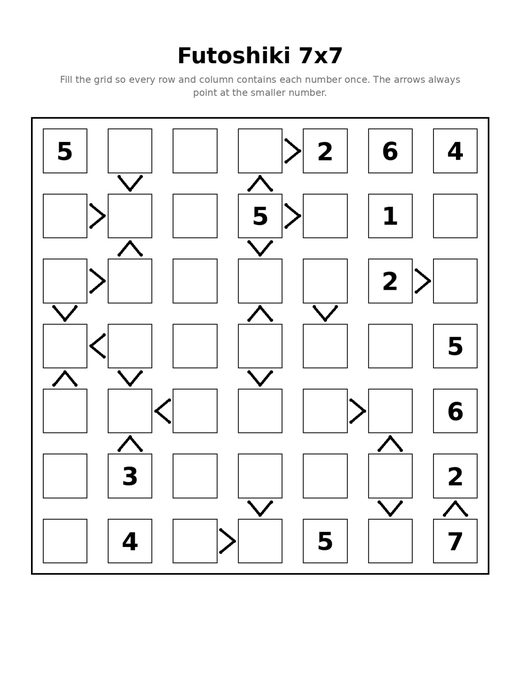 Futoshiki 7x7 03Download PDF ↓
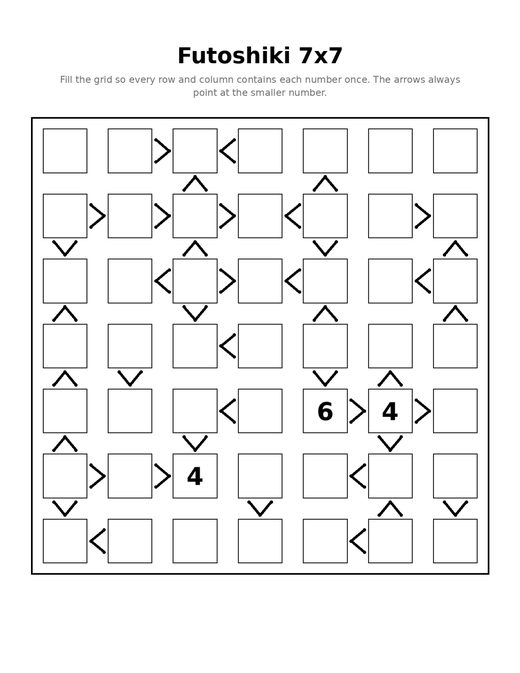 Futoshiki 7x7 04Download PDF ↓
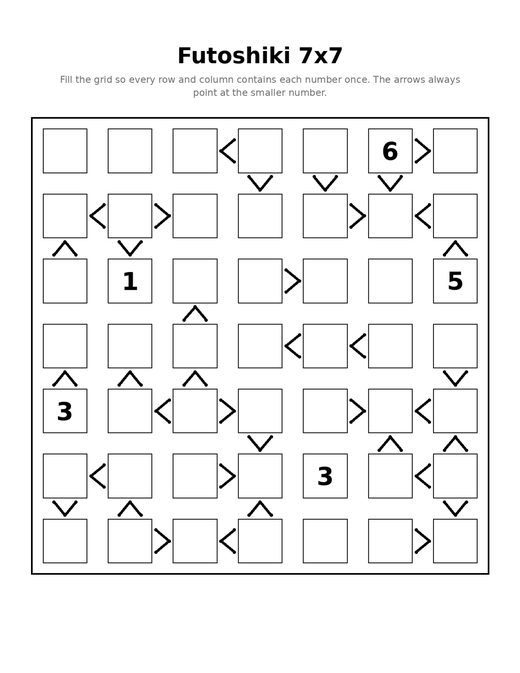 Futoshiki 7x7 05Download PDF ↓
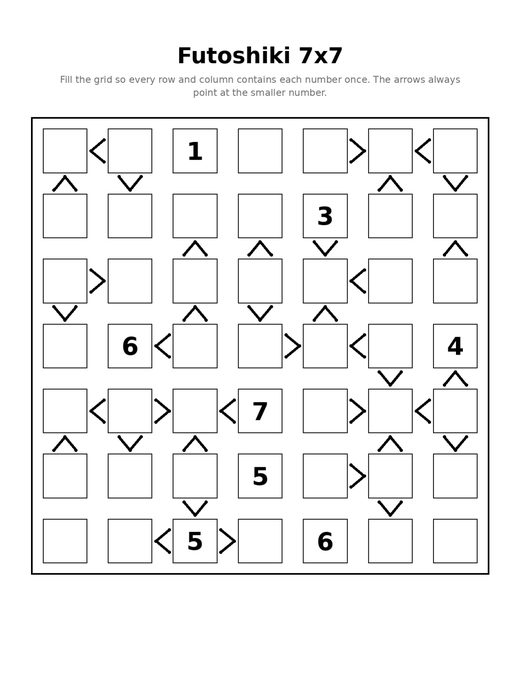 Futoshiki 7x7 06Download PDF ↓
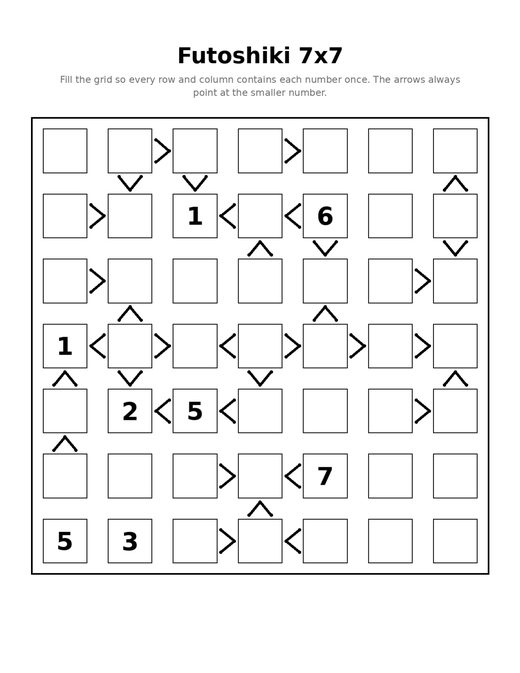 Futoshiki 7x7 07Download PDF ↓
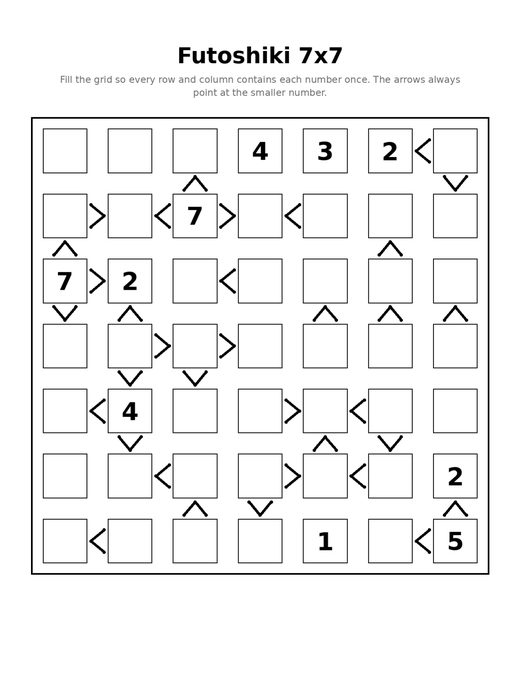 Futoshiki 7x7 08Download PDF ↓
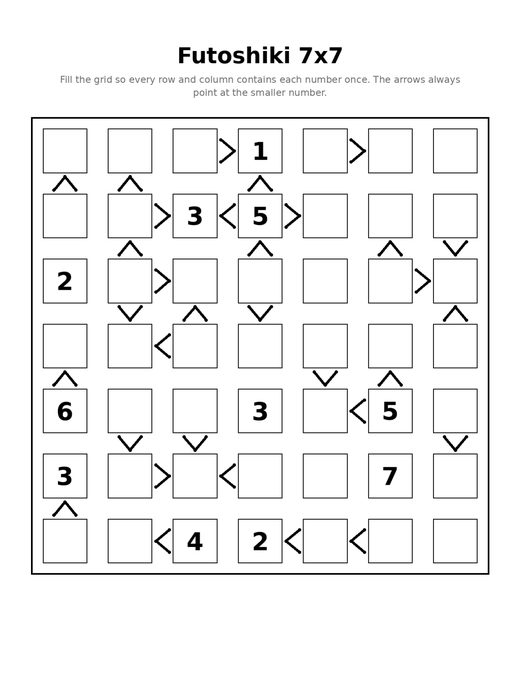 Futoshiki 7x7 09Download PDF ↓
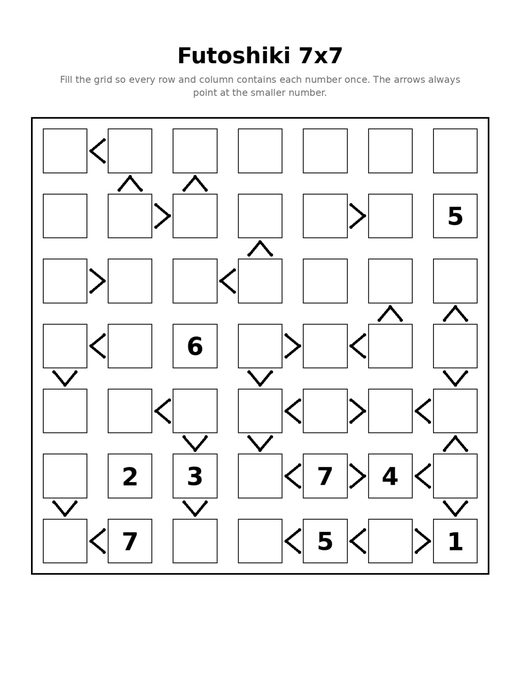 Futoshiki 7x7 10Download PDF ↓