Futoshiki Puzzles — 6x6
Free printable 6x6 futoshiki puzzles as PDFs with answer pages. Numbers 1 to 6 with inequality chains. No sign-up, no email.
⬇ Download all 10 as one PDF — free, no sign-upA 6x6 futoshiki holds thirty-six cells and the numbers 1 to 6, which is enough range that a single greater-than sign rules out very little on its own. These grids are solved in layers: prune the impossible extremes from the signs, run the row and column eliminations, then go back to the signs with a smaller candidate set and prune again. Two or three passes of that loop usually crack it. If you have been solving 5x5 grids in a few minutes, expect these to take two or three times as long.
One 6x6 futoshiki grid per page, printed with clear inequality signs and cells sized to hold both a final answer and pencilled candidates. Given numbers, where present, are set in a heavier weight than your own entries will be. Each puzzle has an answer page with the finished grid. Black and white, one puzzle per US Letter sheet.
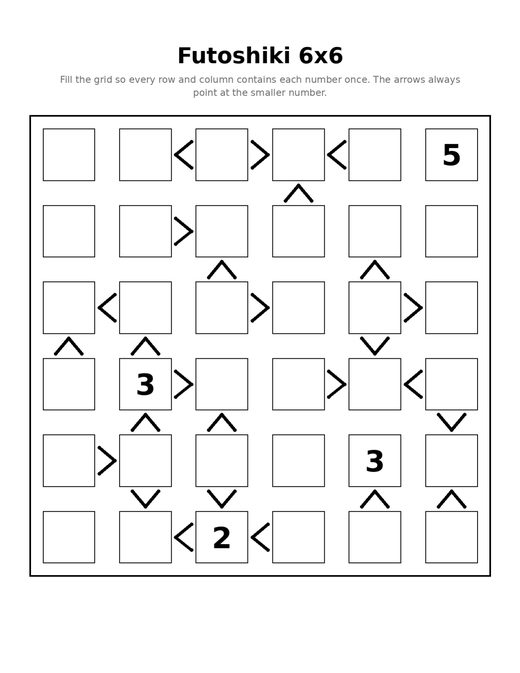 Futoshiki 6x6 01Download PDF ↓
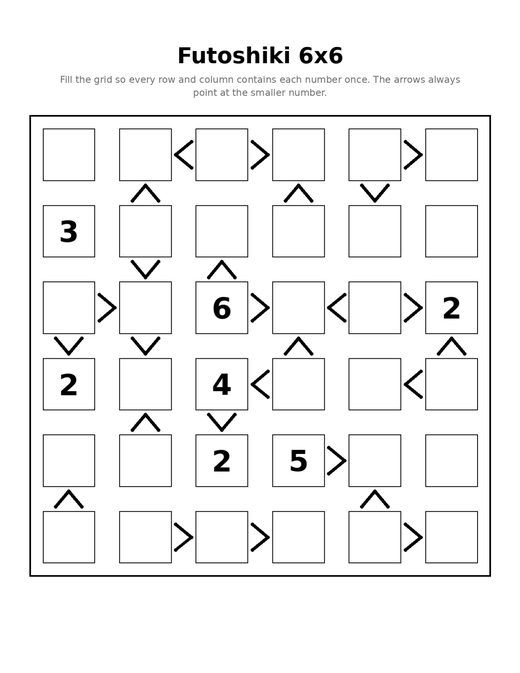 Futoshiki 6x6 02Download PDF ↓
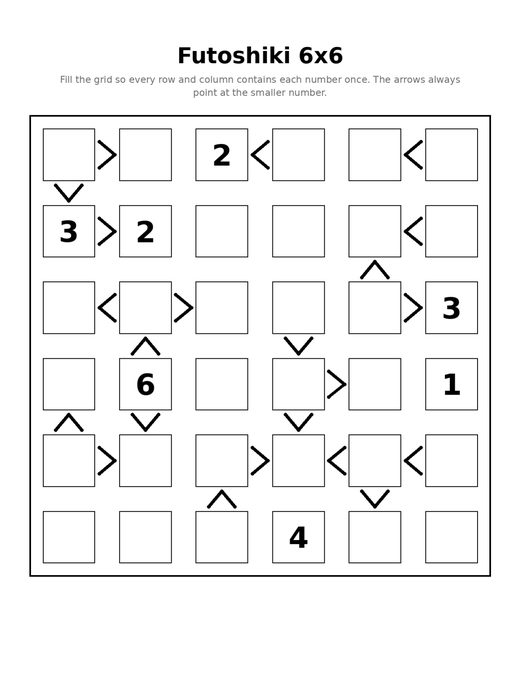 Futoshiki 6x6 03Download PDF ↓
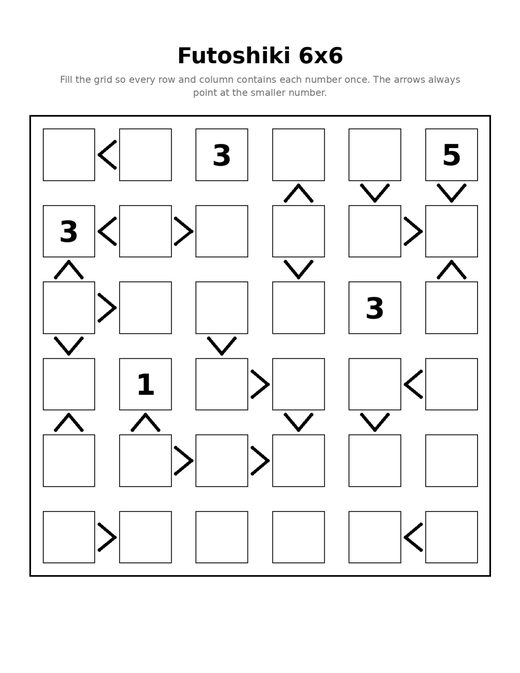 Futoshiki 6x6 04Download PDF ↓
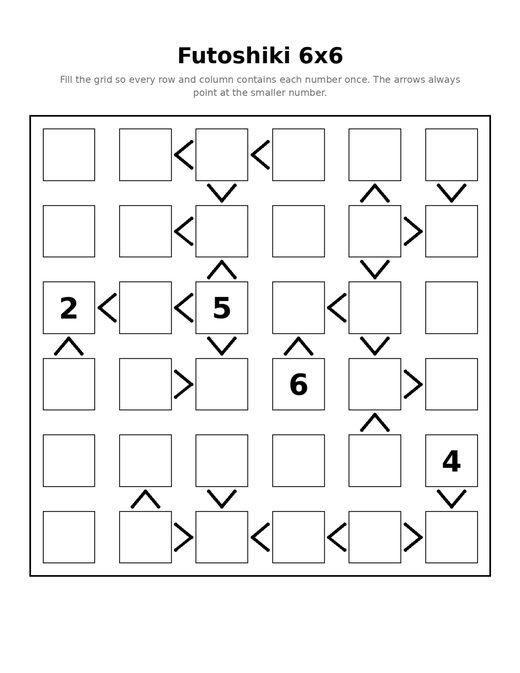 Futoshiki 6x6 05Download PDF ↓
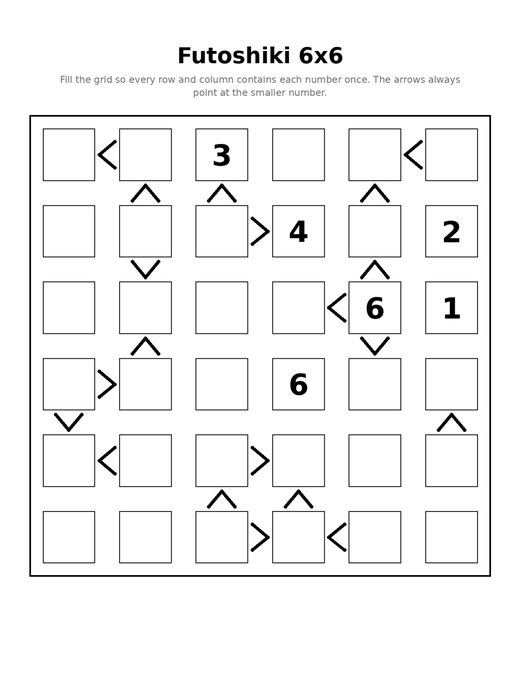 Futoshiki 6x6 06Download PDF ↓
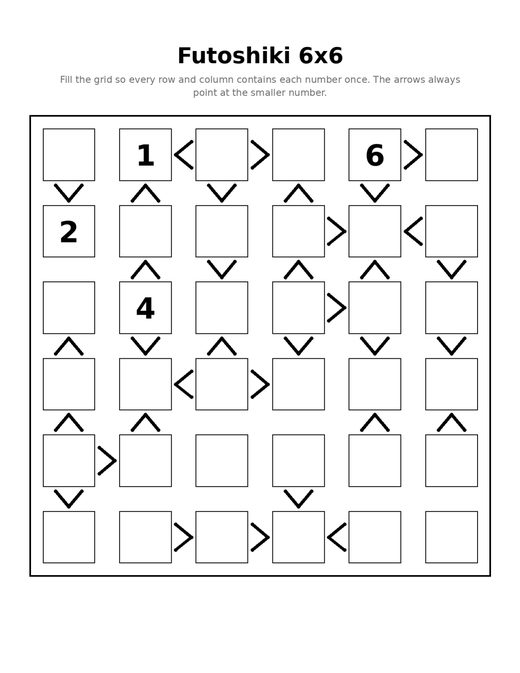 Futoshiki 6x6 07Download PDF ↓
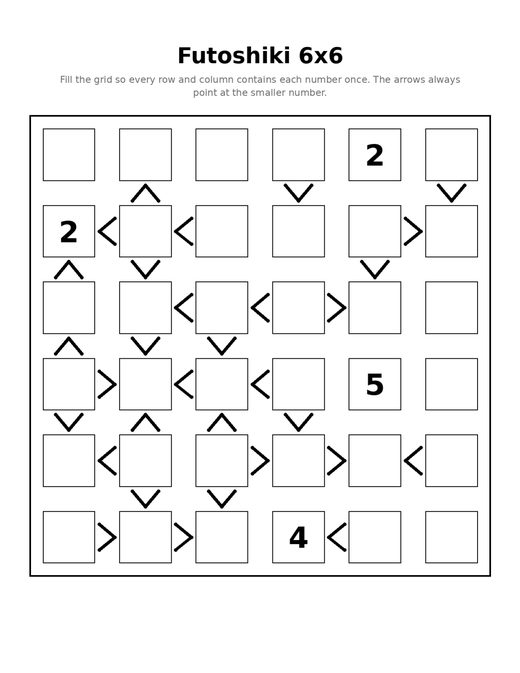 Futoshiki 6x6 08Download PDF ↓
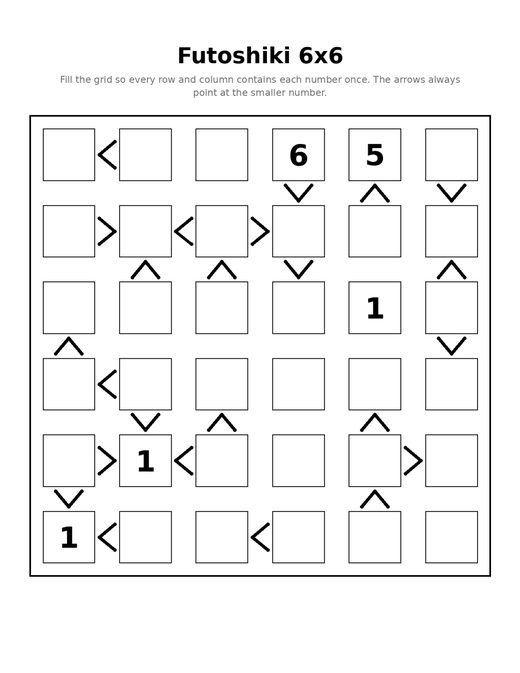 Futoshiki 6x6 09Download PDF ↓
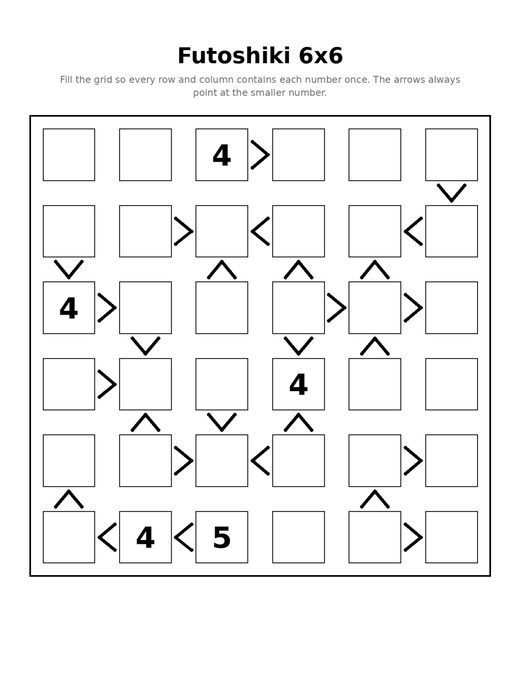 Futoshiki 6x6 10Download PDF ↓