Compare and Contrast Organizers
Free printable compare and contrast organizers as PDFs. Charts with separate space for similarities and differences. No sign-up.
⬇ Download all 2 as one PDF — free, no sign-upComparing two things well means saying what they share as clearly as how they differ, and students almost always find the differences easier. These organizers separate the two jobs. Alongside the columns for each subject there is dedicated space for similarities, and — on the matrix versions — a left-hand column for naming the feature being compared, which is the step that turns a scattered list into an actual comparison. One is bigger and one is smaller is not a comparison until you name size as the criterion.
Two formats: a three-part chart with a column for each subject and a shared similarities panel, and a comparison matrix with rows for named features and a column per subject. The matrix versions include a blank feature column so you choose the criteria. All areas are ruled for writing. Black and white, one organizer per US Letter page.
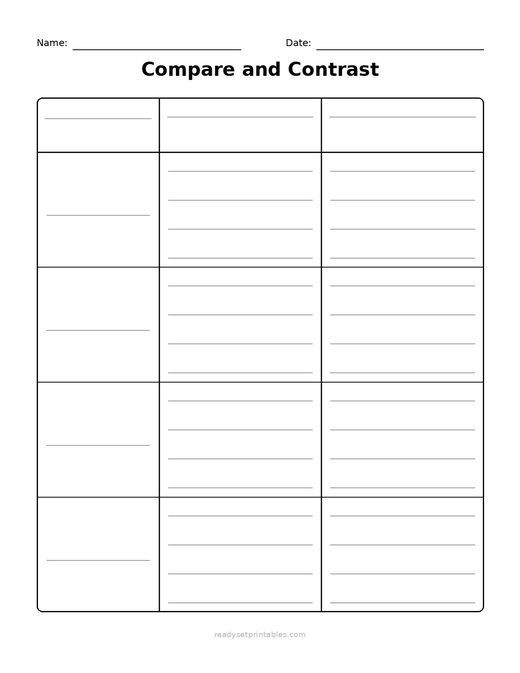 Graphic Organizers Compare and Contrast BlankDownload PDF ↓
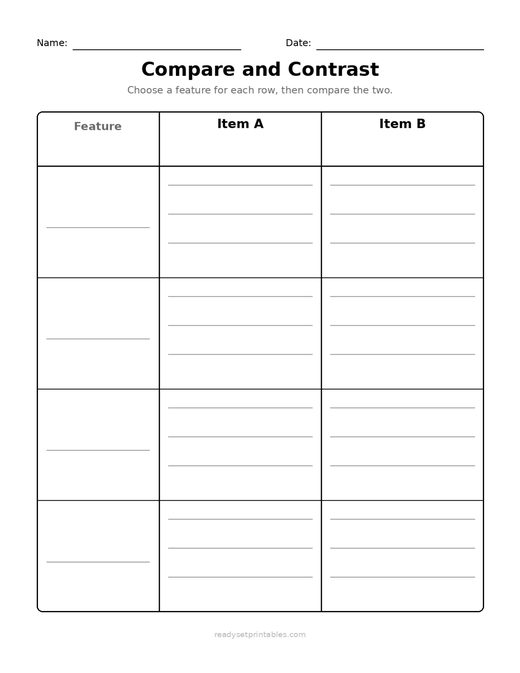 Graphic Organizers Compare and Contrast PromptedDownload PDF ↓