Frayer Model Templates
Free printable Frayer model templates as PDFs. Four-quadrant vocabulary organizers with a center word box. No sign-up, no email.
⬇ Download all 2 as one PDF — free, no sign-upThe Frayer model is a vocabulary organizer built around one word in a center box and four quadrants around it. The usual four are definition, characteristics, examples and non-examples — and it is the non-examples quadrant that makes it work. Asking a student what is not a mammal, or what is not a polygon, exposes the edge of their understanding far faster than asking for a definition, which they can often produce word-perfect without knowing what it excludes.
Blank Frayer model sheets with a central oval or box for the target word and four labeled quadrants around it. Standard versions use definition, characteristics, examples and non-examples; alternative versions leave the quadrant labels blank so you can set your own headings. All quadrants are ruled and large enough for a short list. Black and white, one per US Letter page.
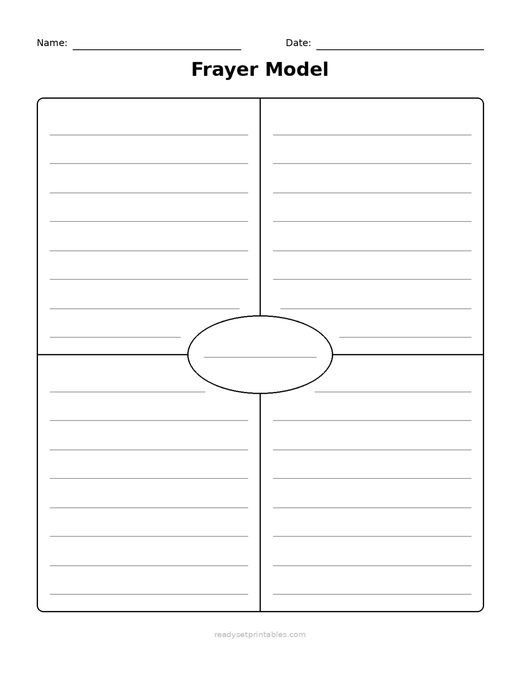 Graphic Organizers Frayer Model BlankDownload PDF ↓
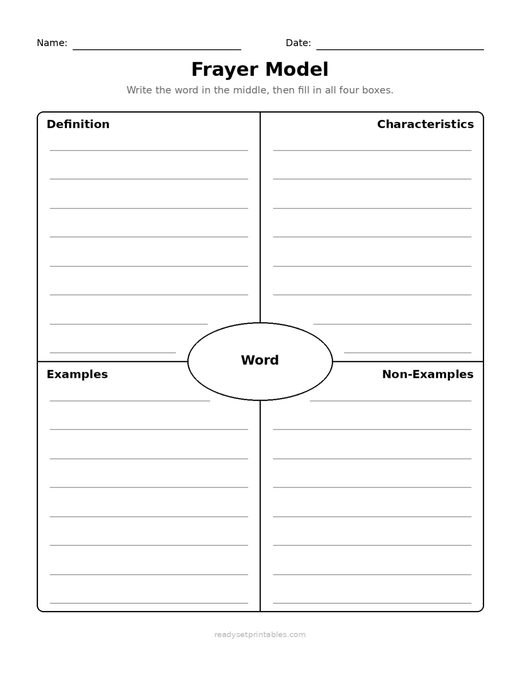 Graphic Organizers Frayer Model PromptedDownload PDF ↓