Kakuro Puzzles — 10x10
Free printable 10x10 kakuro puzzles in PDF with answer pages. Longer runs and more crossings than 8x8. No sign-up, no email.
⬇ Download all 10 as one PDF — free, no sign-upAt 10x10 kakuro develops the quality that makes it addictive: intersections. Longer runs mean more cells that belong to both an across total and a down total, and the real solving happens where those two constraint sets overlap. A cell that could be 2, 5 or 8 from its row and 5, 6 or 7 from its column has only one option, and finding that overlap is usually more productive than working out either run in isolation. Expect twenty minutes or more per grid.
Each page holds one 10x10 kakuro puzzle with diagonally split clue cells and across and down totals set clearly apart. The white cells are drawn large enough to carry pencilled candidate digits in the corners, which matters at this size. Every puzzle comes with an answer page. Black and white on US Letter, one puzzle per page.
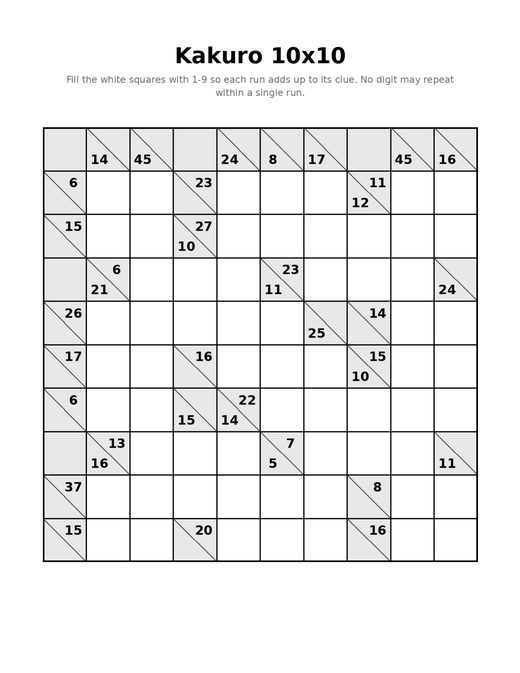 Kakuro 10x10 01Download PDF ↓
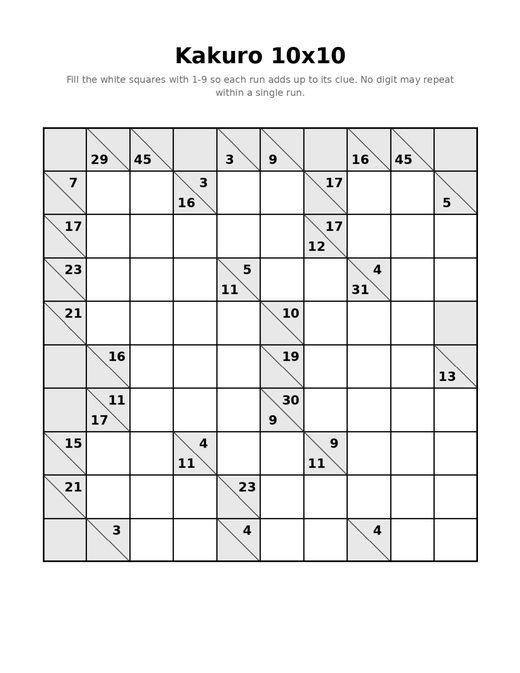 Kakuro 10x10 02Download PDF ↓
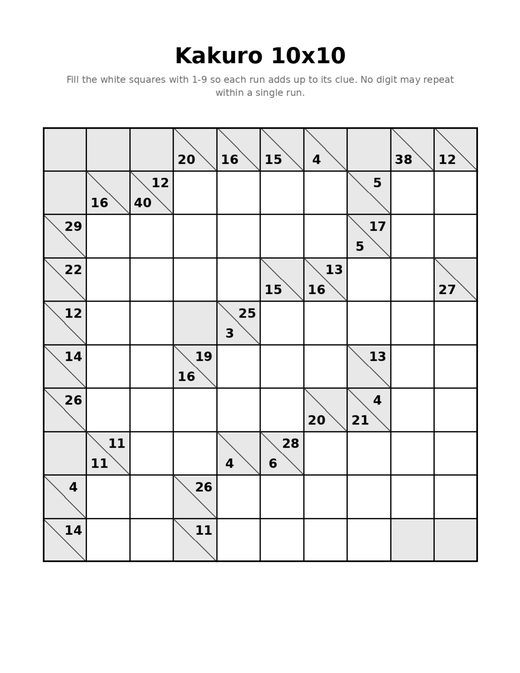 Kakuro 10x10 03Download PDF ↓
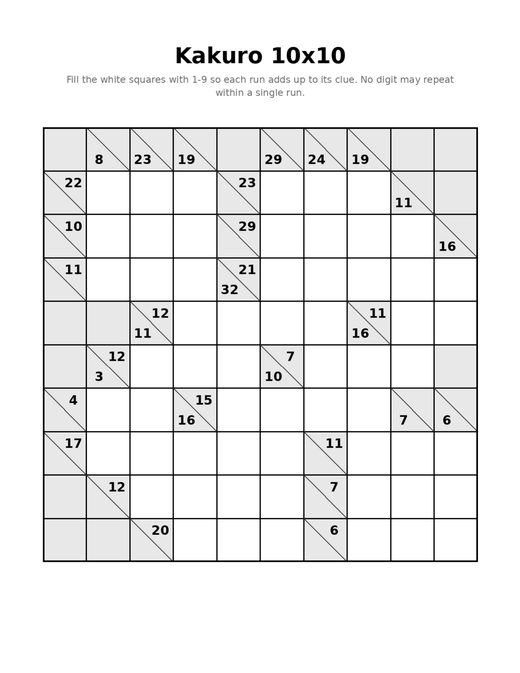 Kakuro 10x10 04Download PDF ↓
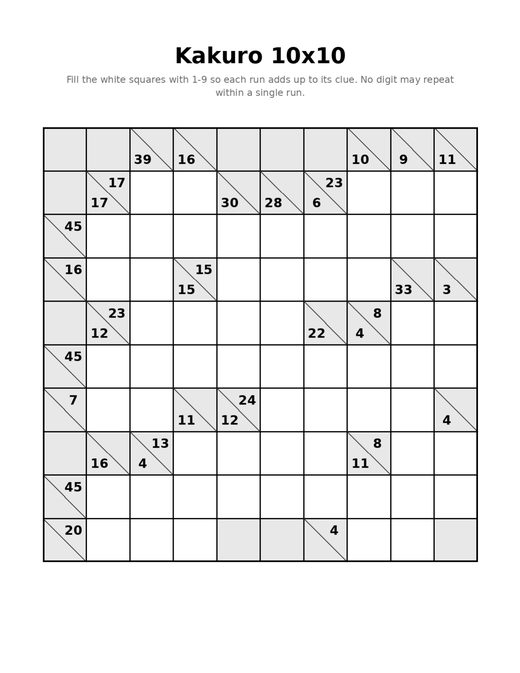 Kakuro 10x10 05Download PDF ↓
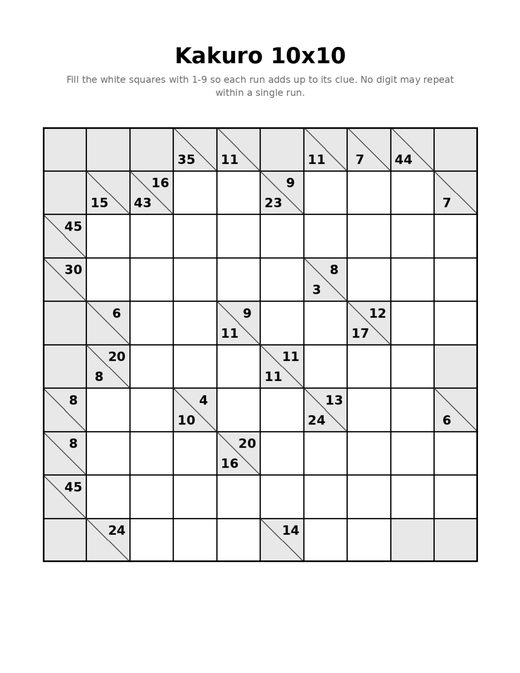 Kakuro 10x10 06Download PDF ↓
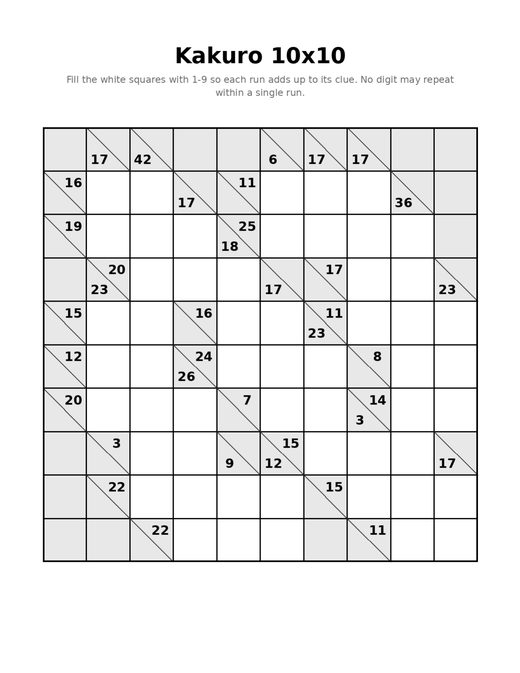 Kakuro 10x10 07Download PDF ↓
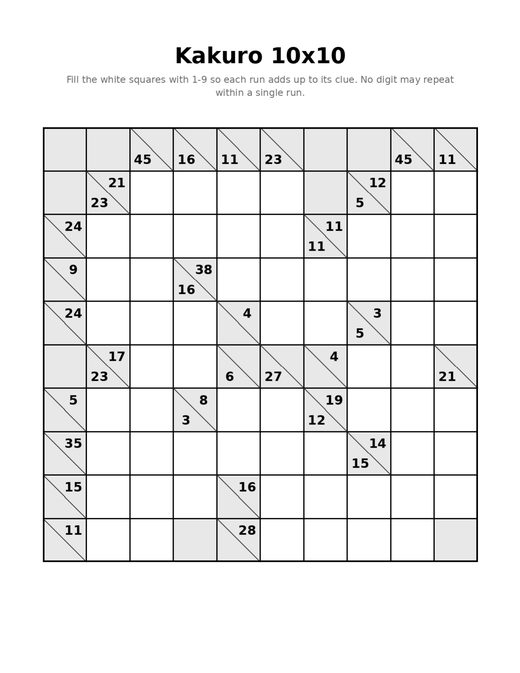 Kakuro 10x10 08Download PDF ↓
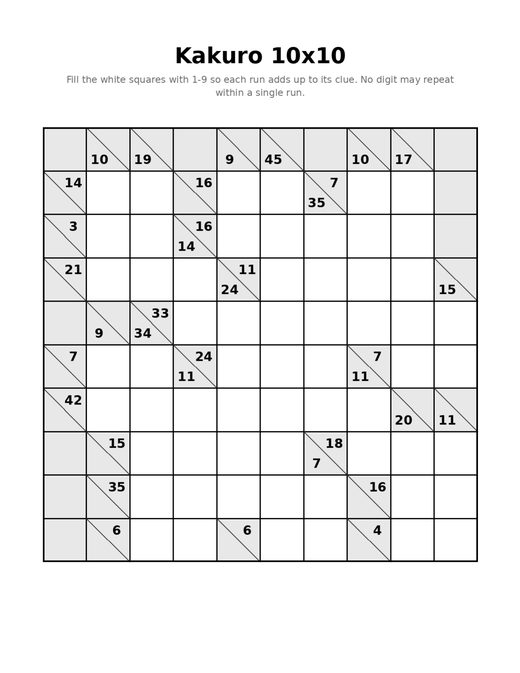 Kakuro 10x10 09Download PDF ↓
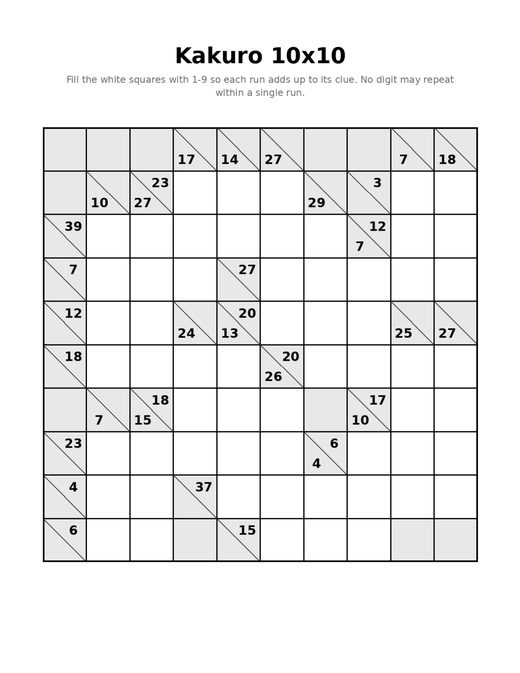 Kakuro 10x10 10Download PDF ↓