Kakuro Puzzles — 8x8
Free printable 8x8 kakuro puzzles as PDFs with answer pages. Cross-sum grids using digits 1 to 9. No sign-up and no email.
⬇ Download all 10 as one PDF — free, no sign-upKakuro is a crossword built out of sums. Each run of white cells has a clue number in the shaded triangle beside it, and the digits you write must add to that total, using 1 to 9 with no digit repeated inside a single run. An 8x8 grid keeps the runs short — mostly two to four cells — which means the classic forced combinations do most of the work: a 3 in two cells can only be 1 and 2, and a 16 in two cells can only be 7 and 9. Good arithmetic practice that never feels like a worksheet.
One 8x8 kakuro grid per page with the shaded clue cells split cleanly on the diagonal and the across and down totals printed at a size that stays readable. White cells are large enough for a digit plus small candidate marks. Every puzzle has an answer page with the completed grid. Black and white on US Letter, one puzzle per sheet.
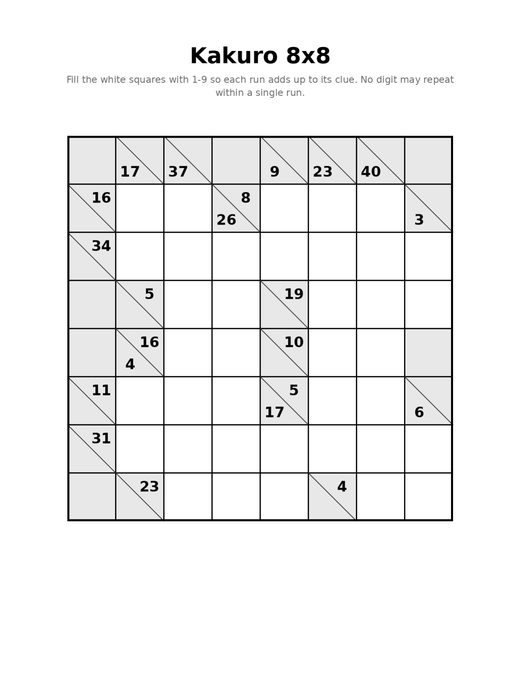 Kakuro 8x8 01Download PDF ↓
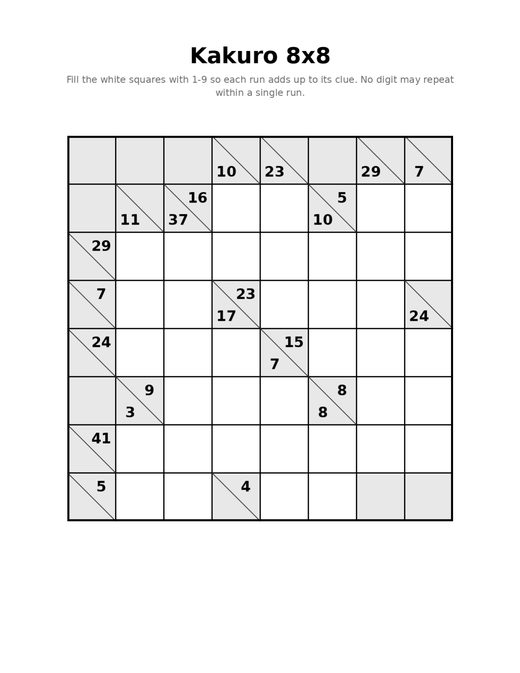 Kakuro 8x8 02Download PDF ↓
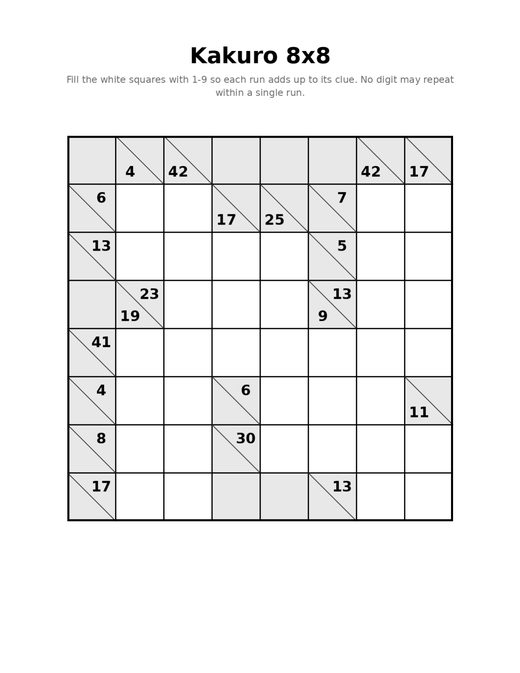 Kakuro 8x8 03Download PDF ↓
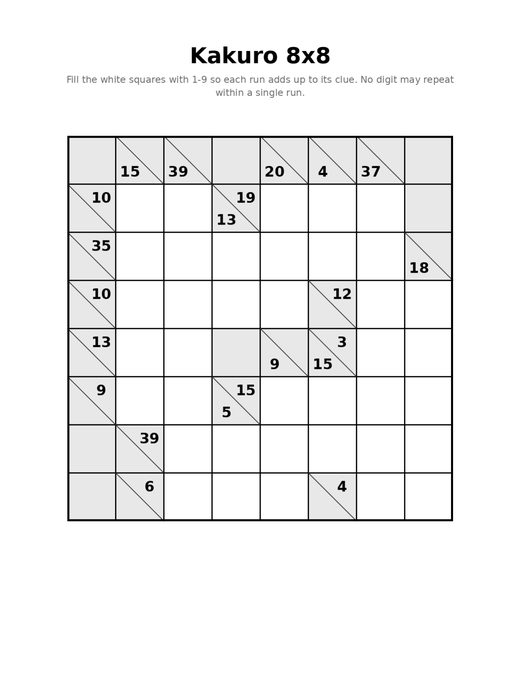 Kakuro 8x8 04Download PDF ↓
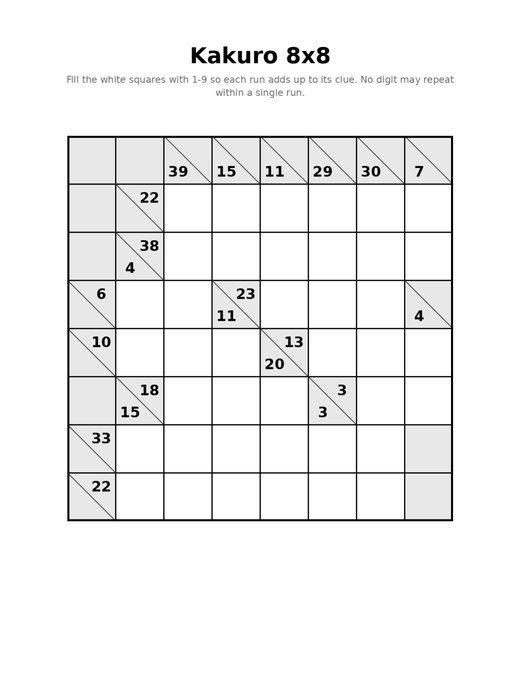 Kakuro 8x8 05Download PDF ↓
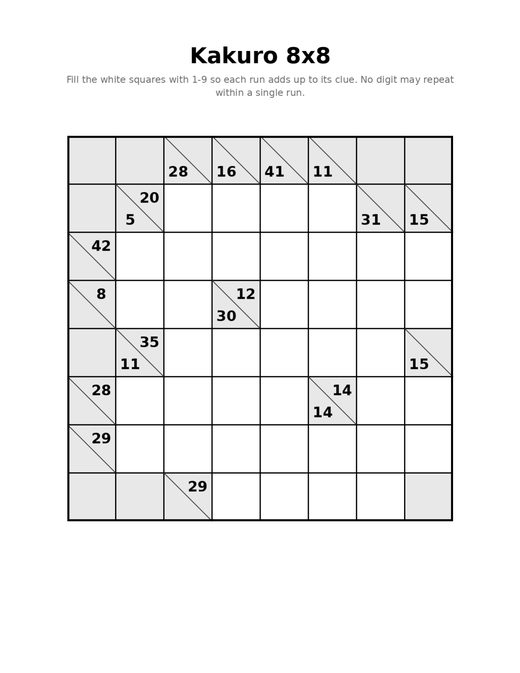 Kakuro 8x8 06Download PDF ↓
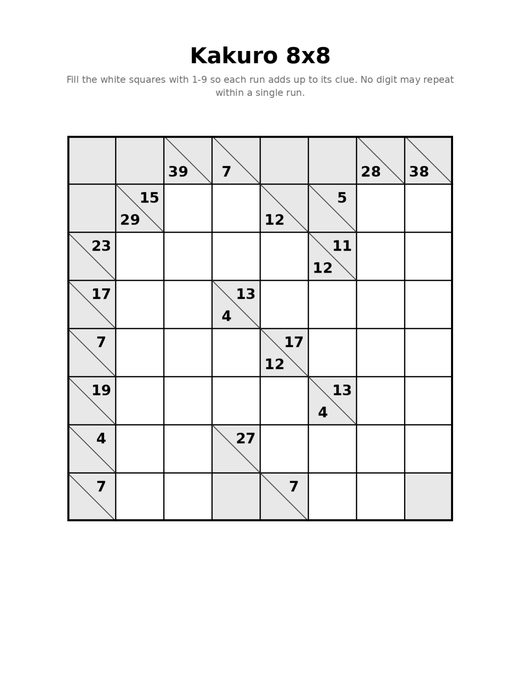 Kakuro 8x8 07Download PDF ↓
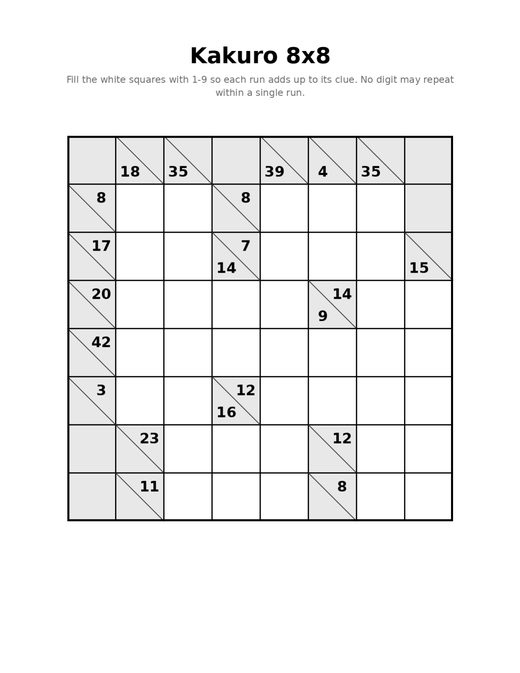 Kakuro 8x8 08Download PDF ↓
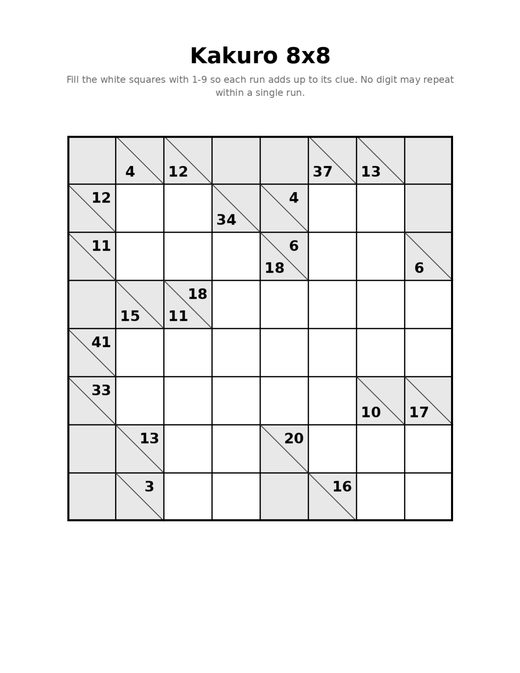 Kakuro 8x8 09Download PDF ↓
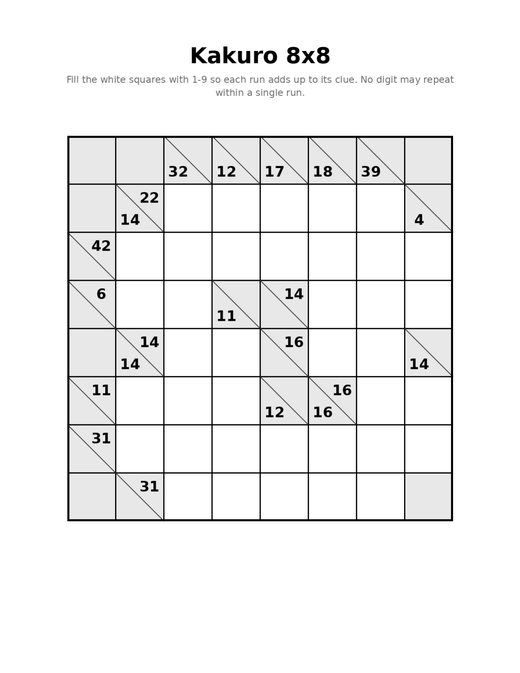 Kakuro 8x8 10Download PDF ↓