Kakuro Puzzles — 12x12
Free printable 12x12 kakuro puzzles as PDFs with answer pages. Large cross-sum grids for experienced solvers. No sign-up required.
⬇ Download all 10 as one PDF — free, no sign-upThis is the largest kakuro size on the site, and it is a proper sitting rather than a coffee-break puzzle. Twelve by twelve gives room for runs of seven, eight and nine cells, where the sum tells you the set of digits but almost nothing about their order — the ordering comes entirely from the crossings. Solvers who enjoy the bookkeeping side of puzzles will find these the most rewarding kakuro here; solvers who prefer quick wins should stay on the 8x8 grids.
One 12x12 kakuro grid per page, printed to keep white cells writable and clue triangles legible at the larger scale. Across and down totals are positioned so they never collide when a clue cell carries both. Each puzzle is paired with an answer page showing the completed grid. Black and white, one puzzle per US Letter sheet.
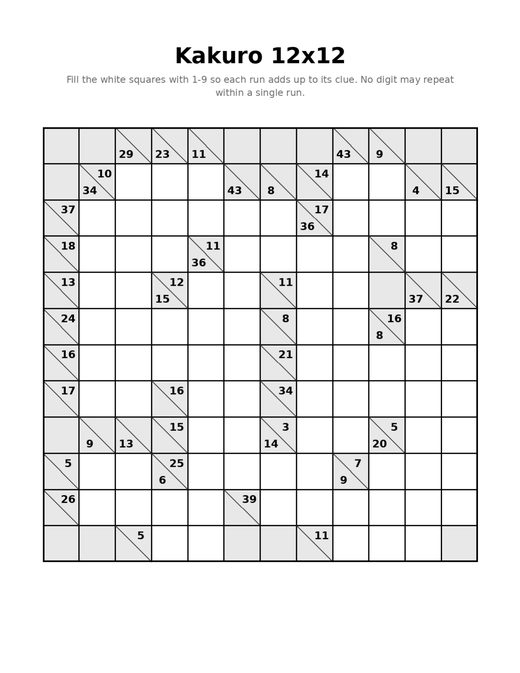 Kakuro 12x12 01Download PDF ↓
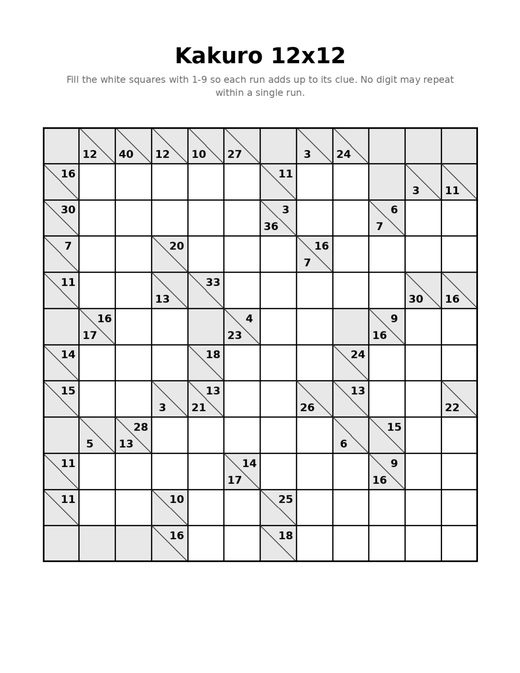 Kakuro 12x12 02Download PDF ↓
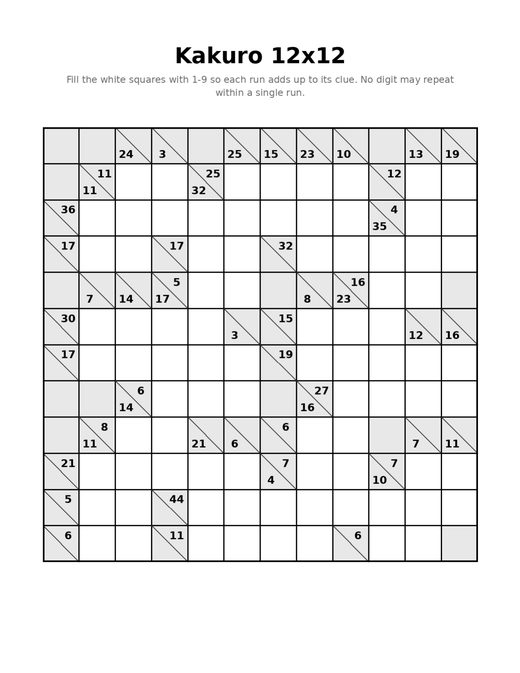 Kakuro 12x12 03Download PDF ↓
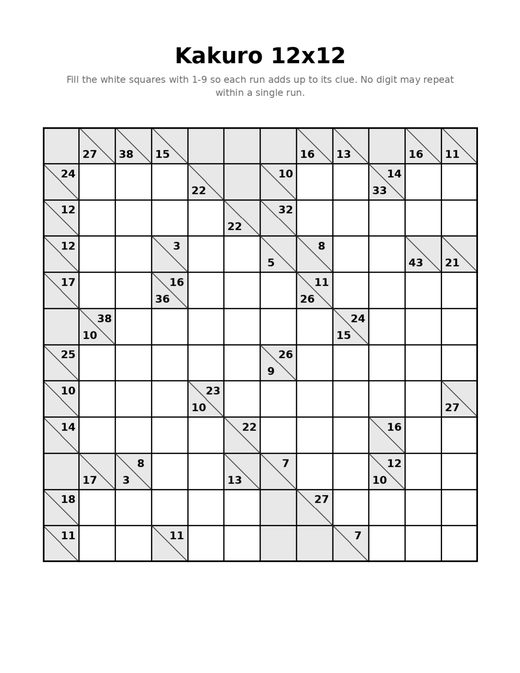 Kakuro 12x12 04Download PDF ↓
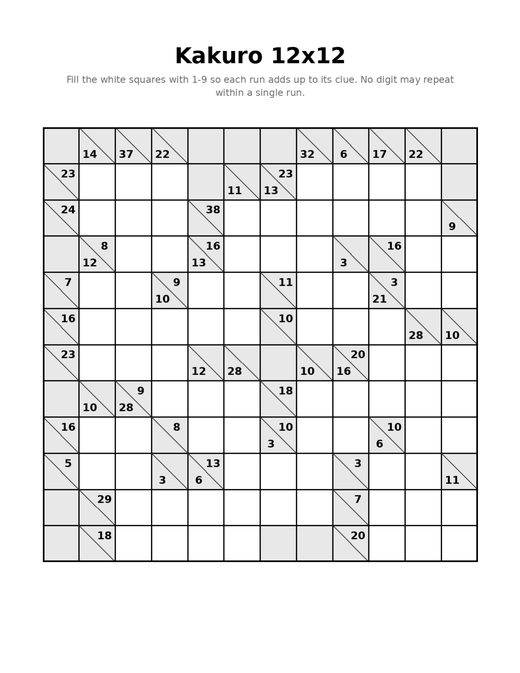 Kakuro 12x12 05Download PDF ↓
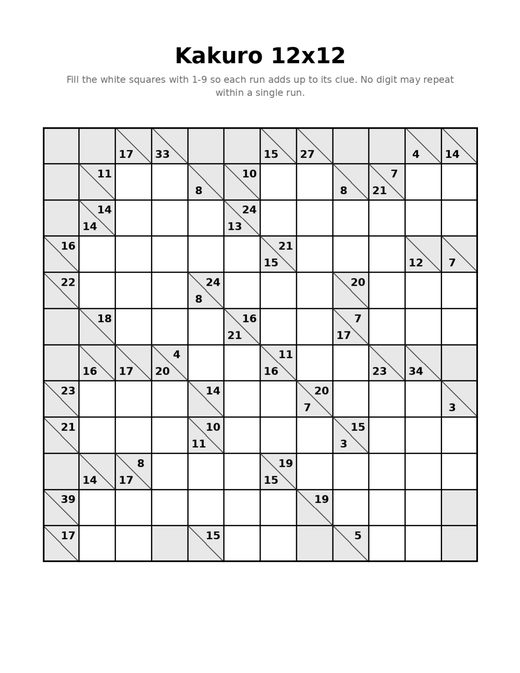 Kakuro 12x12 06Download PDF ↓
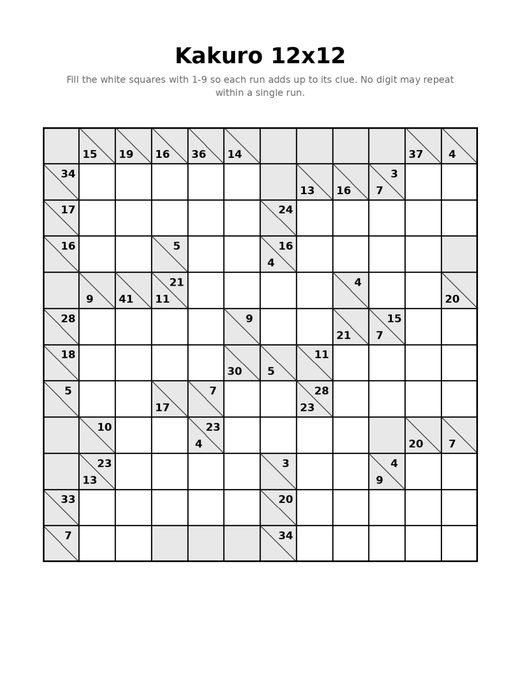 Kakuro 12x12 07Download PDF ↓
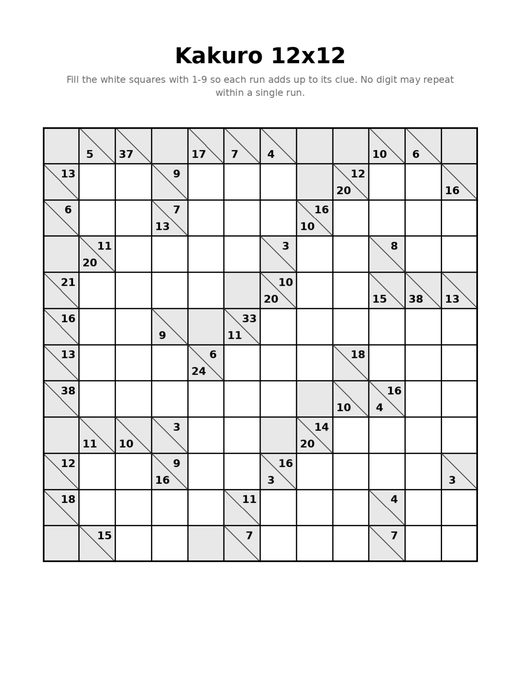 Kakuro 12x12 08Download PDF ↓
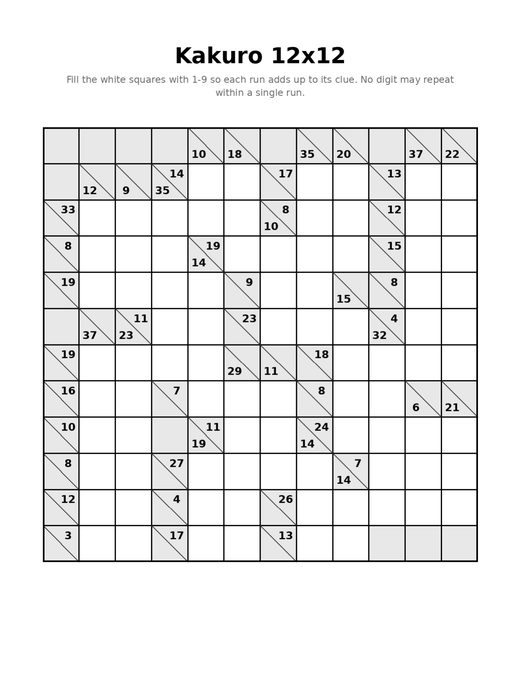 Kakuro 12x12 09Download PDF ↓
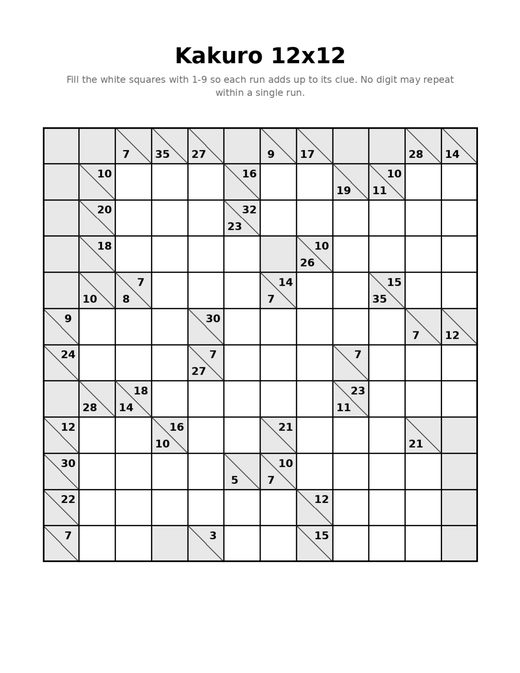 Kakuro 12x12 10Download PDF ↓