Long Division Worksheets
Free printable long division worksheets as PDFs. Single and two-digit divisors with room to show working. No sign-up, no email.
⬇ Download all 10 as one PDF — free, no sign-upLong division is the first algorithm where a student has to keep four things going at once — divide, multiply, subtract, bring down — and most mistakes are bookkeeping rather than arithmetic. A digit written half a column to the left is the difference between 47 and 407. These sheets are laid out with that in mind: fewer questions per page than a drill sheet, and real vertical space beneath each one, because long division done in a cramped margin goes wrong for reasons that have nothing to do with understanding it.
Long division questions with single-digit divisors on the earlier sheets and two-digit divisors later, printed with the division bracket already drawn and plenty of clear space below each question for the working steps. Question counts are kept low per page so nothing has to be squeezed. One worksheet per US Letter page, black and white.
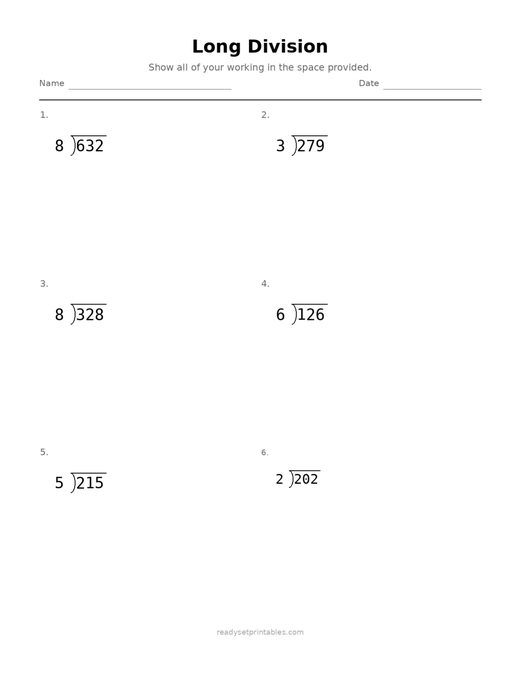 Long Division 01Download PDF ↓
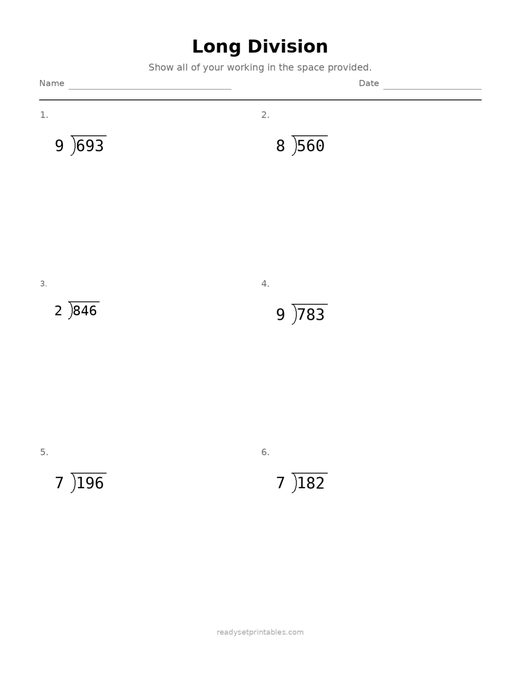 Long Division 02Download PDF ↓
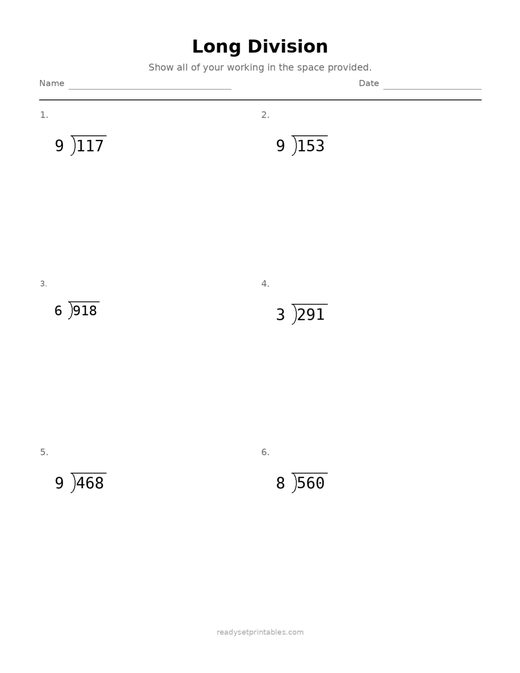 Long Division 03Download PDF ↓
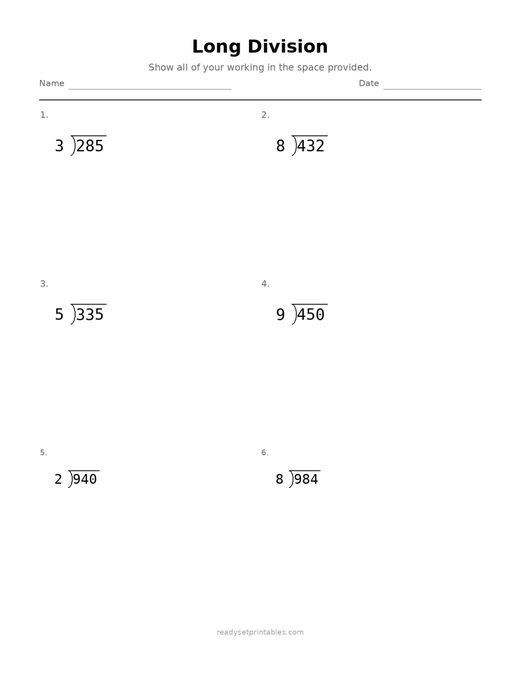 Long Division 04Download PDF ↓
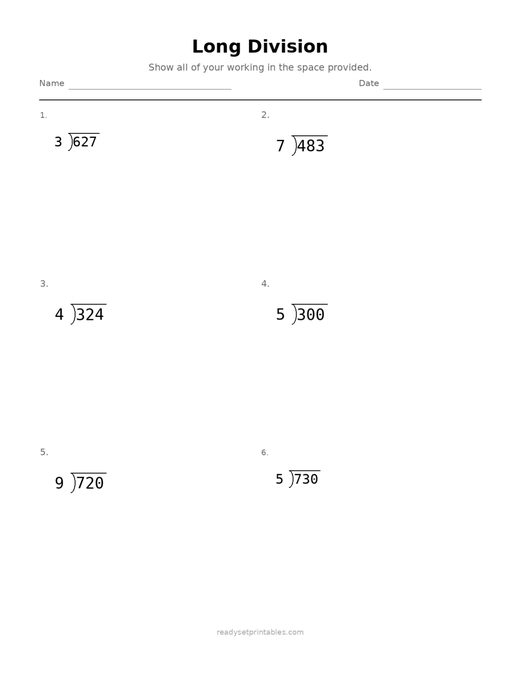 Long Division 05Download PDF ↓
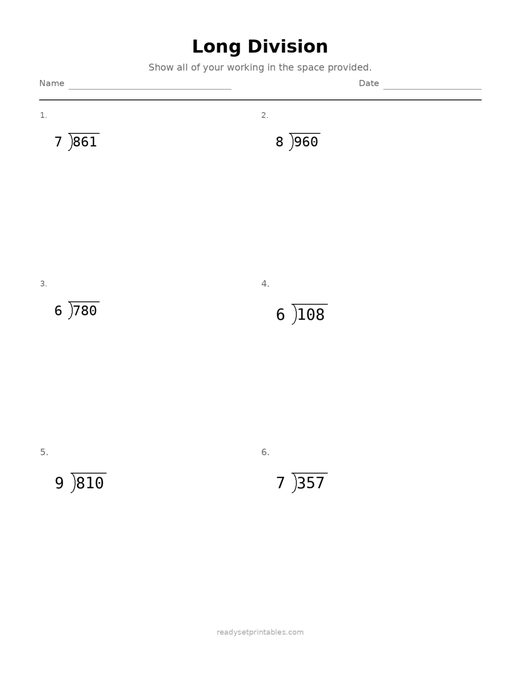 Long Division 06Download PDF ↓
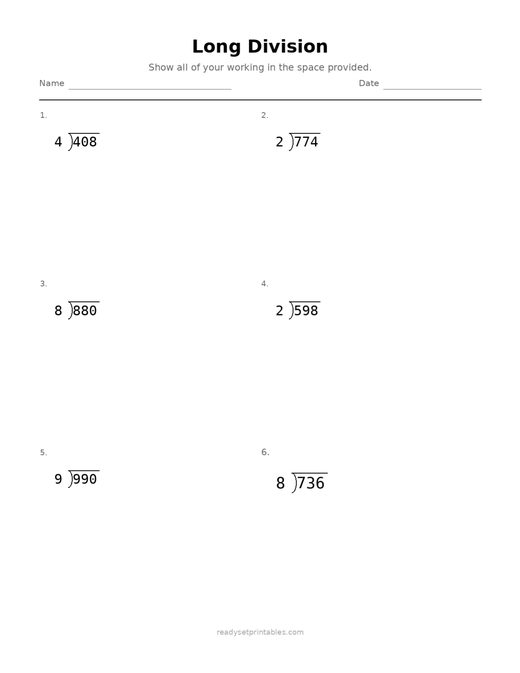 Long Division 07Download PDF ↓
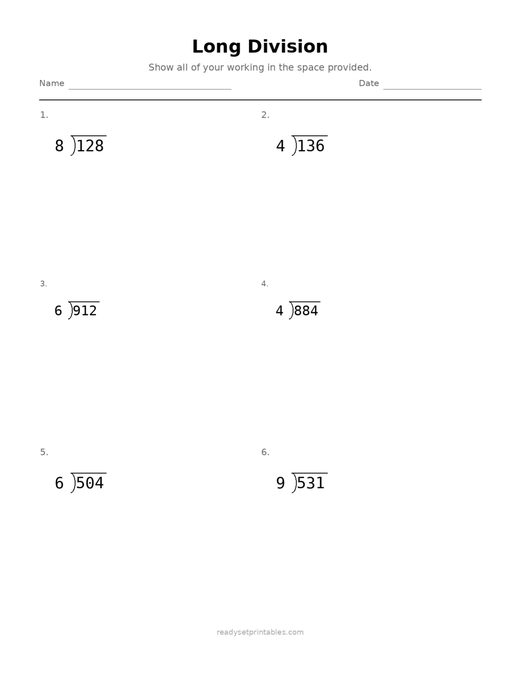 Long Division 08Download PDF ↓
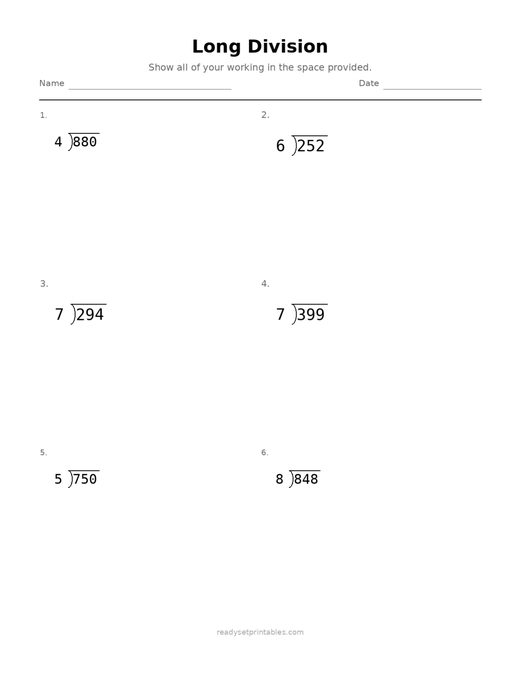 Long Division 09Download PDF ↓
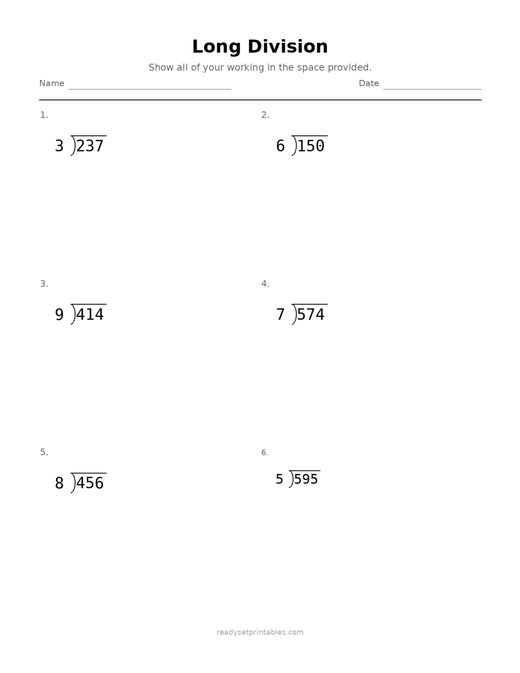 Long Division 10Download PDF ↓