Equivalent Fractions Worksheets
Free printable equivalent fractions worksheets as PDFs. Fraction bars, missing numerators and simplifying practice. No sign-up.
⬇ Download all 10 as one PDF — free, no sign-up- Sheets
- 10 printable PDFs
- Ages / grades
- Grade 4
- Answer keys
- Yes — on the last page of each PDF
- Paper
- US Letter, portrait; black and white
- Cost
- Free. No sign-up, no email, no watermark
- Use
- Print as many copies as you need for your own classroom or home. Not for resale or re-hosting
Equivalent fractions are the idea everything later in fractions depends on: that one half and three sixths are the same amount written differently. Students who take this on trust as a rule about multiplying top and bottom struggle the moment they meet addition with unlike denominators. These sheets start with shaded bars and shapes so the equality is something you can see, and only then move to the numerical work of finding a missing numerator or simplifying to lowest terms.
Sheets that begin with fraction bars and divided shapes to shade and compare, then move to missing-number questions of the form three quarters equals blank twelfths, and finally to simplifying fractions to their lowest terms. Later pages mix all three so students choose the approach. Diagrams are printed large and clearly divided. One worksheet per US Letter page, black and white.
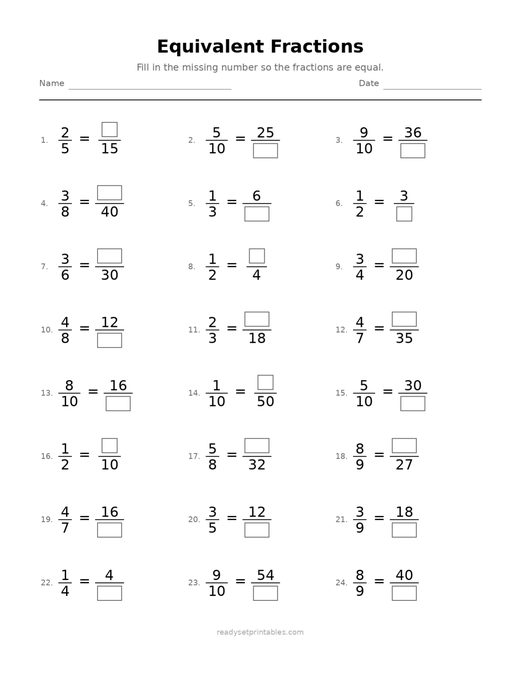 Equivalent Fractions 01Download PDF ↓
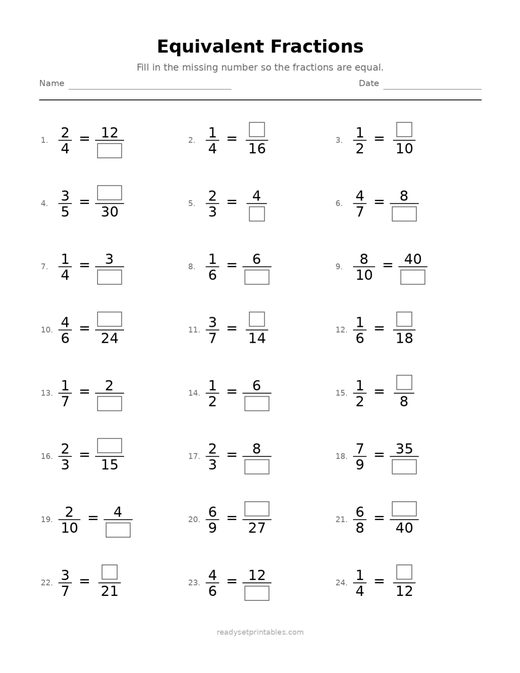 Equivalent Fractions 02Download PDF ↓
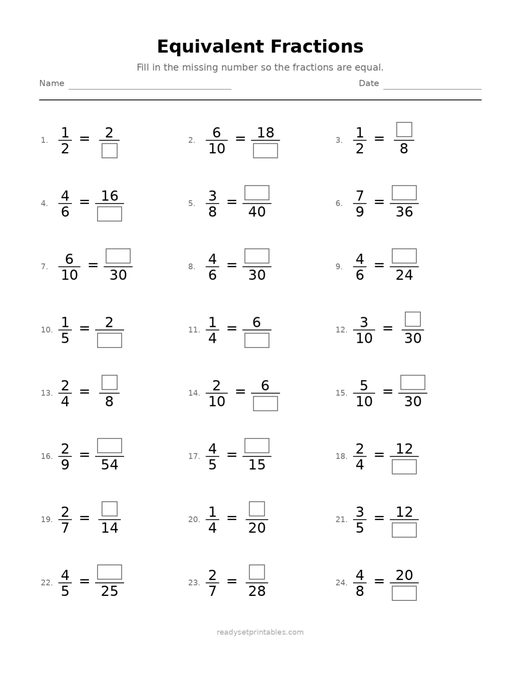 Equivalent Fractions 03Download PDF ↓
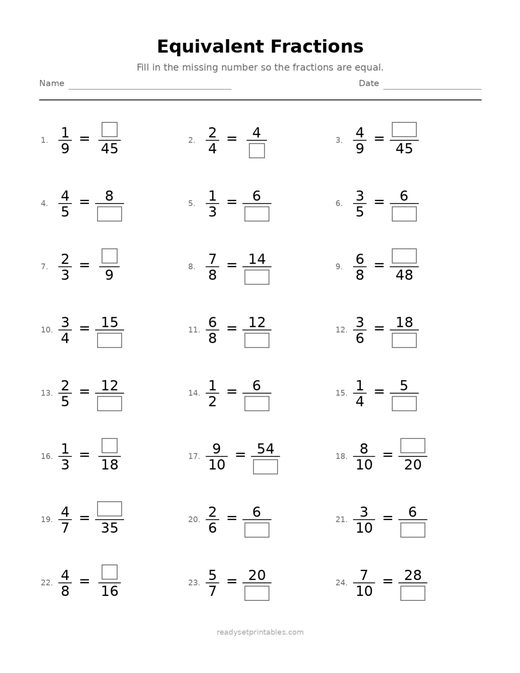 Equivalent Fractions 04Download PDF ↓
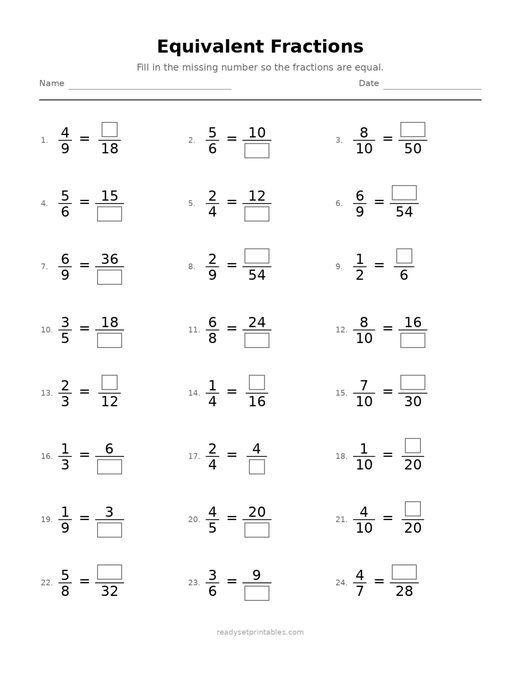 Equivalent Fractions 05Download PDF ↓
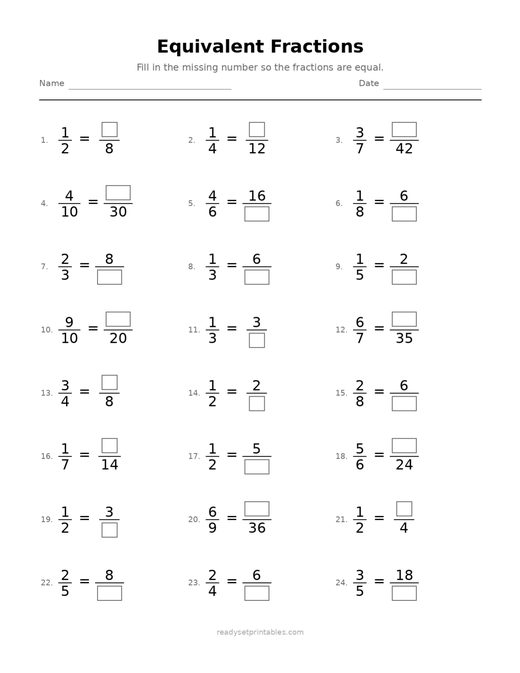 Equivalent Fractions 06Download PDF ↓
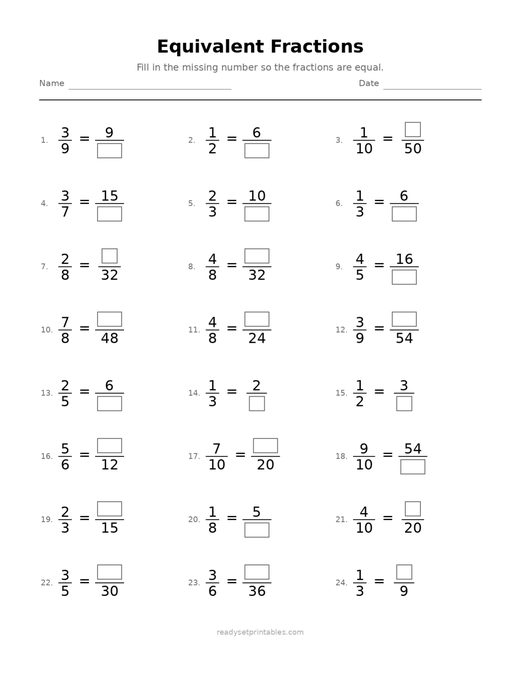 Equivalent Fractions 07Download PDF ↓
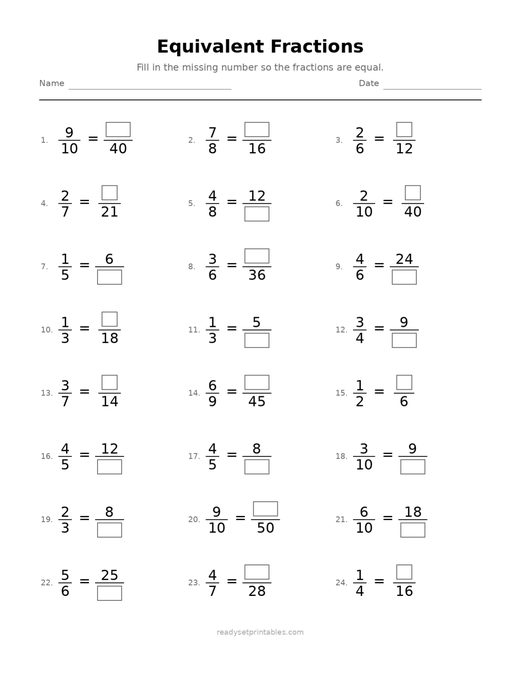 Equivalent Fractions 08Download PDF ↓
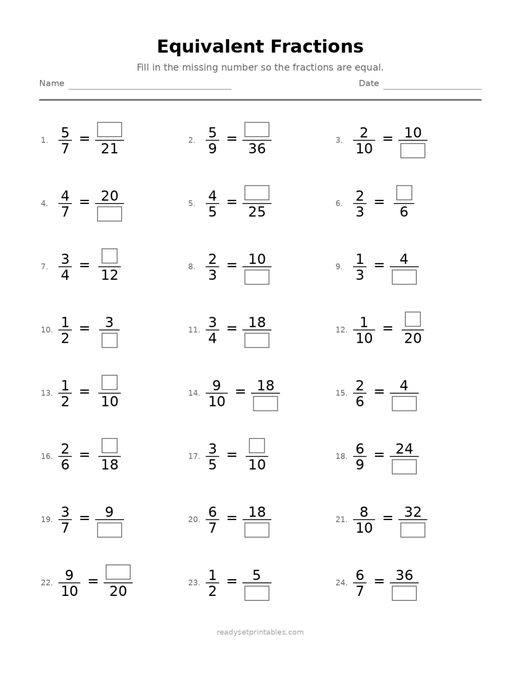 Equivalent Fractions 09Download PDF ↓
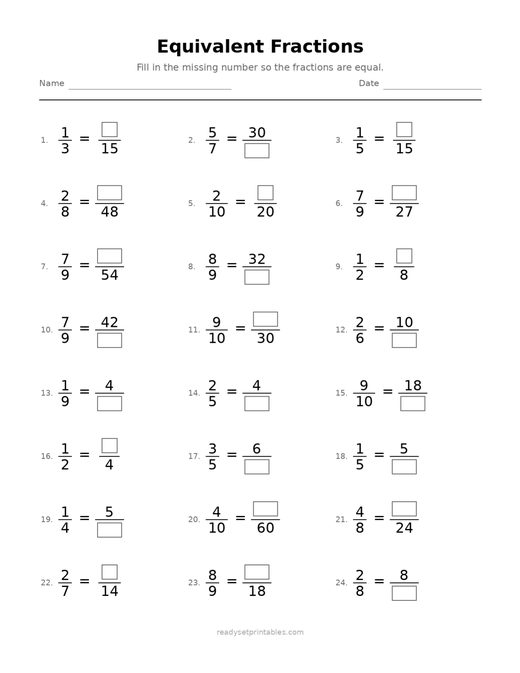 Equivalent Fractions 10Download PDF ↓