10 Times Table Worksheets
Free printable 10 times table worksheets as PDFs. Ordered, mixed and missing-number sheets for 10 x 1 to 10 x 12. No sign-up.
⬇ Download all 10 as one PDF — free, no sign-upThe ten times table is the one children learn without noticing, and it is also the one most often taught with a phrase that causes trouble later: add a zero. It works for whole numbers and then fails the moment decimals appear, because 10 x 2.5 is not 2.50. The honest version is that multiplying by ten shifts every digit one place to the left. These sheets keep the practice quick, since the facts themselves rarely need drilling, and use the space instead for missing numbers and division.
Ordered sheets from 10 x 1 to 10 x 12, mixed-order recall, and a larger proportion of missing-number and division rows than the other tables, since the forward facts are usually secure early. Some sheets extend past 12 into larger multiples to reinforce the place-value idea. One worksheet per US Letter page, black and white.
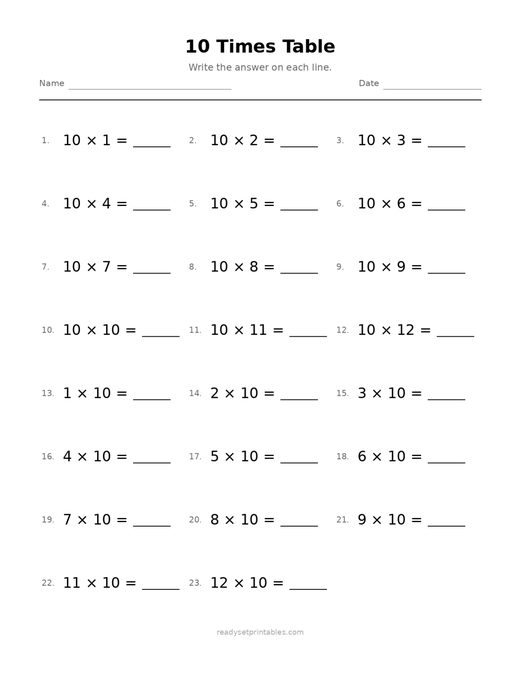 10 Times Table 01Download PDF ↓
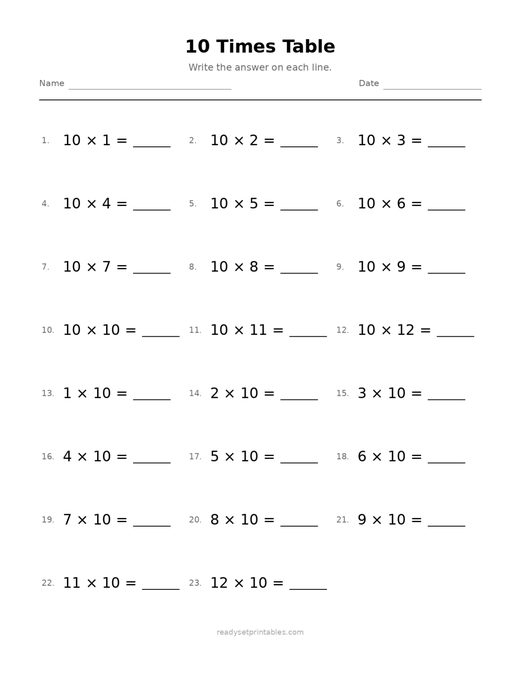 10 Times Table 02Download PDF ↓
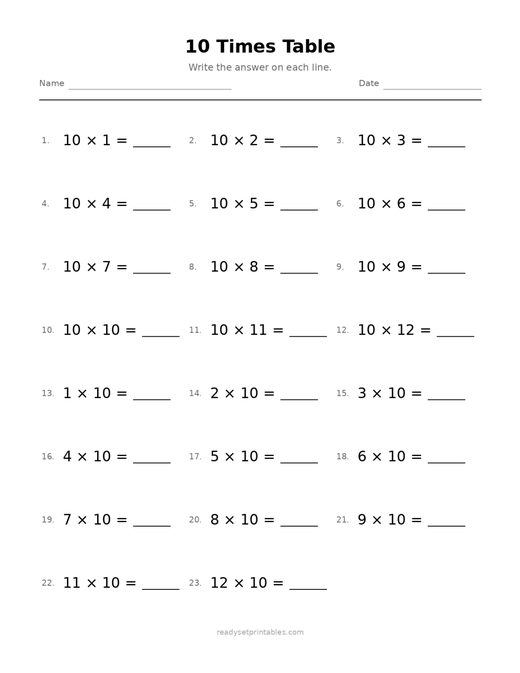 10 Times Table 03Download PDF ↓
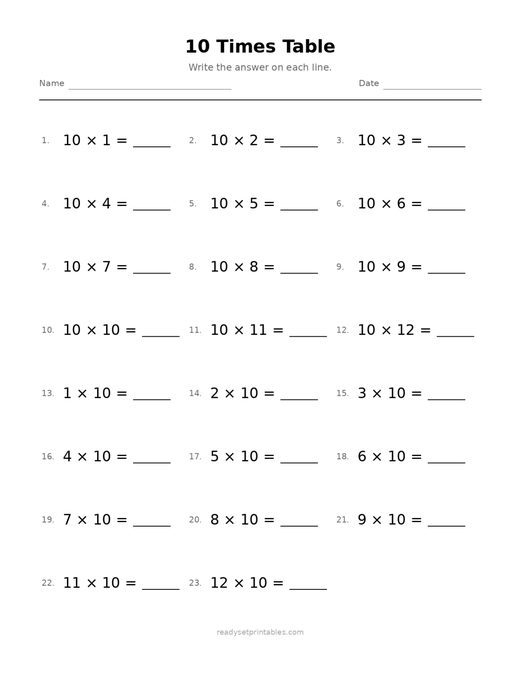 10 Times Table 04Download PDF ↓
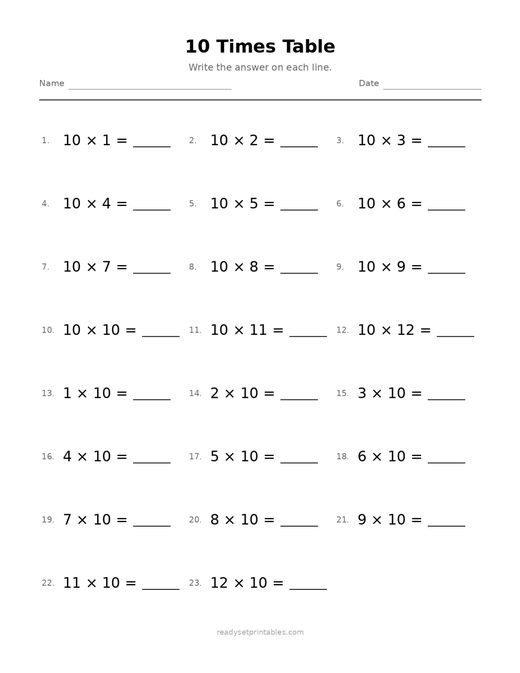 10 Times Table 05Download PDF ↓
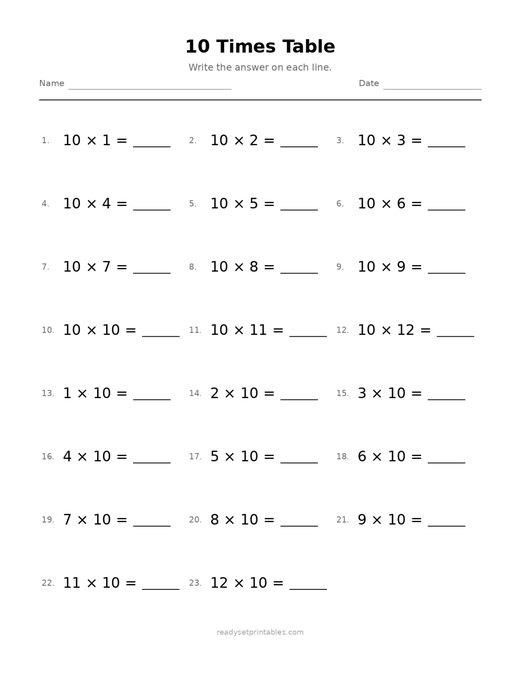 10 Times Table 06Download PDF ↓
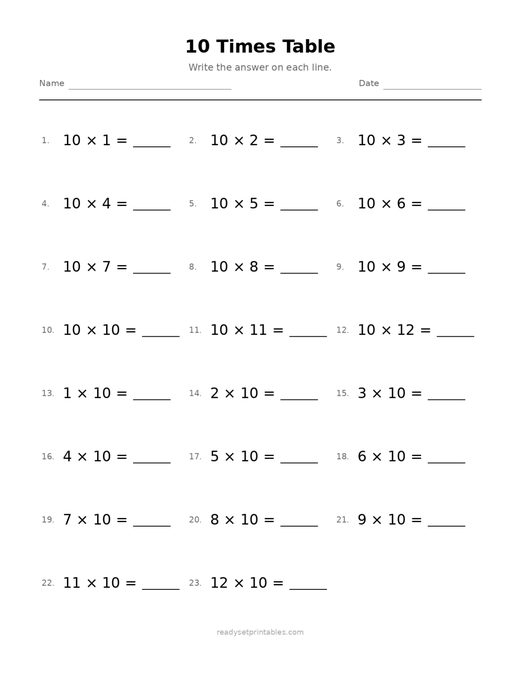 10 Times Table 07Download PDF ↓
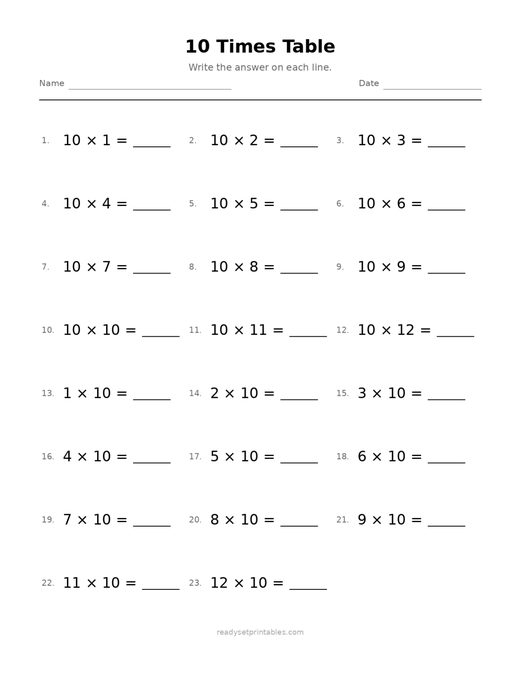 10 Times Table 08Download PDF ↓
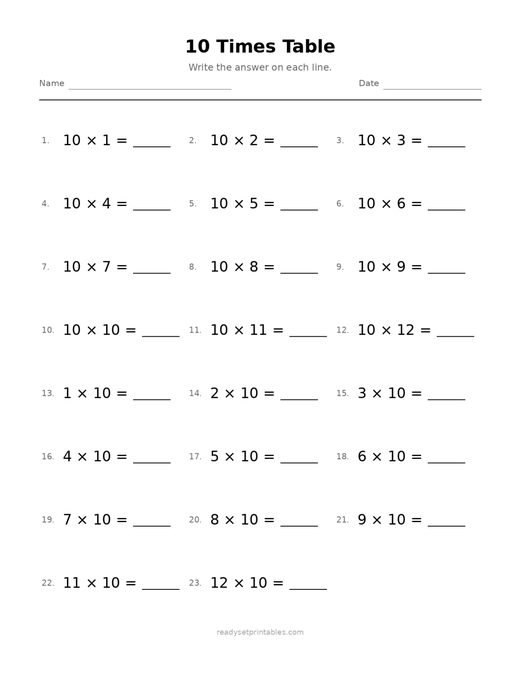 10 Times Table 09Download PDF ↓
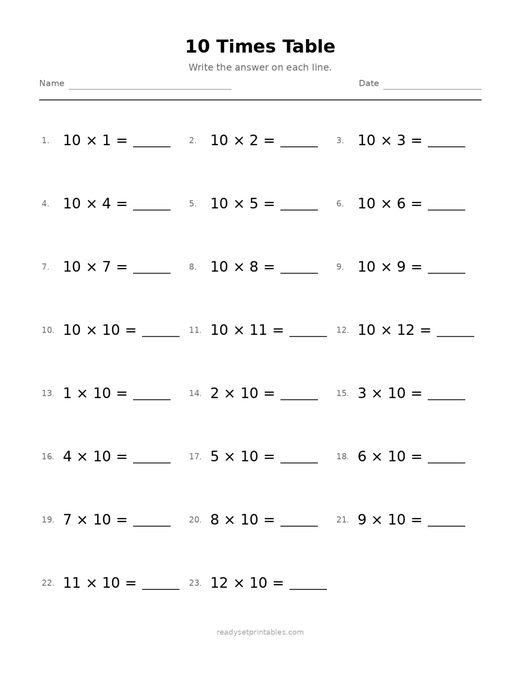 10 Times Table 10Download PDF ↓