11 Times Table Worksheets
Free printable 11 times table worksheets as PDFs. Ordered, mixed and missing-number practice for 11 x 1 to 11 x 12. No sign-up.
⬇ Download all 10 as one PDF — free, no sign-upFor the first nine facts the eleven times table barely counts as work: 11, 22, 33, 44 — the digit simply repeats. That makes it the table children learn quickest and the one they are most likely to get wrong, because the repeating pattern stops at 11 x 9 and then 11 x 10, 11 x 11 and 11 x 12 give 110, 121 and 132. Those last three are the whole point of practicing this table, and these sheets weight the mixed-order pages accordingly rather than pretending the pattern continues.
Ordered sheets from 11 x 1 to 11 x 12 where the repeating-digit pattern is visible, mixed-order recall pages that give extra weight to the three facts past the pattern break, and missing-number rows in both directions. Division facts appear on the later sheets. One worksheet per US Letter page, black and white.
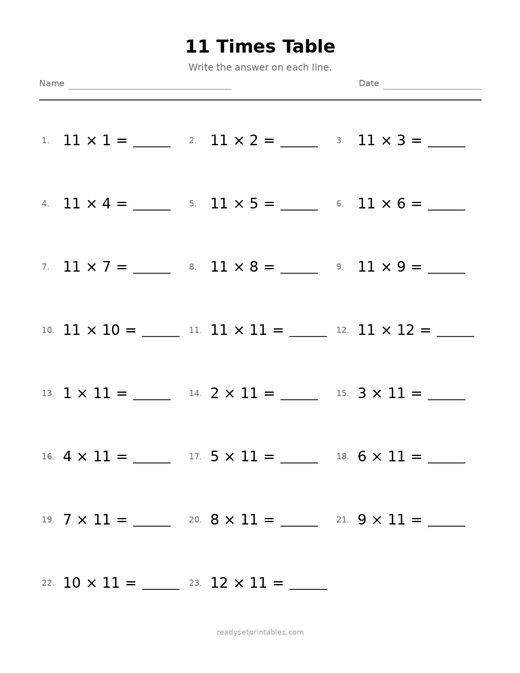 11 Times Table 01Download PDF ↓
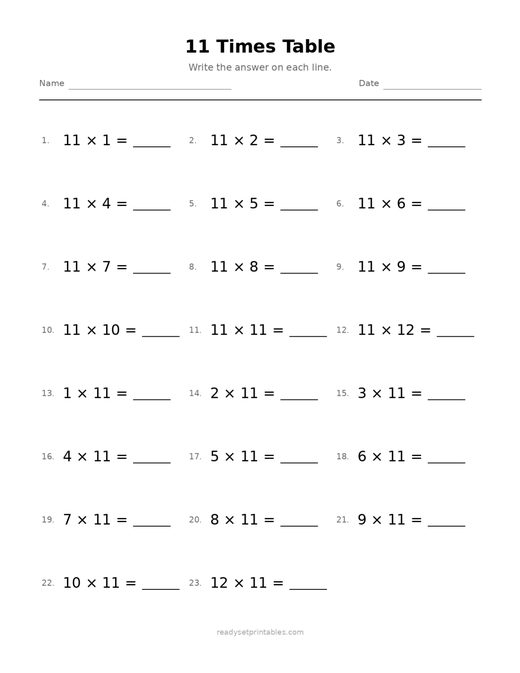 11 Times Table 02Download PDF ↓
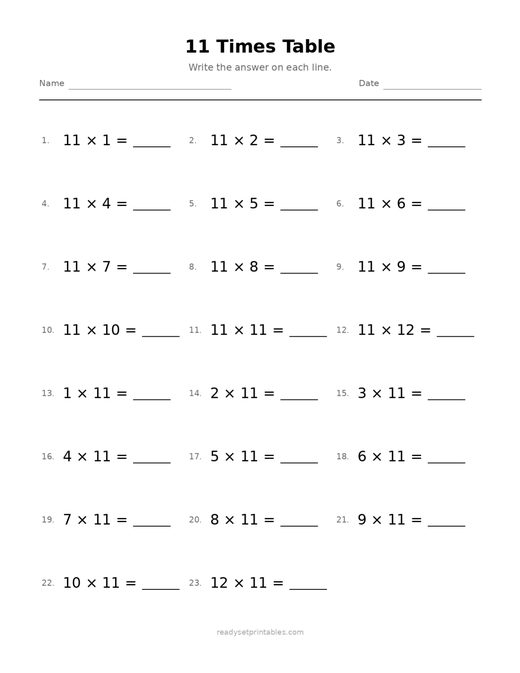 11 Times Table 03Download PDF ↓
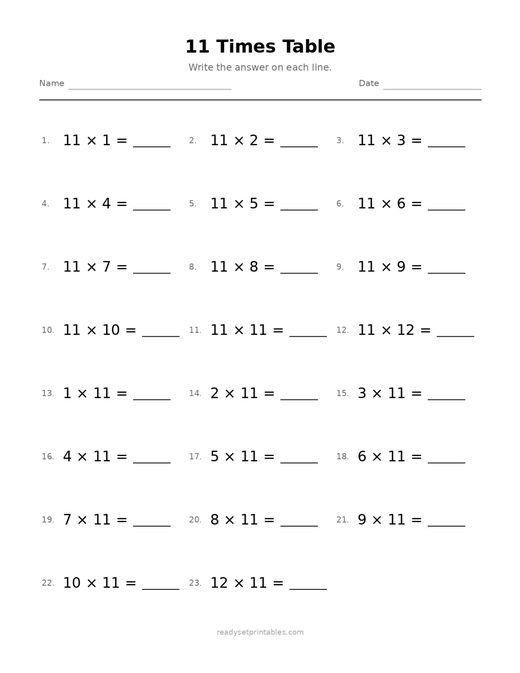 11 Times Table 04Download PDF ↓
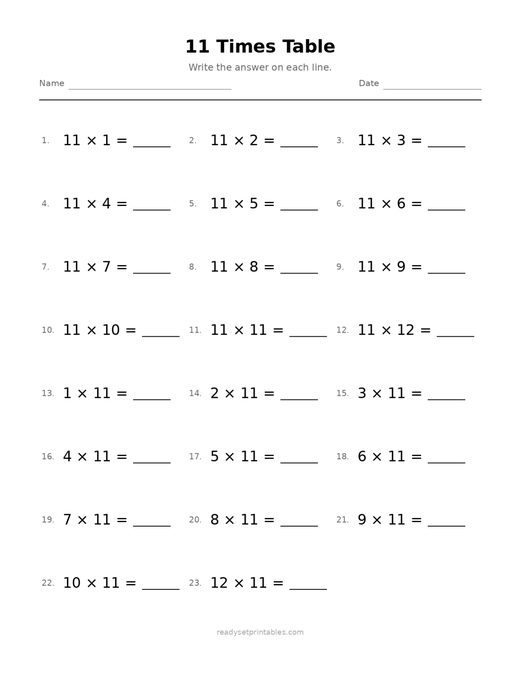 11 Times Table 05Download PDF ↓
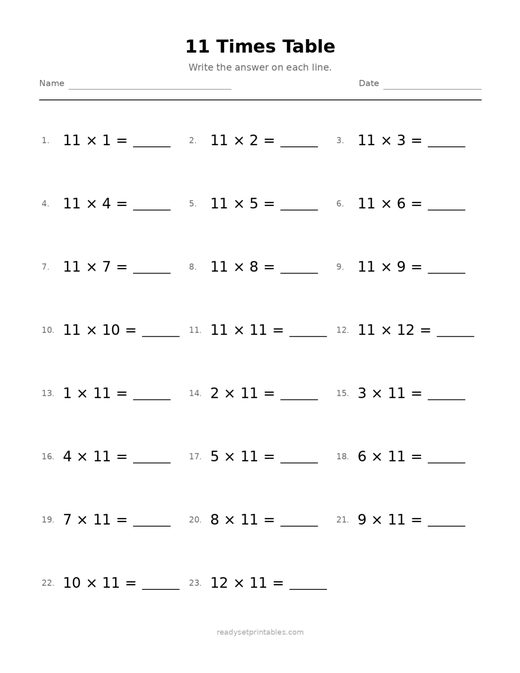 11 Times Table 06Download PDF ↓
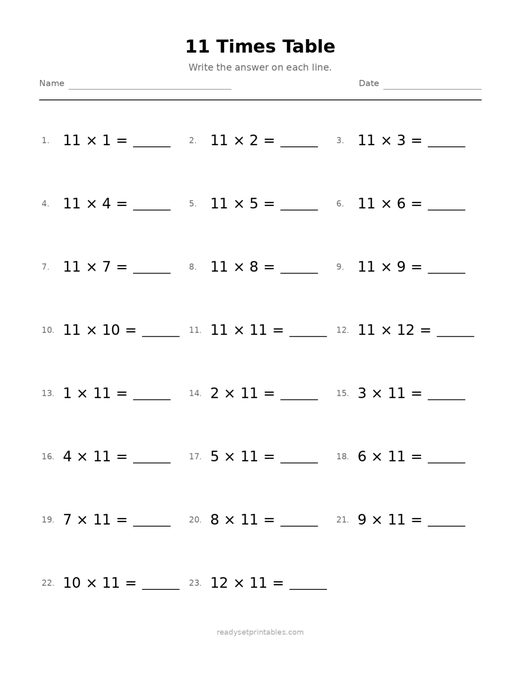 11 Times Table 07Download PDF ↓
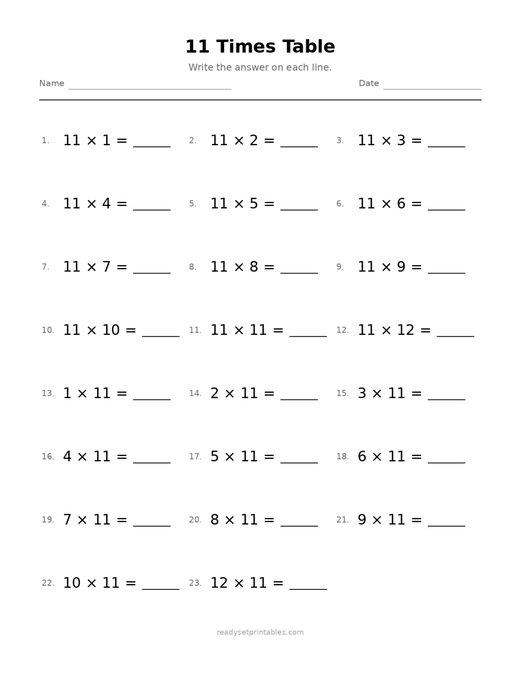 11 Times Table 08Download PDF ↓
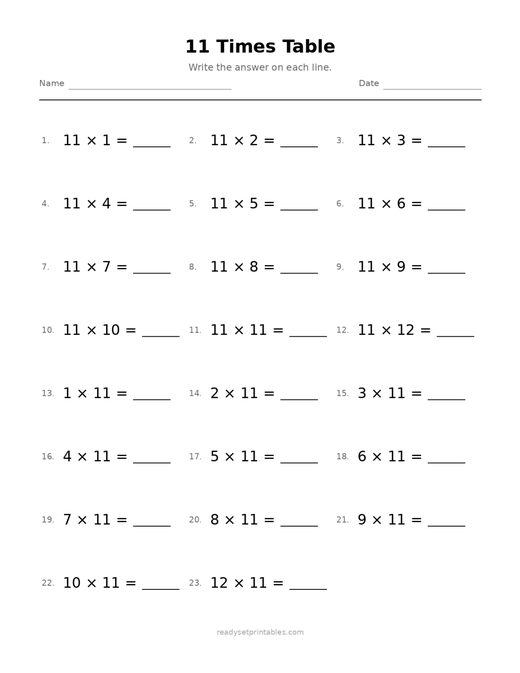 11 Times Table 09Download PDF ↓
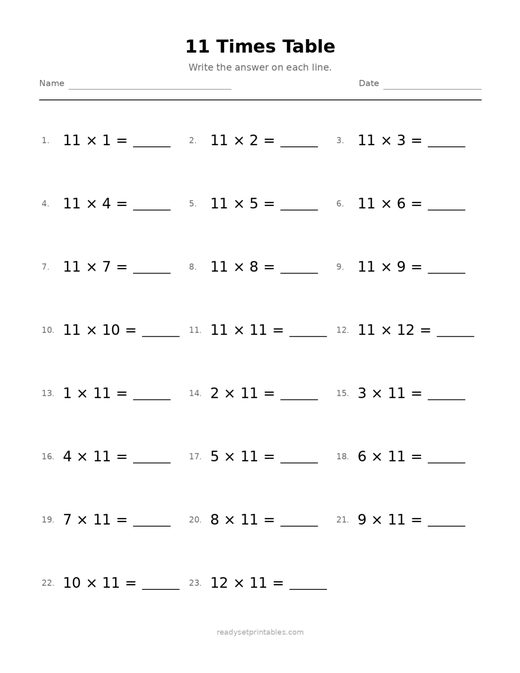 11 Times Table 10Download PDF ↓