12 Times Table Worksheets
Free printable 12 times table worksheets as PDFs. Ordered, mixed and missing-number sheets for 12 x 1 to 12 x 12. No sign-up.
⬇ Download all 10 as one PDF — free, no sign-upTwelve is the last table most schools ask for, and it is more approachable than its position suggests because it splits cleanly: 12 x 7 is 10 x 7 plus 2 x 7, which is 70 plus 14. Anyone secure on the tens and twos can reach every fact this way. It is also the most practically useful of the large tables, since twelve is the number behind dozens, inches in a foot, months in a year and the hours on a clock face.
Ordered practice from 12 x 1 to 12 x 12, mixed-order recall sheets, and missing-number rows in both directions. Some pages show each fact broken into its ten and two parts so the partitioning method is on the page. Division facts drawn from the same table appear on the later sheets. One worksheet per US Letter page, black and white.
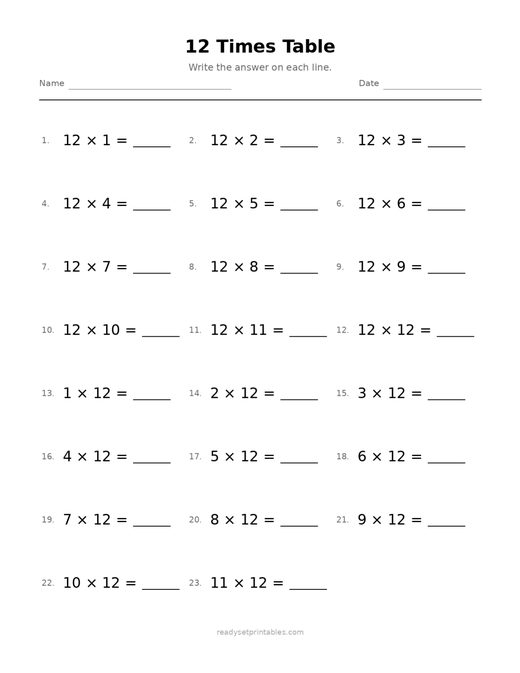 12 Times Table 01Download PDF ↓
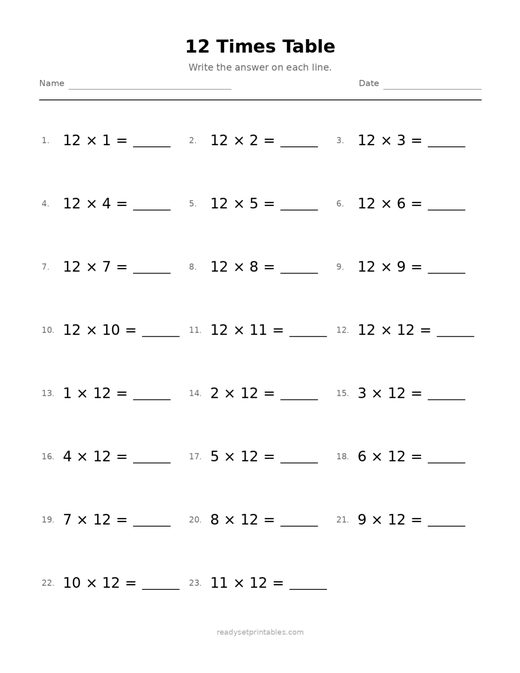 12 Times Table 02Download PDF ↓
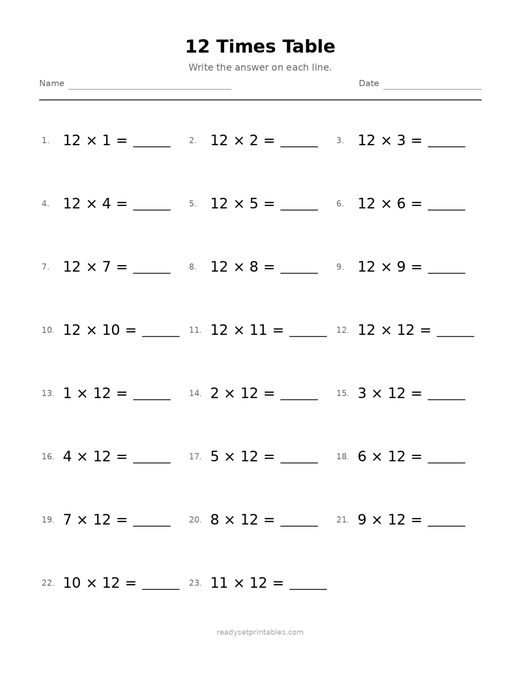 12 Times Table 03Download PDF ↓
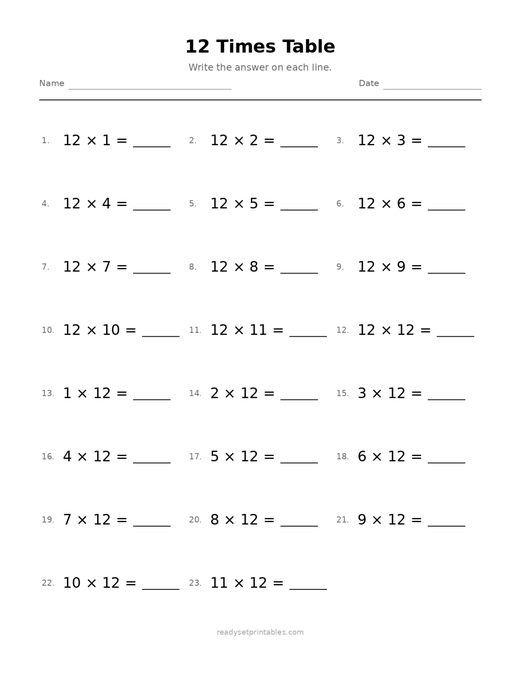 12 Times Table 04Download PDF ↓
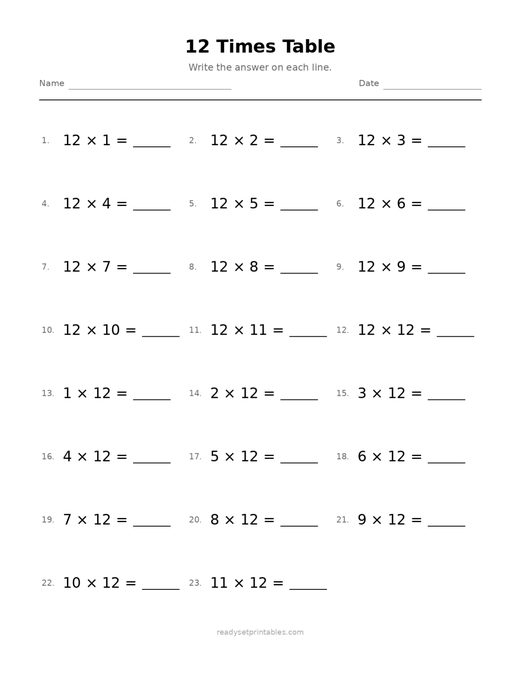 12 Times Table 05Download PDF ↓
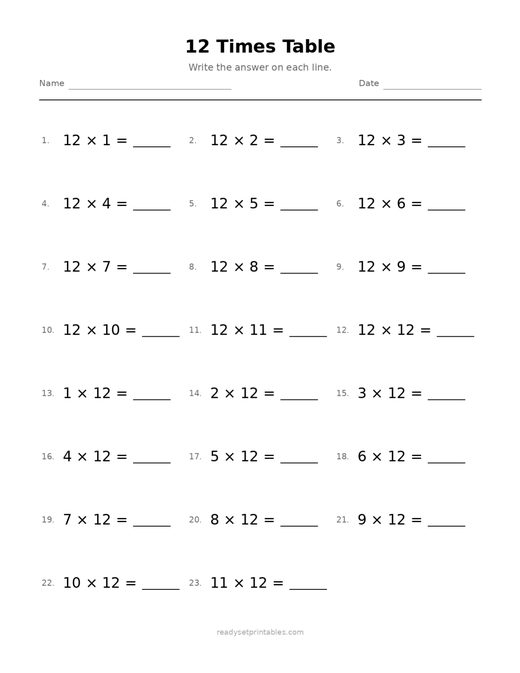 12 Times Table 06Download PDF ↓
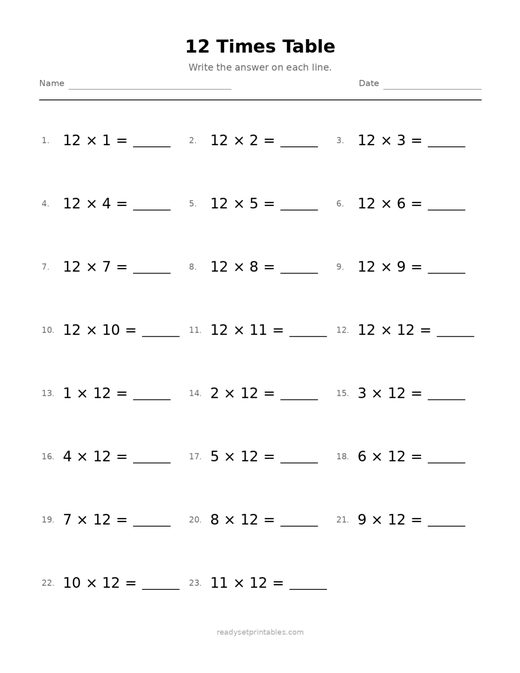 12 Times Table 07Download PDF ↓
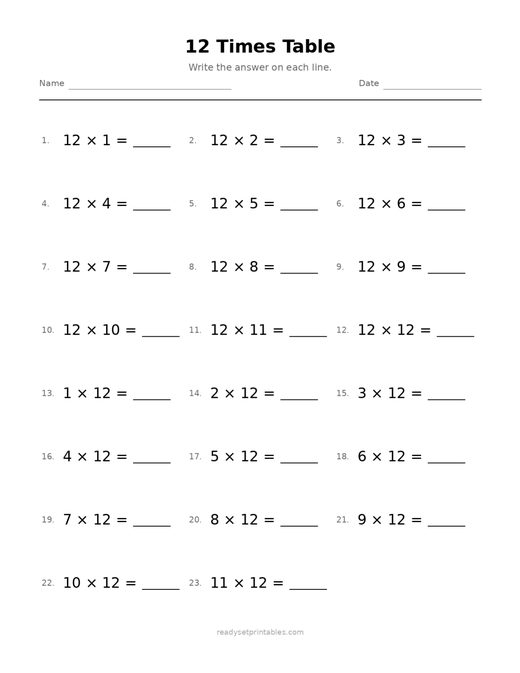 12 Times Table 08Download PDF ↓
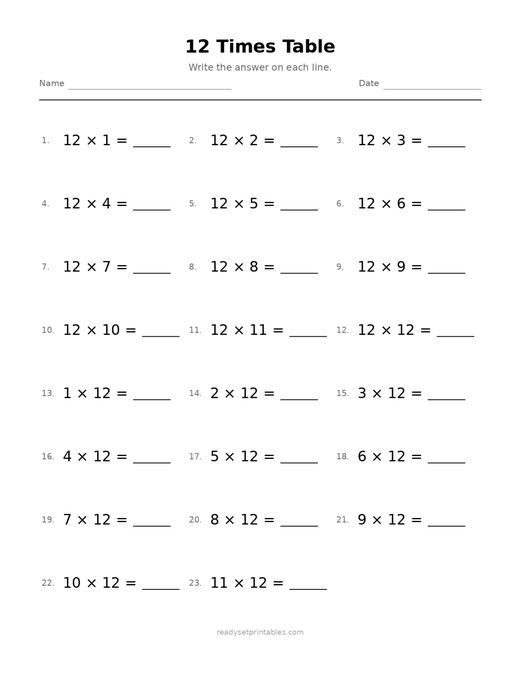 12 Times Table 09Download PDF ↓
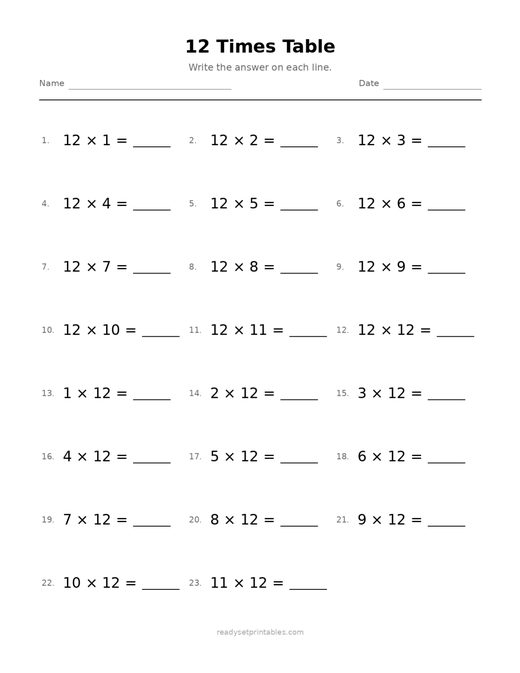 12 Times Table 10Download PDF ↓