3 Times Table Worksheets
Free printable 3 times table worksheets as PDFs. In-order, mixed and missing-number practice for 3 x 1 to 3 x 12. No sign-up.
⬇ Download all 10 as one PDF — free, no sign-upThe three times table is the first one without an obvious shortcut. There is no doubling to fall back on and the answers do not end in a tidy repeating digit, so this is usually where a child stops deriving and starts genuinely remembering. The one pattern worth teaching is the digit sum: every multiple of three has digits that add to a multiple of three, which turns 27 and 51 from things to be checked into things that can be recognized at a glance.
Ordered sheets running 3 x 1 through 3 x 12, mixed-order recall sheets, and missing-number rows in both directions. Later pages include division facts drawn from the same table so the relationship between 3 x 8 and 24 divided by 3 stays visible. Clear row spacing, one worksheet per US Letter page, printed black on white.
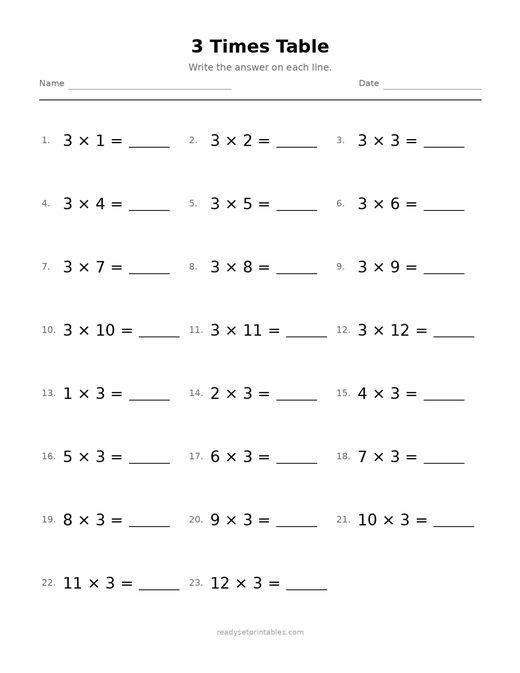 3 Times Table 01Download PDF ↓
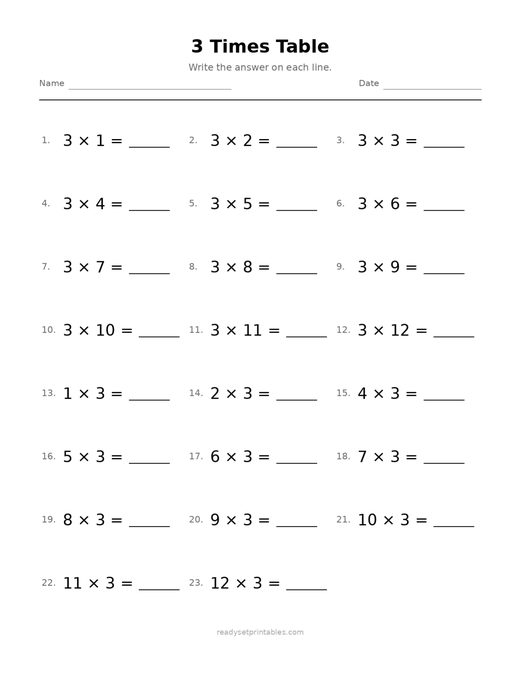 3 Times Table 02Download PDF ↓
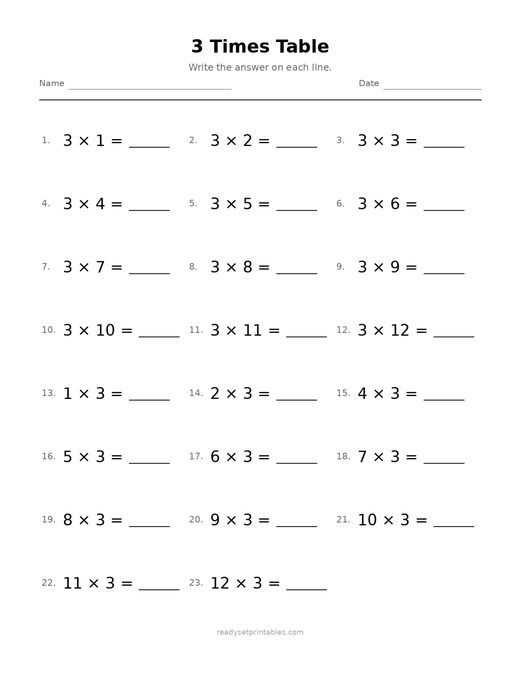 3 Times Table 03Download PDF ↓
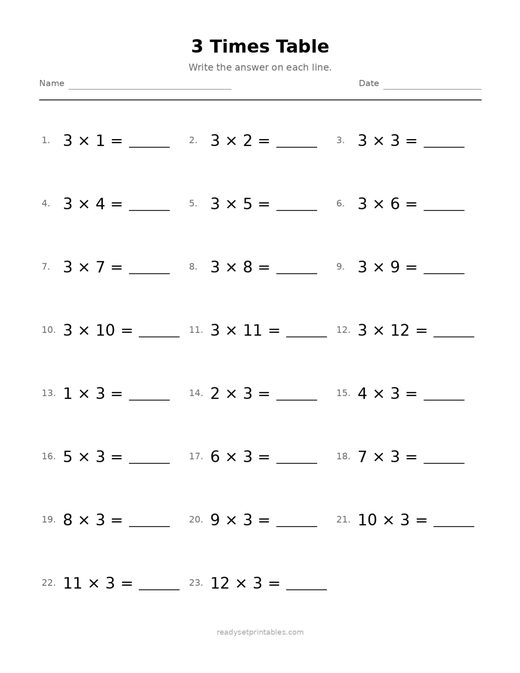 3 Times Table 04Download PDF ↓
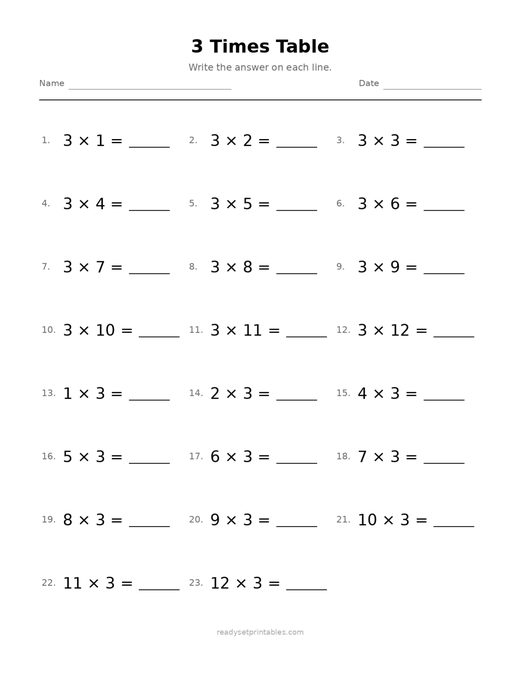 3 Times Table 05Download PDF ↓
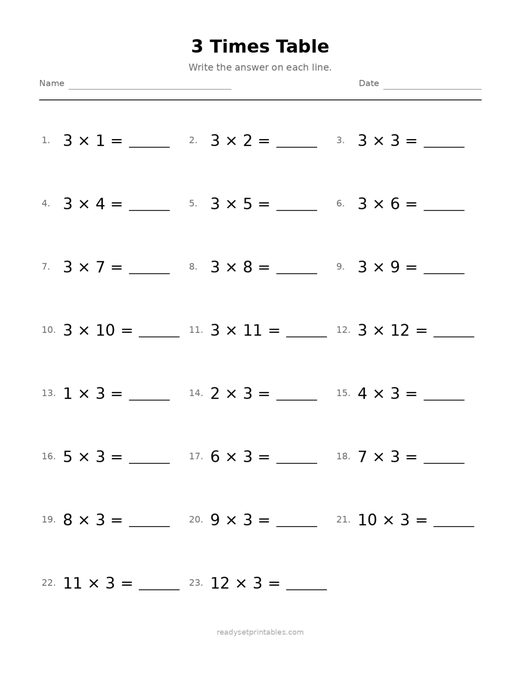 3 Times Table 06Download PDF ↓
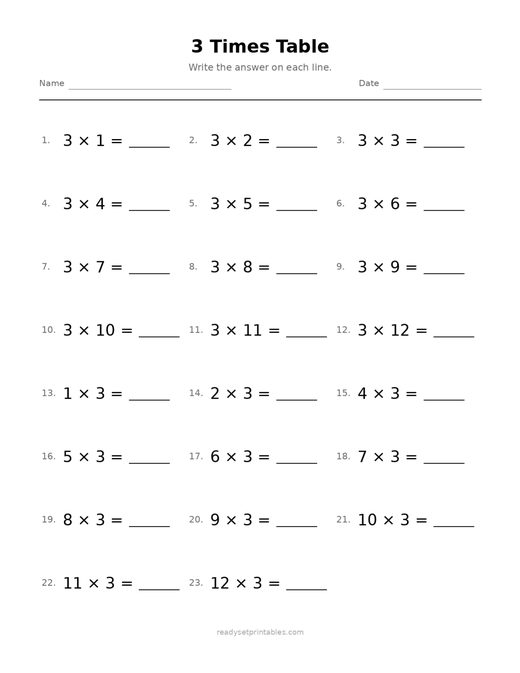 3 Times Table 07Download PDF ↓
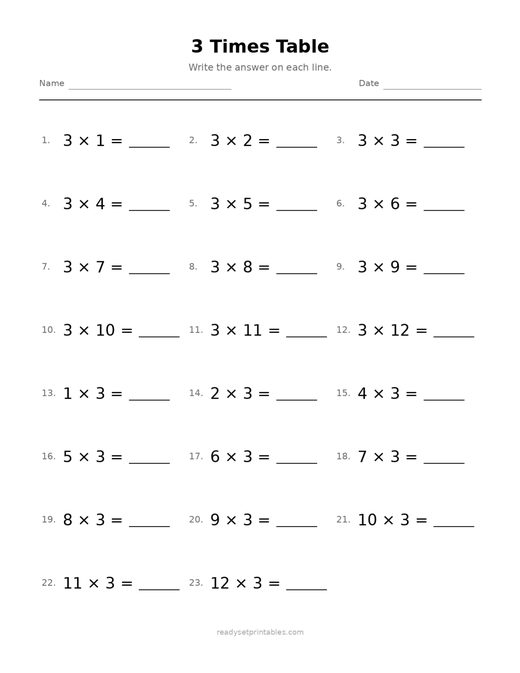 3 Times Table 08Download PDF ↓
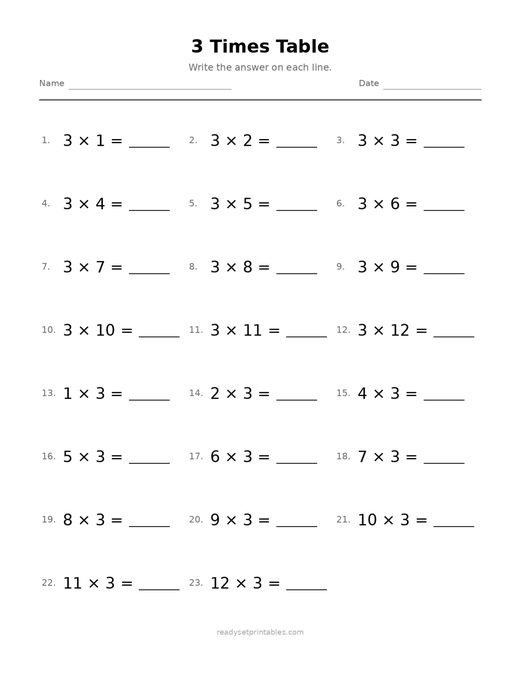 3 Times Table 09Download PDF ↓
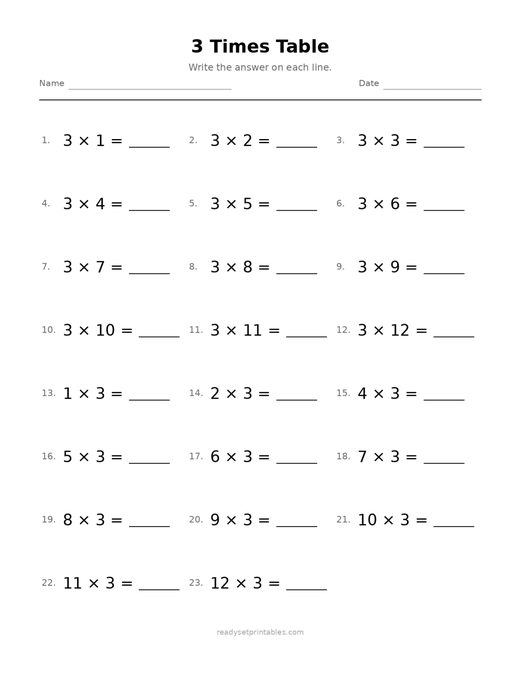 3 Times Table 10Download PDF ↓