5 Times Table Worksheets
Free printable 5 times table worksheets as PDFs. Ordered, mixed and missing-number practice for 5 x 1 to 5 x 12. No sign-up.
⬇ Download all 10 as one PDF — free, no sign-up- Sheets
- 10 printable PDFs
- Ages / grades
- Grades 2–5
- Answer keys
- Yes — on the last page of each PDF
- Paper
- US Letter, portrait; black and white
- Cost
- Free. No sign-up, no email, no watermark
- Use
- Print as many copies as you need for your own classroom or home. Not for resale or re-hosting
Five is the table children usually learn fastest, because every answer ends in a 5 or a 0 and the alternation is impossible to miss. It is also the most useful one outside the classroom: it is the table behind reading a clock face, counting money in nickels, and tallying in fives. These sheets start with the ordered count that makes the pattern obvious, then move to mixed recall, because the danger with an easy table is that children keep counting up rather than knowing the facts outright.
Ordered sheets from 5 x 1 to 5 x 12, mixed-order recall practice, and missing-number rows in both directions. Later sheets bring in the matching division facts. Row spacing is generous and each worksheet fits a single US Letter page in black and white, so a set for a class is one print job.
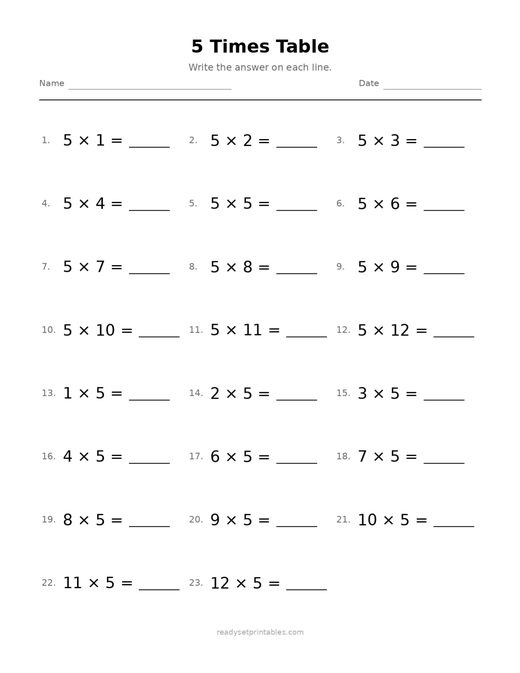 5 Times Table 01Download PDF ↓
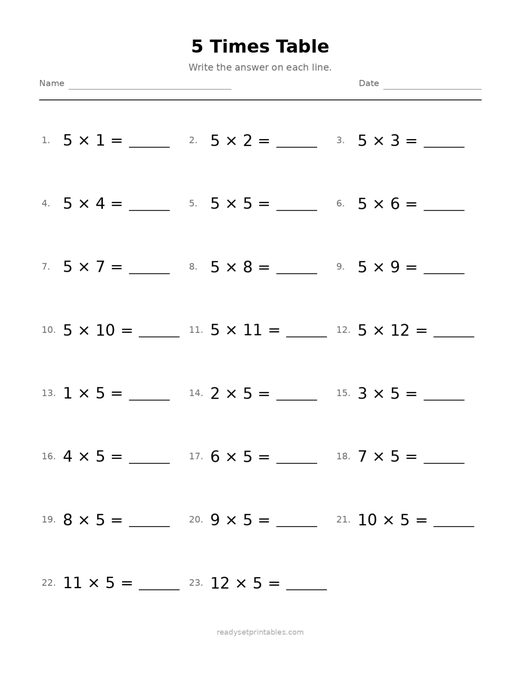 5 Times Table 02Download PDF ↓
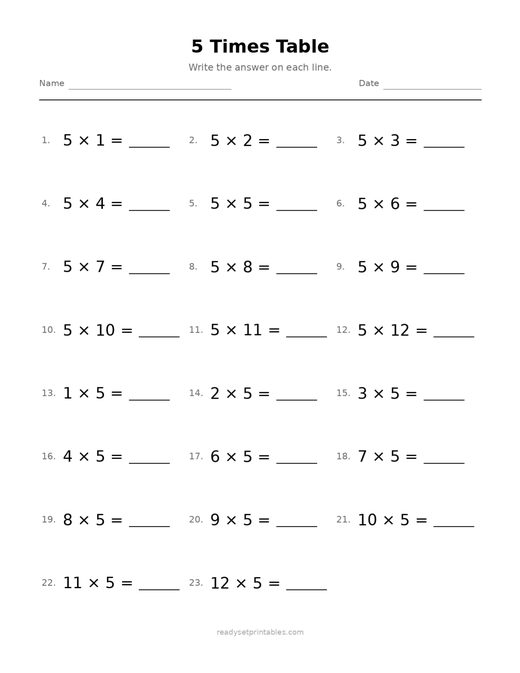 5 Times Table 03Download PDF ↓
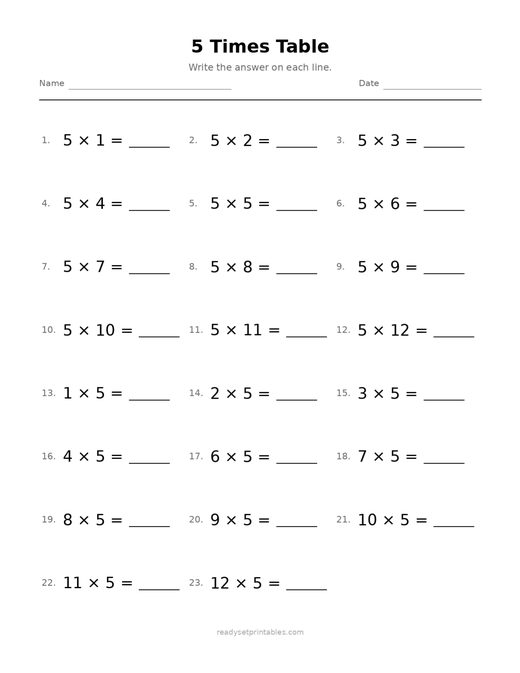 5 Times Table 04Download PDF ↓
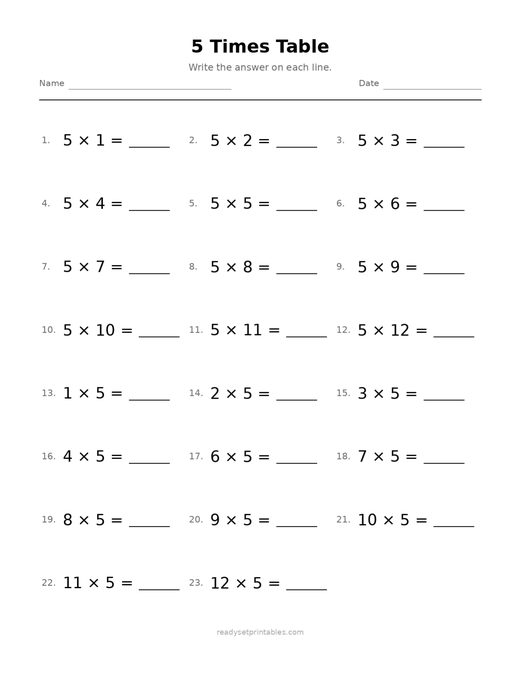 5 Times Table 05Download PDF ↓
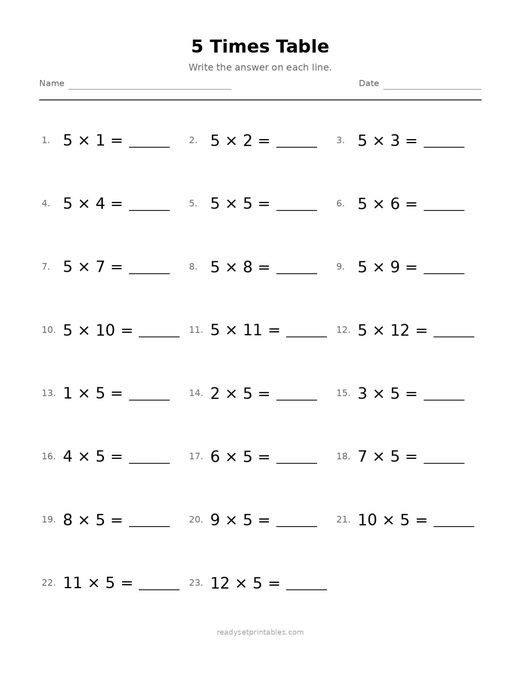 5 Times Table 06Download PDF ↓
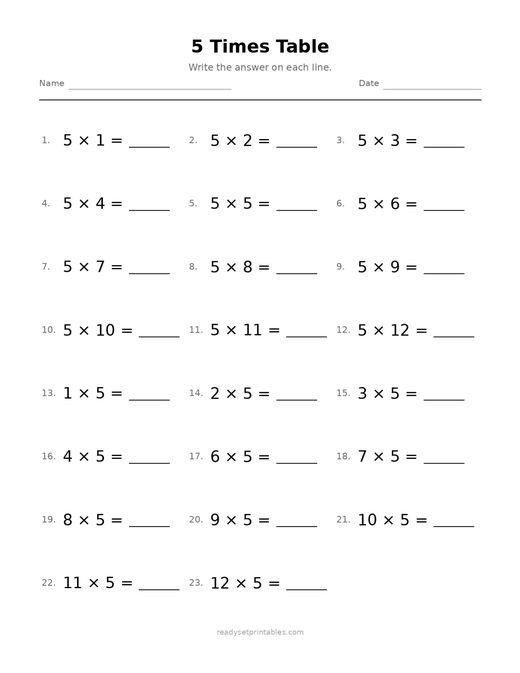 5 Times Table 07Download PDF ↓
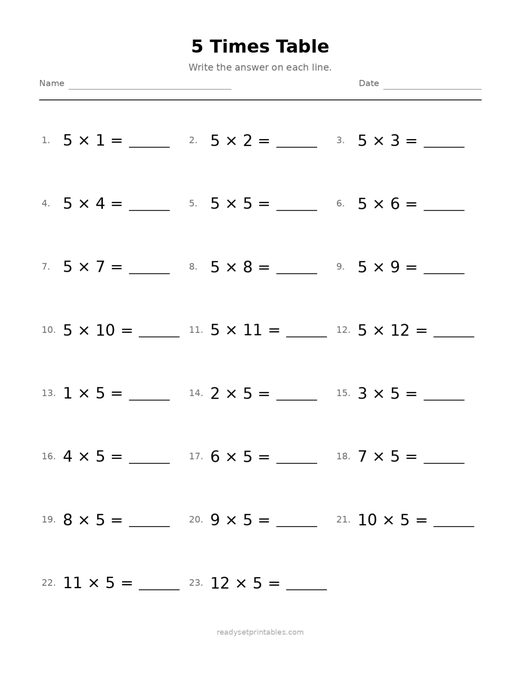 5 Times Table 08Download PDF ↓
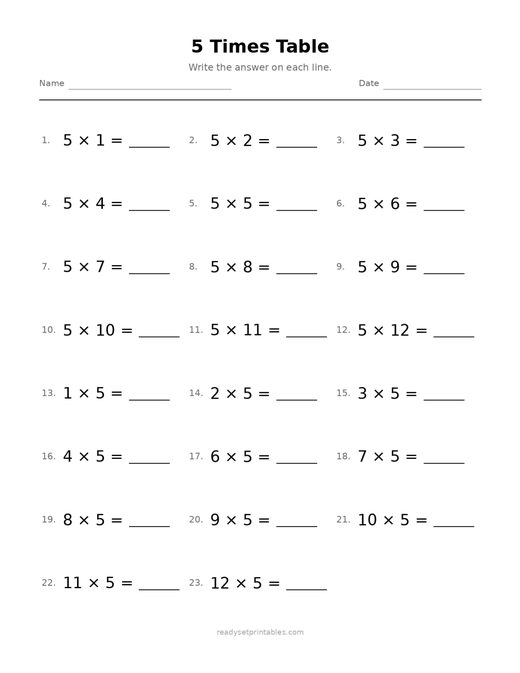 5 Times Table 09Download PDF ↓
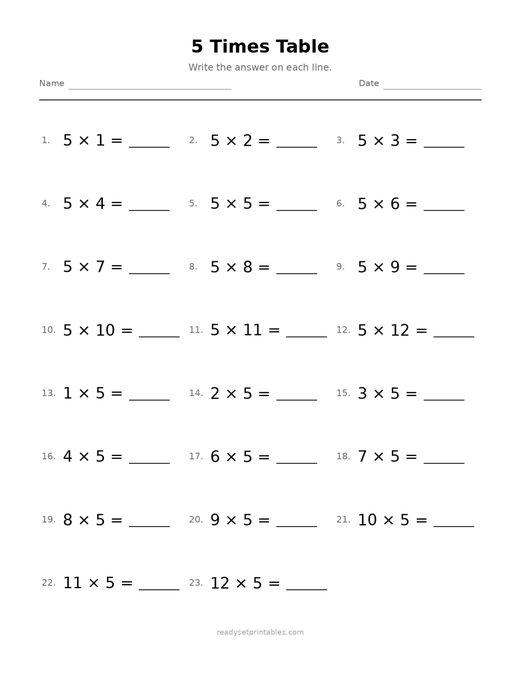 5 Times Table 10Download PDF ↓