6 Times Table Worksheets
Free printable 6 times table worksheets as PDFs. Ordered, mixed and missing-number sheets for 6 x 1 to 6 x 12. No sign-up.
⬇ Download all 10 as one PDF — free, no sign-upThe six times table sits in the awkward middle of the grid, past the easy patterns and before the nines with their finger trick. It has one quiet pattern worth knowing: six times any even number ends in that same even digit — 6 x 4 is 24, 6 x 6 is 36, 6 x 8 is 48. Beyond that the reliable route is doubling the three times table, which is why these sheets are worth doing after the threes rather than before, and why several of them pair the two facts side by side.
Sheets covering 6 x 1 to 6 x 12 in order, then in mixed order, with missing-number rows where either the product or a factor is blank. Some pages set the matching three times fact beside each six fact to make the doubling relationship visible. Division facts appear on the later sheets. One worksheet per US Letter page, black and white.
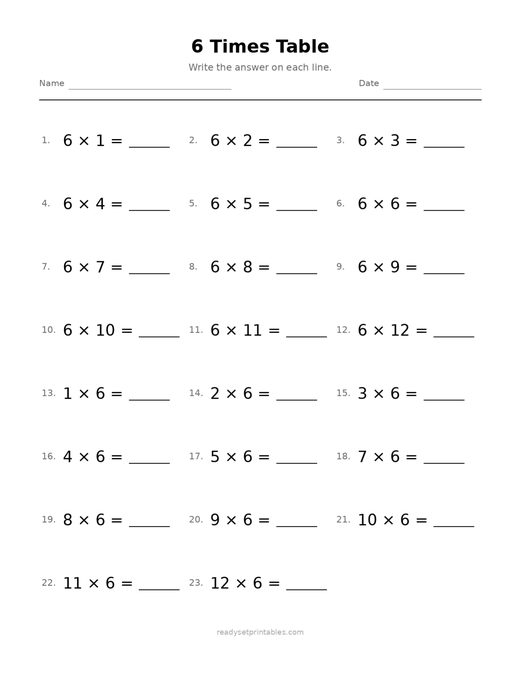 6 Times Table 01Download PDF ↓
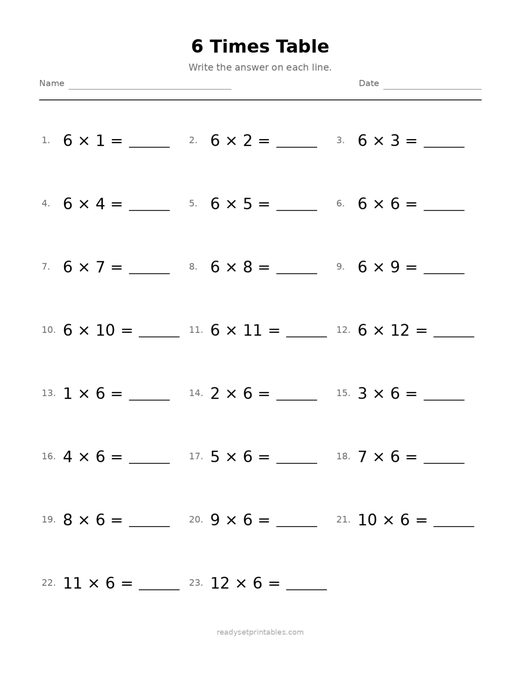 6 Times Table 02Download PDF ↓
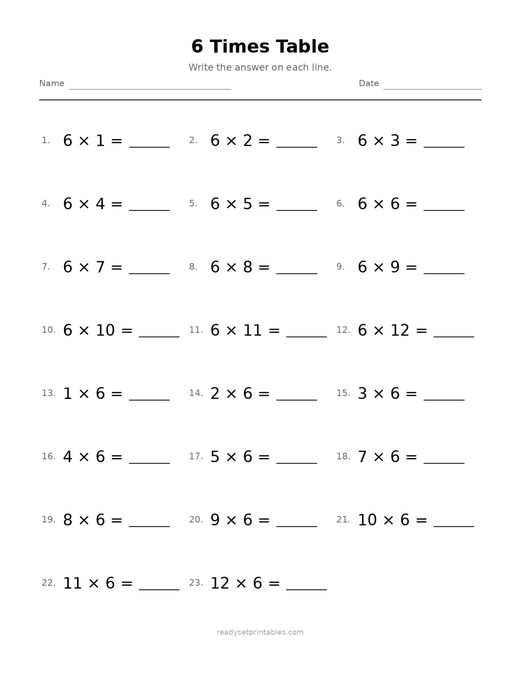 6 Times Table 03Download PDF ↓
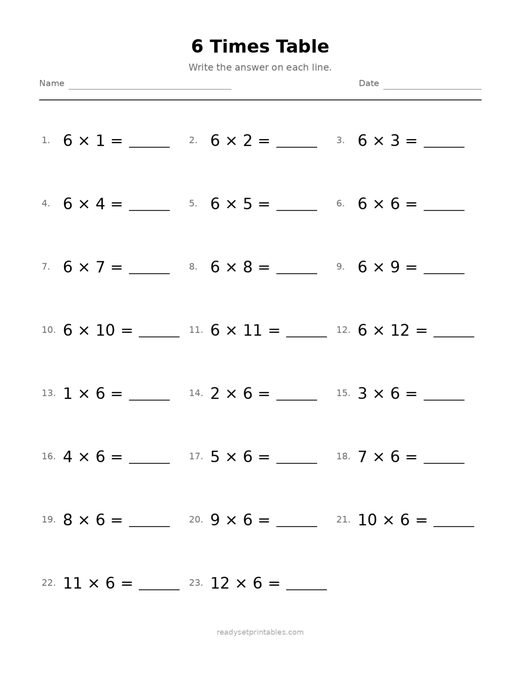 6 Times Table 04Download PDF ↓
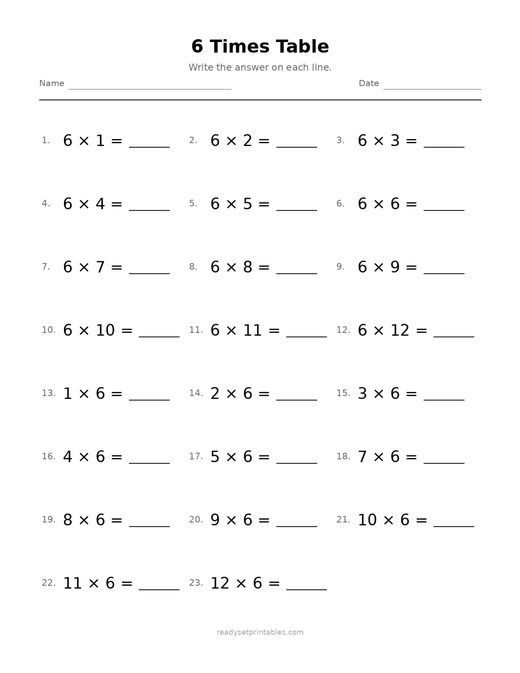 6 Times Table 05Download PDF ↓
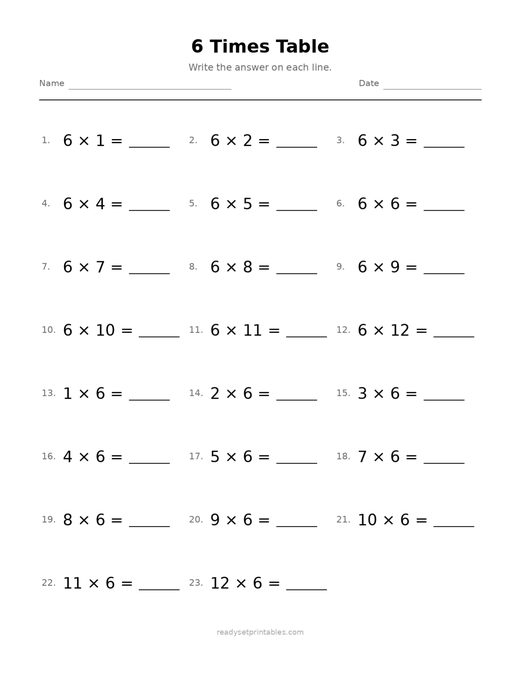 6 Times Table 06Download PDF ↓
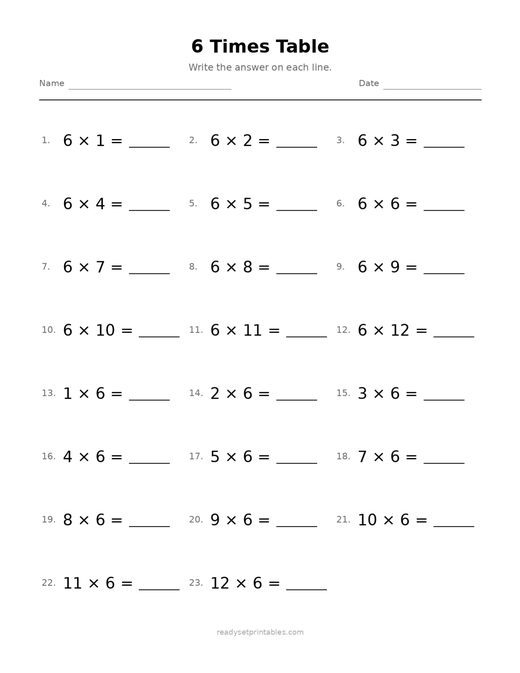 6 Times Table 07Download PDF ↓
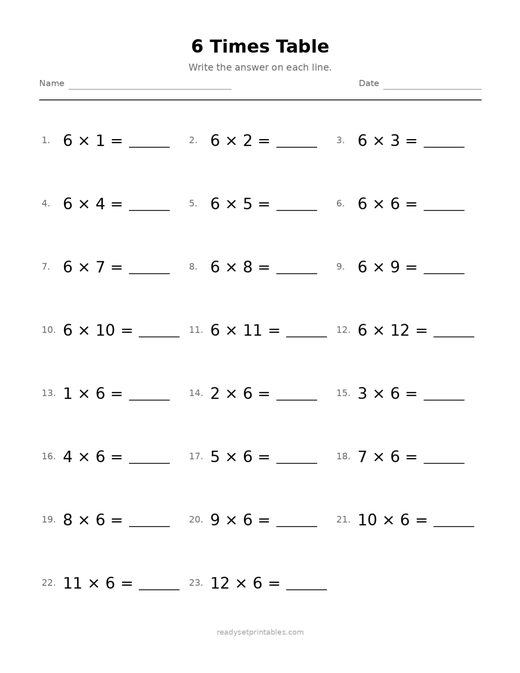 6 Times Table 08Download PDF ↓
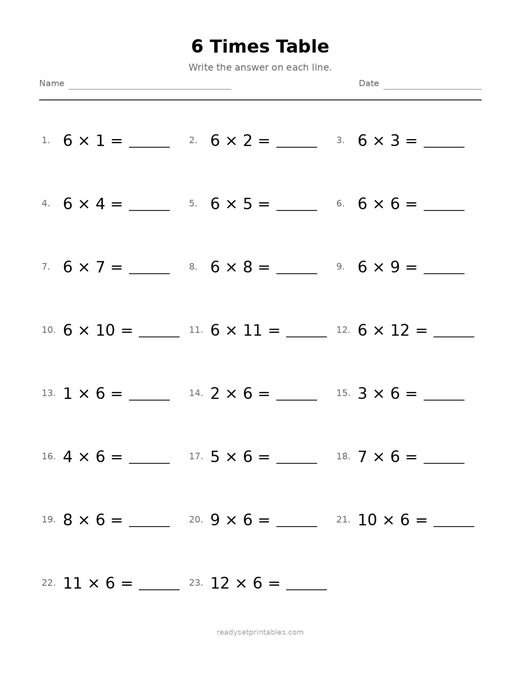 6 Times Table 09Download PDF ↓
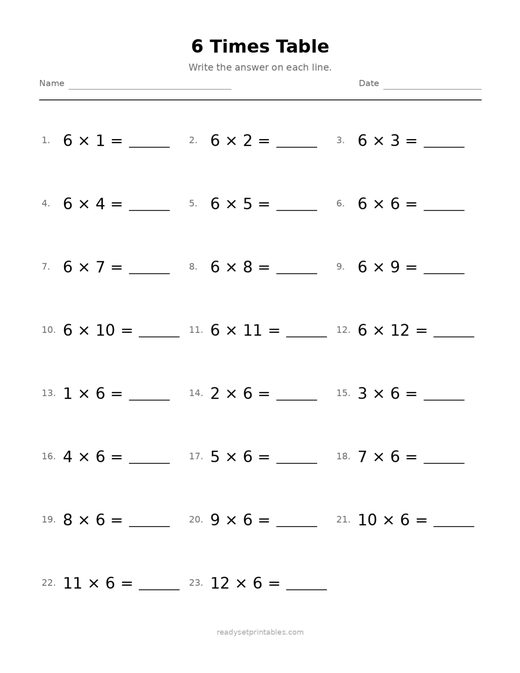 6 Times Table 10Download PDF ↓