7 Times Table Worksheets
Free printable 7 times table worksheets as PDFs. Ordered, mixed and missing-number practice for 7 x 1 to 7 x 12. No sign-up.
⬇ Download all 10 as one PDF — free, no sign-upThe sevens have a reputation, and it is deserved. There is no last-digit pattern, no finger method and no halving shortcut — seven is prime, so nothing about it is derived from a friendlier table. What does help is realizing how much of it is already known from elsewhere: 7 x 2, 7 x 5 and 7 x 10 come free from those tables, and 7 x 1 is trivial. That leaves a genuinely small set of new facts to learn, which is a much more encouraging way to start than facing twelve of them.
Ordered practice from 7 x 1 to 7 x 12 and mixed-order recall sheets, plus missing-number rows in both directions. Some sheets isolate the smaller set of facts that are not already covered by the two, five and ten tables, so practice concentrates where it is needed. Division facts appear later in the set. One worksheet per US Letter page, black and white.
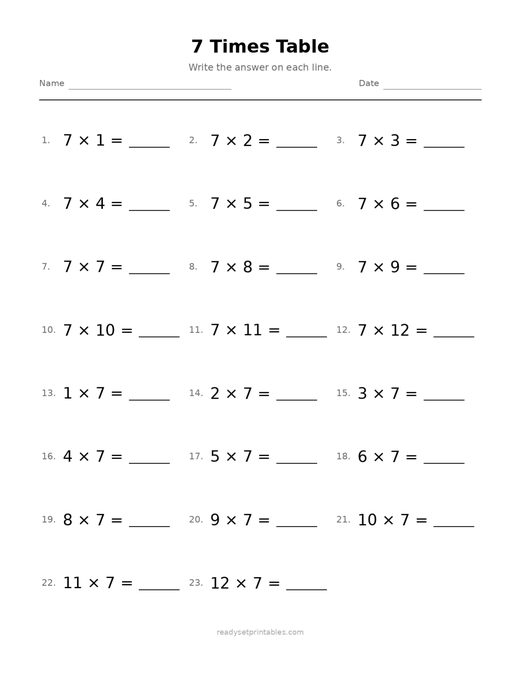 7 Times Table 01Download PDF ↓
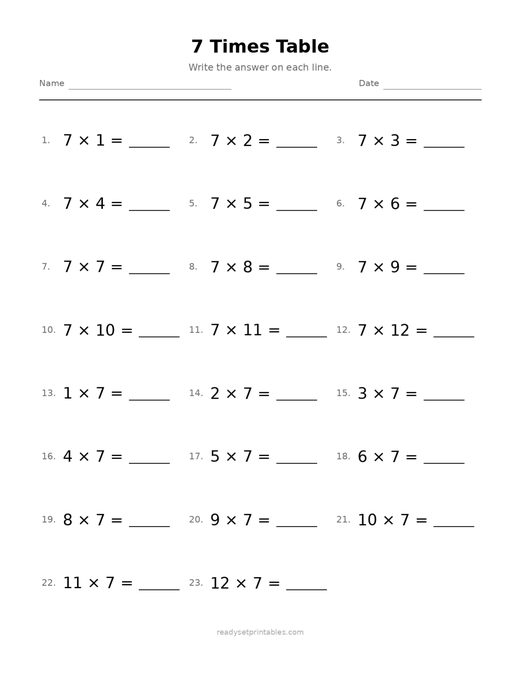 7 Times Table 02Download PDF ↓
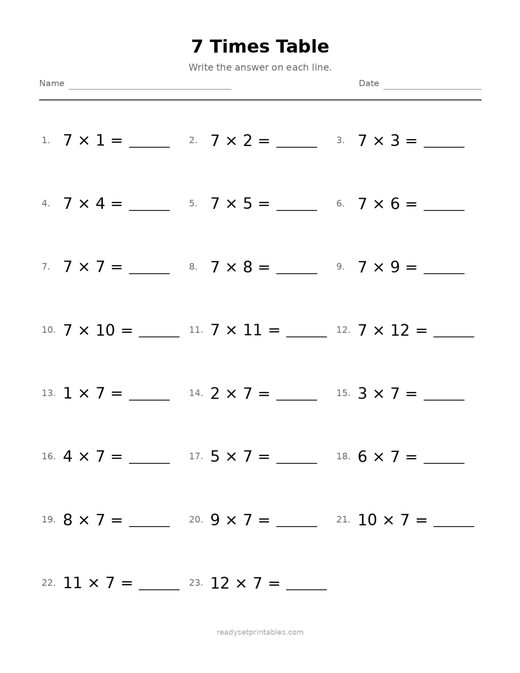 7 Times Table 03Download PDF ↓
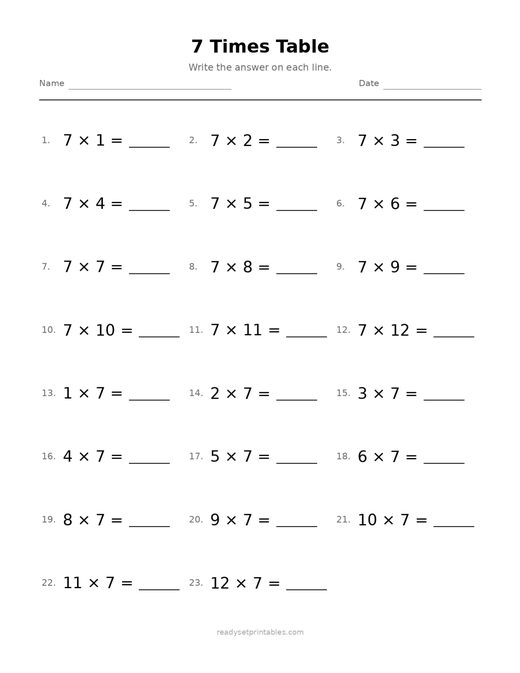 7 Times Table 04Download PDF ↓
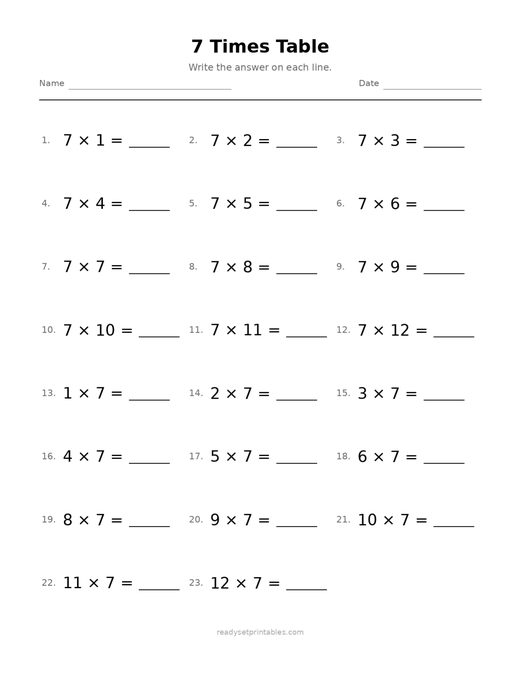 7 Times Table 05Download PDF ↓
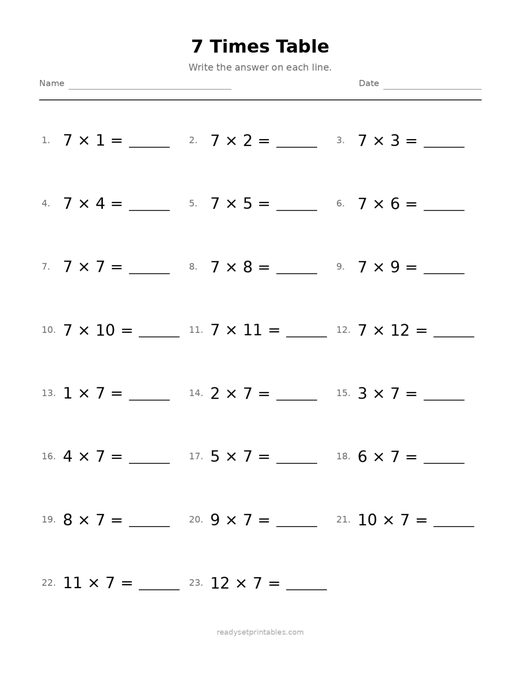 7 Times Table 06Download PDF ↓
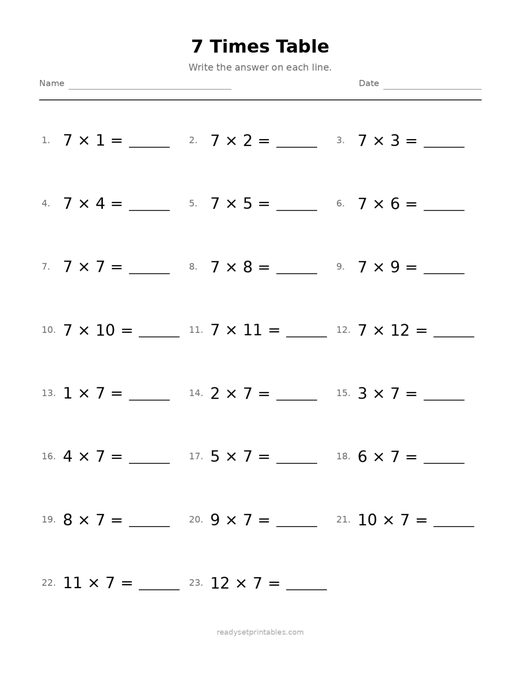 7 Times Table 07Download PDF ↓
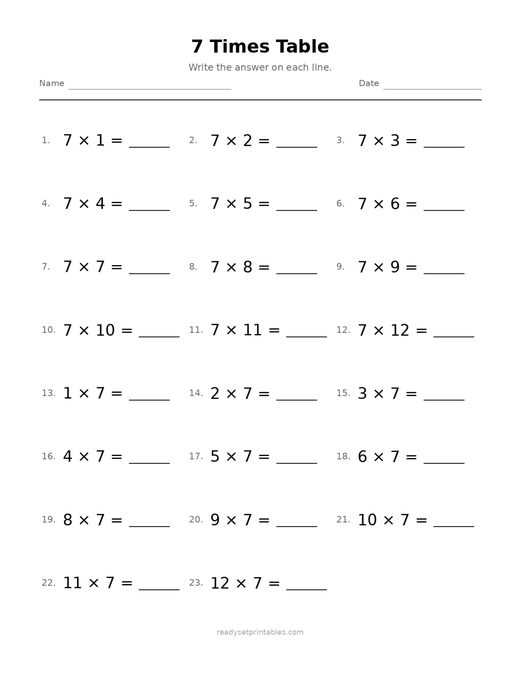 7 Times Table 08Download PDF ↓
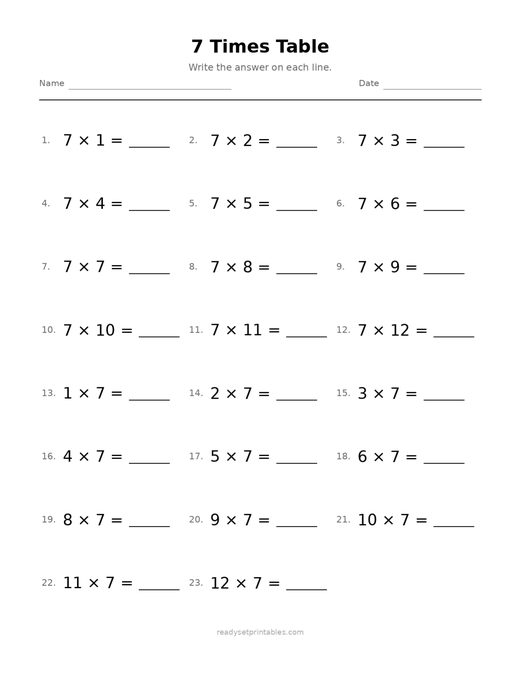 7 Times Table 09Download PDF ↓
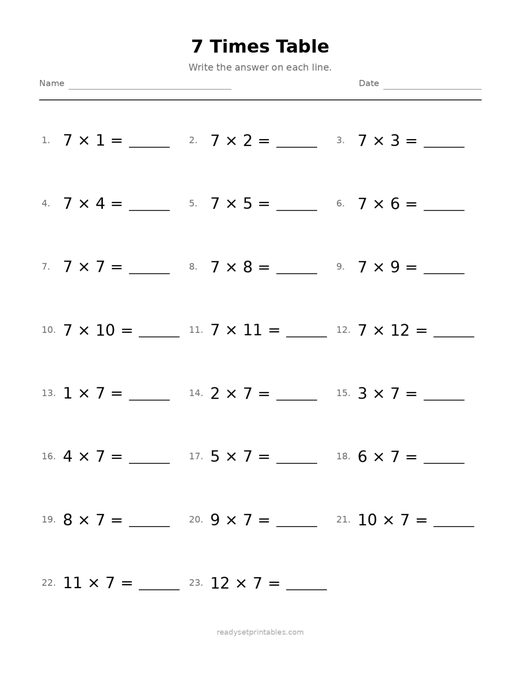 7 Times Table 10Download PDF ↓