8 Times Table Worksheets
Free printable 8 times table worksheets as PDFs. Ordered, mixed and missing-number sheets for 8 x 1 to 8 x 12. No sign-up.
⬇ Download all 10 as one PDF — free, no sign-up- Sheets
- 10 printable PDFs
- Ages / grades
- Grades 2–5
- Answer keys
- Yes — on the last page of each PDF
- Paper
- US Letter, portrait; black and white
- Cost
- Free. No sign-up, no email, no watermark
- Use
- Print as many copies as you need for your own classroom or home. Not for resale or re-hosting
Eight is two doubled three times over, which gives this table the most reliable fallback of any of the harder ones: to find 8 x 6, double 6 to 12, double again to 24, double once more to 48. It also has an unusually tidy last-digit pattern — the answers end in 8, 6, 4, 2, 0 and then repeat — so a wrong answer often announces itself before you check it. These sheets use the ordered pages to make that descending pattern visible before switching to mixed recall.
Ordered sheets from 8 x 1 to 8 x 12, mixed-order recall, and missing-number rows in both directions. Some pages set the four times fact beside each eight fact so the doubling relationship is on the page rather than in the instructions. Division facts from the same table appear on the later sheets. One worksheet per US Letter page, black and white.
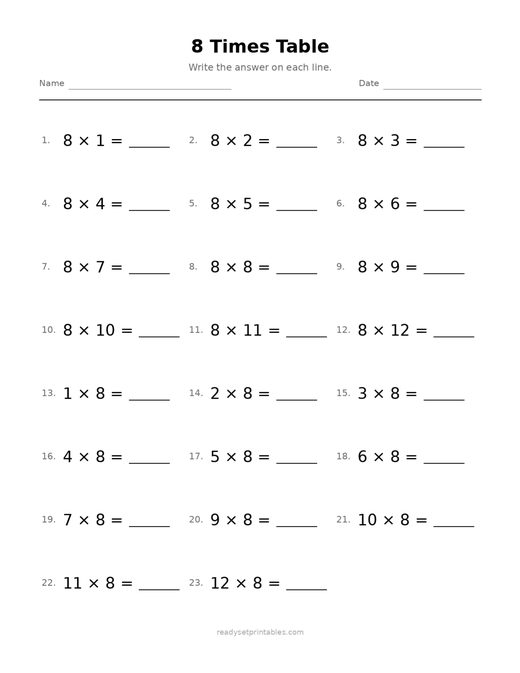 8 Times Table 01Download PDF ↓
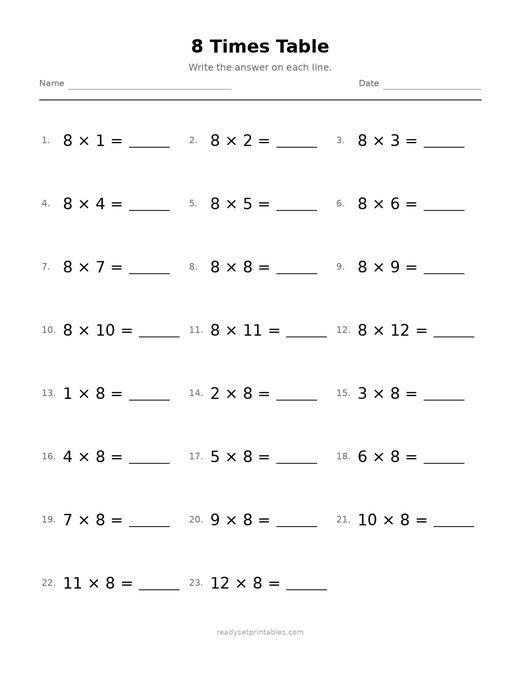 8 Times Table 02Download PDF ↓
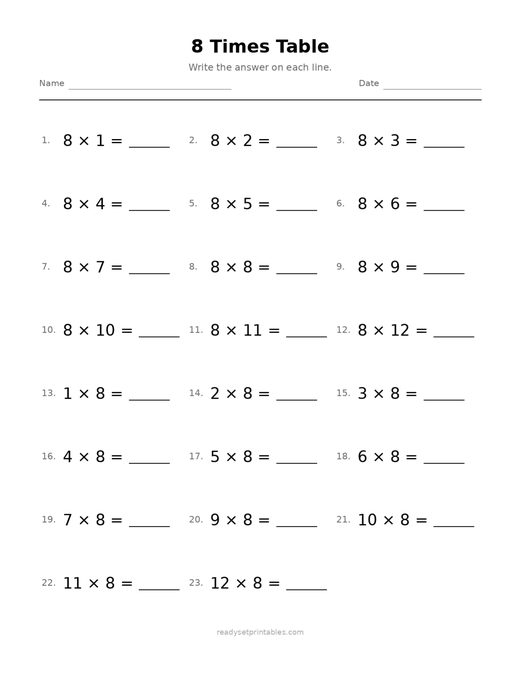 8 Times Table 03Download PDF ↓
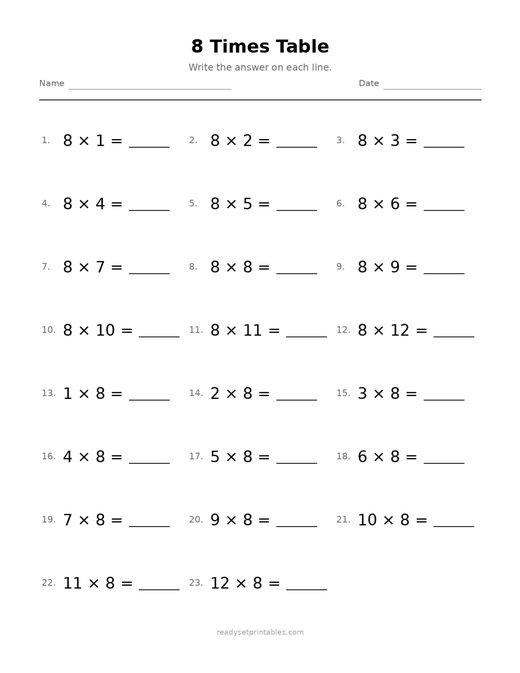 8 Times Table 04Download PDF ↓
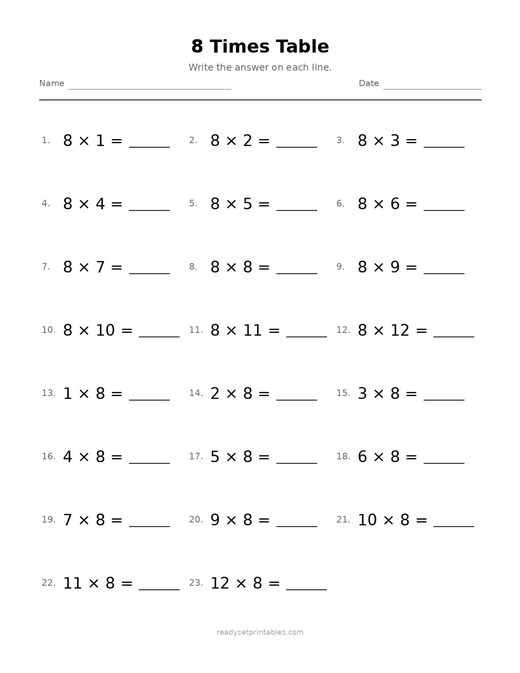 8 Times Table 05Download PDF ↓
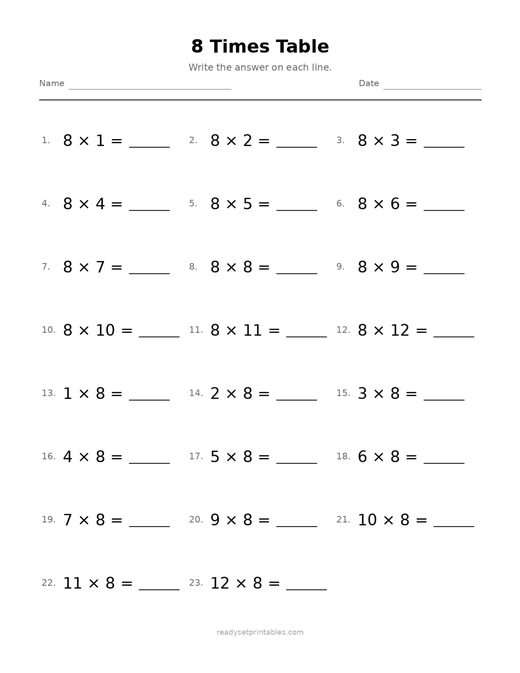 8 Times Table 06Download PDF ↓
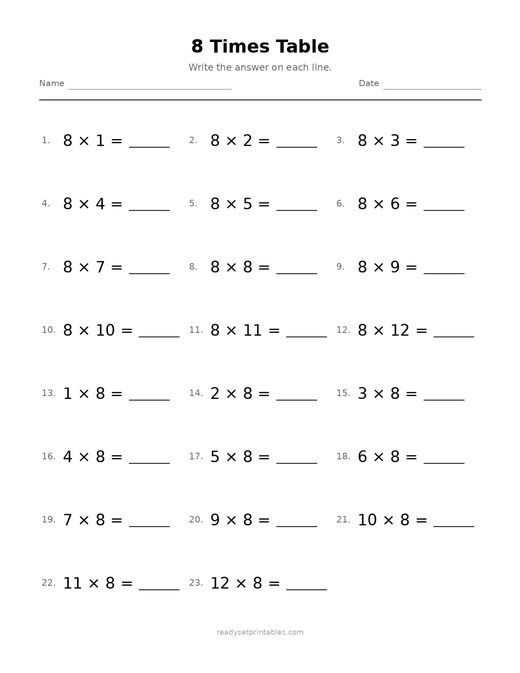 8 Times Table 07Download PDF ↓
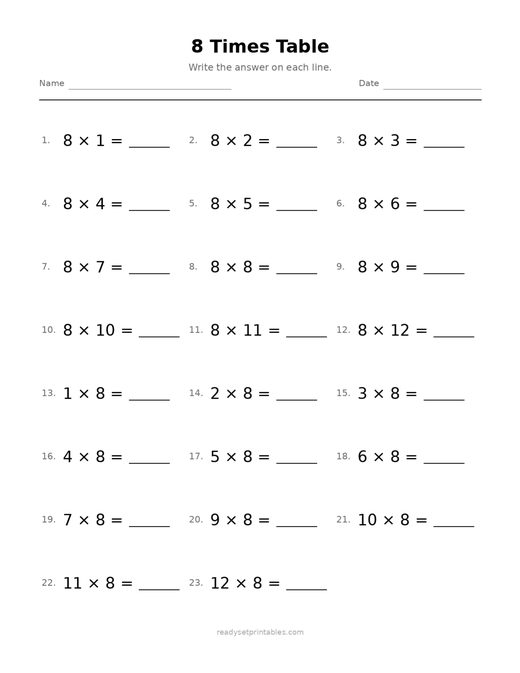 8 Times Table 08Download PDF ↓
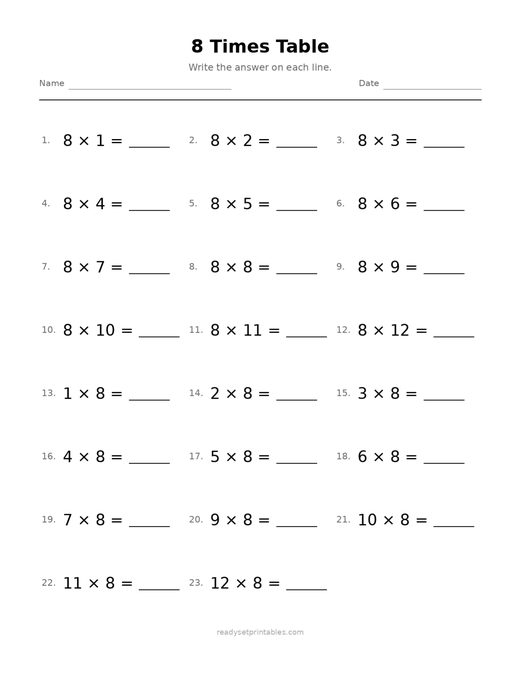 8 Times Table 09Download PDF ↓
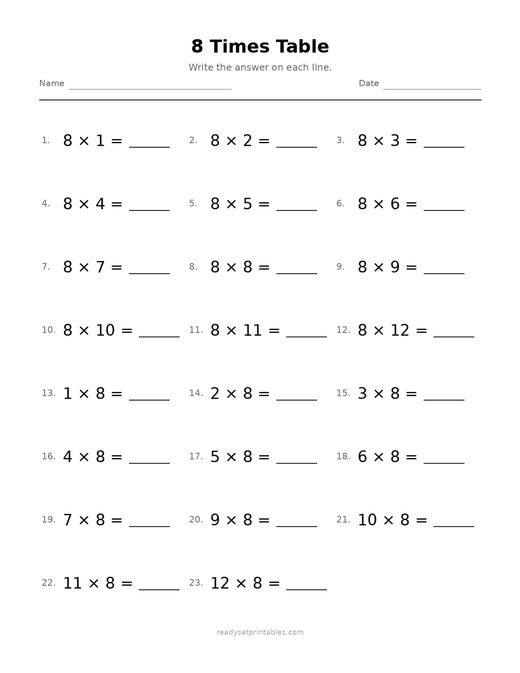 8 Times Table 10Download PDF ↓