9 Times Table Worksheets
Free printable 9 times table worksheets as PDFs. Ordered, mixed and missing-number practice for 9 x 1 to 9 x 12. No sign-up.
⬇ Download all 10 as one PDF — free, no sign-upThe nines are the most pattern-rich table in the grid, which makes them a pleasure to teach. Up to 9 x 10 the digits of every answer add to nine, the tens digit is always one less than the number you multiplied by, and the units digits count down from nine as the tens count up. There is also the finger method, which works and which children remember for years. These sheets are ordered first so the patterns are visible on the page, then mixed so the facts get stored rather than reconstructed.
Ordered sheets running 9 x 1 to 9 x 12, mixed-order recall pages, and missing-number rows in both directions. Ordered pages are laid out so the answers line up vertically and the digit pattern is easy to spot. Division facts from the same table appear later in the set. One worksheet per US Letter page, black and white.
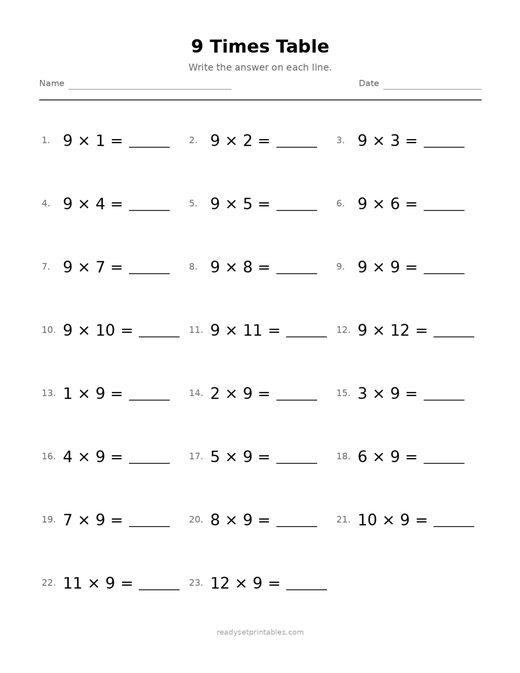 9 Times Table 01Download PDF ↓
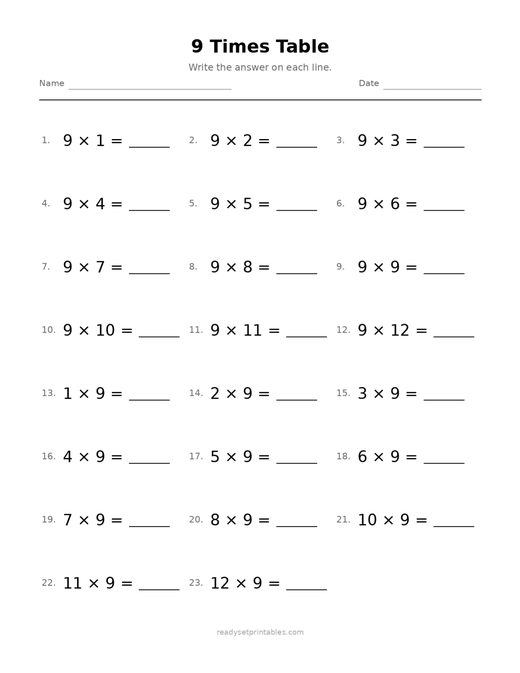 9 Times Table 02Download PDF ↓
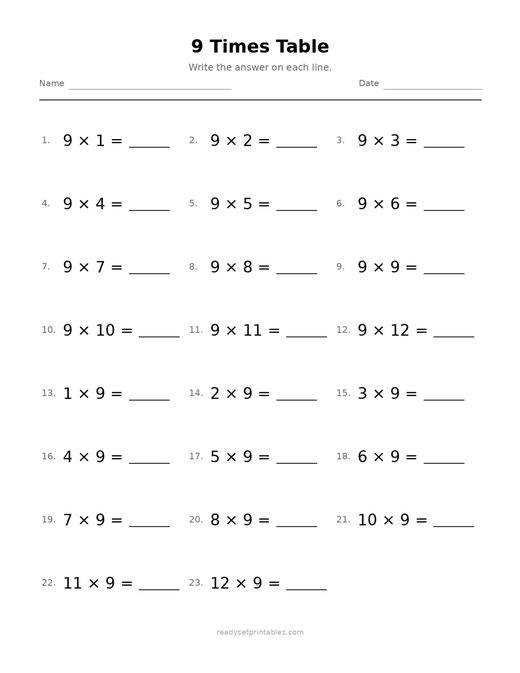 9 Times Table 03Download PDF ↓
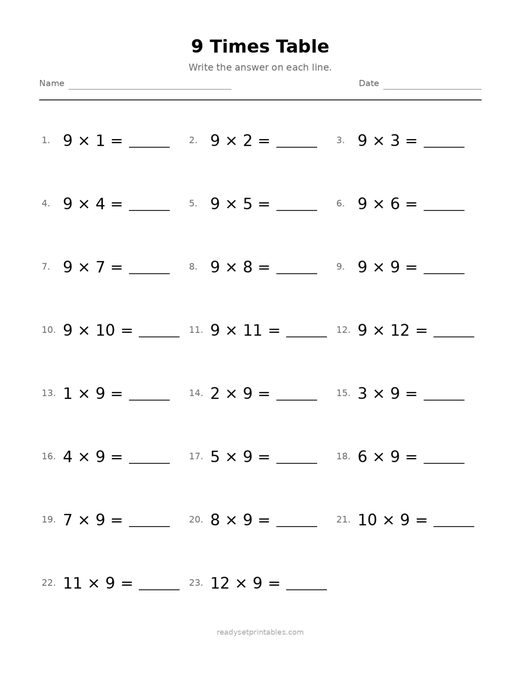 9 Times Table 04Download PDF ↓
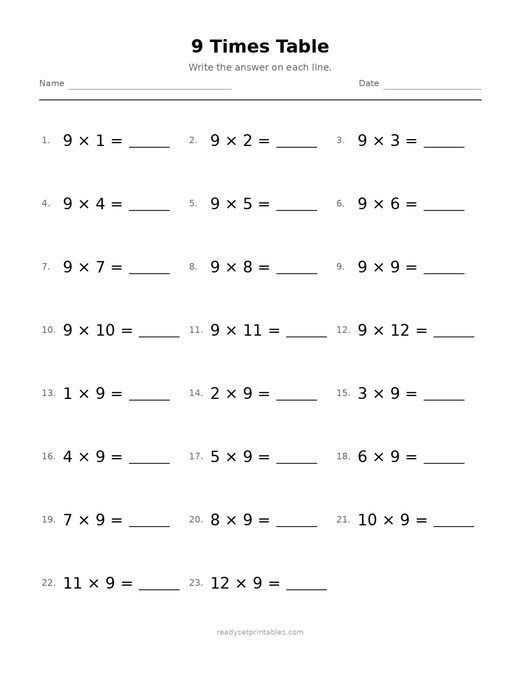 9 Times Table 05Download PDF ↓
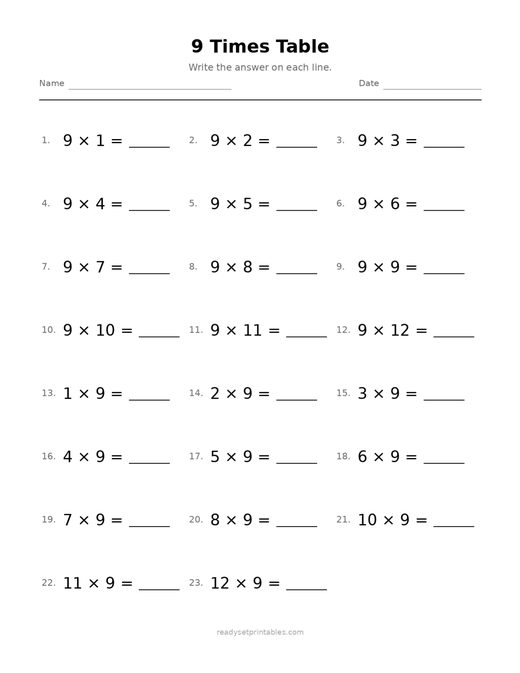 9 Times Table 06Download PDF ↓
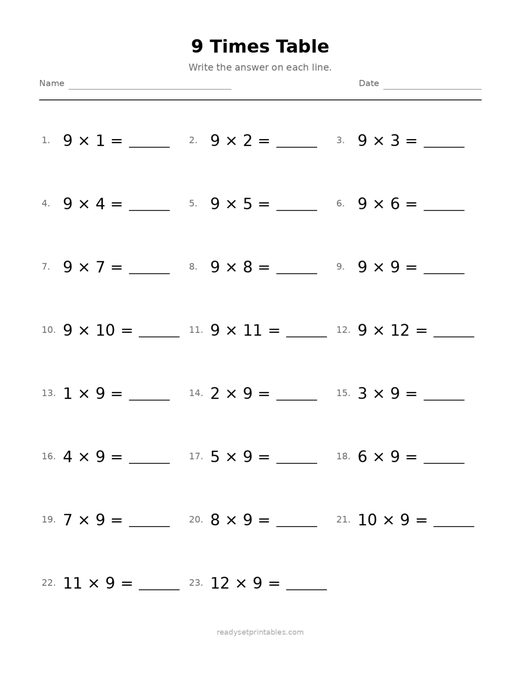 9 Times Table 07Download PDF ↓
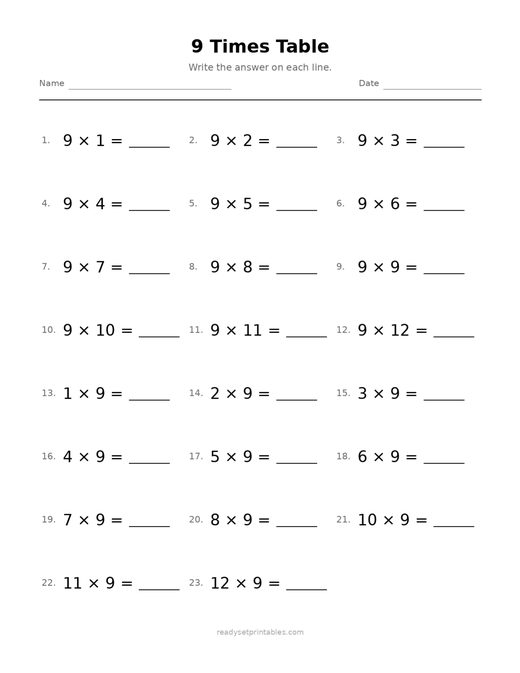 9 Times Table 08Download PDF ↓
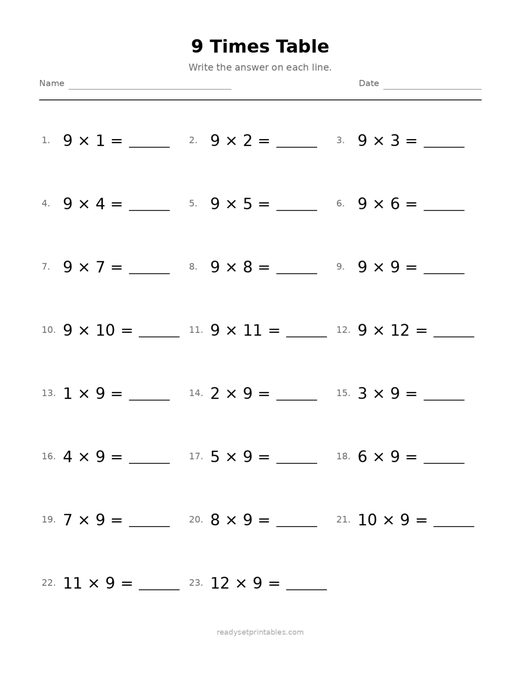 9 Times Table 09Download PDF ↓
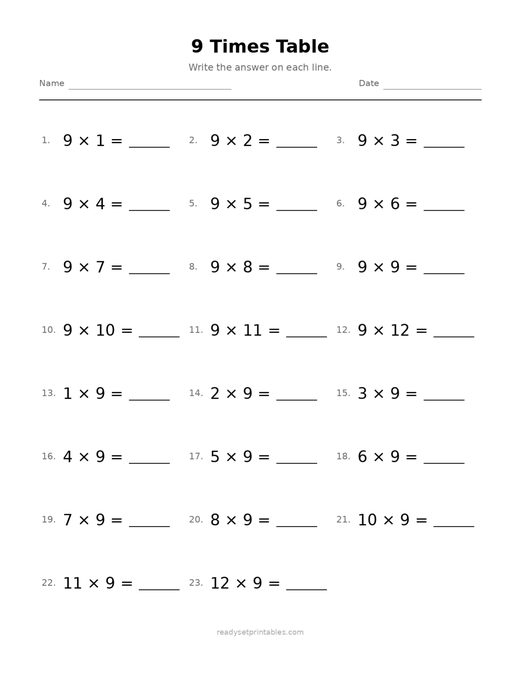 9 Times Table 10Download PDF ↓