Multiplication Drill Worksheets
Free printable multiplication drill sheets as PDFs. Timed-style pages of mixed facts for quick daily practice. No sign-up, no email.
⬇ Download all 10 as one PDF — free, no sign-upA drill sheet has one job: get a lot of facts in front of a student quickly, in an order that gives no help. That is the difference between a drill and a times table worksheet — there is no run of nines to fall into a rhythm on, so every question has to be answered on its own. Used for a few minutes a day rather than a long session, drills are how shaky facts become automatic, and how you find out which particular facts are the shaky ones.
Pages of mixed multiplication facts arranged in dense columns, with enough questions to keep a fast student working for several minutes. Some sheets restrict the facts to a chosen range for targeted practice; others draw from the full grid up to 12 x 12. Layouts are plain and uncluttered so nothing competes with the numbers. One sheet per US Letter page, black and white.
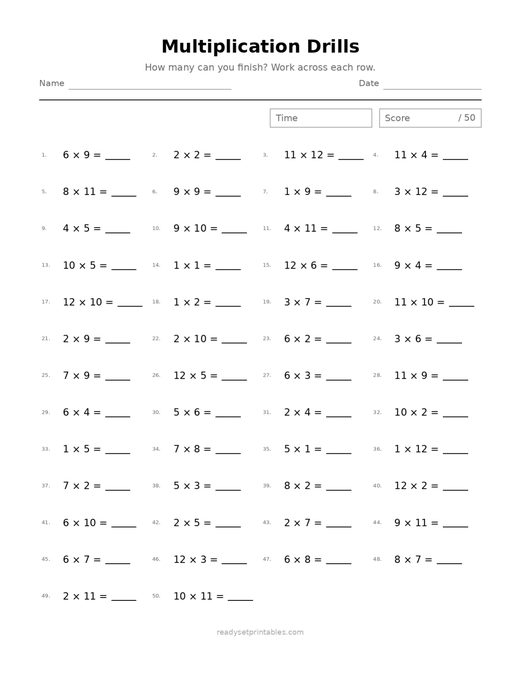 Multiplication Drills 01Download PDF ↓
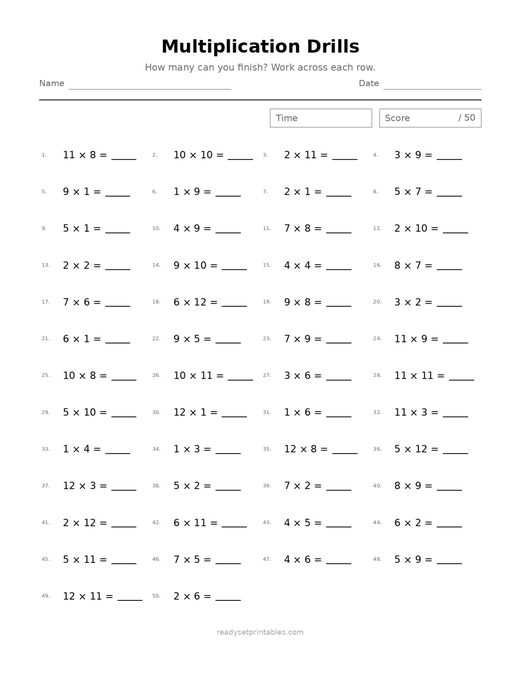 Multiplication Drills 02Download PDF ↓
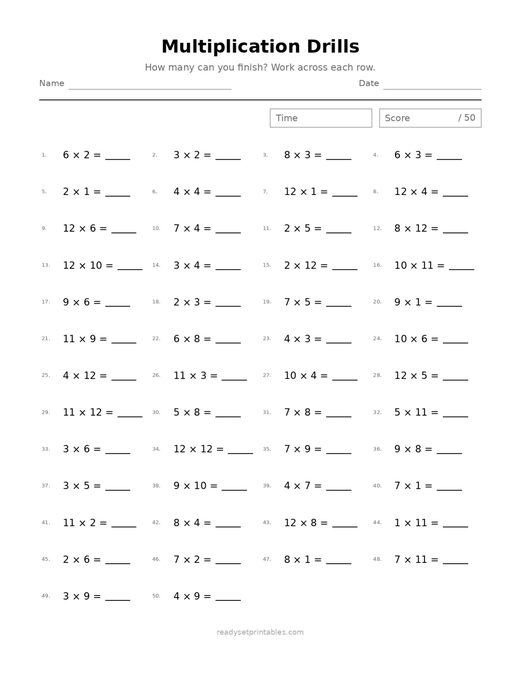 Multiplication Drills 03Download PDF ↓
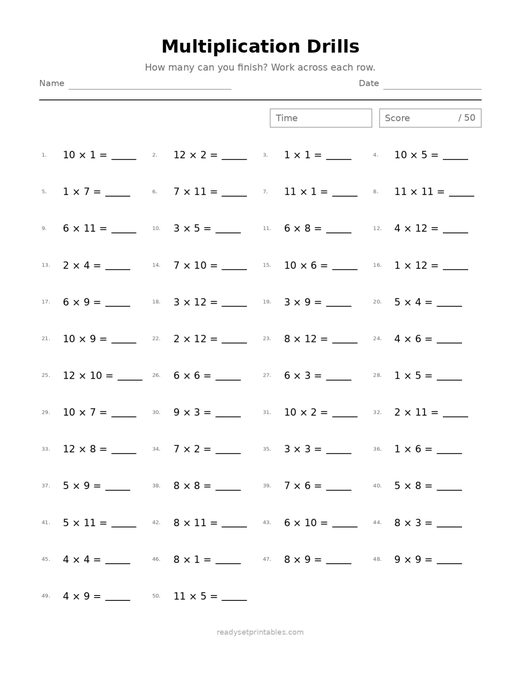 Multiplication Drills 04Download PDF ↓
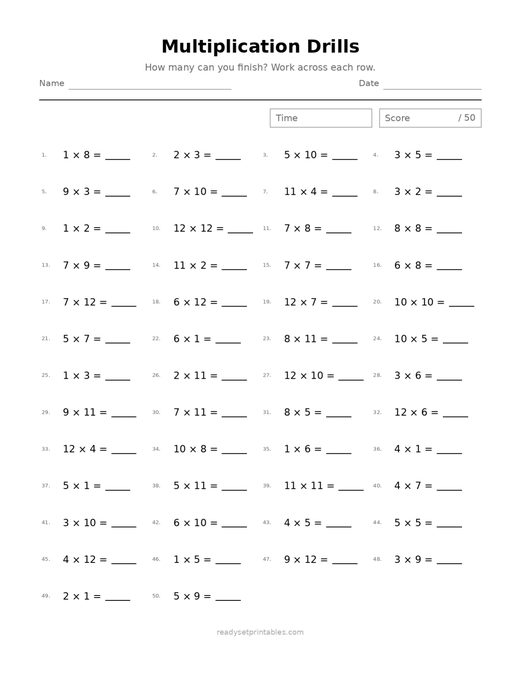 Multiplication Drills 05Download PDF ↓
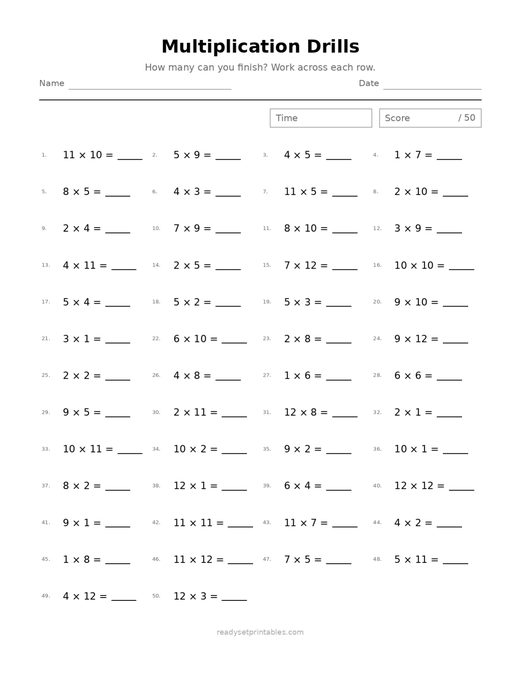 Multiplication Drills 06Download PDF ↓
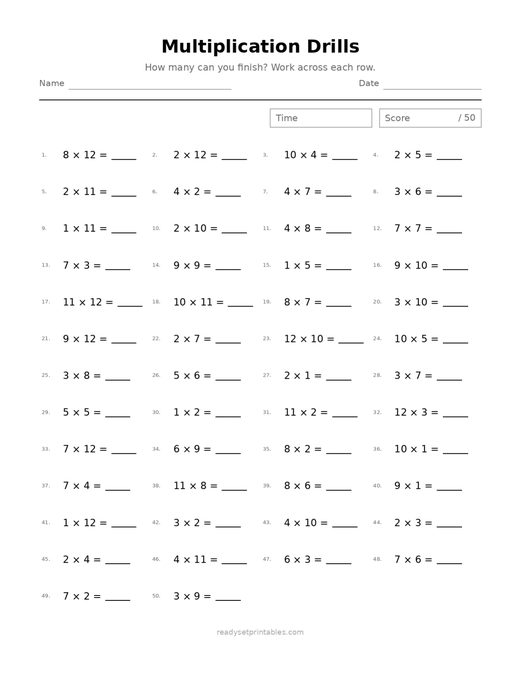 Multiplication Drills 07Download PDF ↓
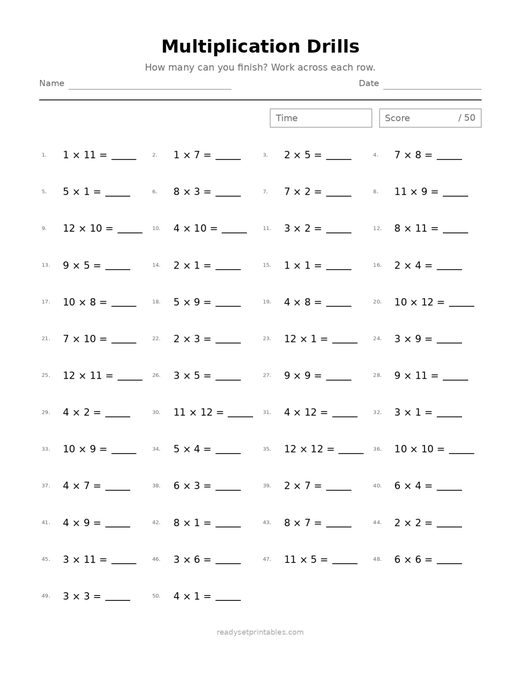 Multiplication Drills 08Download PDF ↓
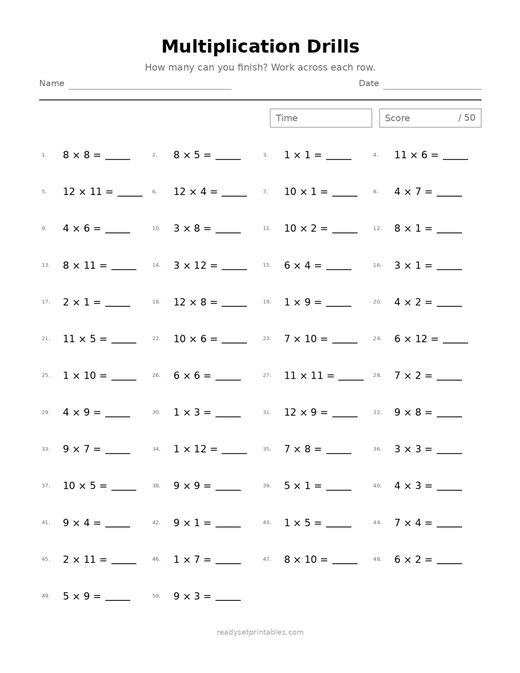 Multiplication Drills 09Download PDF ↓
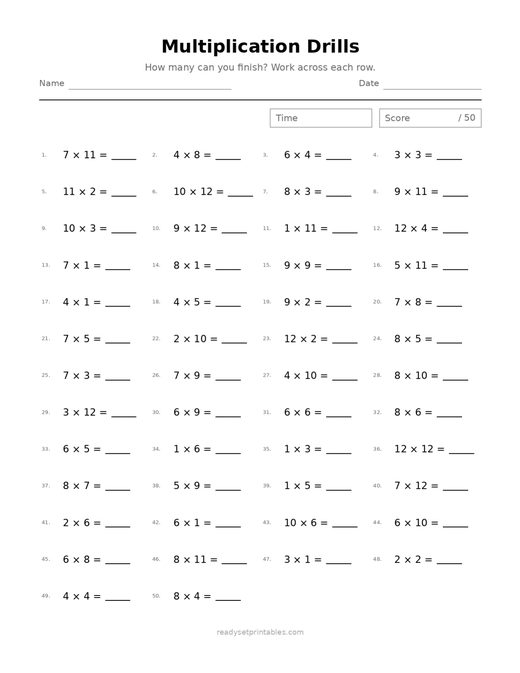 Multiplication Drills 10Download PDF ↓