Blank Number Bond Templates
Free printable blank number bonds as PDFs. Empty two-part and three-part bond diagrams to fill in. No sign-up, no email.
⬇ Download all 10 as one PDF — free, no sign-upA blank number bond is one of the most reusable things in an early math classroom. The same empty diagram covers finding pairs that make ten, splitting a number for mental addition, showing a fact family, and later on partitioning for column methods. Because it is blank, you set the difficulty: write 10 in the whole and let a child find the parts, or write both parts and ask for the whole. One printed sheet outlasts a dozen pre-filled worksheets.
Blank number bond diagrams with an empty whole circle joined to two part circles, in layouts of six and nine bonds per page. Versions include a completely blank whole for open-ended use, and sheets that pre-fill the whole with 10 or 20 for the two most common exercises. Circles are drawn large enough for young writers. Black and white, US Letter.
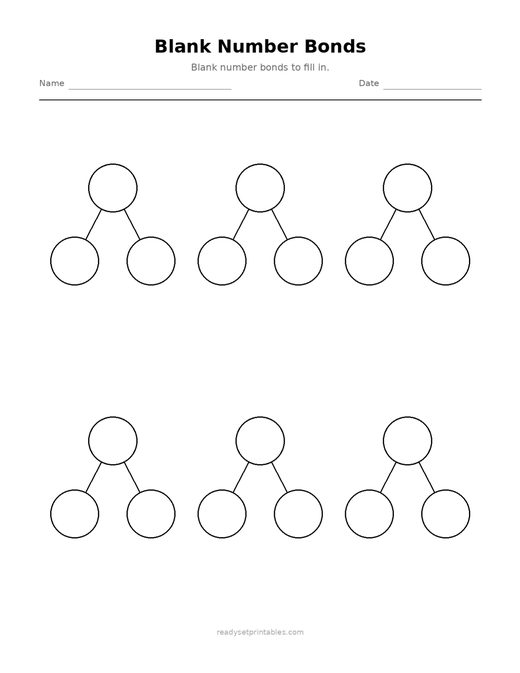 Blank Number Bonds 01Download PDF ↓
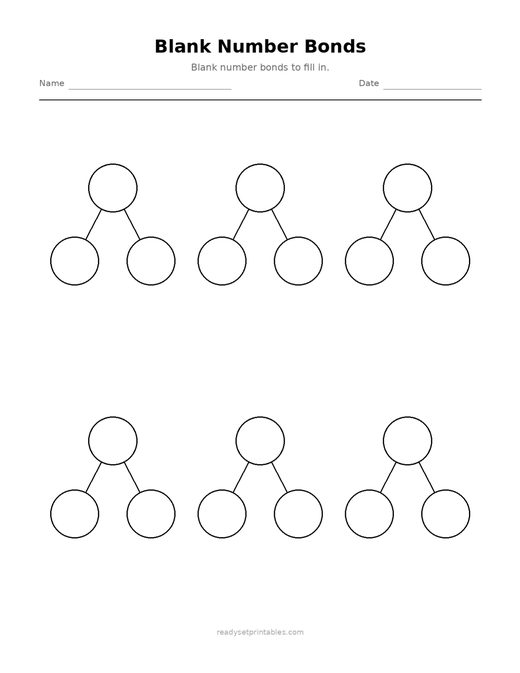 Blank Number Bonds 02Download PDF ↓
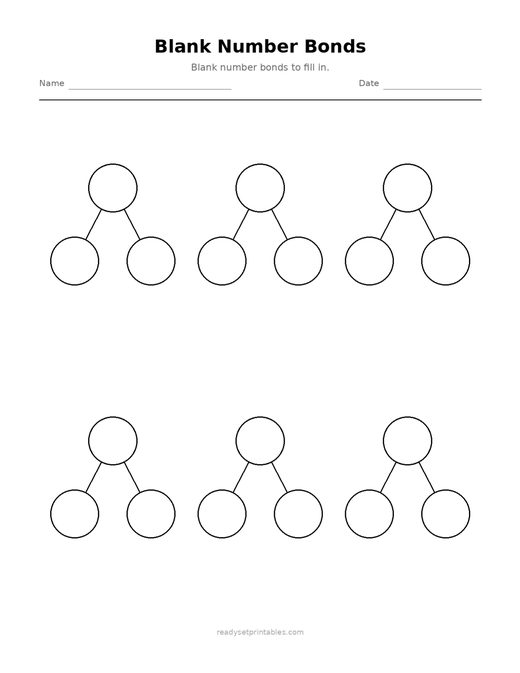 Blank Number Bonds 03Download PDF ↓
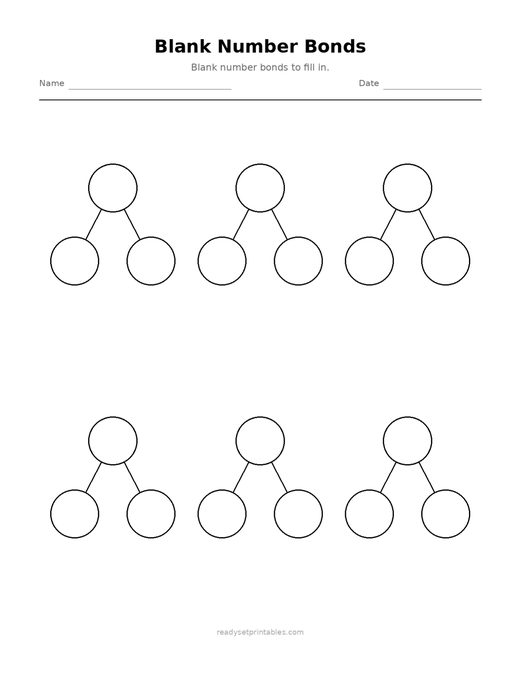 Blank Number Bonds 04Download PDF ↓
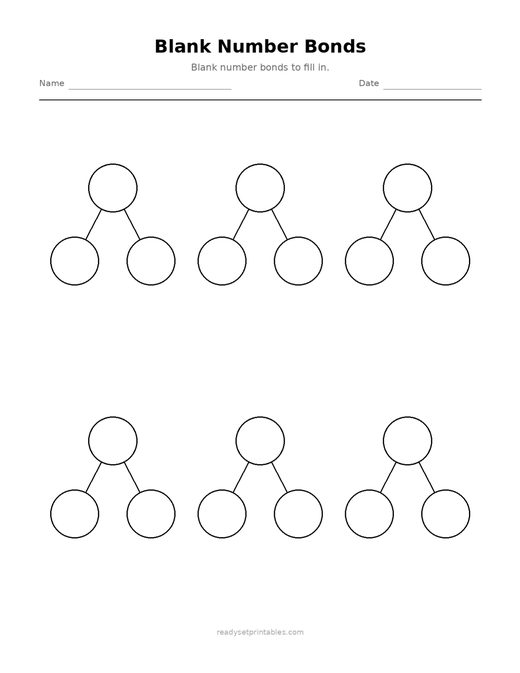 Blank Number Bonds 05Download PDF ↓
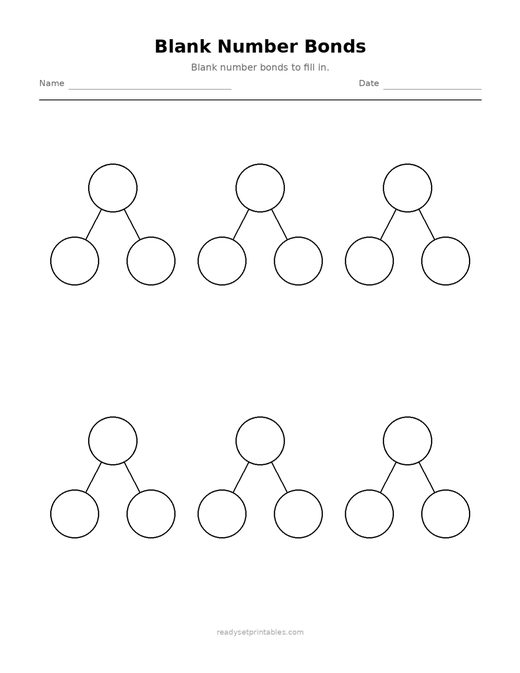 Blank Number Bonds 06Download PDF ↓
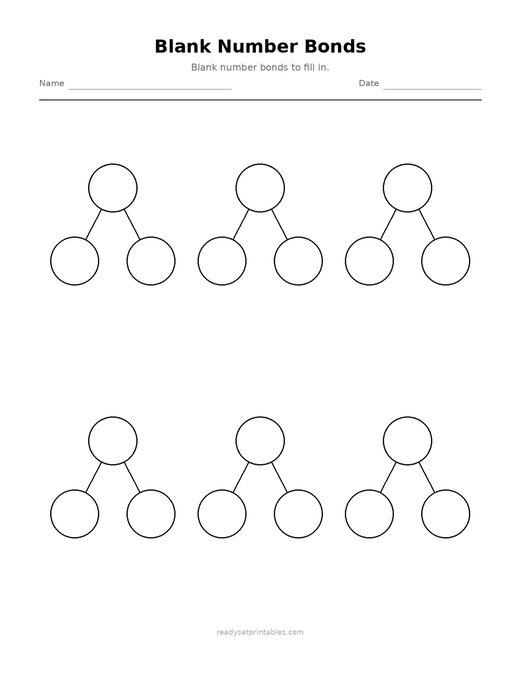 Blank Number Bonds 07Download PDF ↓
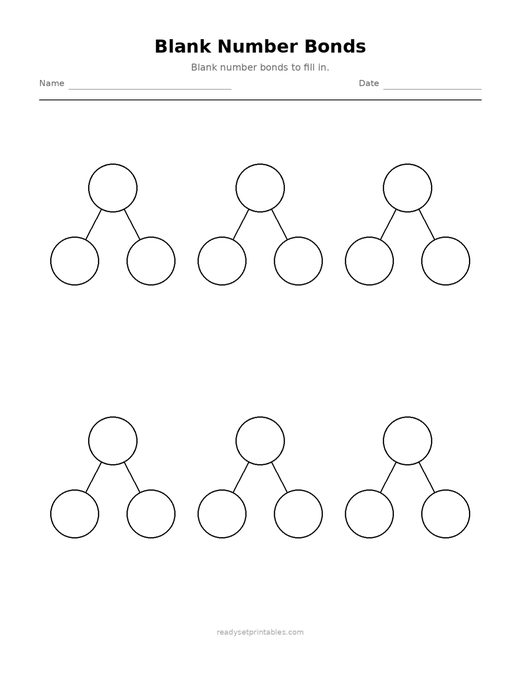 Blank Number Bonds 08Download PDF ↓
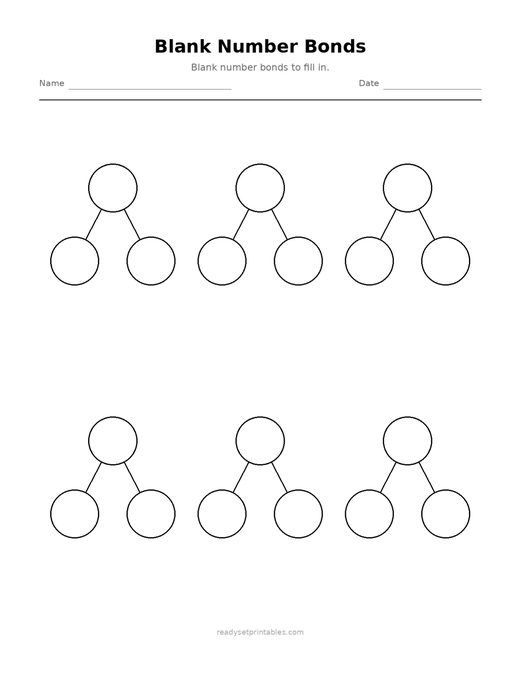 Blank Number Bonds 09Download PDF ↓
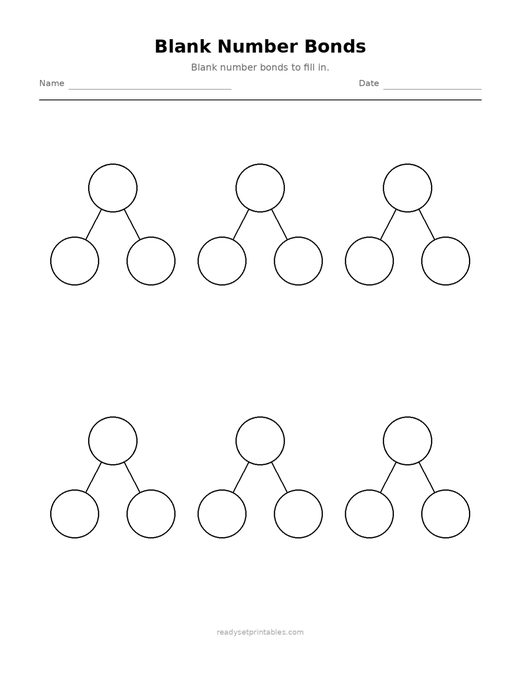 Blank Number Bonds 10Download PDF ↓