Rounding Worksheets
Free printable rounding worksheets as PDFs. Round to the nearest 10, 100, 1000 and to decimal places. No sign-up, no email.
⬇ Download all 10 as one PDF — free, no sign-upRounding is taught as a rule about the digit to the right, and it works, but students who only have the rule fall apart on a question like round 4,972 to the nearest hundred. What helps is the number line: which hundred is 4,972 closer to? These sheets use both. The early pages put numbers on marked lines so the answer is a matter of looking, and the later ones drop the line once the intuition is there and the rule has something to stand on.
Sheets rounding to the nearest ten, hundred and thousand, with number lines on the early pages and bare numbers later, plus sets on rounding decimals to one and two places. Some pages include estimation questions where rounding is used to check whether an answer is sensible. Clear layouts with room to work. One worksheet per US Letter page, black and white.
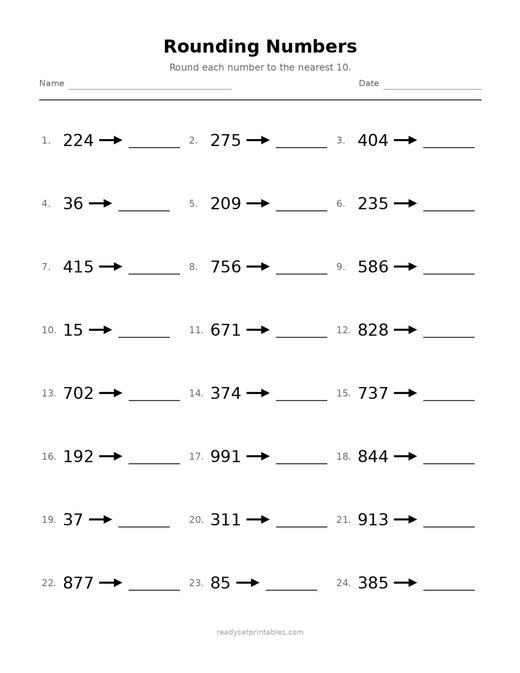 Rounding 01Download PDF ↓
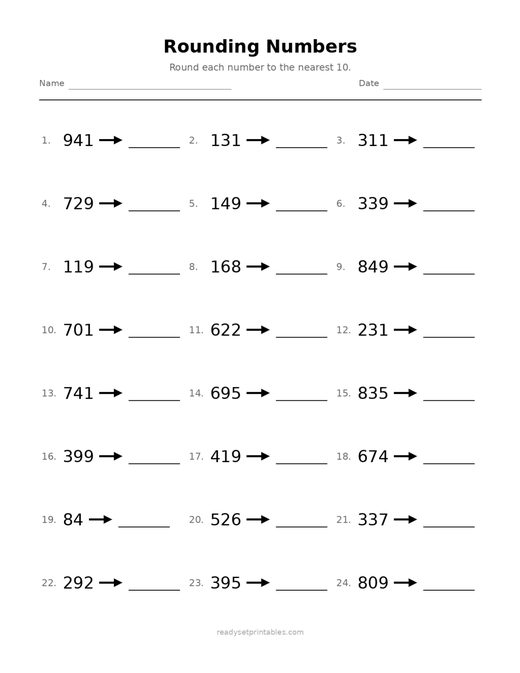 Rounding 02Download PDF ↓
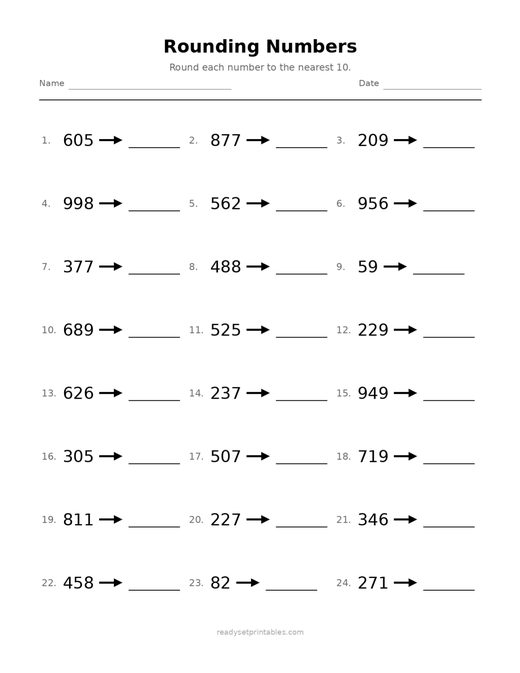 Rounding 03Download PDF ↓
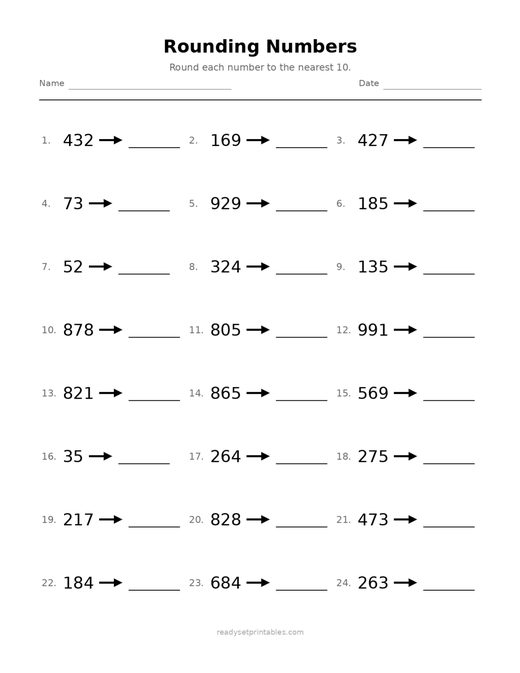 Rounding 04Download PDF ↓
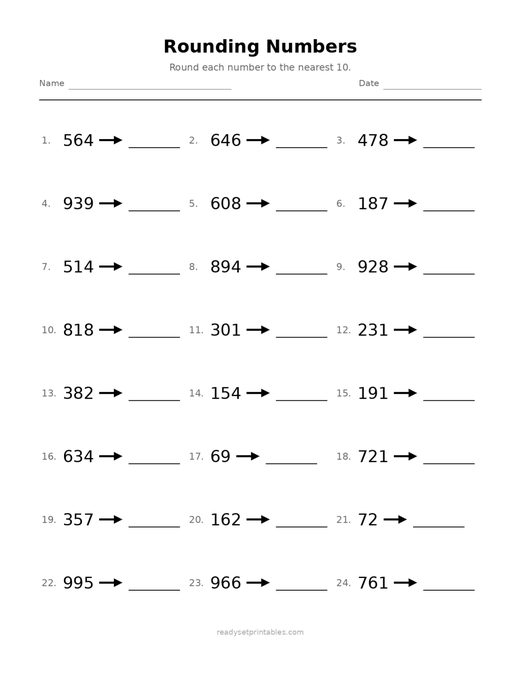 Rounding 05Download PDF ↓
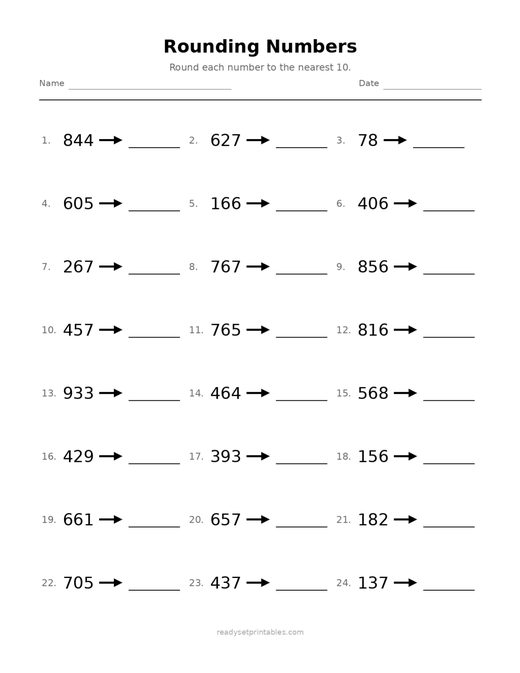 Rounding 06Download PDF ↓
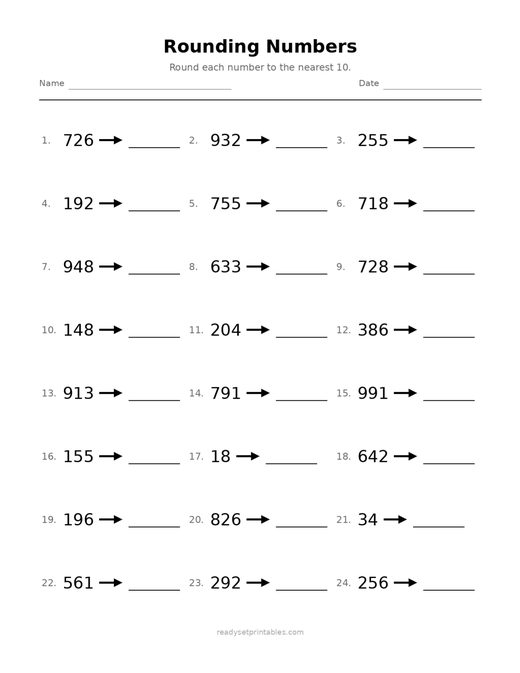 Rounding 07Download PDF ↓
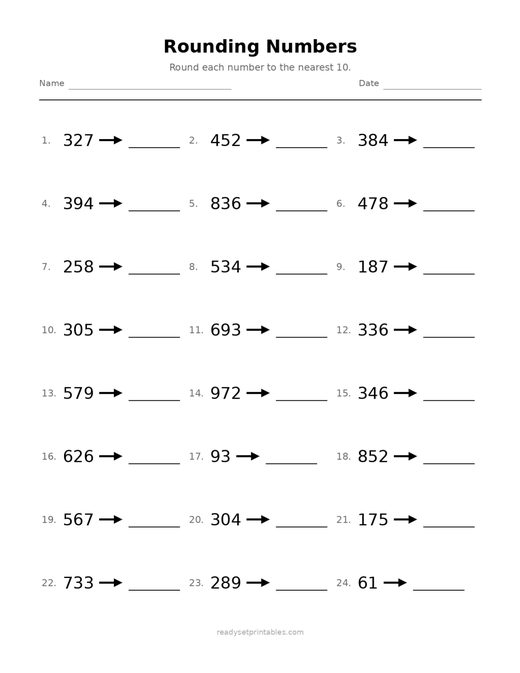 Rounding 08Download PDF ↓
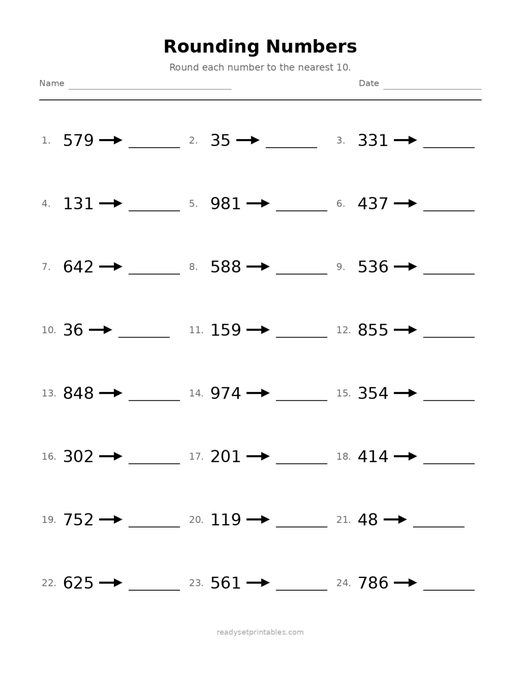 Rounding 09Download PDF ↓
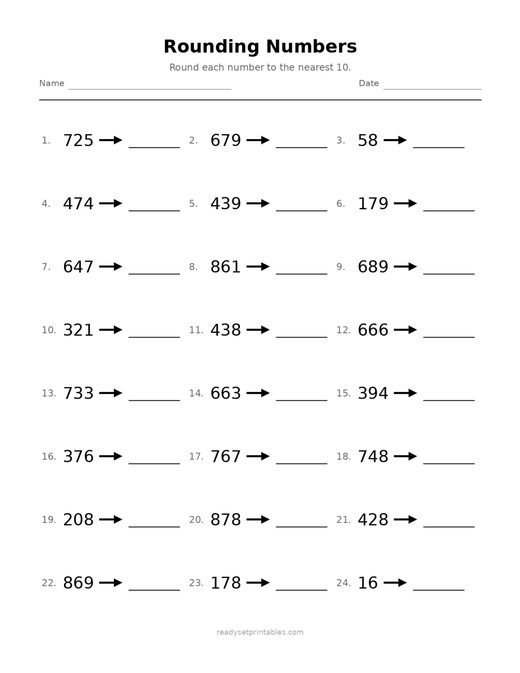 Rounding 10Download PDF ↓