Blank Clock Face Printables
Free printable blank clock faces as PDFs. Empty analog clocks to draw hands on, in several sizes per page. No sign-up, no email.
⬇ Download all 10 as one PDF — free, no sign-upBlank clock faces are the most reusable sheet in any time unit, because drawing the hands is a harder task than reading them and one page covers any question you care to set. Give a time, have the student draw it; give a time and ask for twenty minutes later; use one face for the start of the school day and another for the end. These come with the numbers printed and the hands left off, plus fully empty circles for when writing the numbers around the face is itself the exercise.
Pages of blank analog clock faces with the numbers 1 to 12 printed and no hands, in layouts of six, nine and twelve faces per sheet — six when you want room to work large, twelve when one sheet has to cover a whole exercise. A blank line beneath each face gives space to write the matching digital time. Black and white, US Letter.
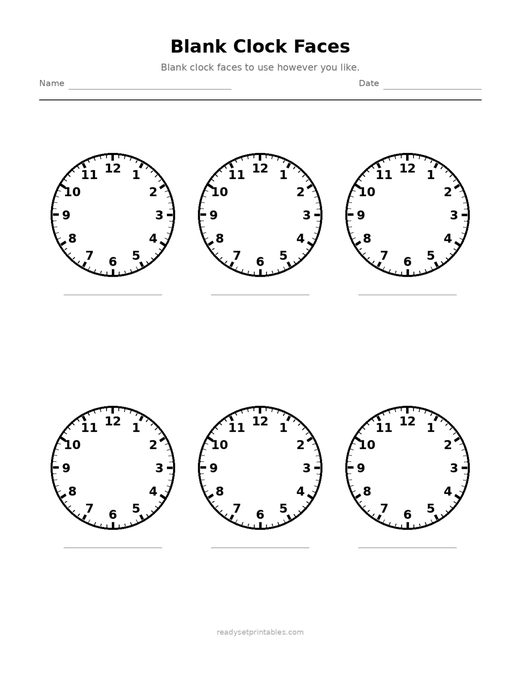 Blank Clock Faces 01Download PDF ↓
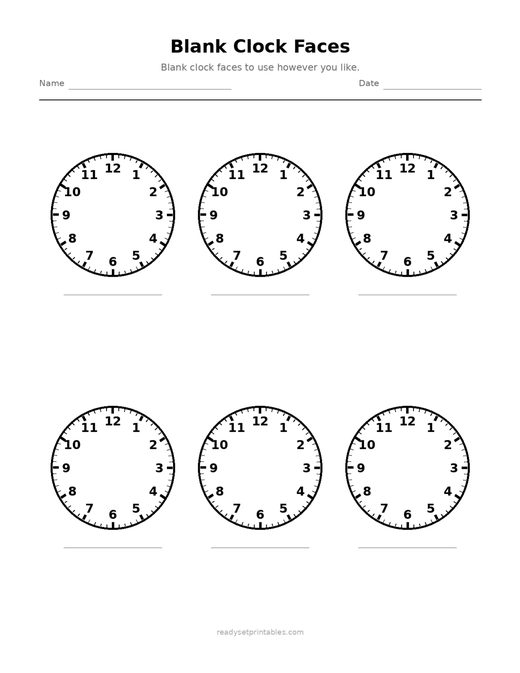 Blank Clock Faces 02Download PDF ↓
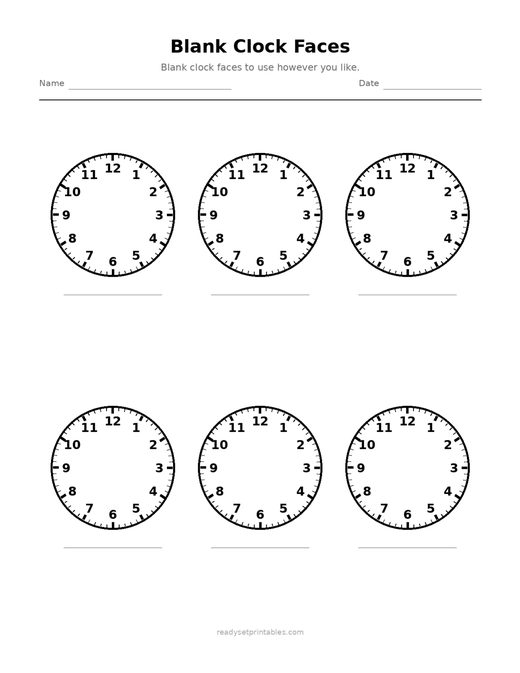 Blank Clock Faces 03Download PDF ↓
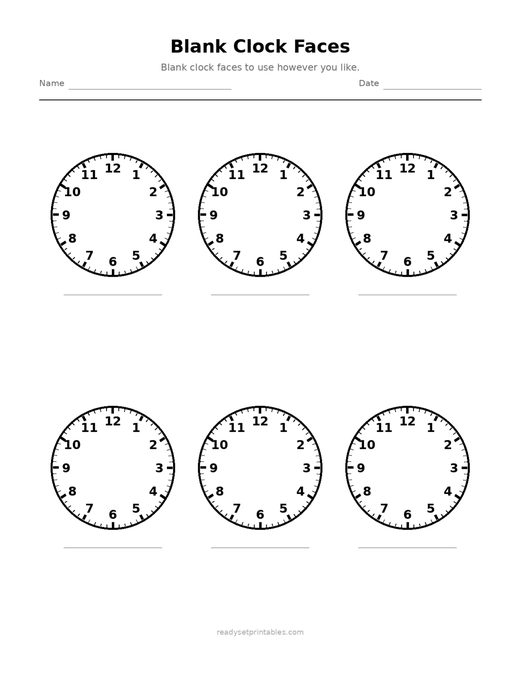 Blank Clock Faces 04Download PDF ↓
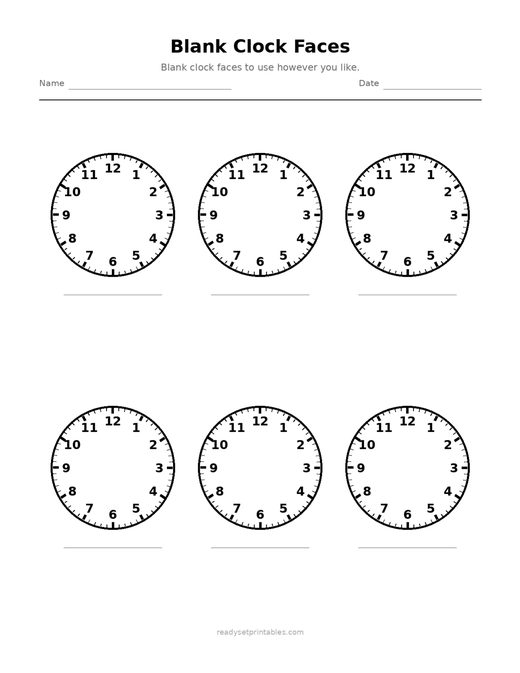 Blank Clock Faces 05Download PDF ↓
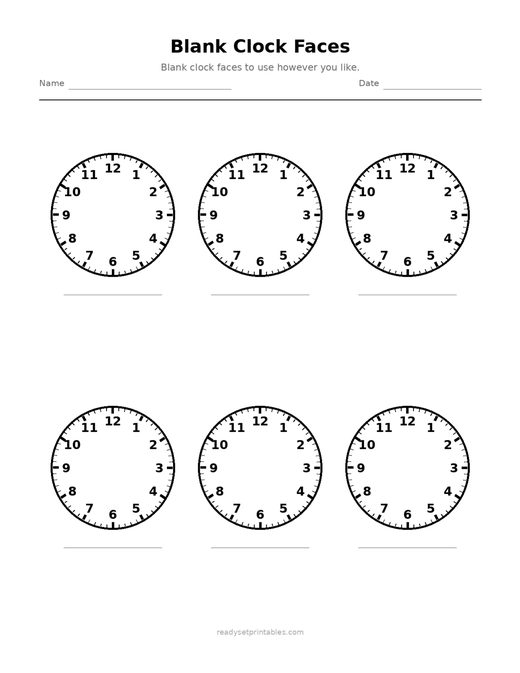 Blank Clock Faces 06Download PDF ↓
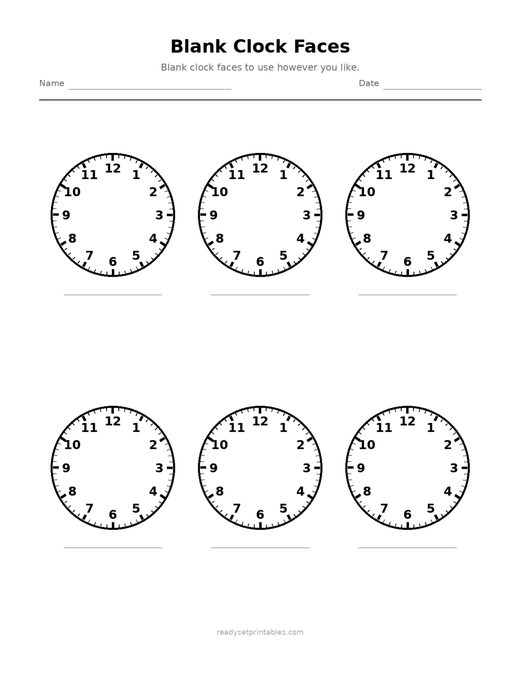 Blank Clock Faces 07Download PDF ↓
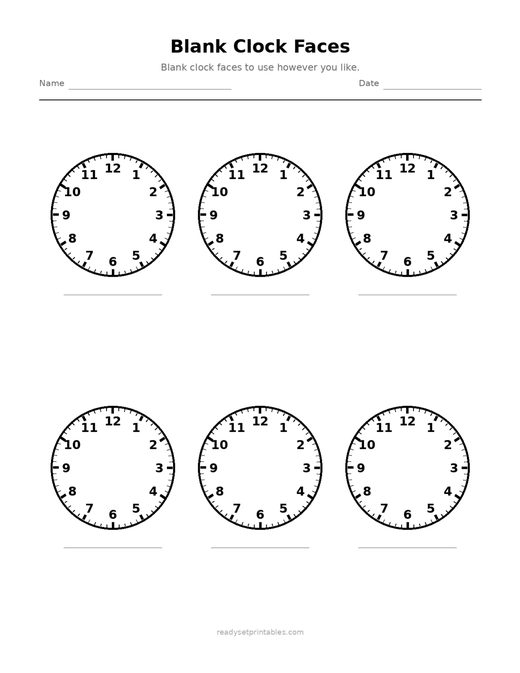 Blank Clock Faces 08Download PDF ↓
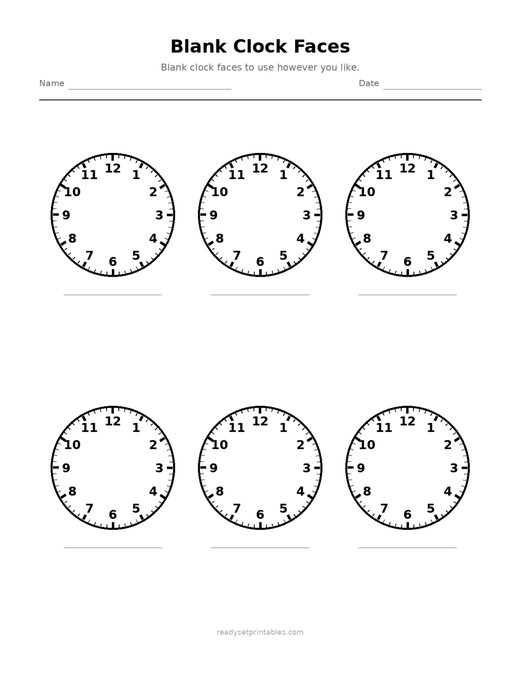 Blank Clock Faces 09Download PDF ↓
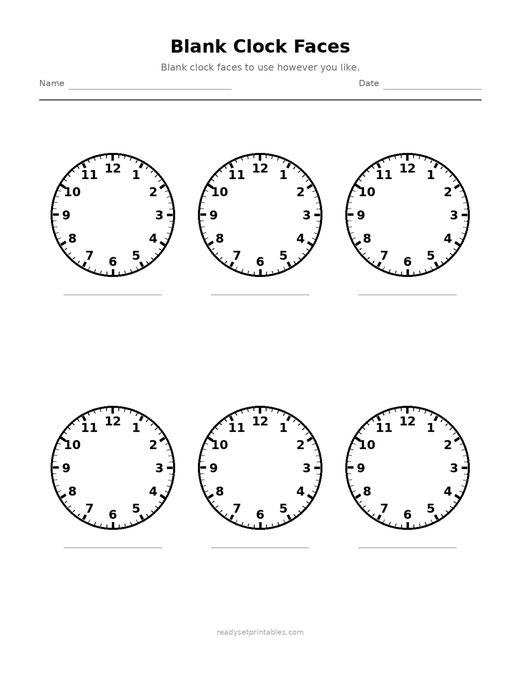 Blank Clock Faces 10Download PDF ↓