Telling Time to 5 Minutes Worksheets
Free printable telling time to 5 minutes worksheets as PDFs. Read any clock face using the five times table. No sign-up, no email.
⬇ Download all 10 as one PDF — free, no sign-up- Sheets
- 10 printable PDFs
- Ages / grades
- Grade 2
- Answer keys
- Yes — on the last page of each PDF
- Paper
- US Letter, portrait; black and white
- Cost
- Free. No sign-up, no email, no watermark
- Use
- Print as many copies as you need for your own classroom or home. Not for resale or re-hosting
Reading to five-minute intervals is the point where telling time turns into arithmetic. Each number on the face is worth five minutes, so the minute hand pointing at the seven means thirty-five past — which is the five times table applied to something a child can see. It is worth doing these sheets after the fives are reasonably secure, because a student who is still counting 5, 10, 15 under their breath will get the right answer and take so long that the skill never becomes useful.
Clock faces set to every five-minute position, with the hour hand drawn in its true intermediate place throughout. Tasks include reading and writing the time, drawing hands to match a given time, and converting between past and to forms. Some sheets show small minute markings around the face; others leave them off to push recall. One worksheet per US Letter page, black and white.
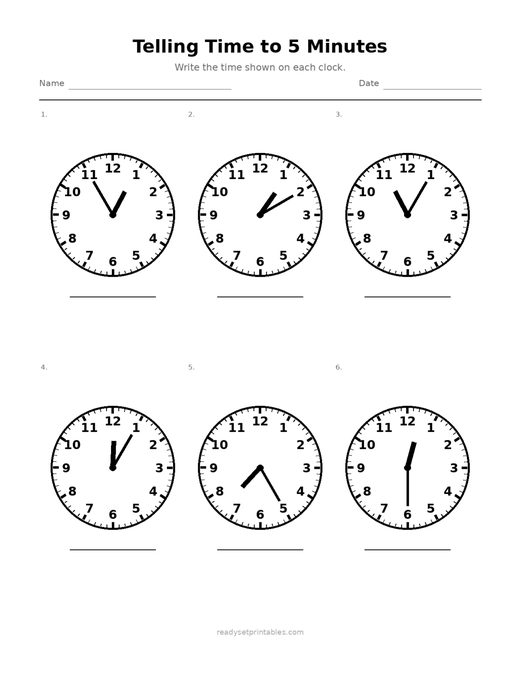 Telling Time to 5 Minutes 01Download PDF ↓
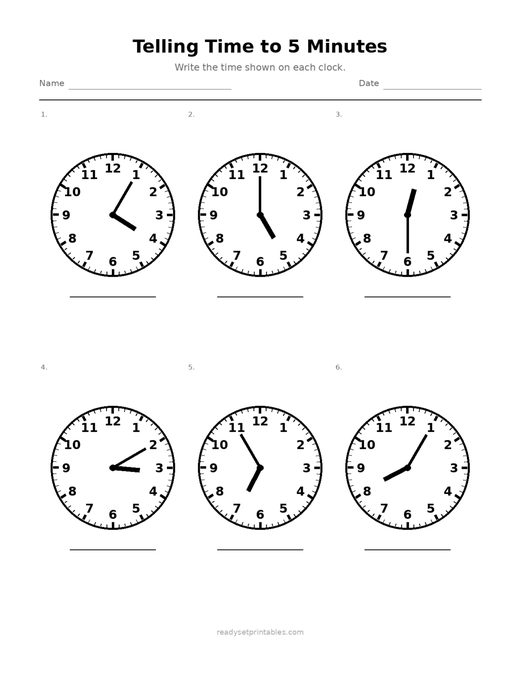 Telling Time to 5 Minutes 02Download PDF ↓
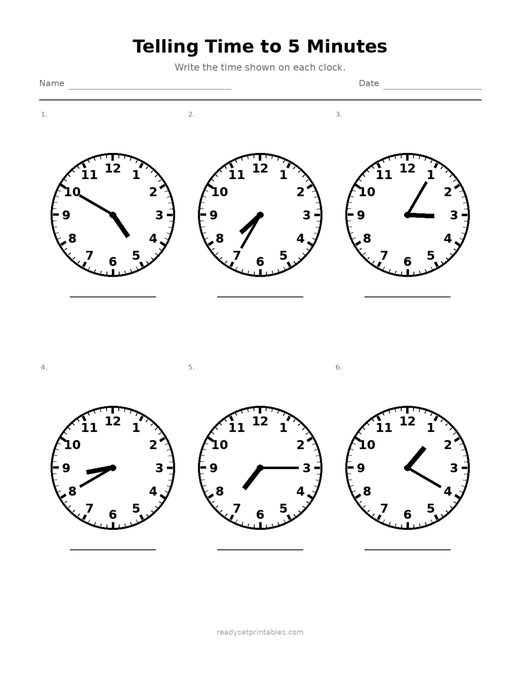 Telling Time to 5 Minutes 03Download PDF ↓
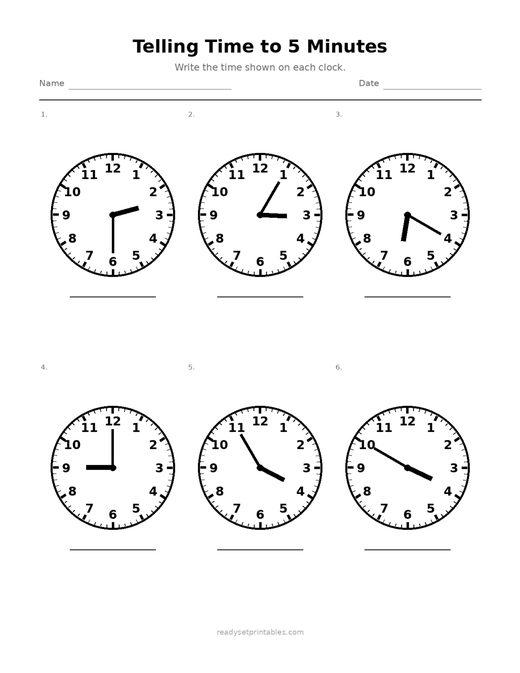 Telling Time to 5 Minutes 04Download PDF ↓
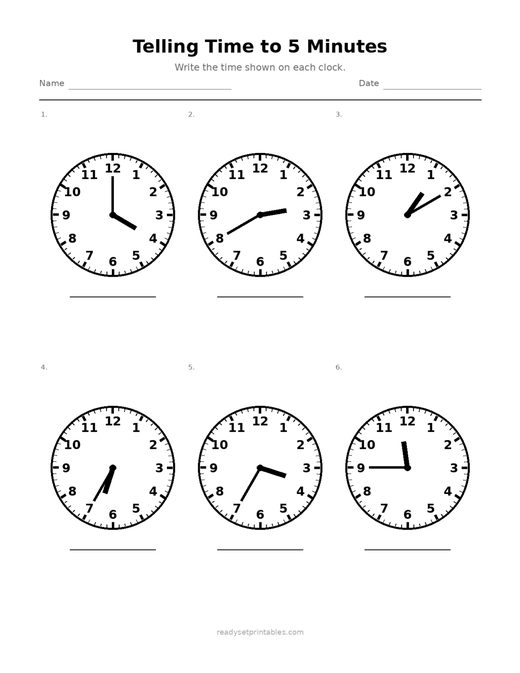 Telling Time to 5 Minutes 05Download PDF ↓
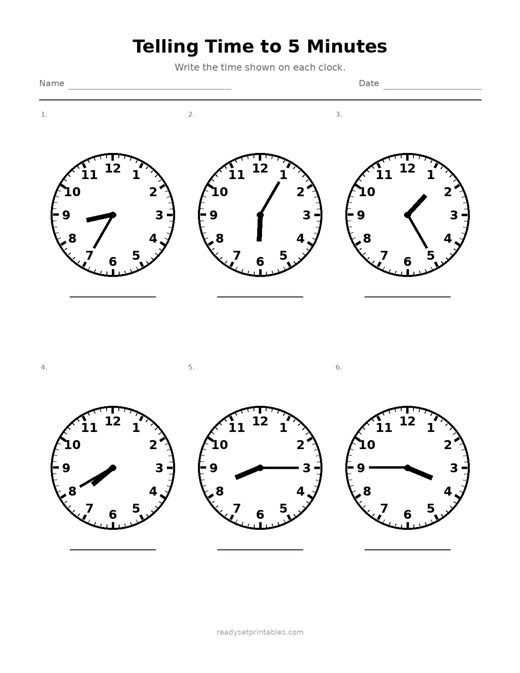 Telling Time to 5 Minutes 06Download PDF ↓
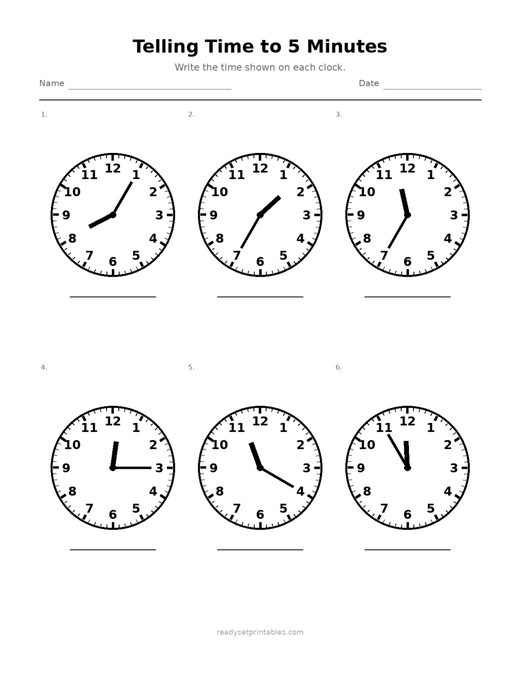 Telling Time to 5 Minutes 07Download PDF ↓
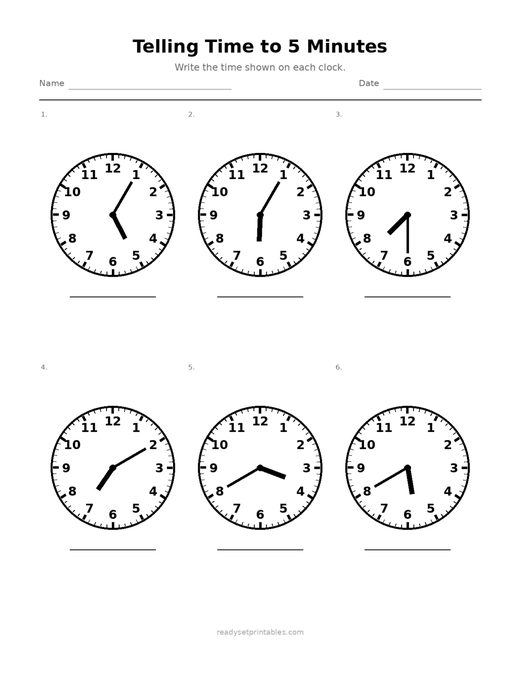 Telling Time to 5 Minutes 08Download PDF ↓
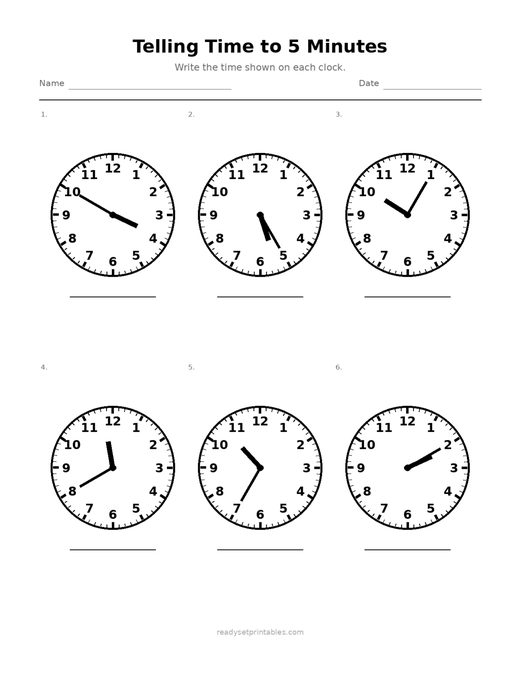 Telling Time to 5 Minutes 09Download PDF ↓
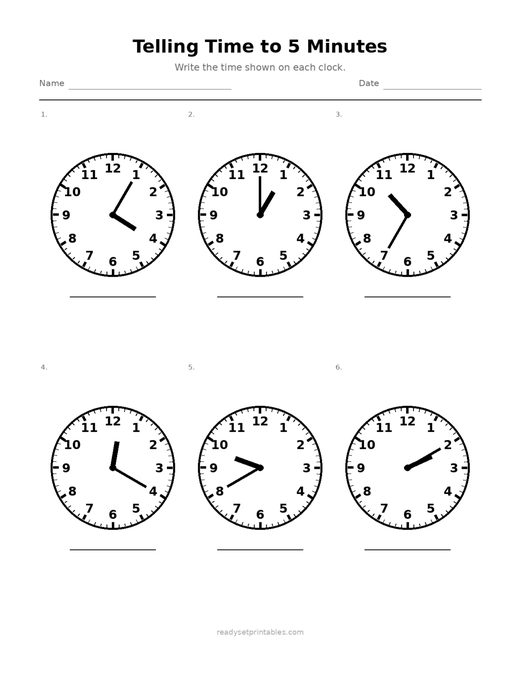 Telling Time to 5 Minutes 10Download PDF ↓