Telling Time to the Half Hour Worksheets
Free printable telling time to the half hour worksheets as PDFs. Half past practice on analog clocks. No sign-up, no email.
⬇ Download all 10 as one PDF — free, no sign-upHalf past introduces the complication that trips almost every child: the hour hand has moved. At half past three it is not pointing at the three any more, it is sitting between the three and the four, and a child who has only ever seen it point directly at a number will read it as half past four. These sheets deliberately draw the hour hand in its true position rather than cheating it onto the number, because learning to read the earlier of the two numbers is the entire lesson here.
Clock faces showing whole hours and half hours mixed together, with the hour hand drawn in its correct intermediate position at half past. Sheets include reading the clock and writing the time, and drawing hands to match a written time. Faces are printed large with clear numbering. One worksheet per US Letter page, black and white.
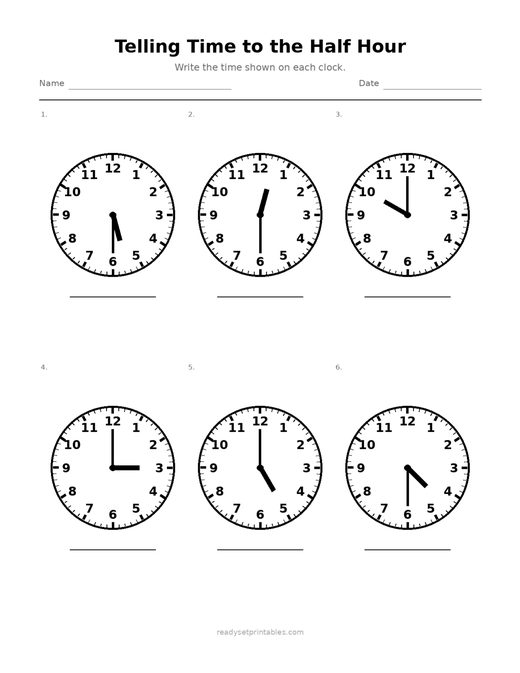 Telling Time to the Half Hour 01Download PDF ↓
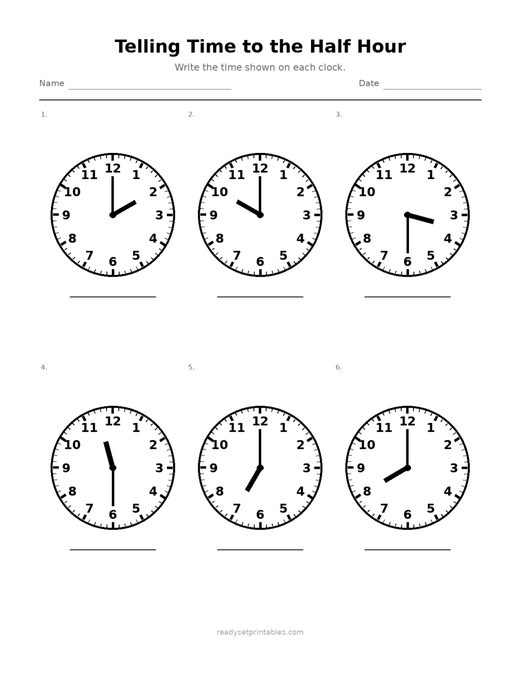 Telling Time to the Half Hour 02Download PDF ↓
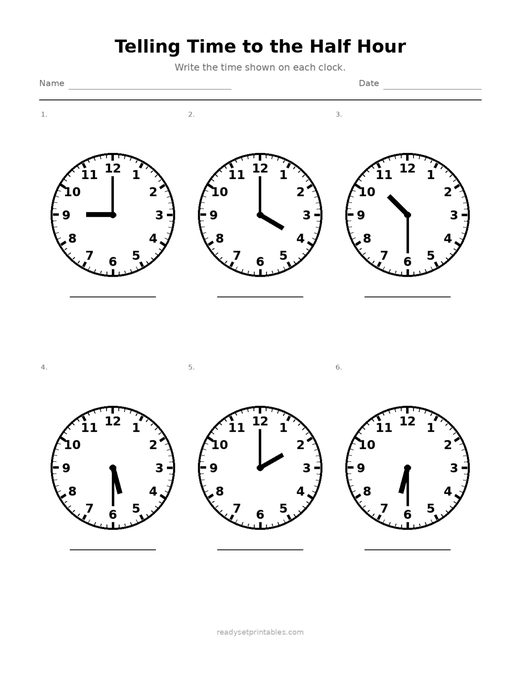 Telling Time to the Half Hour 03Download PDF ↓
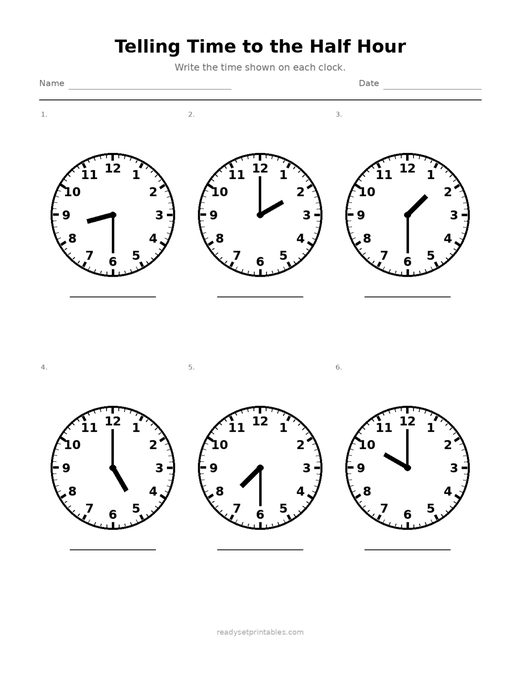 Telling Time to the Half Hour 04Download PDF ↓
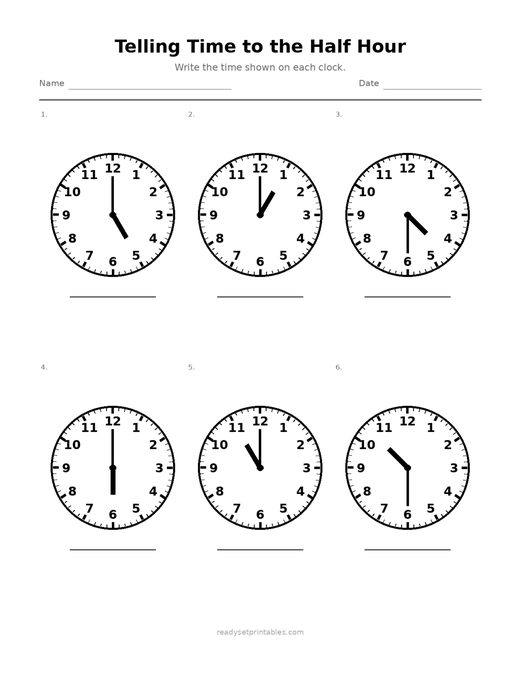 Telling Time to the Half Hour 05Download PDF ↓
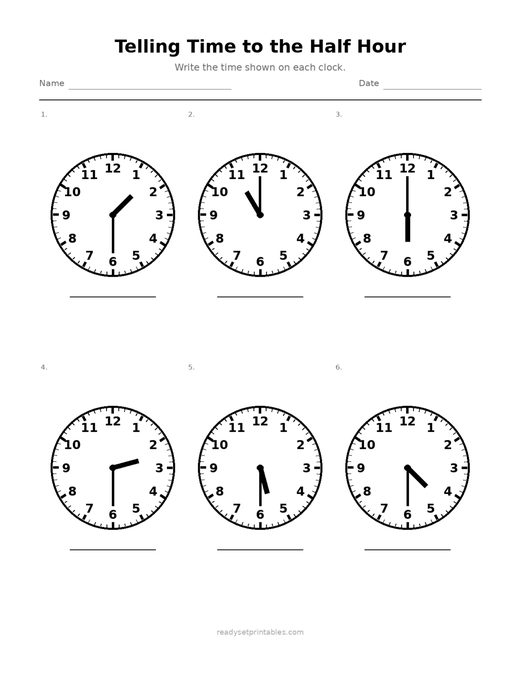 Telling Time to the Half Hour 06Download PDF ↓
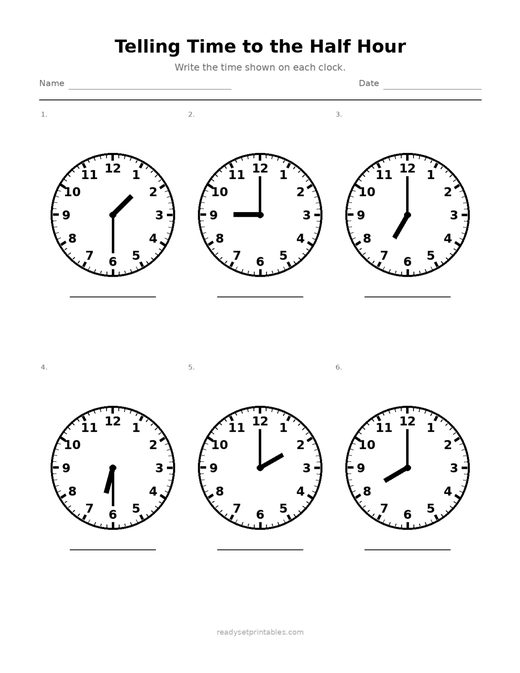 Telling Time to the Half Hour 07Download PDF ↓
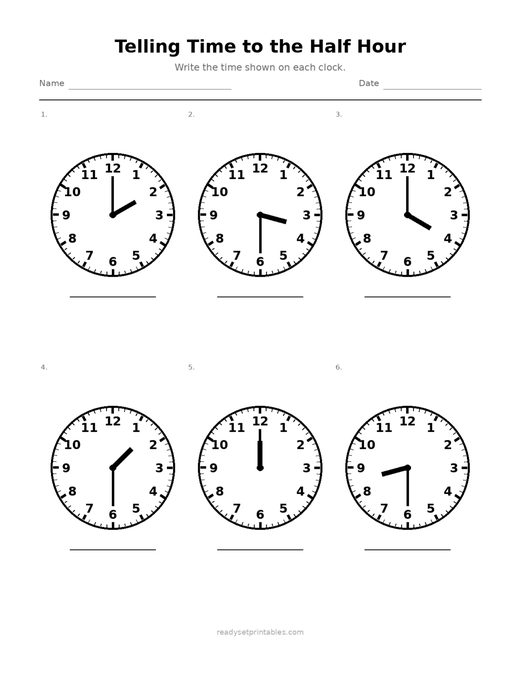 Telling Time to the Half Hour 08Download PDF ↓
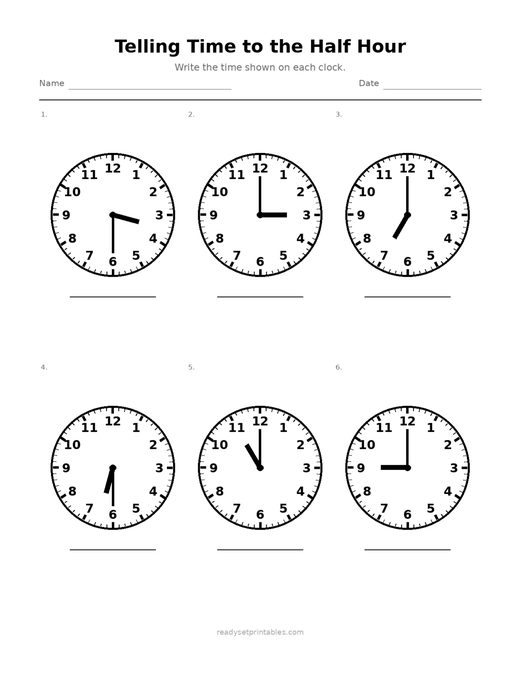 Telling Time to the Half Hour 09Download PDF ↓
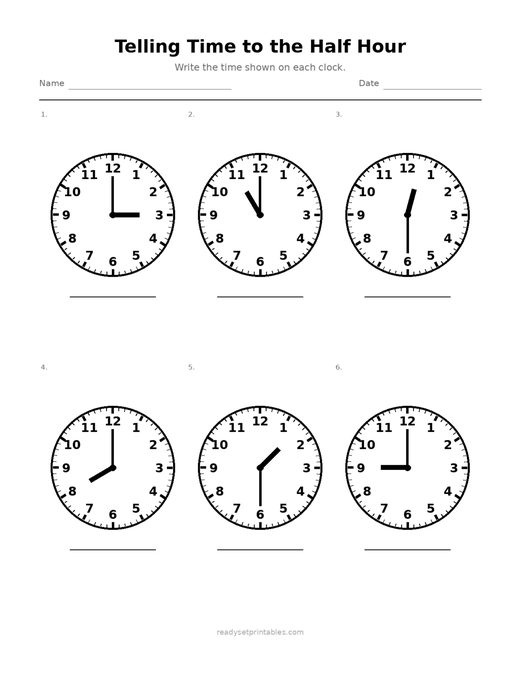 Telling Time to the Half Hour 10Download PDF ↓