Telling Time to the Hour Worksheets
Free printable telling time to the hour worksheets as PDFs. O'clock practice on analog clock faces. No sign-up and no email.
⬇ Download all 10 as one PDF — free, no sign-upTelling time to the hour is the first step, and it is mostly about learning that the two hands are not equal partners. At o'clock the long hand is always straight up and the short hand does all the work, which makes it the cleanest possible introduction — one thing to read, twelve possible answers. These sheets keep the minute hand at twelve throughout so the habit that forms is reading the hour hand, rather than guessing from whichever hand the eye lands on first.
Clock faces set to whole hours with space to write the time in digits beneath, plus reverse questions where a digital time is given and the hands have to be drawn. Clock faces are printed large with clearly numbered positions and hands of visibly different lengths. Some sheets add a simple matching exercise. One worksheet per US Letter page, black and white.
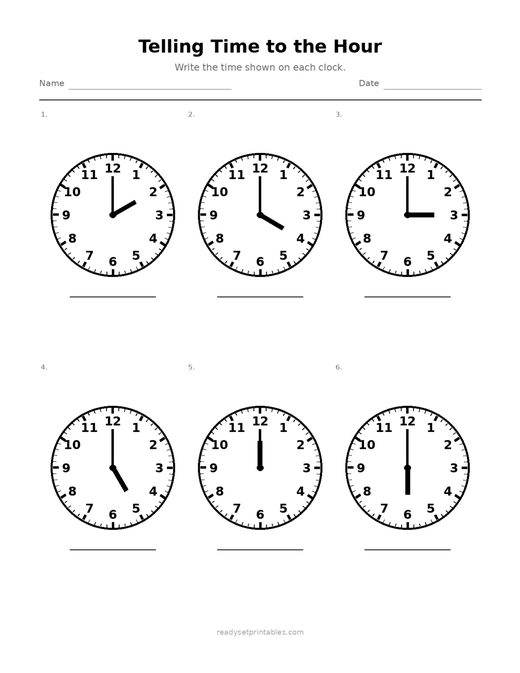 Telling Time to the Hour 01Download PDF ↓
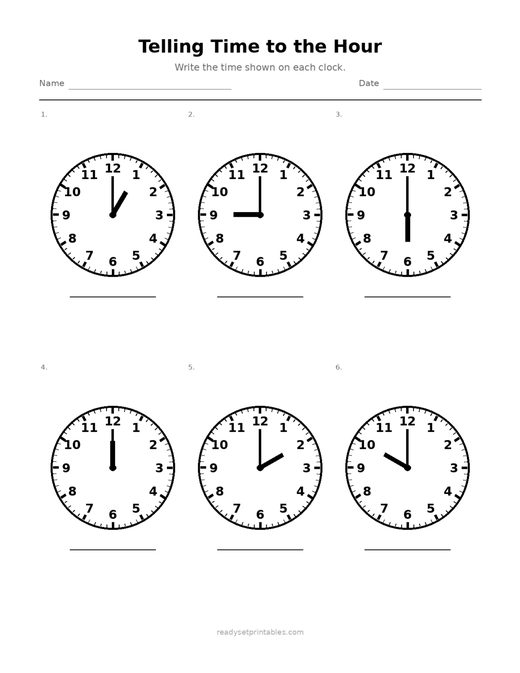 Telling Time to the Hour 02Download PDF ↓
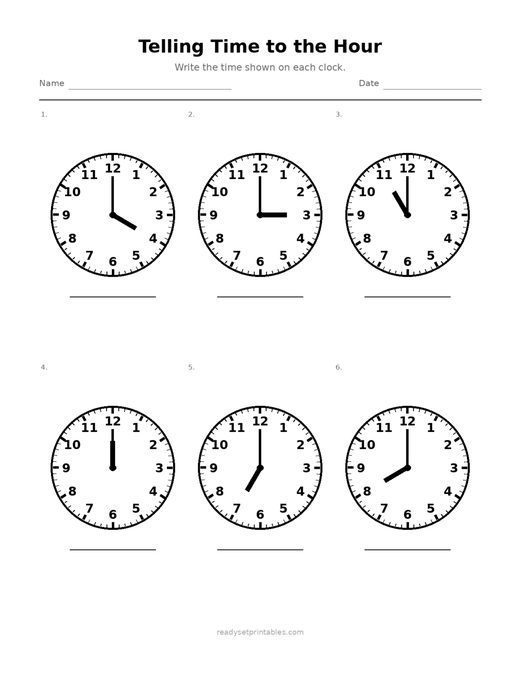 Telling Time to the Hour 03Download PDF ↓
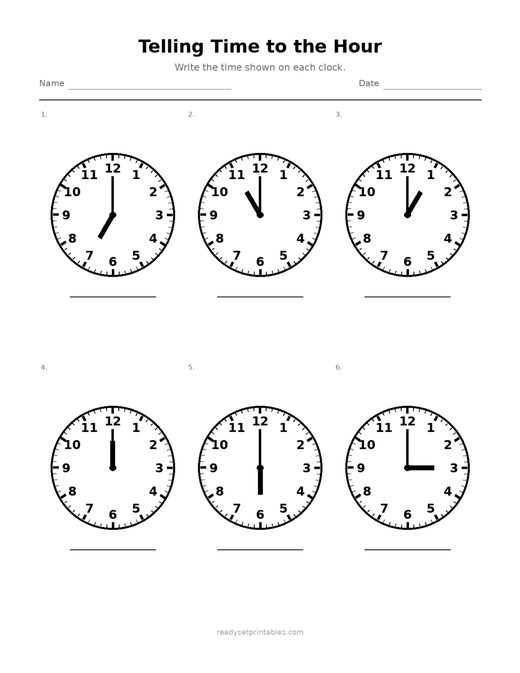 Telling Time to the Hour 04Download PDF ↓
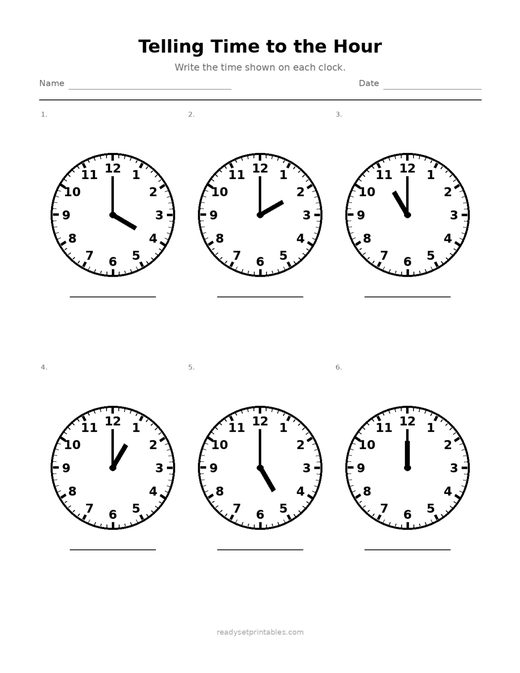 Telling Time to the Hour 05Download PDF ↓
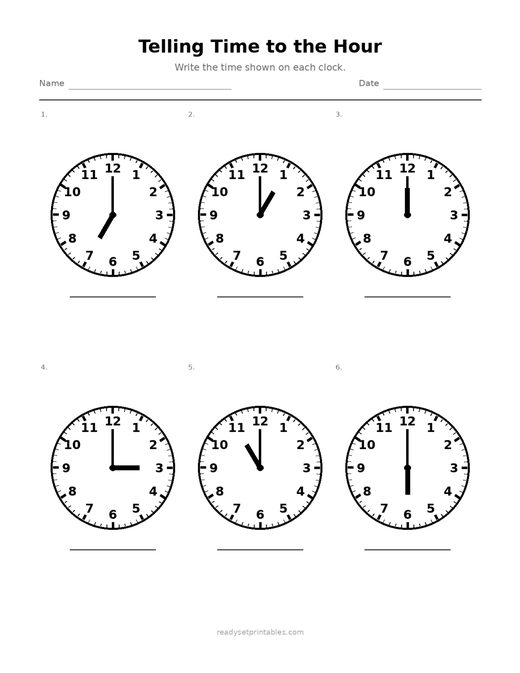 Telling Time to the Hour 06Download PDF ↓
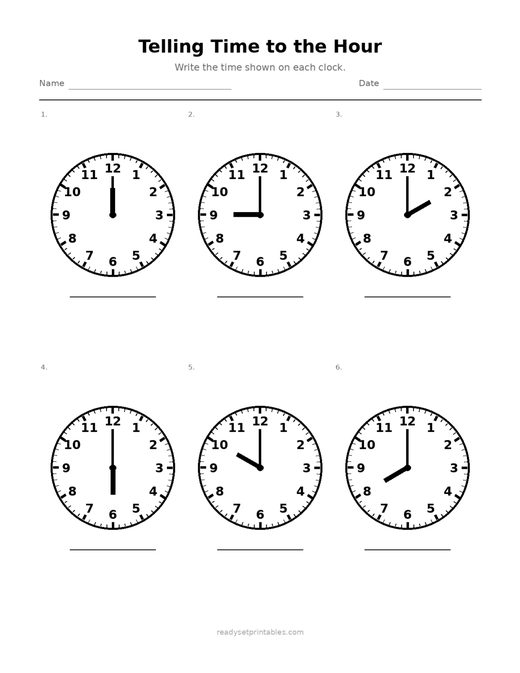 Telling Time to the Hour 07Download PDF ↓
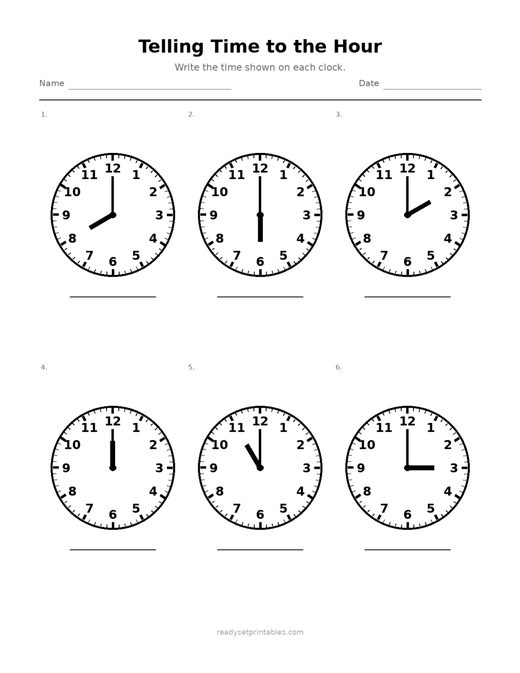 Telling Time to the Hour 08Download PDF ↓
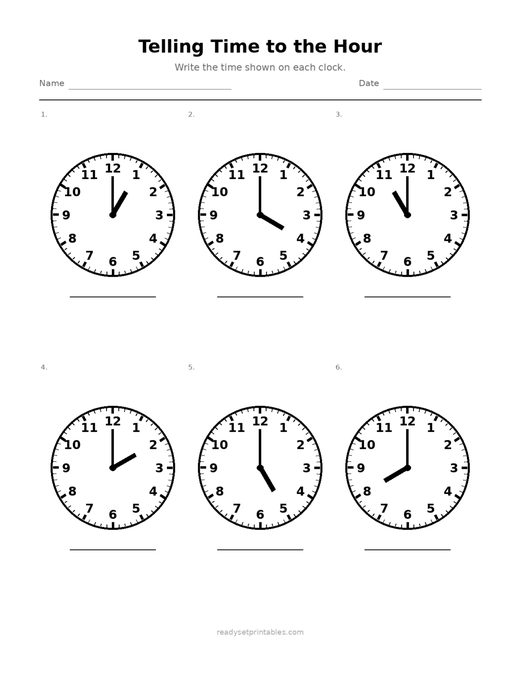 Telling Time to the Hour 09Download PDF ↓
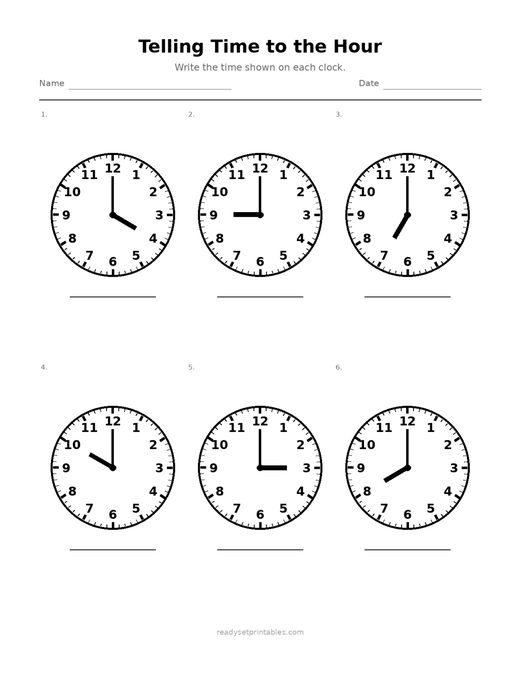 Telling Time to the Hour 10Download PDF ↓