Telling Time to the Quarter Hour Worksheets
Free printable telling time to the quarter hour worksheets as PDFs. Quarter past and quarter to practice. No sign-up, no email.
⬇ Download all 10 as one PDF — free, no sign-up- Sheets
- 10 printable PDFs
- Ages / grades
- Grades 1–4
- Answer keys
- Yes — on the last page of each PDF
- Paper
- US Letter, portrait; black and white
- Cost
- Free. No sign-up, no email, no watermark
- Use
- Print as many copies as you need for your own classroom or home. Not for resale or re-hosting
Quarter past is straightforward; quarter to is where the difficulty lives. Reading forwards from the hour is natural, but quarter to five means counting backwards from a number the hour hand has not reached yet — and the hour hand is now sitting nearly at the five, which makes it look like the answer. These sheets mix quarter past and quarter to throughout rather than teaching them in separate blocks, because the two only become secure once a child has to decide which one they are looking at.
Clock faces at quarter past, half past and quarter to the hour, mixed on the same sheets, with the hour hand always drawn in its true position. Tasks include reading and writing the time, drawing the hands for a given time, and matching analog faces to digital times. Faces are printed large and clearly numbered. One worksheet per US Letter page, black and white.
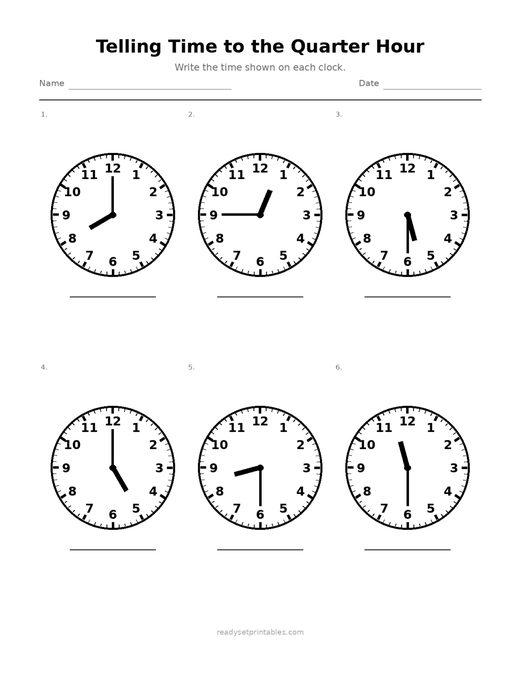 Telling Time to the Quarter Hour 01Download PDF ↓
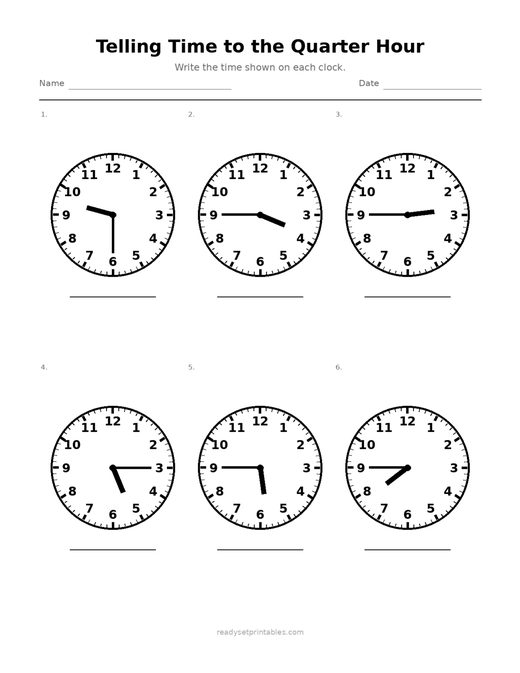 Telling Time to the Quarter Hour 02Download PDF ↓
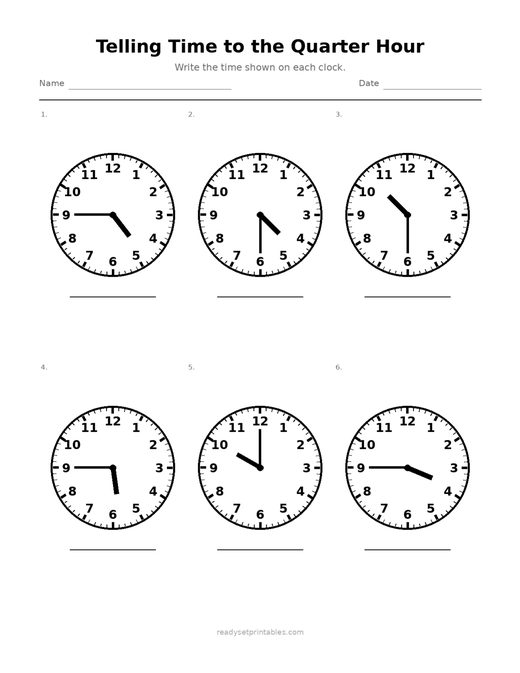 Telling Time to the Quarter Hour 03Download PDF ↓
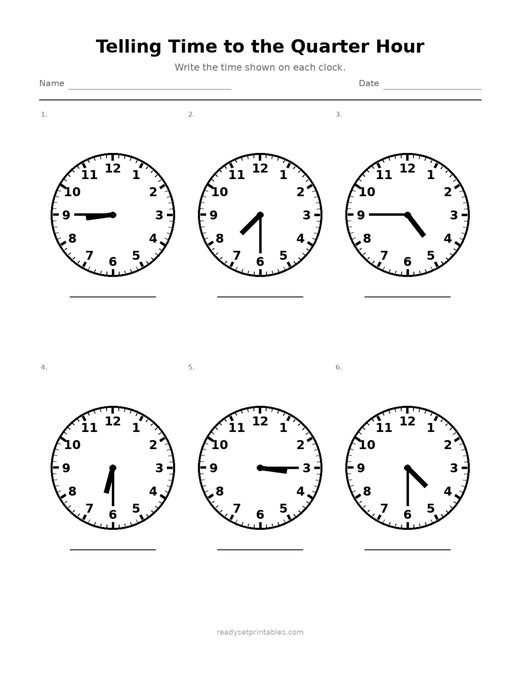 Telling Time to the Quarter Hour 04Download PDF ↓
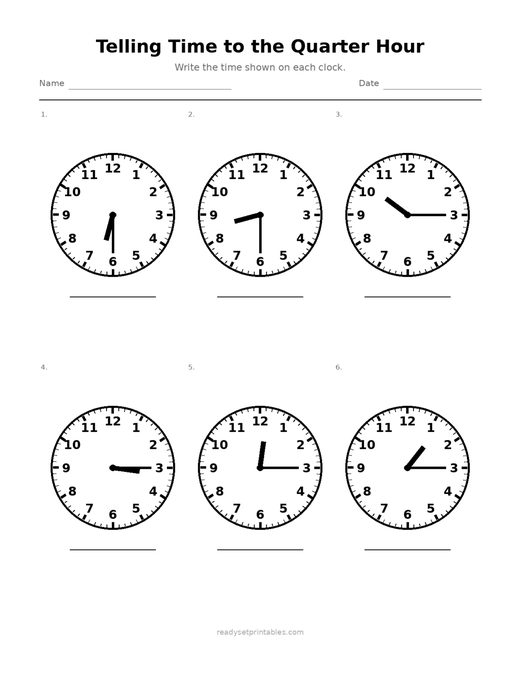 Telling Time to the Quarter Hour 05Download PDF ↓
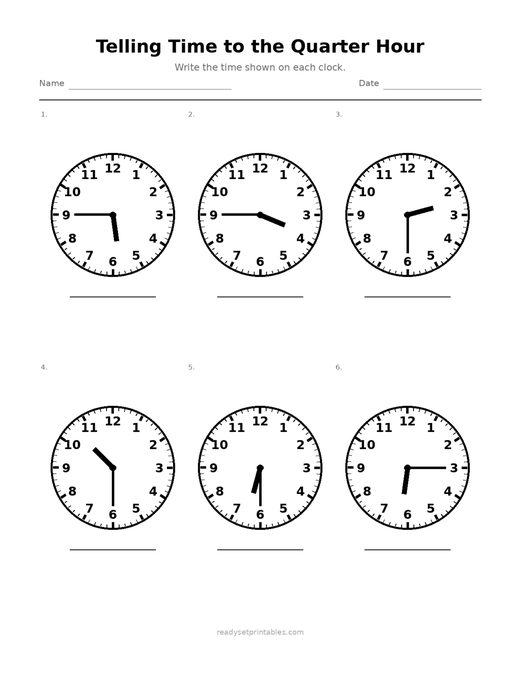 Telling Time to the Quarter Hour 06Download PDF ↓
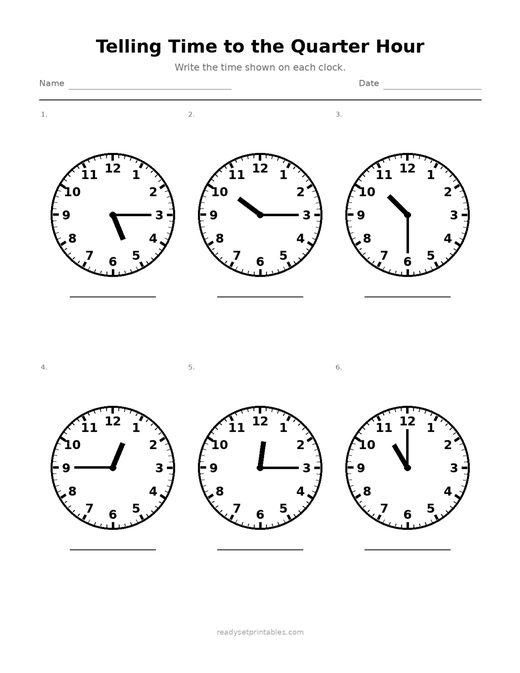 Telling Time to the Quarter Hour 07Download PDF ↓
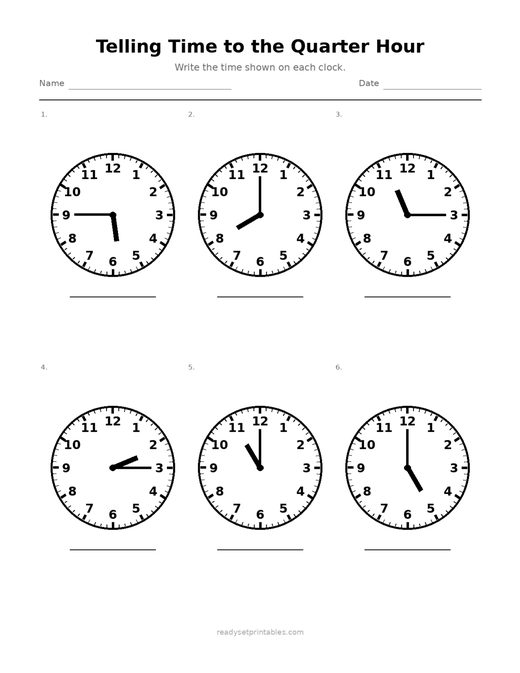 Telling Time to the Quarter Hour 08Download PDF ↓
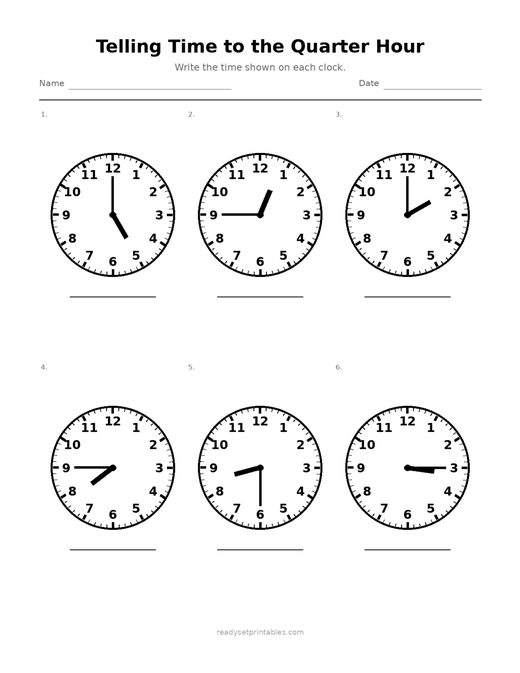 Telling Time to the Quarter Hour 09Download PDF ↓
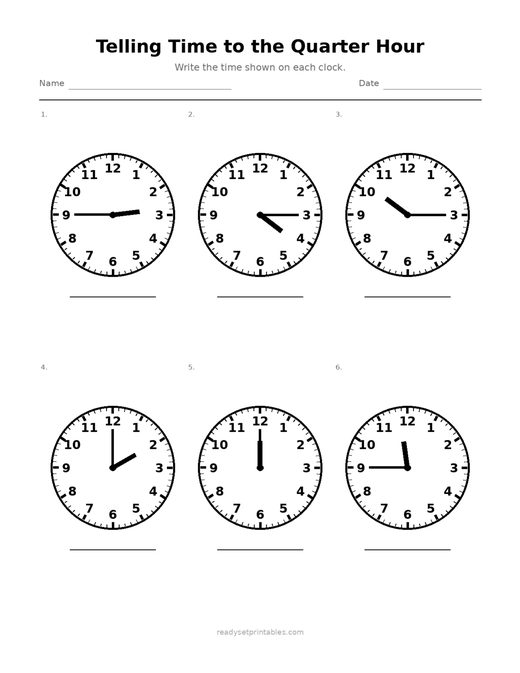 Telling Time to the Quarter Hour 10Download PDF ↓