Variables Worksheets
Free printable variables worksheets (PDF): practice identifying independent, dependent and controlled variables, spotting unfair tests and reading graphs, with answer keys. No sign-up, no email.
⬇ Download all 12 as one PDF — free, no sign-upIndependent, dependent, controlled — three words that students can define perfectly and still get wrong the moment they are looking at an actual experiment. The practice sheets here give them real experiments to take apart: what was deliberately changed, what was measured, what had to stay the same, and whether there was a control group. Every practice sheet has its own answer key.
Four levels of identify-the-variables practice: Level 1 (ages 7–9) uses plain fair-test language; Level 2 (ages 9–11) introduces the three terms; Level 3 (ages 11–14) adds the values tested, units and control groups; Level 4 asks students to spot what makes a test unfair and fix it. There is also a Types of Variables sheet (sorting factors, finding variables in a hypothesis, and control group versus controlled variable), a Variables in Tables and Graphs sheet with clearly labelled example data, and blank planning templates for students' own investigations in three age bands. Black and white, one sheet per US Letter page.
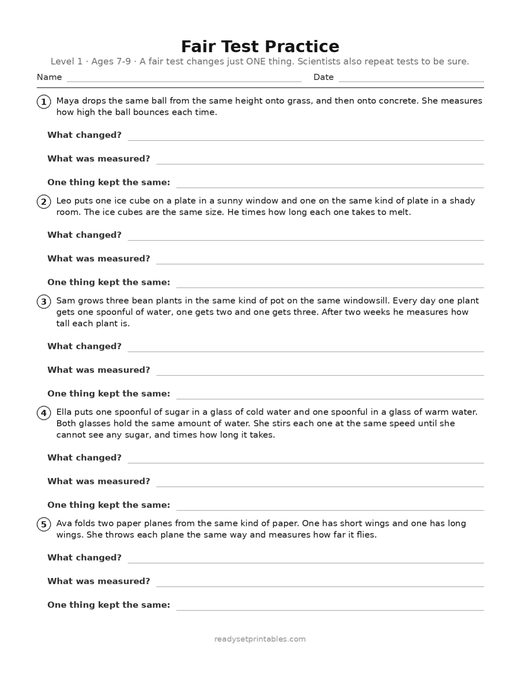 Fair Test Practice — Level 1 (Ages 7–9)Download PDF ↓
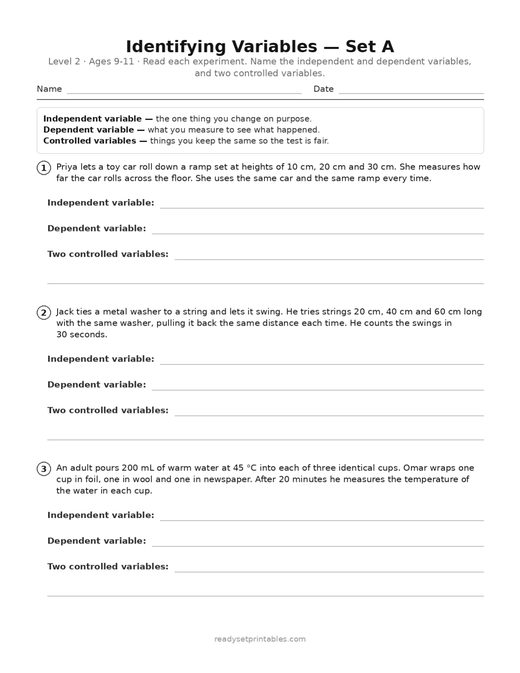 Identifying Variables Practice — Level 2, Set A (Ages 9–11)Download PDF ↓
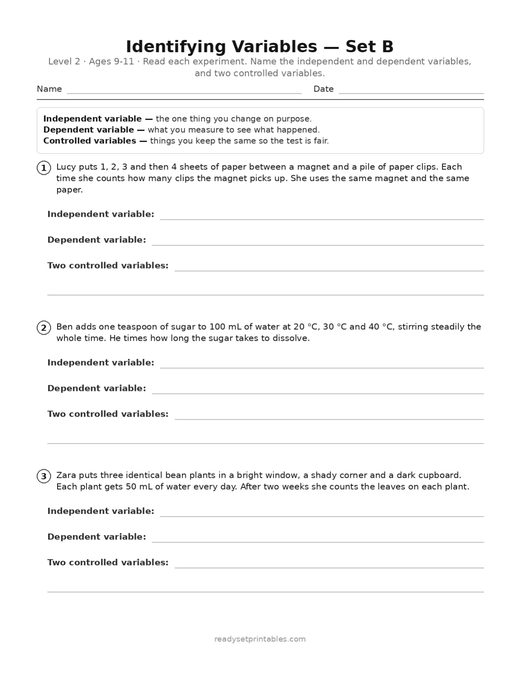 Identifying Variables Practice — Level 2, Set B (Ages 9–11)Download PDF ↓
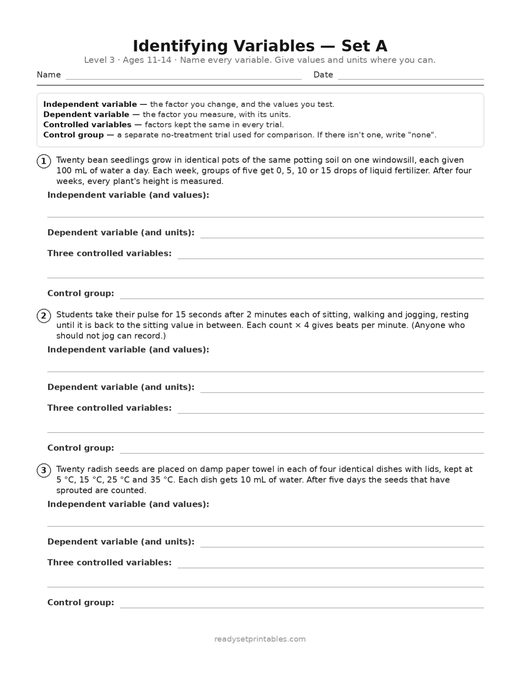 Identifying Variables Practice — Level 3, Set A (Ages 11–14)Download PDF ↓
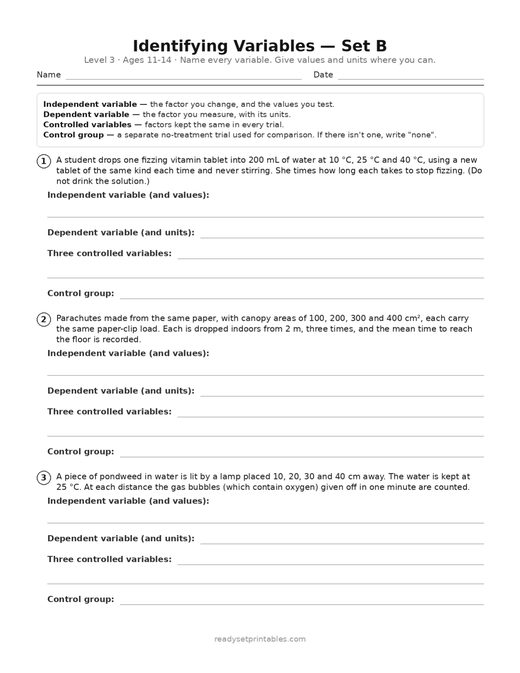 Identifying Variables Practice — Level 3, Set B (Ages 11–14)Download PDF ↓
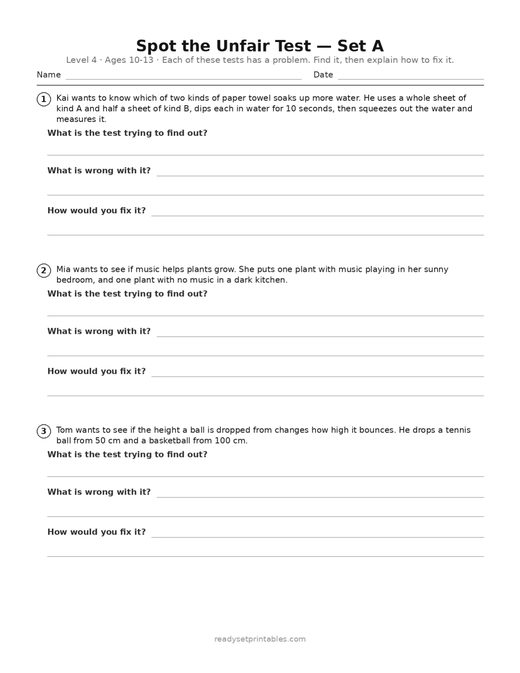 Spot the Unfair Test — Level 4, Set A (Ages 10–13)Download PDF ↓
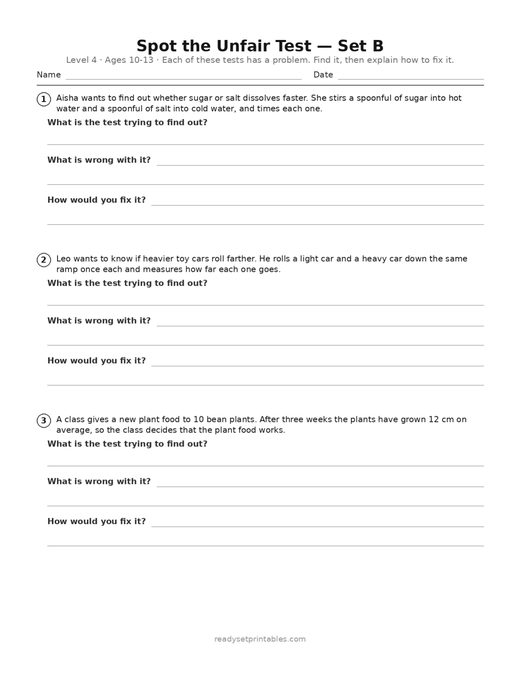 Spot the Unfair Test — Level 4, Set B (Ages 10–13)Download PDF ↓
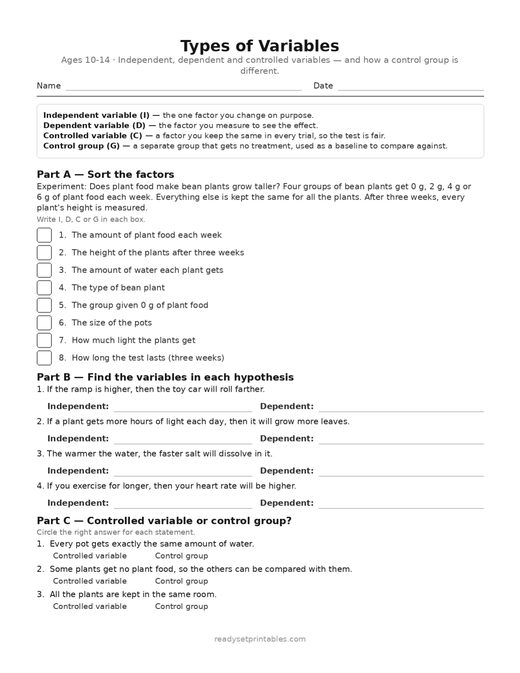 Types of Variables: Independent, Dependent and Controlled (Ages 10–14)Download PDF ↓
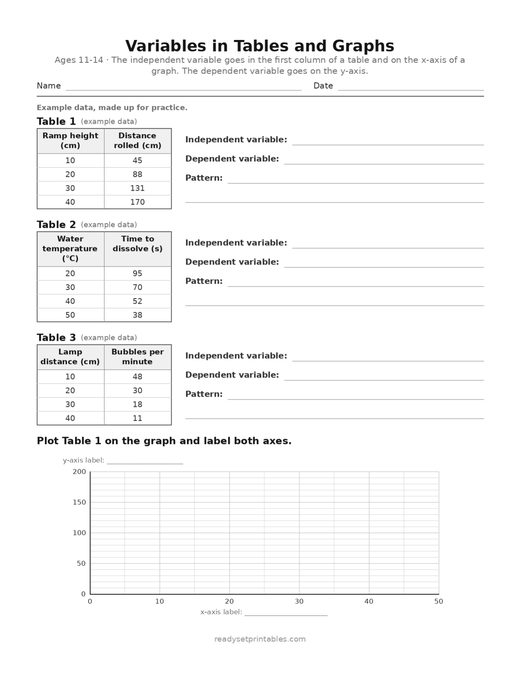 Variables in Tables and Graphs (Ages 11–14)Download PDF ↓
 Making a Fair Test — Template (Ages 5–7)Download PDF ↓
 Variables in an Experiment — Template (Ages 8–10)Download PDF ↓
 Variables and Controls — Template (Ages 11–14)Download PDF ↓
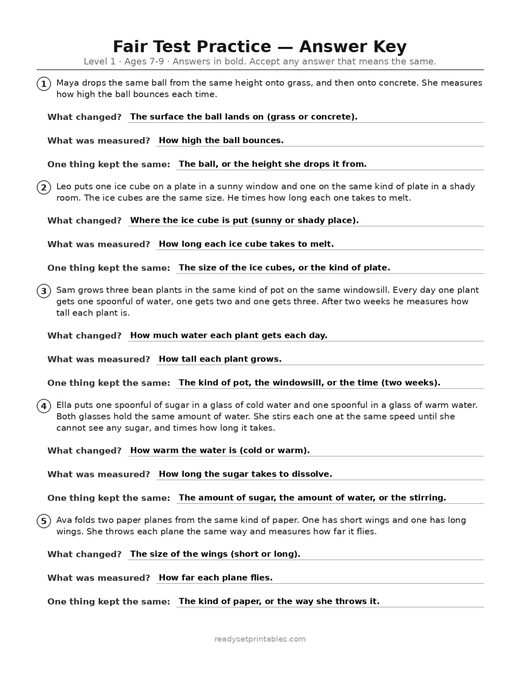 Fair Test Practice — Level 1 (Ages 7–9) — Answer Key Answer keyDownload PDF ↓
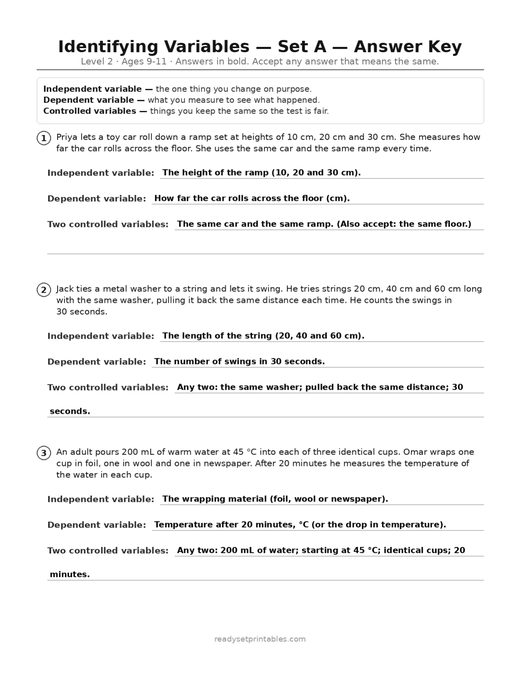 Identifying Variables Practice — Level 2, Set A (Ages 9–11) — Answer Key Answer keyDownload PDF ↓
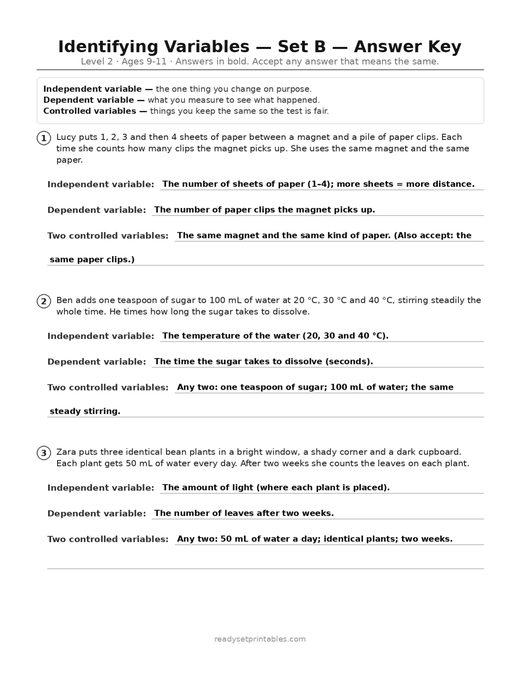 Identifying Variables Practice — Level 2, Set B (Ages 9–11) — Answer Key Answer keyDownload PDF ↓
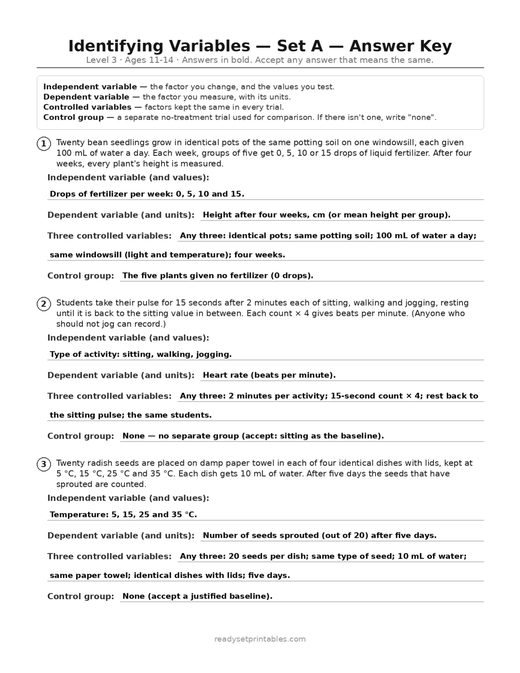 Identifying Variables Practice — Level 3, Set A (Ages 11–14) — Answer Key Answer keyDownload PDF ↓
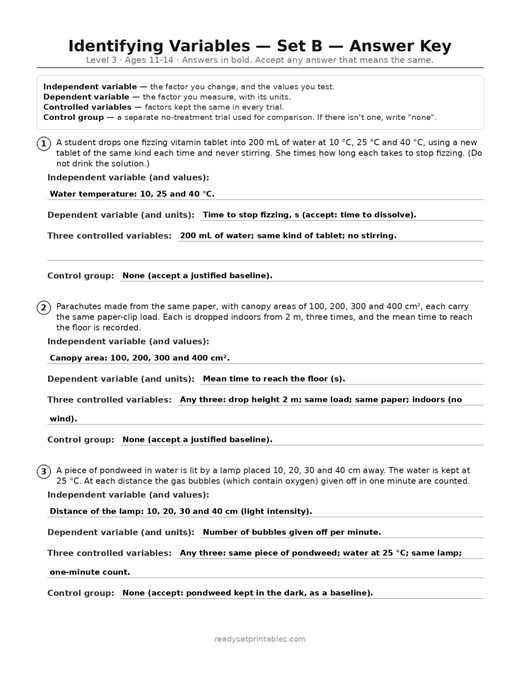 Identifying Variables Practice — Level 3, Set B (Ages 11–14) — Answer Key Answer keyDownload PDF ↓
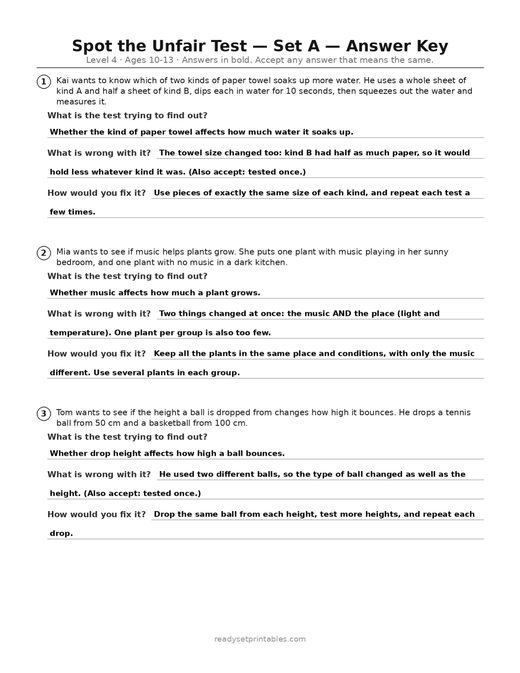 Spot the Unfair Test — Level 4, Set A (Ages 10–13) — Answer Key Answer keyDownload PDF ↓
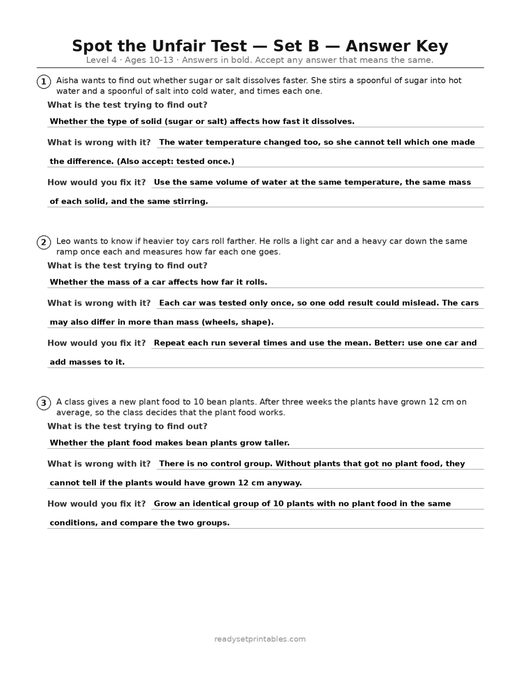 Spot the Unfair Test — Level 4, Set B (Ages 10–13) — Answer Key Answer keyDownload PDF ↓
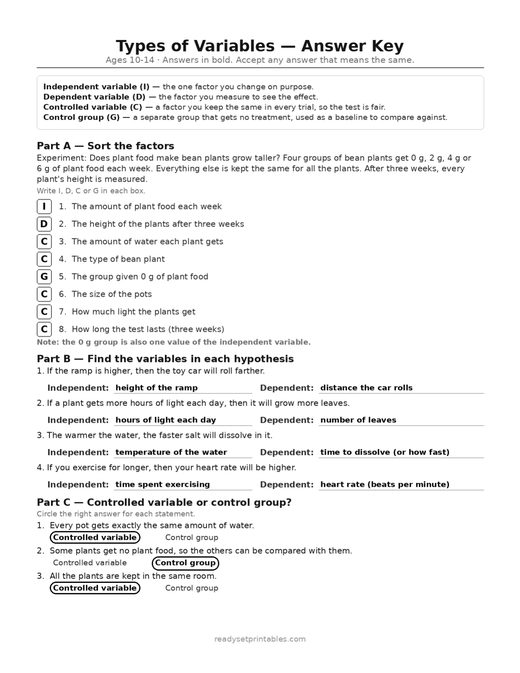 Types of Variables: Independent, Dependent and Controlled (Ages 10–14) — Answer Key Answer keyDownload PDF ↓
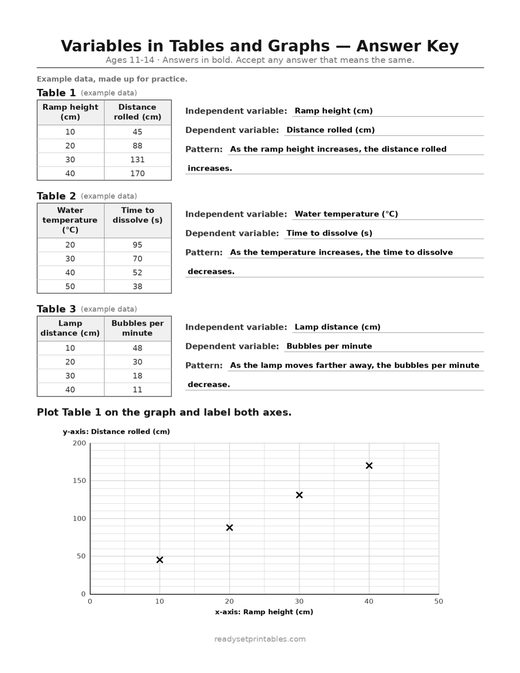 Variables in Tables and Graphs (Ages 11–14) — Answer Key Answer keyDownload PDF ↓