Shikaku Puzzles — 10x10
Free printable 10x10 shikaku puzzles as PDFs with answer pages. The standard adult size, ungated — no sign-up and no email required.
⬇ Download all 10 as one PDF — free, no sign-upTen by ten is the size most shikaku books settle on, and for good reason: a hundred cells is enough room for a long chain of deductions without the grid becoming a chore to draw. Expect large clues like 12 and 15 that stretch across a third of the board, and small 2s and 3s tucked in corners that quietly decide where those big rectangles are allowed to sit. Most solvers work these in twenty minutes or so once the puzzle is familiar.
Each page carries one 10x10 shikaku grid with clean rule lines and clue numbers large enough to read at arm's length. Cell size is kept generous so drawn rectangle borders stay legible even after a few corrections. Every puzzle has an answer page showing the completed tiling. All sheets are black and white and fit a single US Letter page.
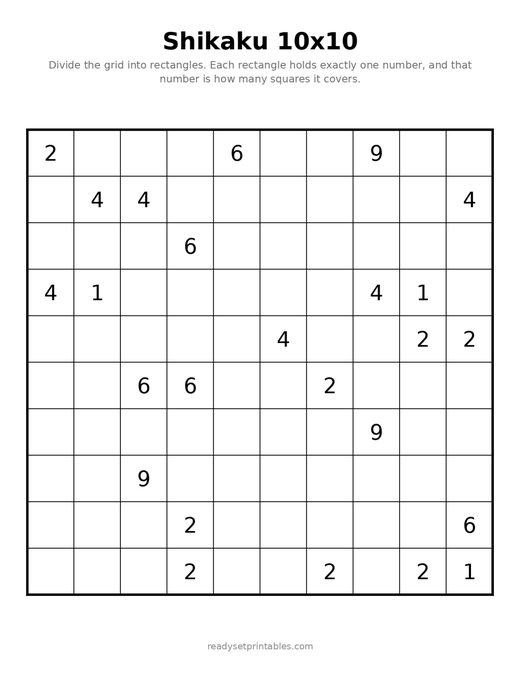 Shikaku 10x10 Medium 01Download PDF ↓
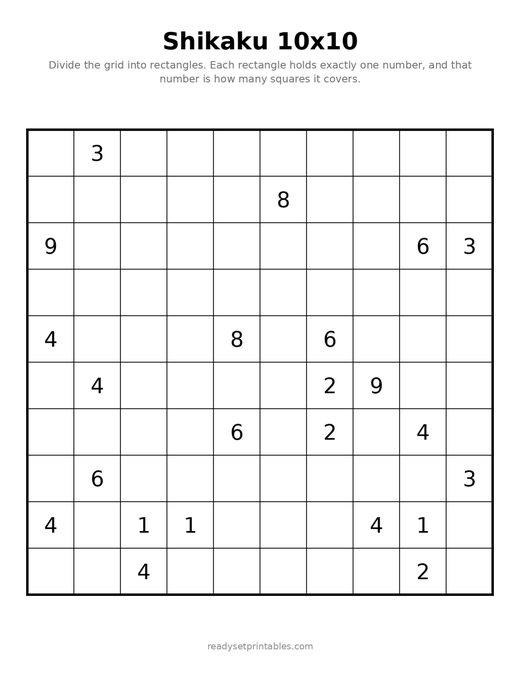 Shikaku 10x10 Medium 02Download PDF ↓
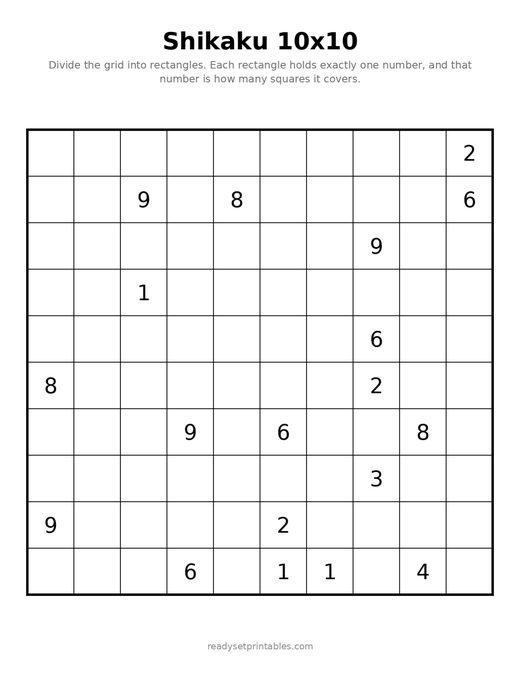 Shikaku 10x10 Medium 03Download PDF ↓
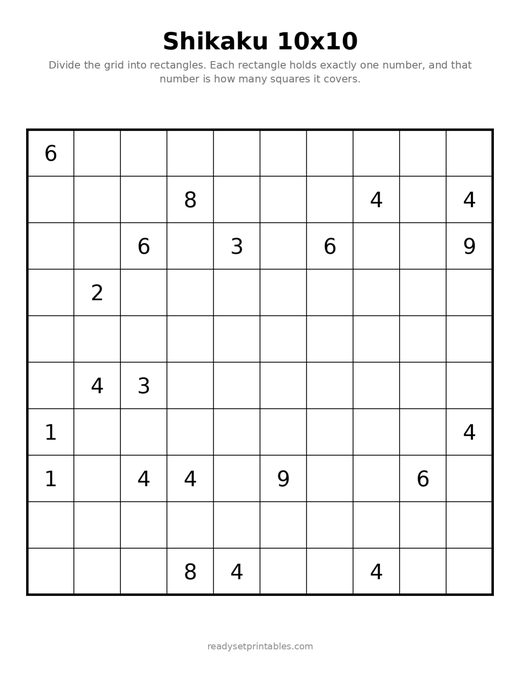 Shikaku 10x10 Medium 04Download PDF ↓
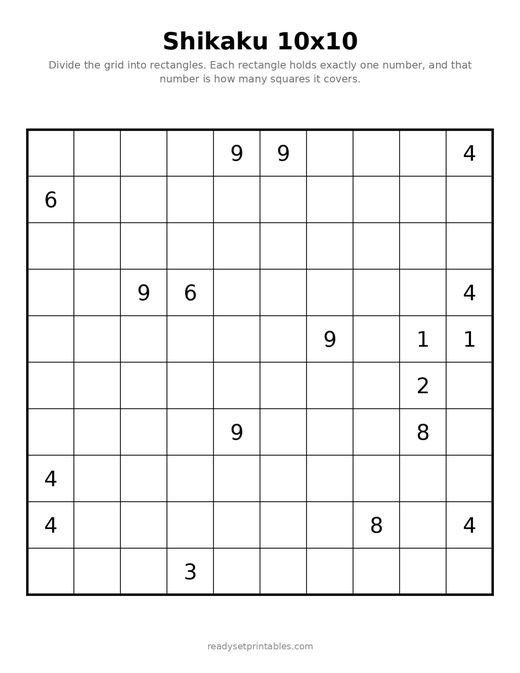 Shikaku 10x10 Medium 05Download PDF ↓
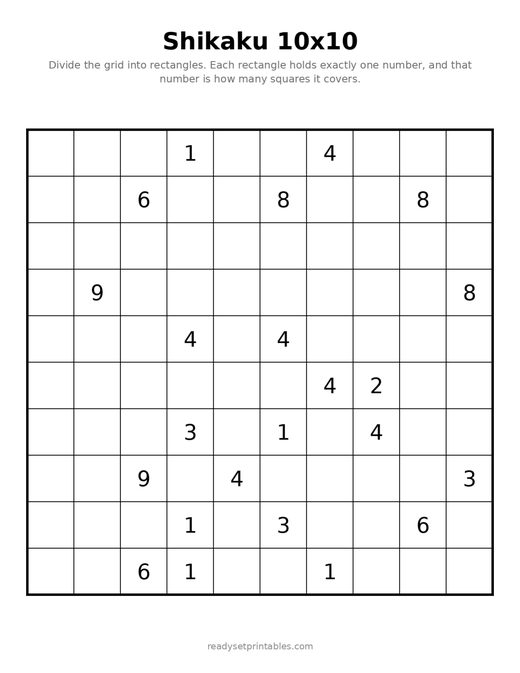 Shikaku 10x10 Medium 06Download PDF ↓
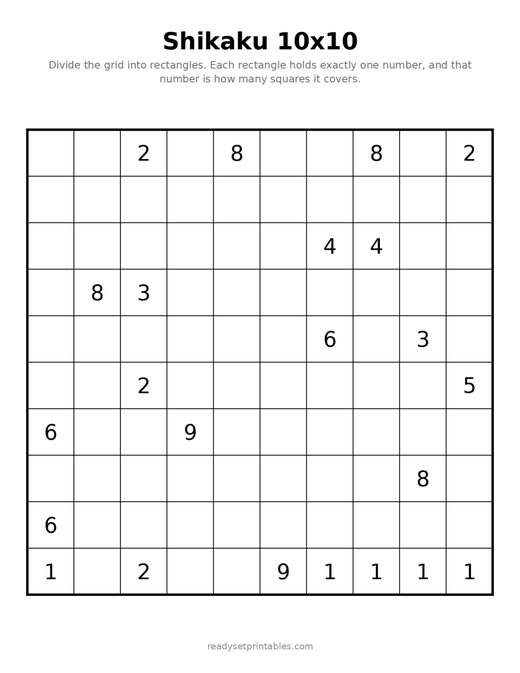 Shikaku 10x10 Medium 07Download PDF ↓
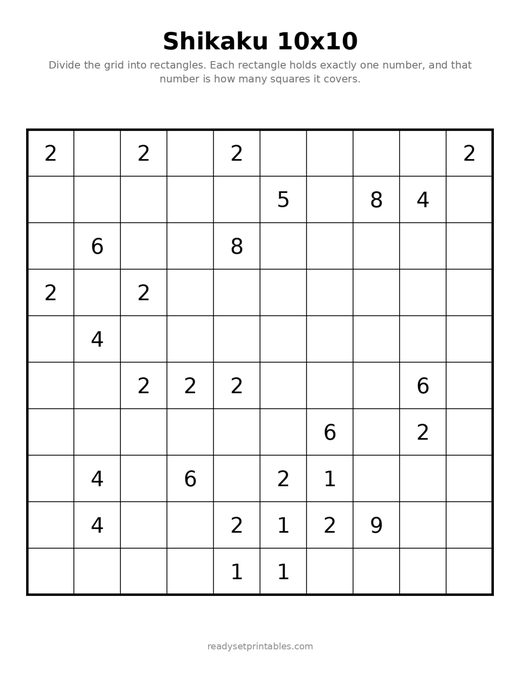 Shikaku 10x10 Medium 08Download PDF ↓
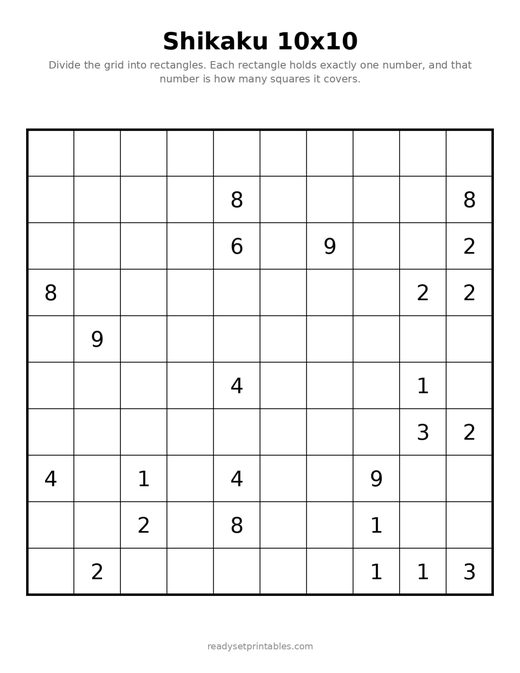 Shikaku 10x10 Medium 09Download PDF ↓
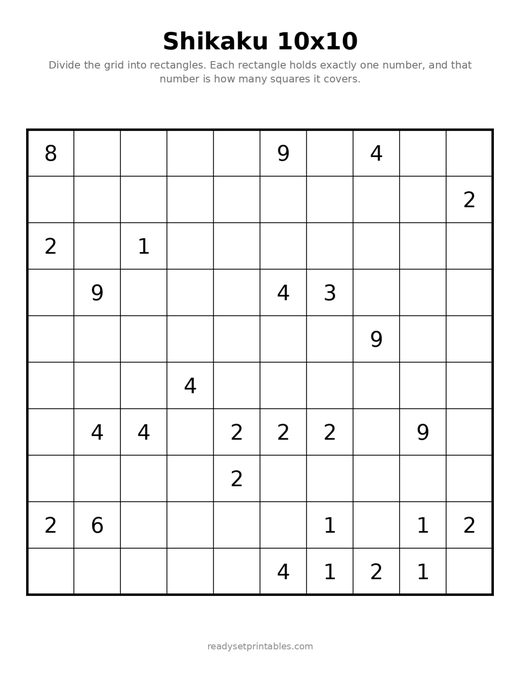 Shikaku 10x10 Medium 10Download PDF ↓