Shikaku Puzzles — 12x12
Free printable 12x12 shikaku puzzles as PDFs with answer pages. The largest size on the site, for experienced solvers. No sign-up.
⬇ Download all 10 as one PDF — free, no sign-upThis is the largest shikaku size on the site and the one that rewards patience over speed. A hundred and forty-four cells means the easy forced placements run out early, and the middle of the puzzle usually has to be unpicked through elimination — proving where a rectangle cannot go rather than where it can. If you have been solving 10x10 grids on autopilot, these will slow you down in a good way. Set aside half an hour and use a pencil.
One 12x12 shikaku per page, printed edge to edge so the cells stay large enough to work in despite the grid size. Clue numbers are set in a clear sans-serif that stays readable at small sizes. Each puzzle is paired with an answer page showing the full rectangle partition. Black and white, US Letter, one puzzle per sheet.
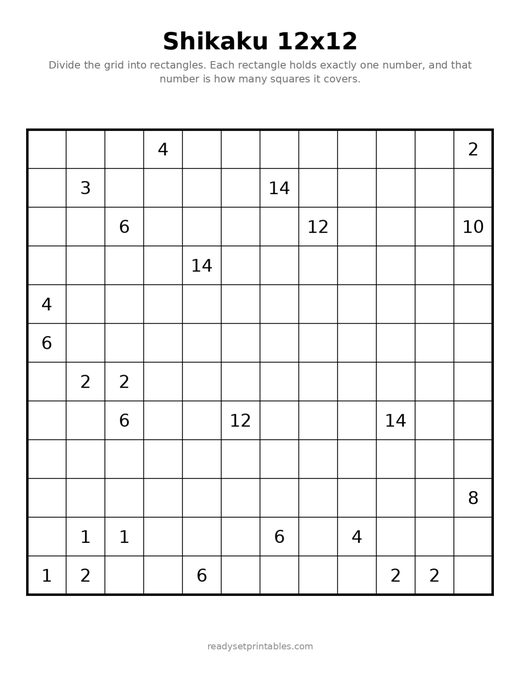 Shikaku 12x12 Hard 01Download PDF ↓
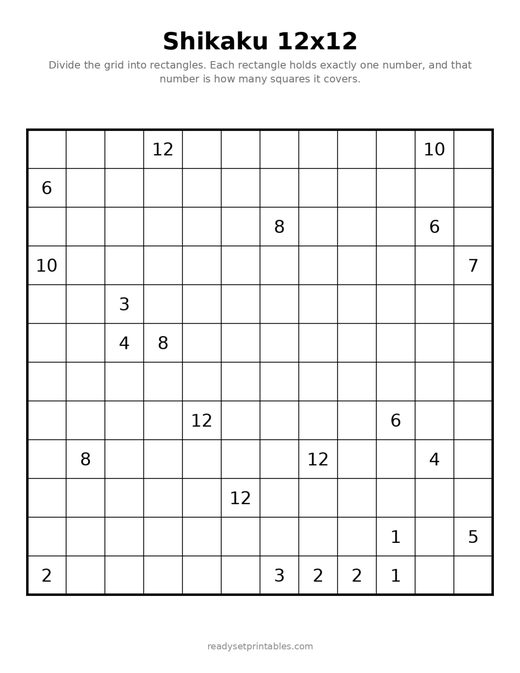 Shikaku 12x12 Hard 02Download PDF ↓
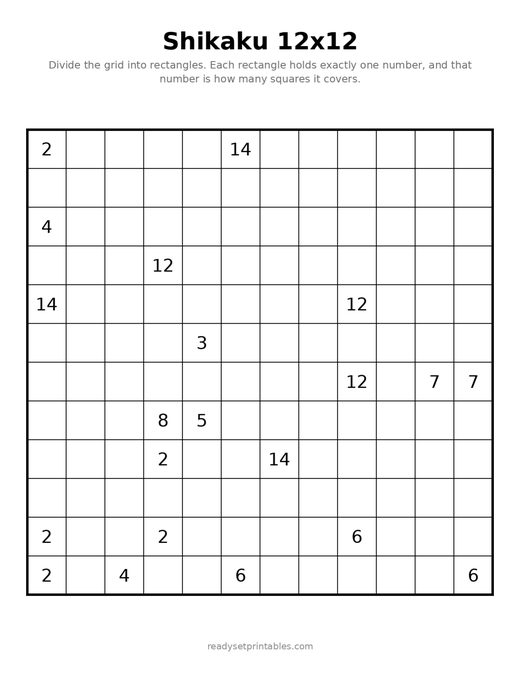 Shikaku 12x12 Hard 03Download PDF ↓
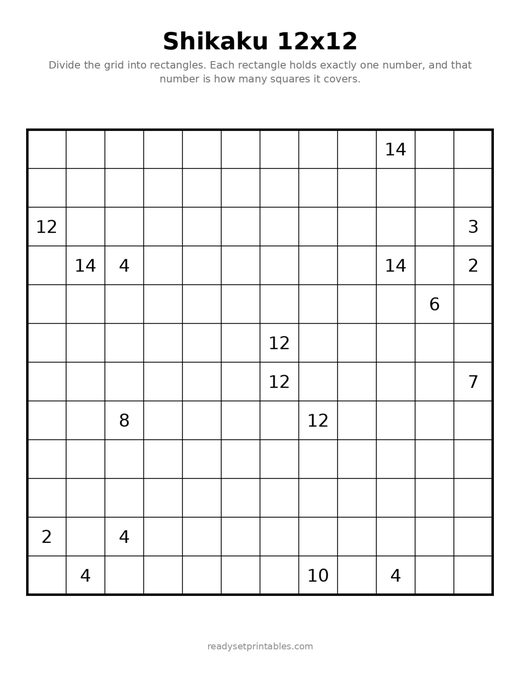 Shikaku 12x12 Hard 04Download PDF ↓
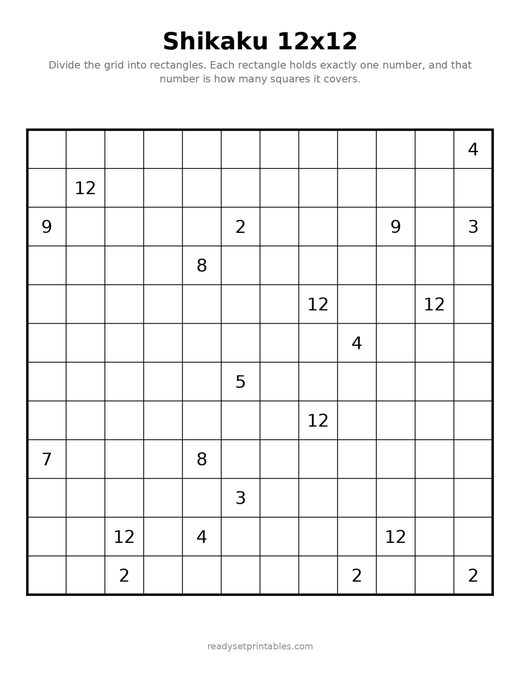 Shikaku 12x12 Hard 05Download PDF ↓
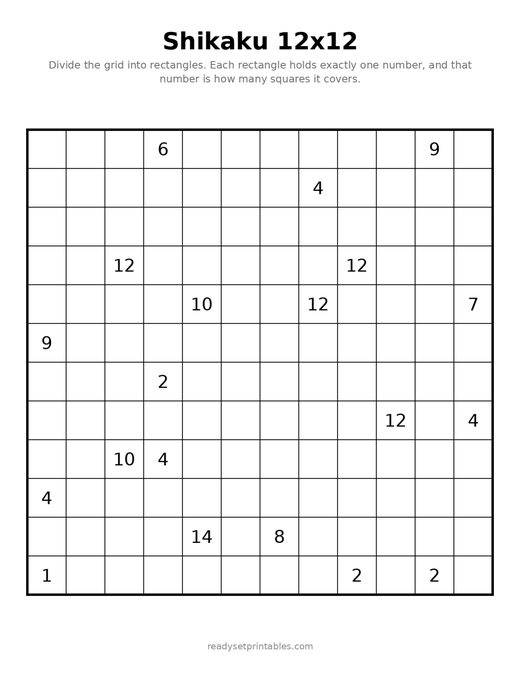 Shikaku 12x12 Hard 06Download PDF ↓
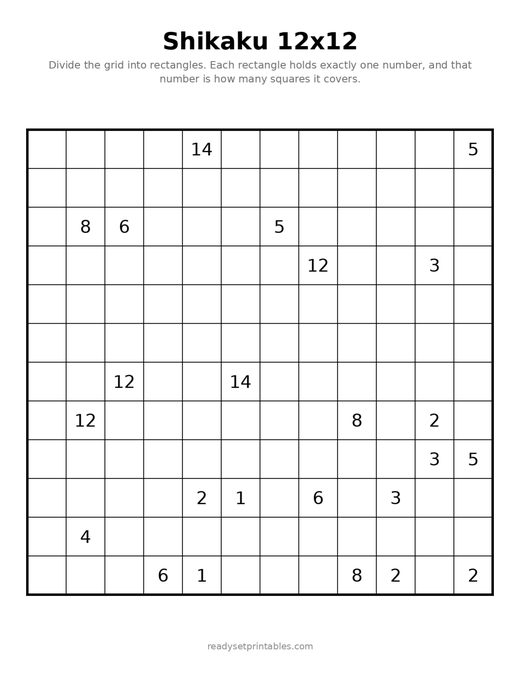 Shikaku 12x12 Hard 07Download PDF ↓
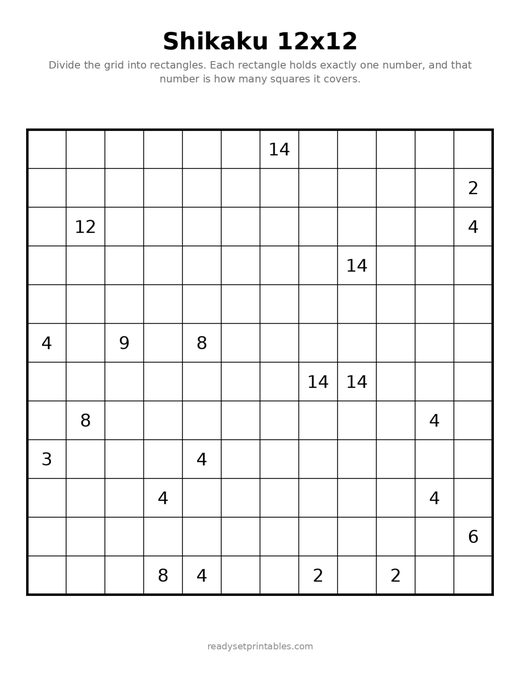 Shikaku 12x12 Hard 08Download PDF ↓
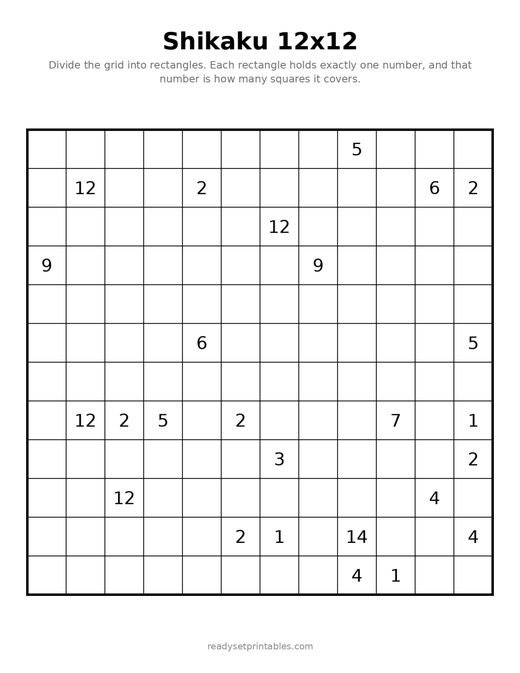 Shikaku 12x12 Hard 09Download PDF ↓
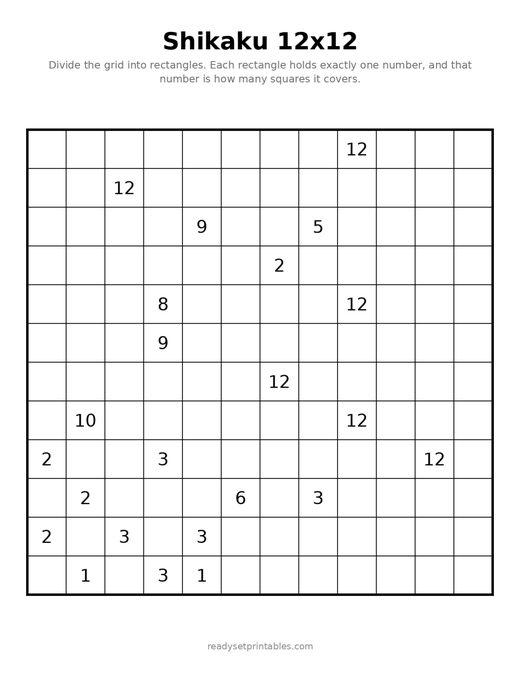 Shikaku 12x12 Hard 10Download PDF ↓