Shikaku Puzzles — 7x7
Free printable 7x7 shikaku puzzles in PDF, with answer pages. A step up from 5x5 with longer chains of deduction. No sign-up, no email.
⬇ Download all 10 as one PDF — free, no sign-up- Sheets
- 10 printable PDFs
- Ages / grades
- All Ages
- Answer keys
- Yes — on the last page of each PDF
- Paper
- US Letter, portrait; black and white
- Cost
- Free. No sign-up, no email, no watermark
- Use
- Print as many copies as you need for your own classroom or home. Not for resale or re-hosting
Seven by seven is the size where shikaku stops being a shape-fitting exercise and starts being a logic puzzle. Forty-nine cells give the clue numbers room to compete: two candidate rectangles for a 6 may both look legal until you notice that one of them strands a corner cell no other number can reach. Solvers who cleared the 5x5 sheets in a couple of minutes usually spend eight to fifteen on one of these. Bring a pencil rather than a pen — the first pass is rarely the last.
One 7x7 shikaku grid per page, printed at a size that leaves room to sketch a rectangle, erase it and try another. Clue numbers sit centered in their cells so a drawn border never runs through a digit. Each puzzle has a matching answer page with the finished partition drawn in. Black and white throughout, sized for US Letter.
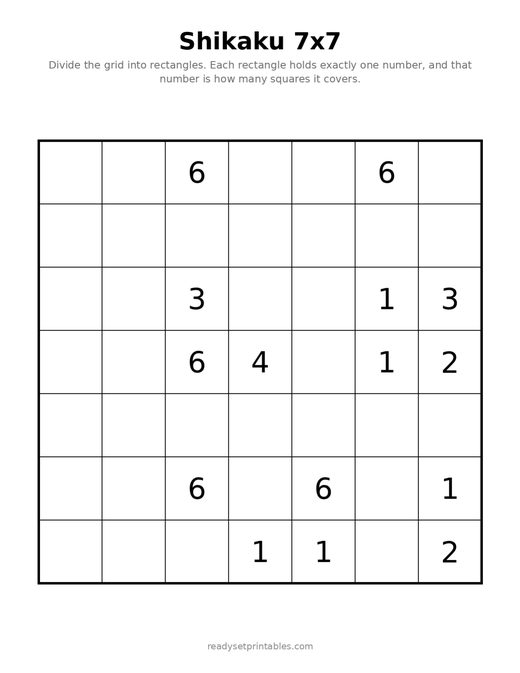 Shikaku 7x7 Easy 01Download PDF ↓
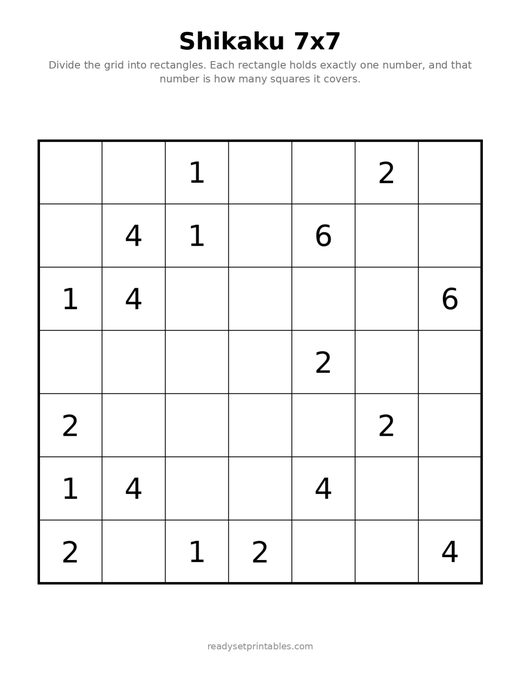 Shikaku 7x7 Easy 02Download PDF ↓
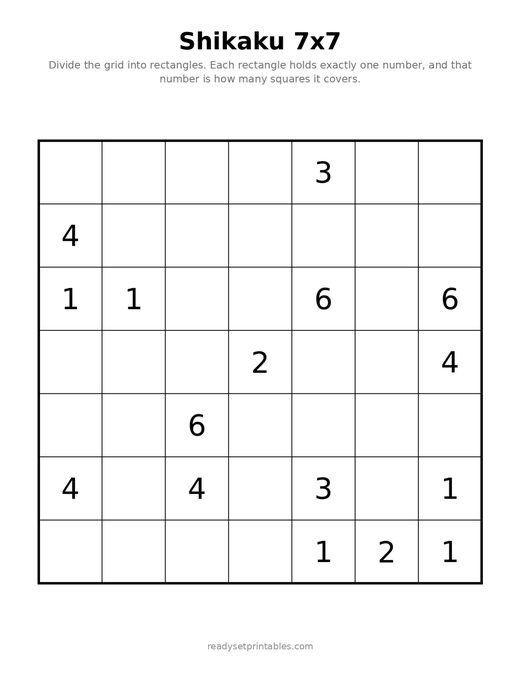 Shikaku 7x7 Easy 03Download PDF ↓
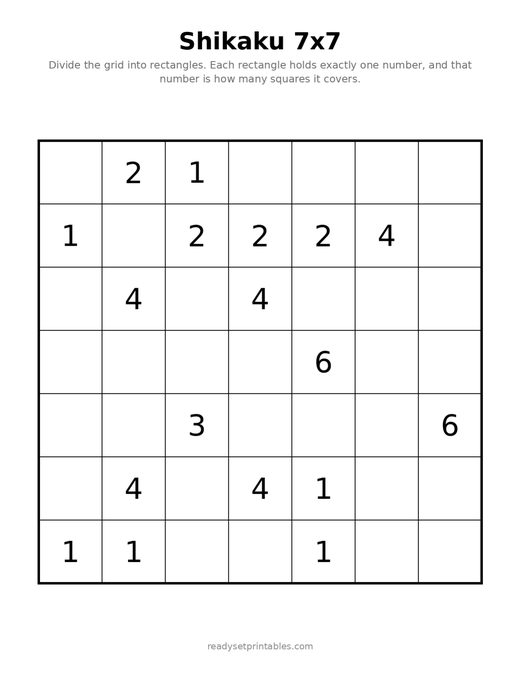 Shikaku 7x7 Easy 04Download PDF ↓
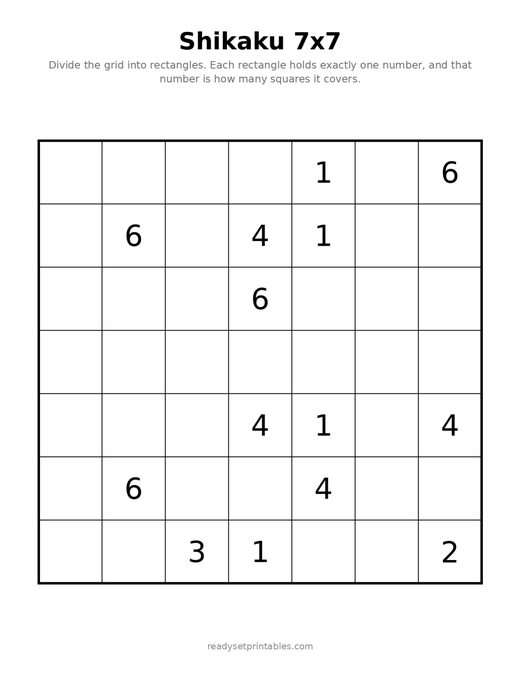 Shikaku 7x7 Easy 05Download PDF ↓
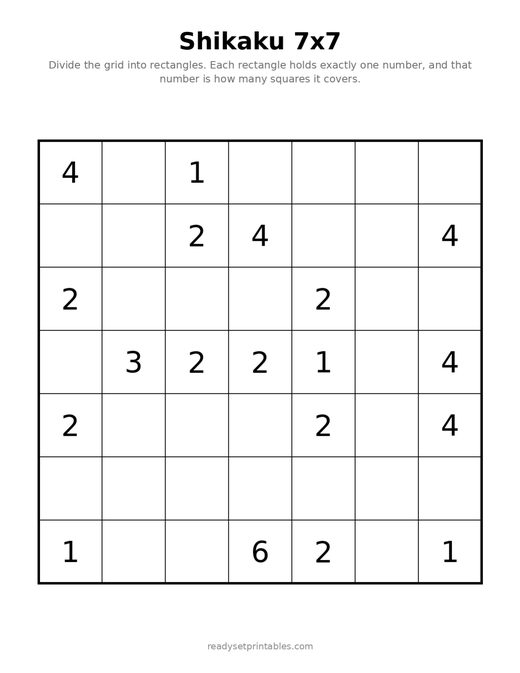 Shikaku 7x7 Easy 06Download PDF ↓
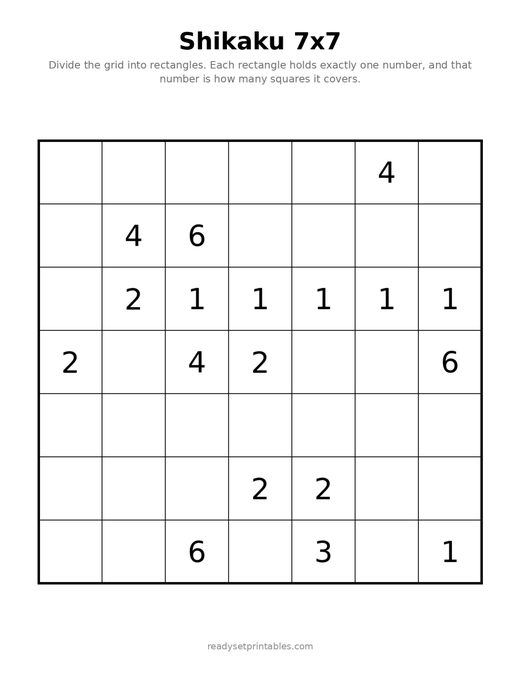 Shikaku 7x7 Easy 07Download PDF ↓
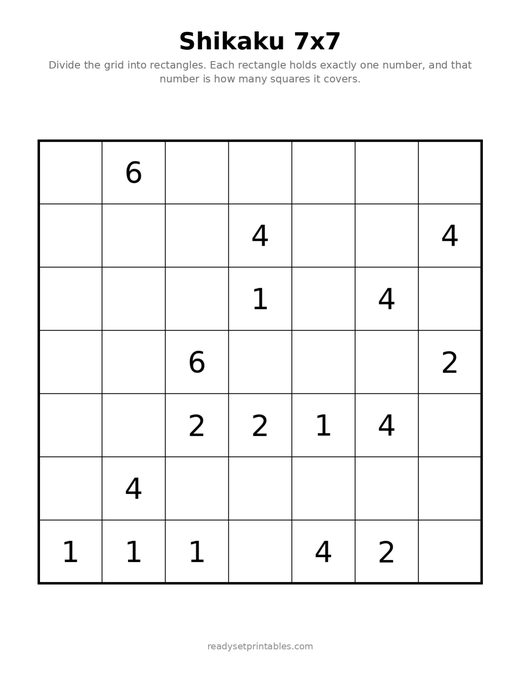 Shikaku 7x7 Easy 08Download PDF ↓
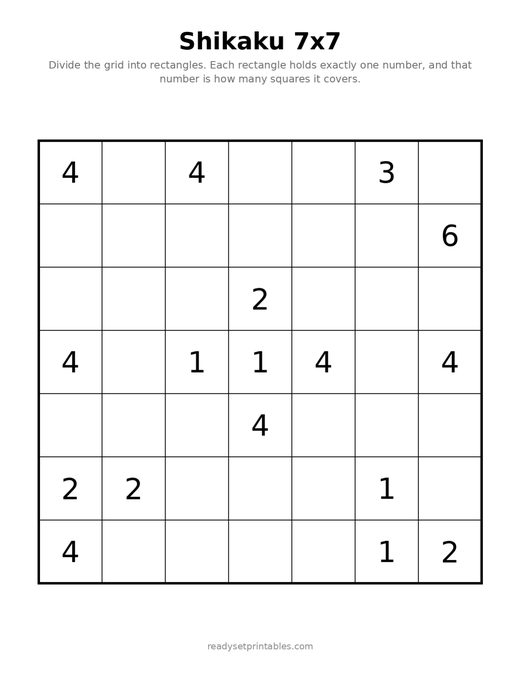 Shikaku 7x7 Easy 09Download PDF ↓
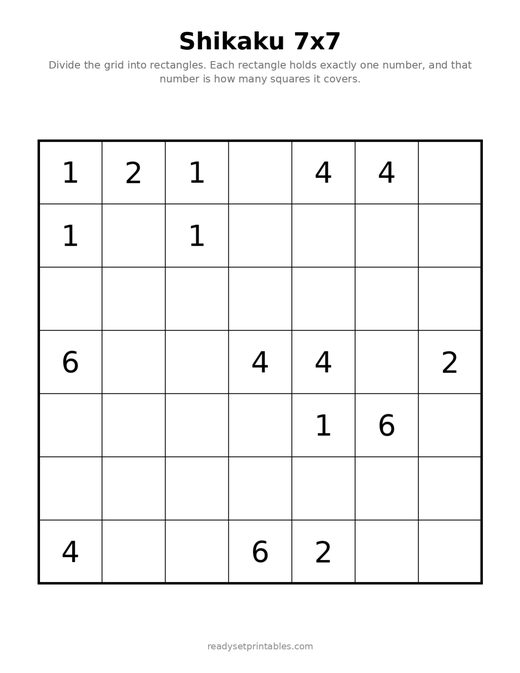 Shikaku 7x7 Easy 10Download PDF ↓