Hashi Bridges Puzzles — Easy
Free printable easy hashi bridges puzzles in PDF, with answer pages. Enough forced moves to keep you going. No sign-up, no email.
⬇ Download all 10 as one PDF — free, no sign-upThe easy hashi sets are built so that there is nearly always a forced bridge waiting to be found. You will spend your time on the pleasant part of the puzzle — spotting an island whose count can only be met one way, drawing it, and watching the constraint ripple outward — rather than staring at a board where every option looks equally possible. It is the right level for someone who has understood the rules and now wants to build the reflexes that make bigger boards solvable.
Easy hashi boards with a moderate island count, printed with generous spacing so double bridges can be drawn as two clean parallel lines. Clue numbers sit inside circles large enough to stay readable once bridges meet them. Each puzzle comes with an answer page showing the complete bridge network. Black and white, single US Letter page per puzzle.
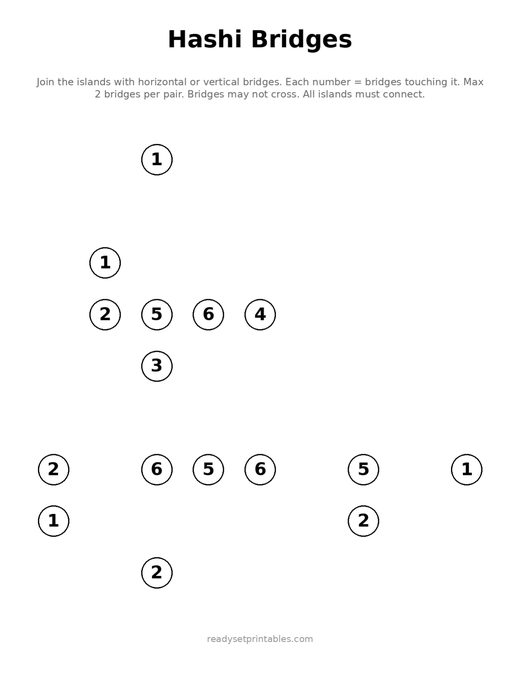 Hashi Easy 01Download PDF ↓
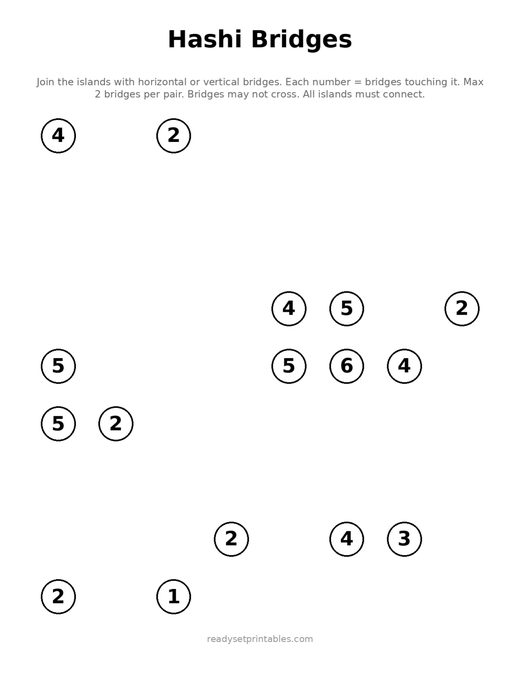 Hashi Easy 02Download PDF ↓
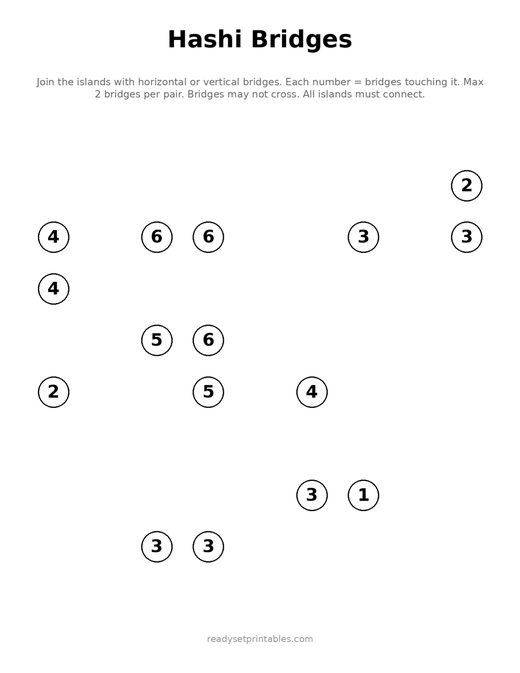 Hashi Easy 03Download PDF ↓
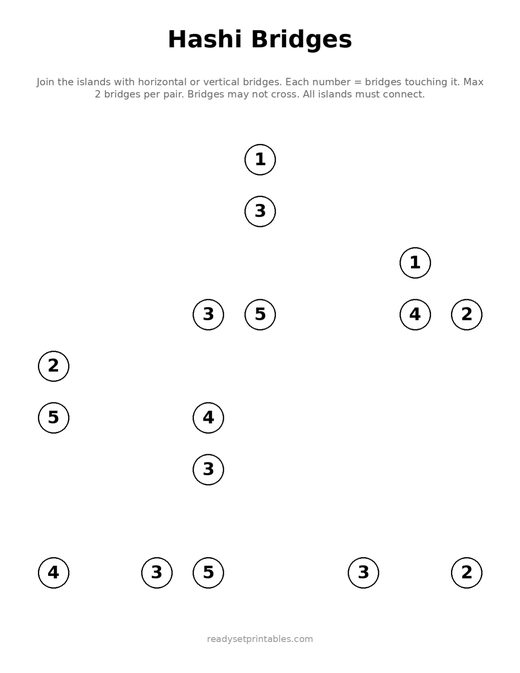 Hashi Easy 04Download PDF ↓
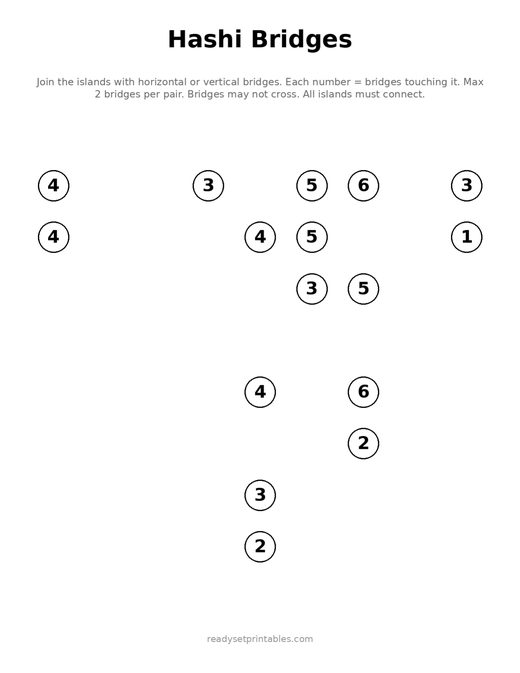 Hashi Easy 05Download PDF ↓
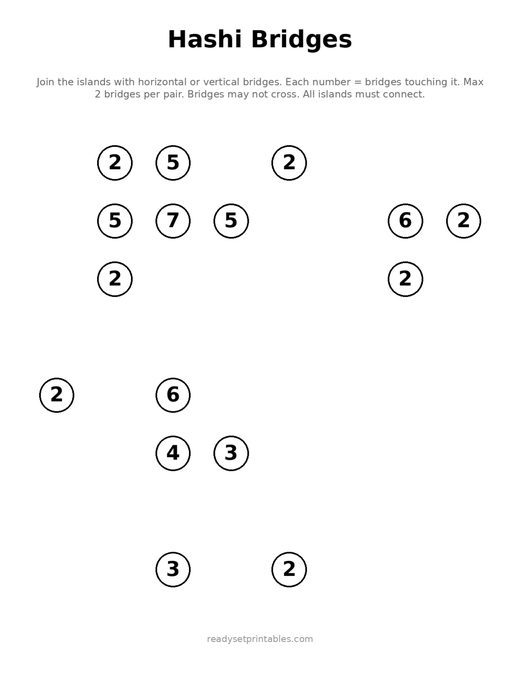 Hashi Easy 06Download PDF ↓
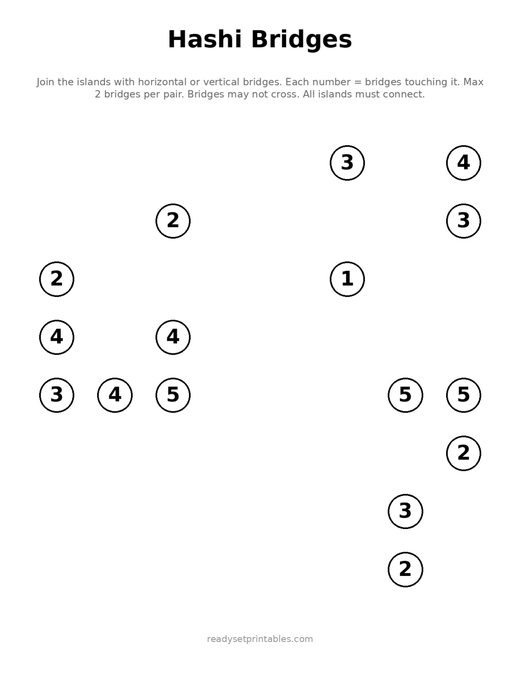 Hashi Easy 07Download PDF ↓
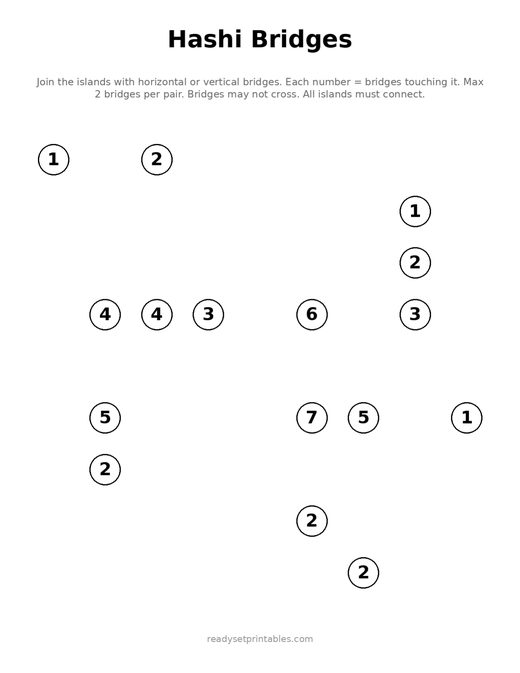 Hashi Easy 08Download PDF ↓
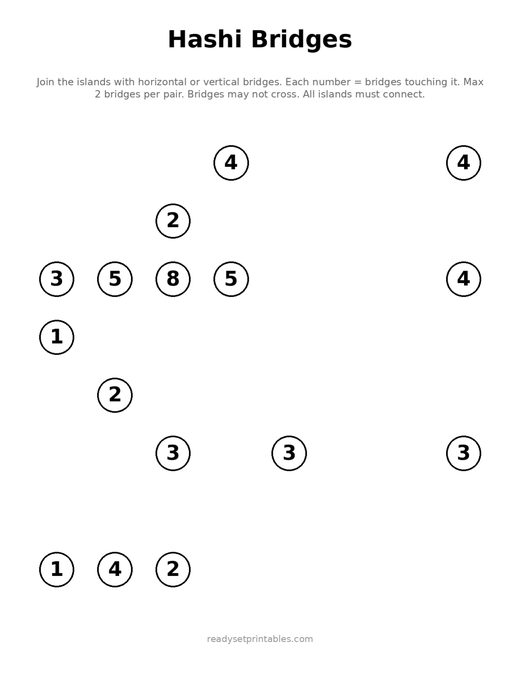 Hashi Easy 09Download PDF ↓
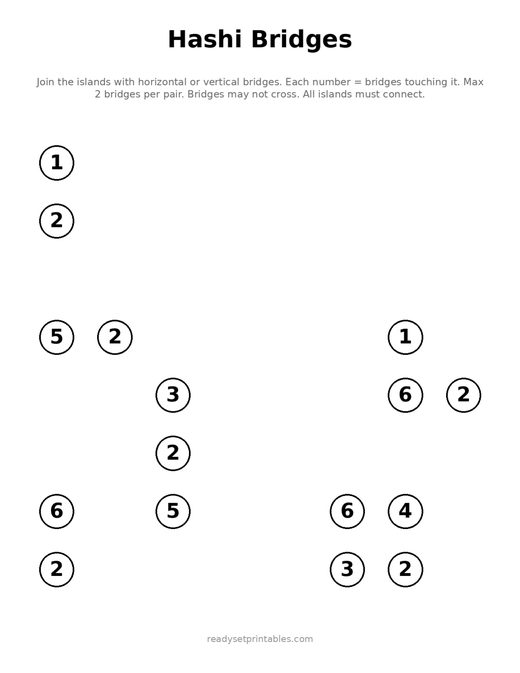 Hashi Easy 10Download PDF ↓