Hashi Bridges Puzzles — For Kids
Free printable bridges puzzles for kids as PDFs, with answer pages. Small hashi grids with few islands. No sign-up, no email.
⬇ Download all 10 as one PDF — free, no sign-upBridges puzzles look like a map, which is most of why children take to them. Circles are islands, the number inside each one says how many bridges must touch it, and you join them with straight horizontal or vertical lines until every island has the right count and the whole map is connected. The sets on this page use few islands and small boards, so a child can see the whole puzzle at once and finish one in a few minutes rather than losing heart halfway.
Small hashi boards with widely spaced islands and clue numbers printed large inside each circle, so there is plenty of room to rule bridges between them without the lines touching the numbers. Each puzzle has an answer page showing the finished network, single and double bridges included. Black and white, one puzzle per US Letter page.
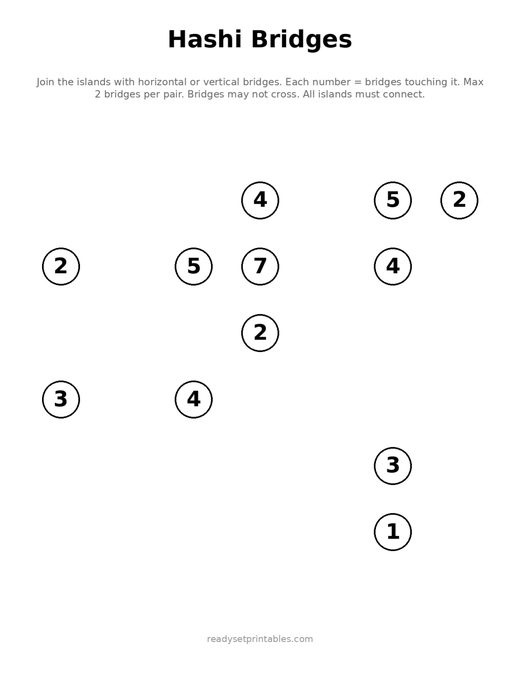 Hashi for Kids 01Download PDF ↓
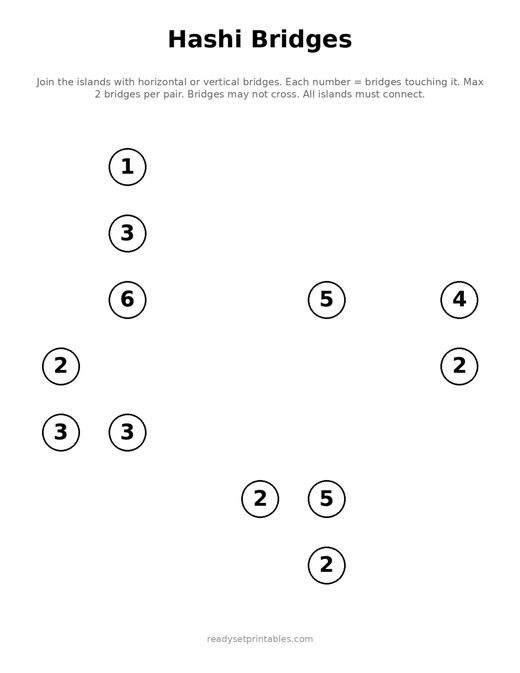 Hashi for Kids 02Download PDF ↓
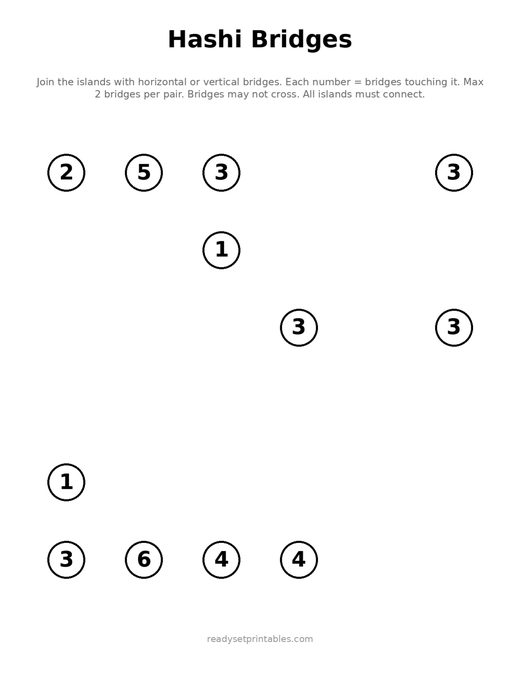 Hashi for Kids 03Download PDF ↓
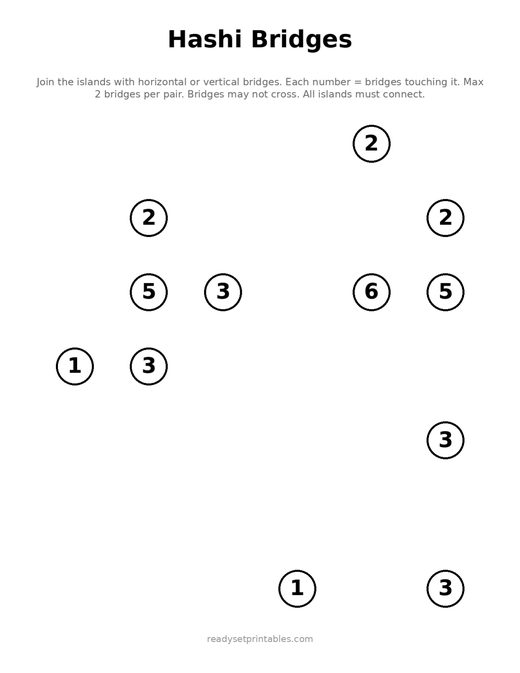 Hashi for Kids 04Download PDF ↓
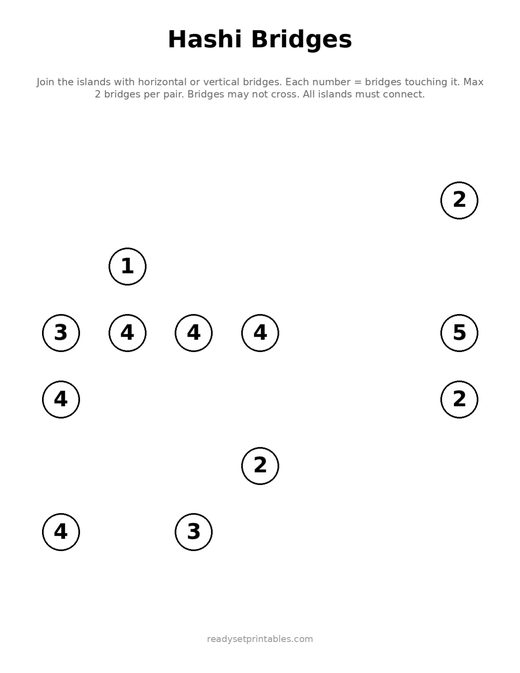 Hashi for Kids 05Download PDF ↓
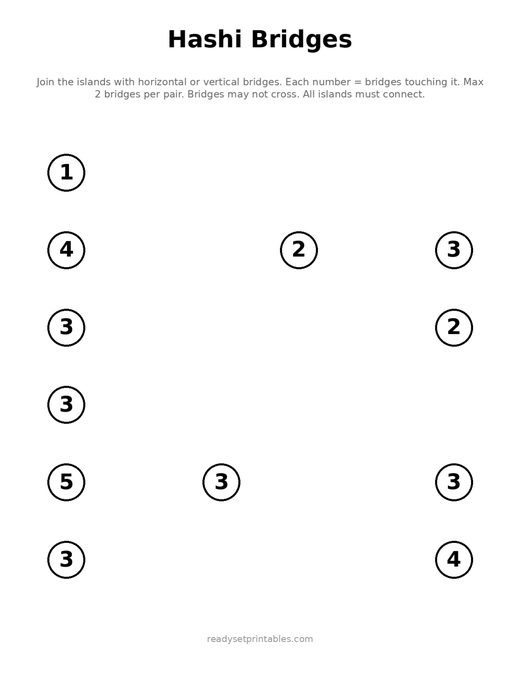 Hashi for Kids 06Download PDF ↓
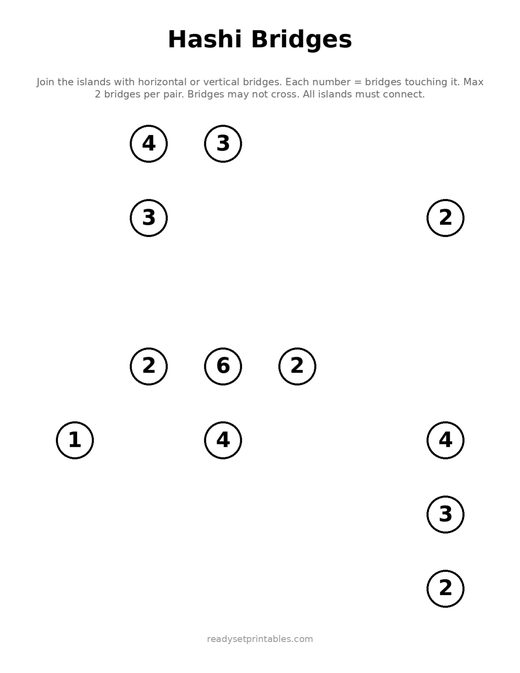 Hashi for Kids 07Download PDF ↓
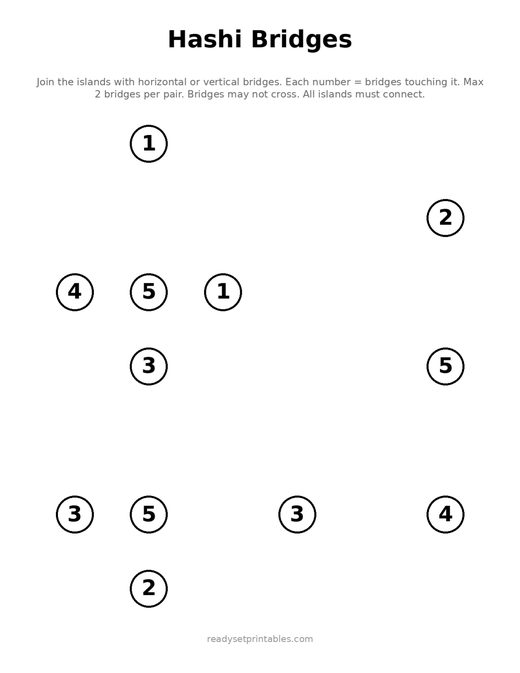 Hashi for Kids 08Download PDF ↓
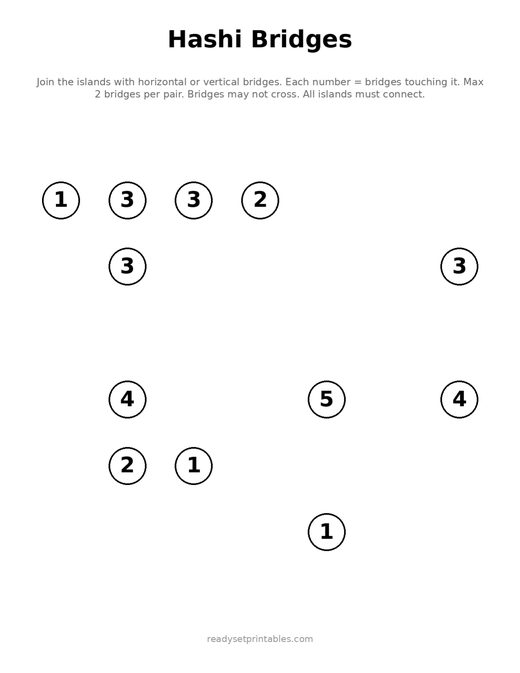 Hashi for Kids 09Download PDF ↓
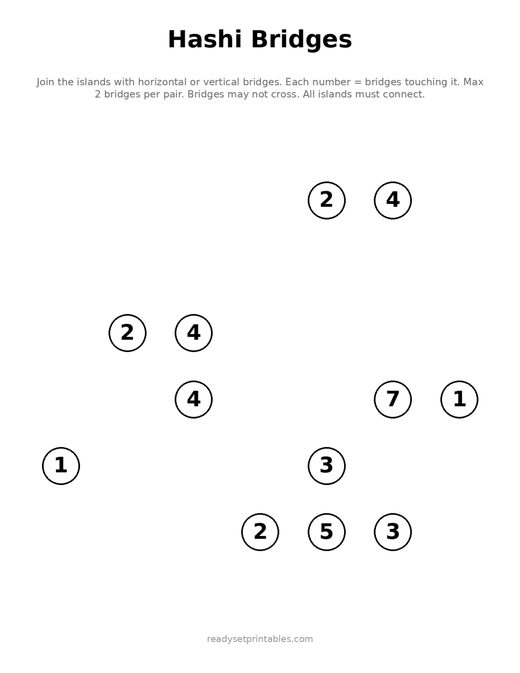 Hashi for Kids 10Download PDF ↓