Hashi Bridges Puzzles — Hard
Free printable hard hashi bridges puzzles as PDFs with answer pages. Large boards, long deduction chains, no guessing. No sign-up.
⬇ Download all 10 as one PDF — free, no sign-upHard hashi is a puzzle of long-range consequences. On these boards a bridge drawn in one corner can block a route four islands away and decide the whole map, and the openings that carry you through an easy grid — the doubled 4s, the forced 1s — barely dent them. What works instead is patient elimination: proving a bridge impossible, marking it off, and letting the accumulated impossibilities force the remaining counts. Allow half an hour and expect to spend a good part of it not drawing anything.
Large hashi boards with high island density and plenty of long spans, one puzzle per page. The layout keeps island circles and clue numbers legible even where several bridges converge. Each puzzle is paired with an answer page showing the complete network with singles and doubles distinguished. Black and white on US Letter, one puzzle per sheet.
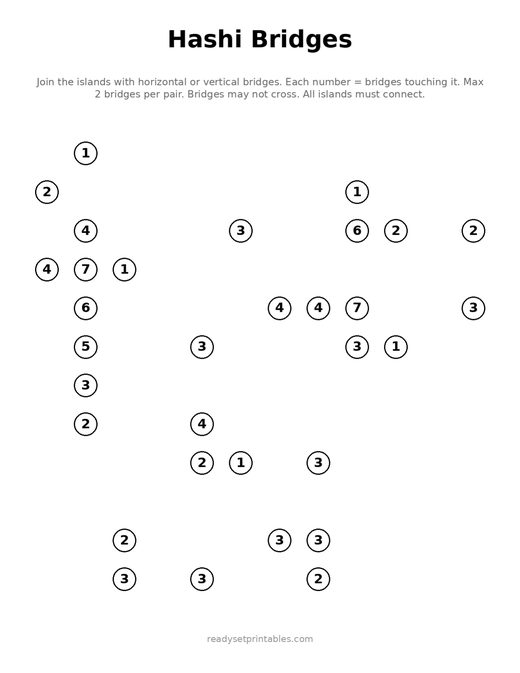 Hashi Hard 01Download PDF ↓
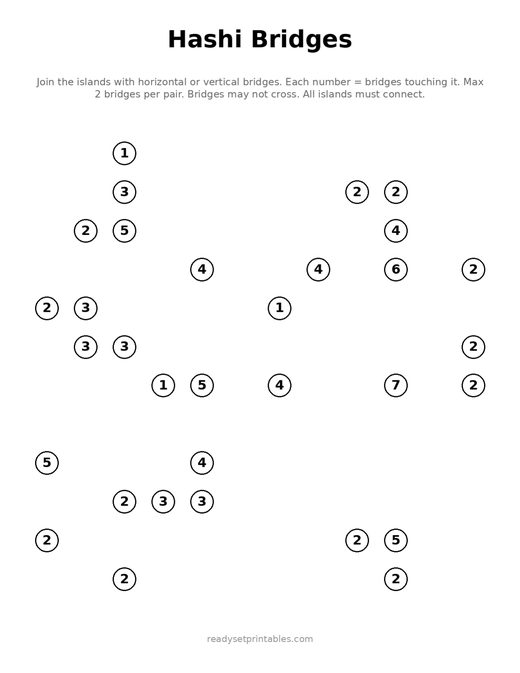 Hashi Hard 02Download PDF ↓
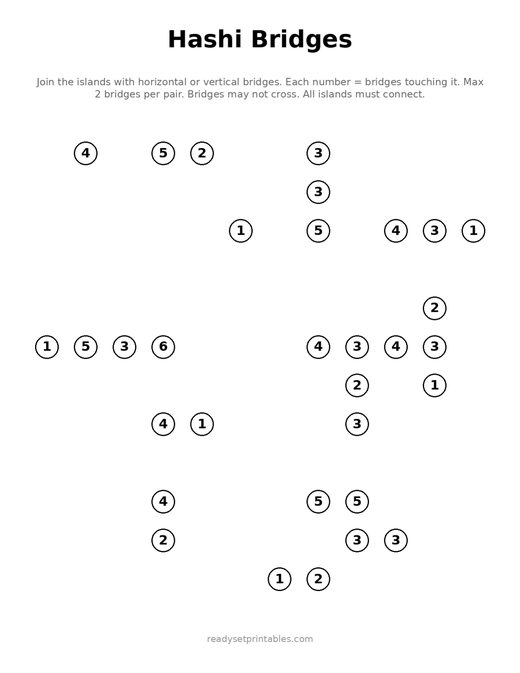 Hashi Hard 03Download PDF ↓
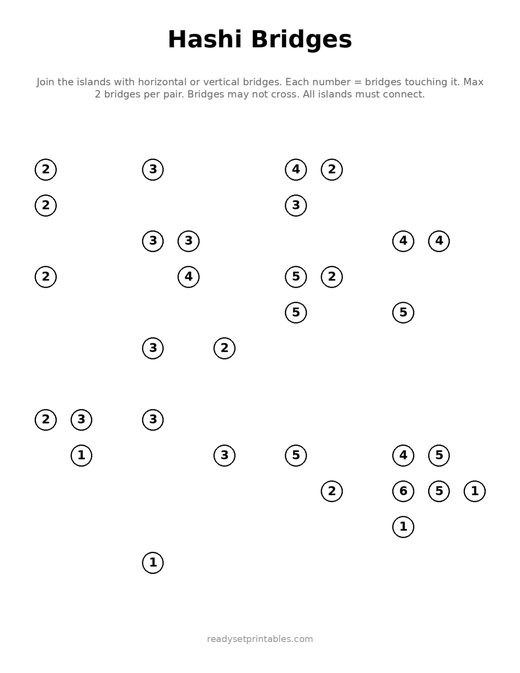 Hashi Hard 04Download PDF ↓
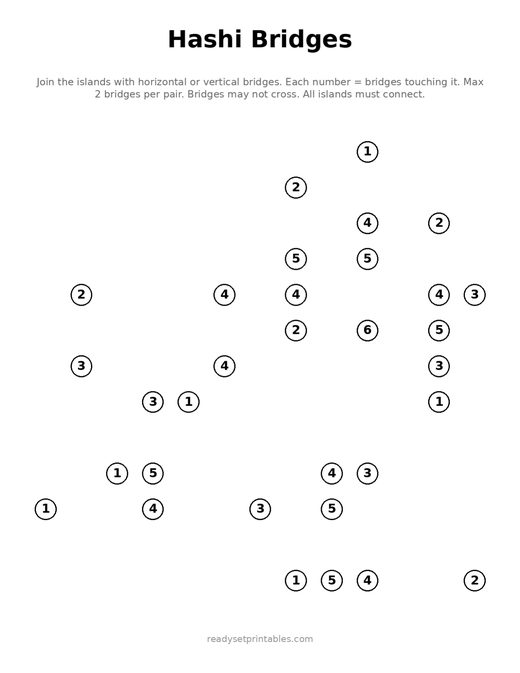 Hashi Hard 05Download PDF ↓
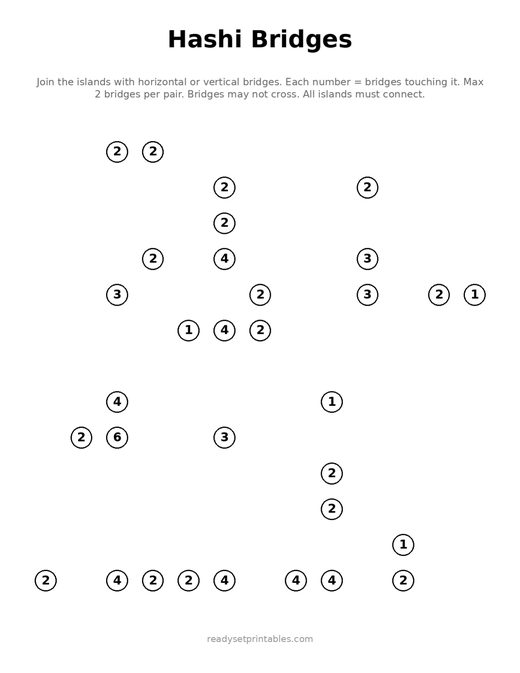 Hashi Hard 06Download PDF ↓
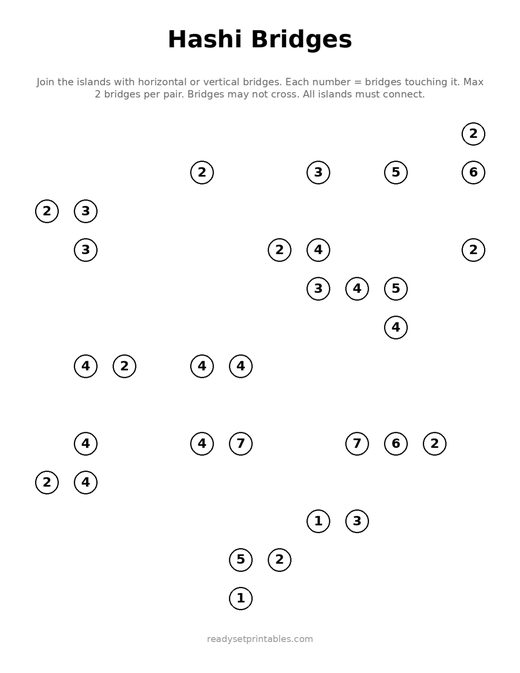 Hashi Hard 07Download PDF ↓
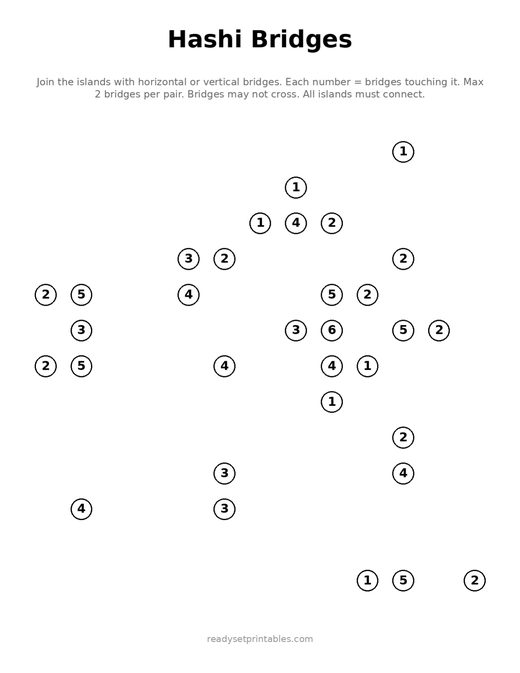 Hashi Hard 08Download PDF ↓
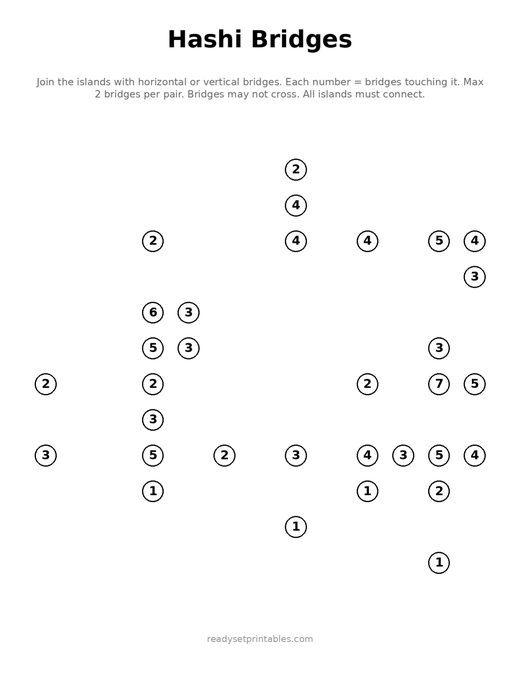 Hashi Hard 09Download PDF ↓
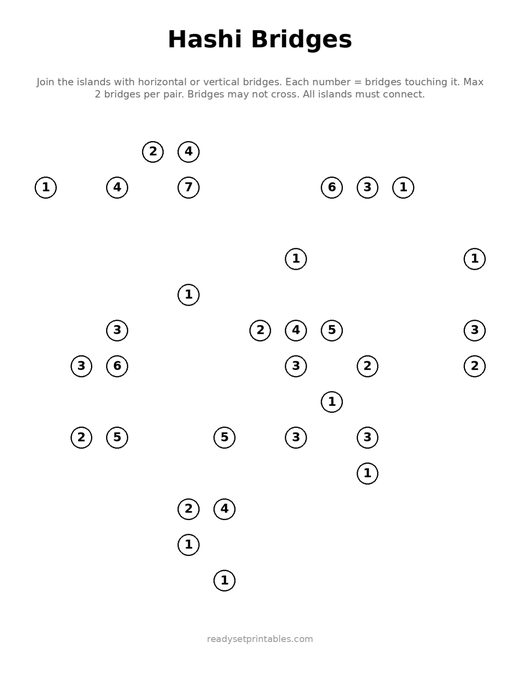 Hashi Hard 10Download PDF ↓