Hashi Bridges Puzzles — Medium
Free printable medium hashi bridges puzzles as PDFs with answer pages. Larger boards where connectivity decides it. No sign-up.
⬇ Download all 10 as one PDF — free, no sign-upMedium hashi boards are big enough that the forced moves run out before the puzzle does. Somewhere around the halfway mark you will have satisfied most island counts and still have choices left, and the way through is almost always the connectivity rule: one of the options would seal off a small cluster of islands from the rest of the map, so it must be wrong. Learning to see those isolated pockets before you draw is the whole step up from easy to medium.
Medium hashi puzzles on larger boards with more islands and longer bridge runs, one per page. Islands are spaced so that a bridge crossing several empty grid positions is still unambiguous, and doubles are easy to draw as two parallel lines. Every puzzle has its own answer page. Printed black and white on US Letter, one puzzle per sheet.
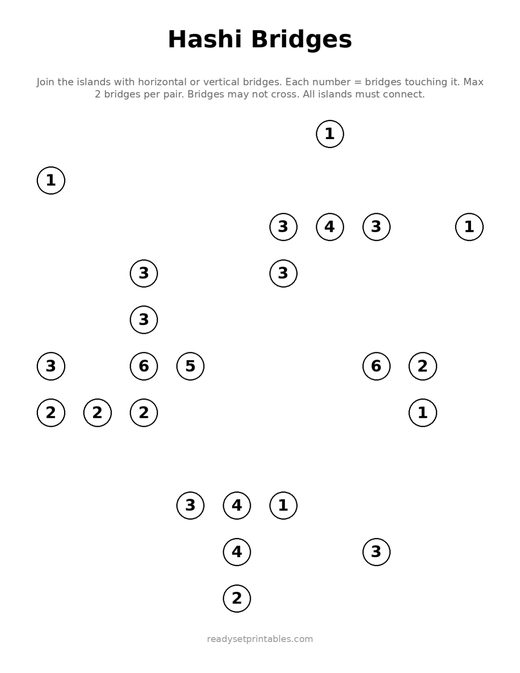 Hashi Medium 01Download PDF ↓
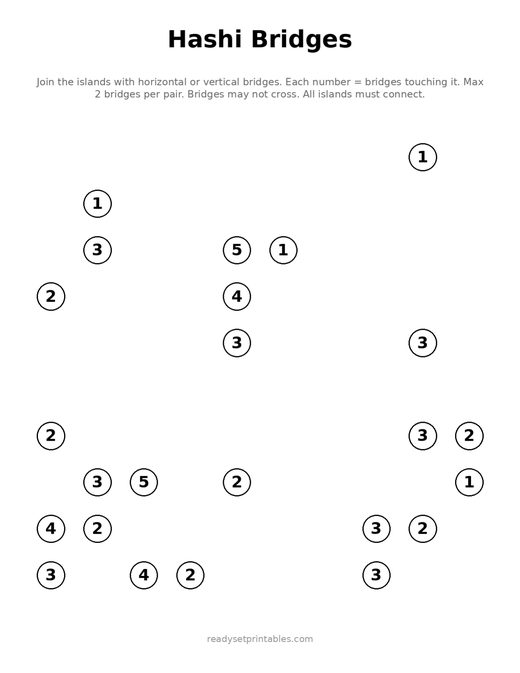 Hashi Medium 02Download PDF ↓
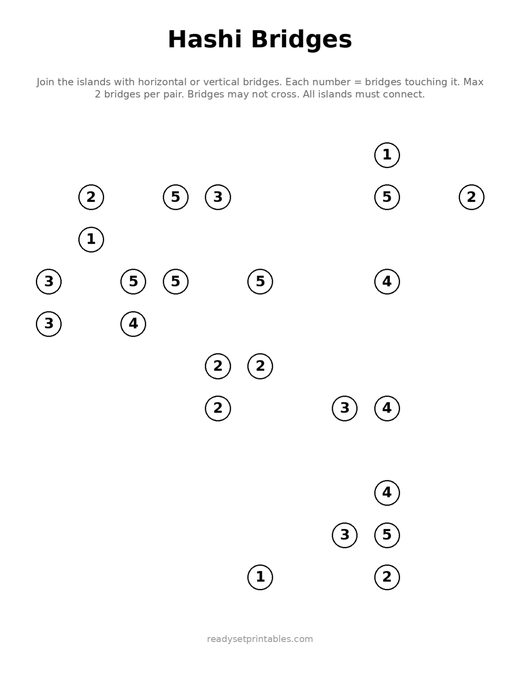 Hashi Medium 03Download PDF ↓
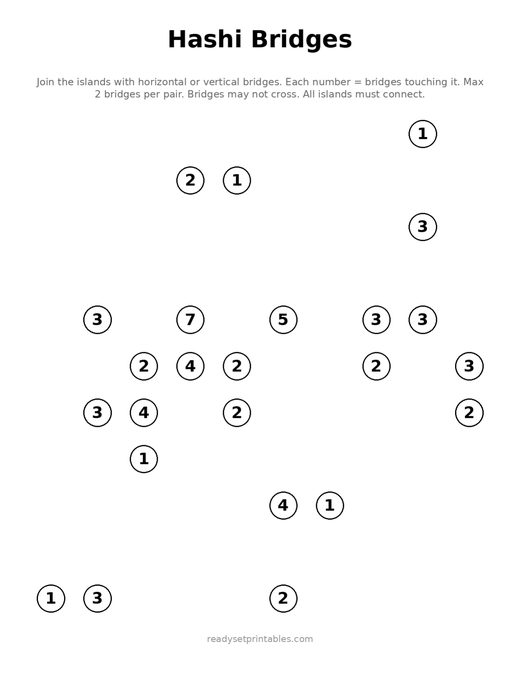 Hashi Medium 04Download PDF ↓
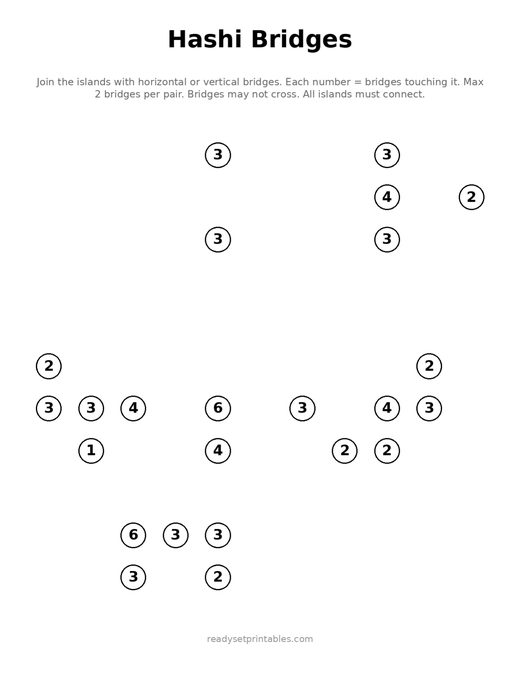 Hashi Medium 05Download PDF ↓
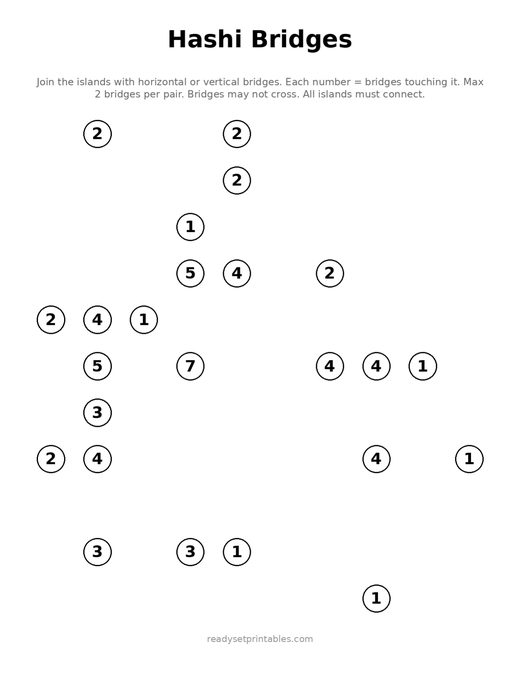 Hashi Medium 06Download PDF ↓
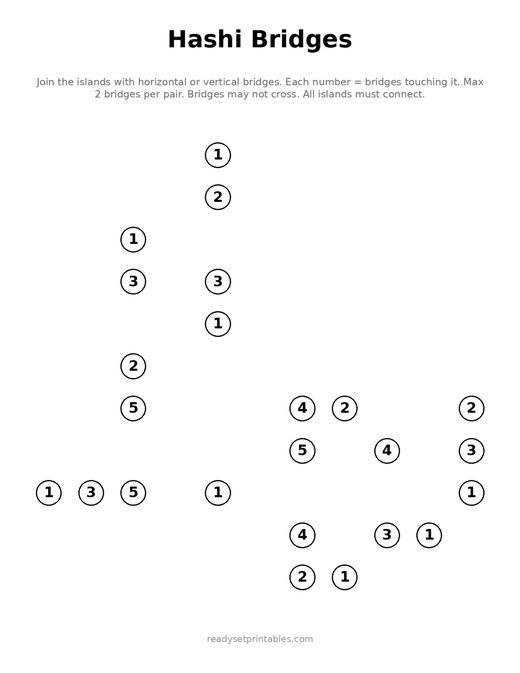 Hashi Medium 07Download PDF ↓
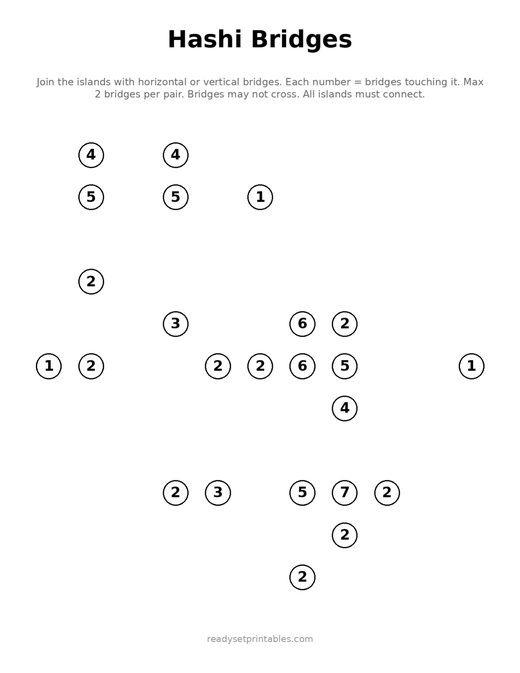 Hashi Medium 08Download PDF ↓
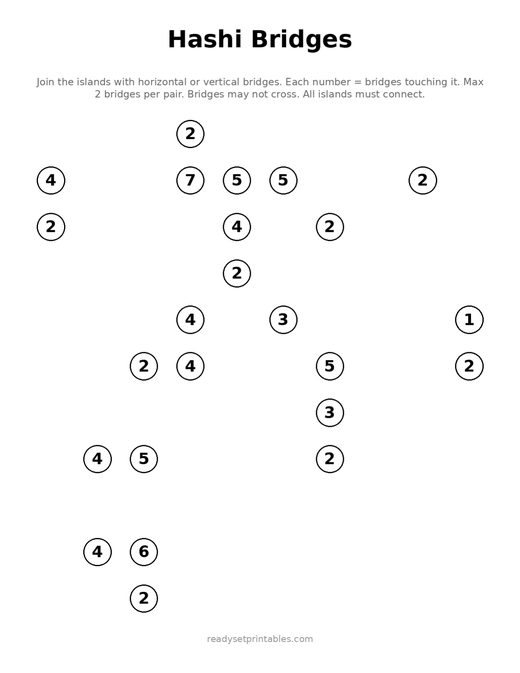 Hashi Medium 09Download PDF ↓
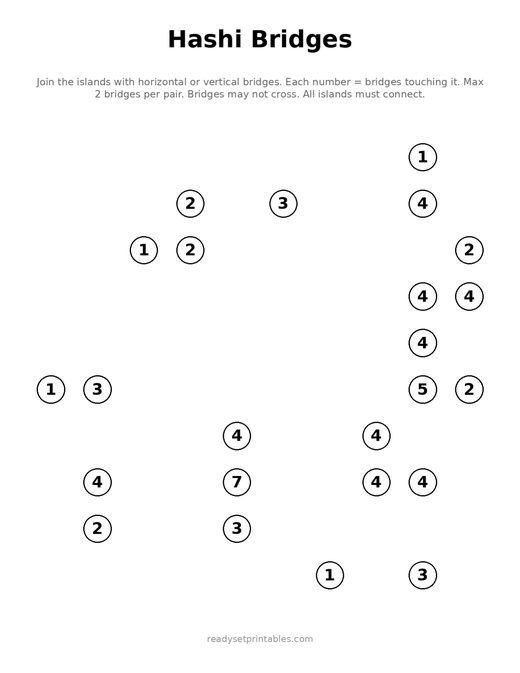 Hashi Medium 10Download PDF ↓