Hitori Puzzles — 10x10
Free printable 10x10 hitori puzzles as PDFs with answer pages. Large grids with long deduction chains. No sign-up, no email capture.
⬇ Download all 10 as one PDF — free, no sign-upAt 10x10 a hitori grid holds a hundred numbers and enough repetition that scanning alone will not get you far. The puzzles on this page are built for solvers who already know the patterns and want a longer sitting: you will typically clear the obvious triples in the first two minutes, then spend the rest of the puzzle proving cells white by contradiction — shade this, and a corner is cut off; shade that, and two blacks end up adjacent. It is the most satisfying size for exactly that reason.
One 10x10 hitori grid per page, laid out to keep cells comfortably large despite the grid size, with digits set for legibility once a neighboring cell is filled in. Each puzzle has a matching answer page showing the completed shading. Black and white throughout, one puzzle per US Letter page, printer friendly with no heavy background fills.
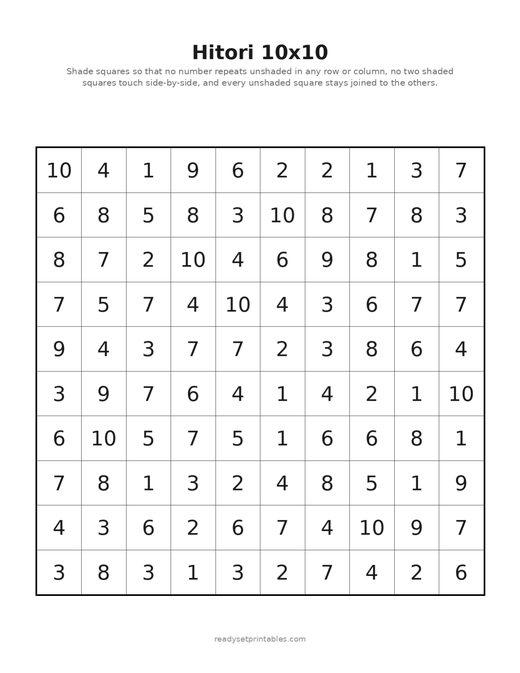 Hitori 10x10 01Download PDF ↓
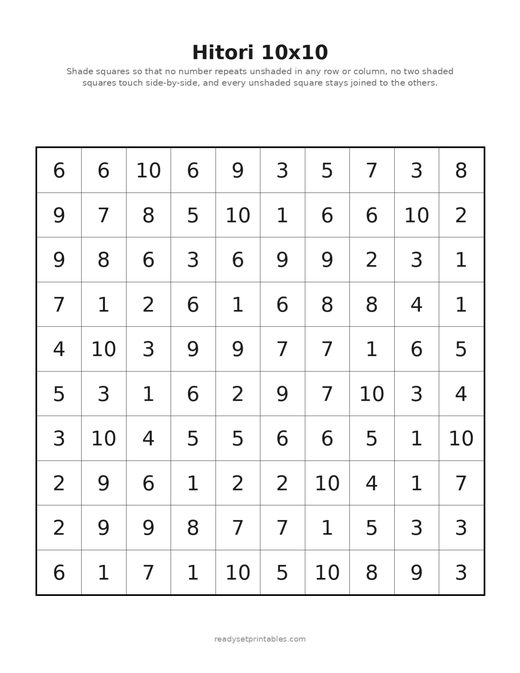 Hitori 10x10 02Download PDF ↓
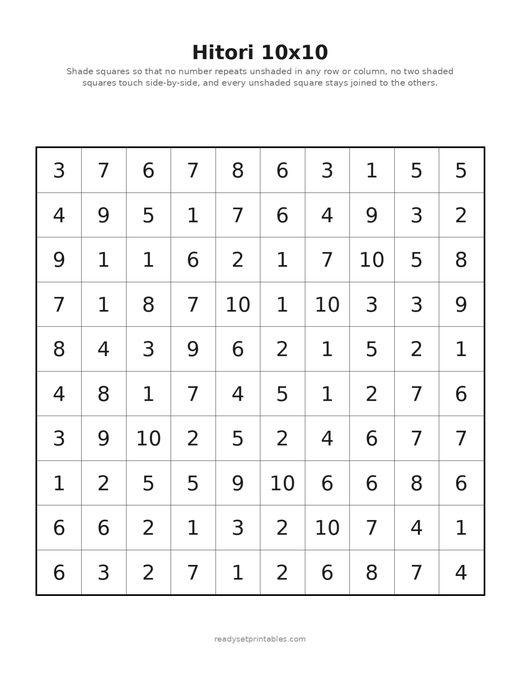 Hitori 10x10 03Download PDF ↓
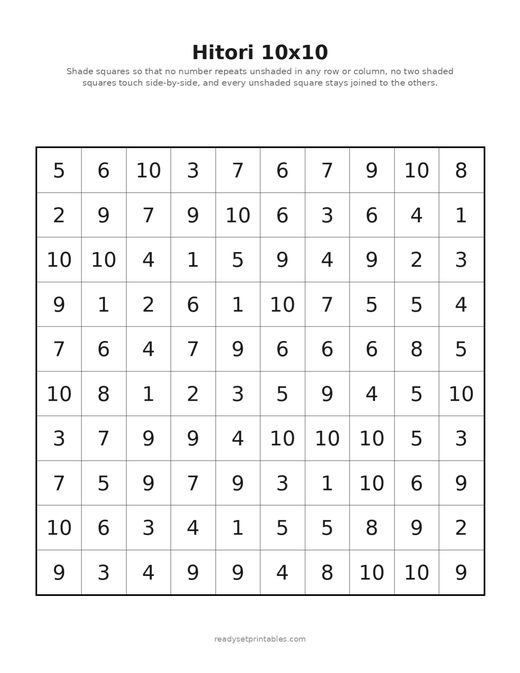 Hitori 10x10 04Download PDF ↓
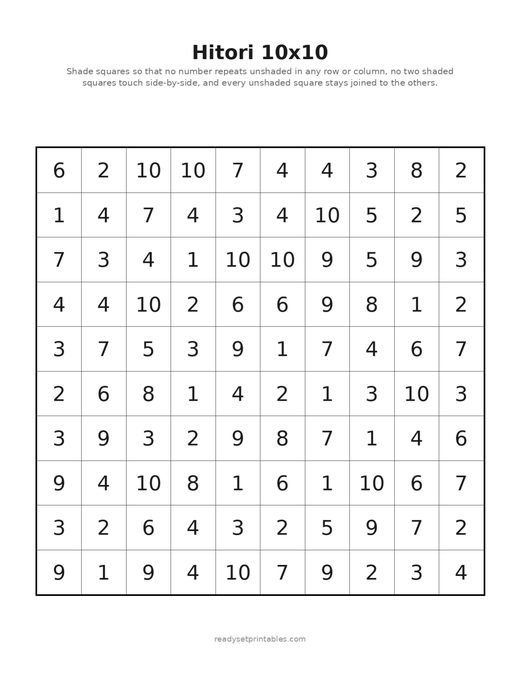 Hitori 10x10 05Download PDF ↓
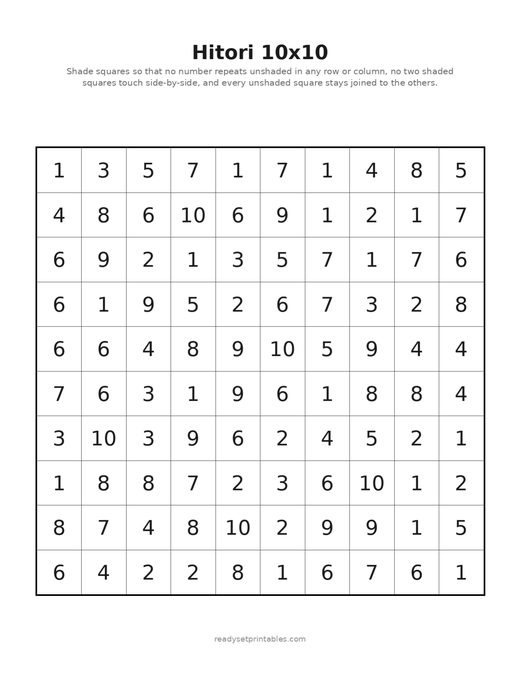 Hitori 10x10 06Download PDF ↓
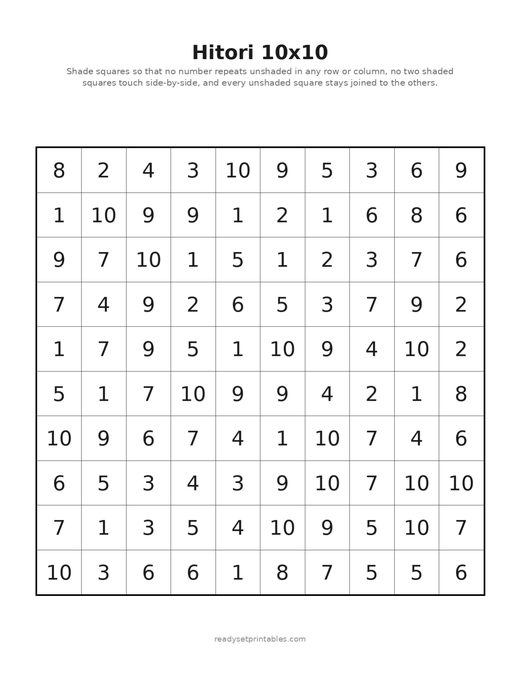 Hitori 10x10 07Download PDF ↓
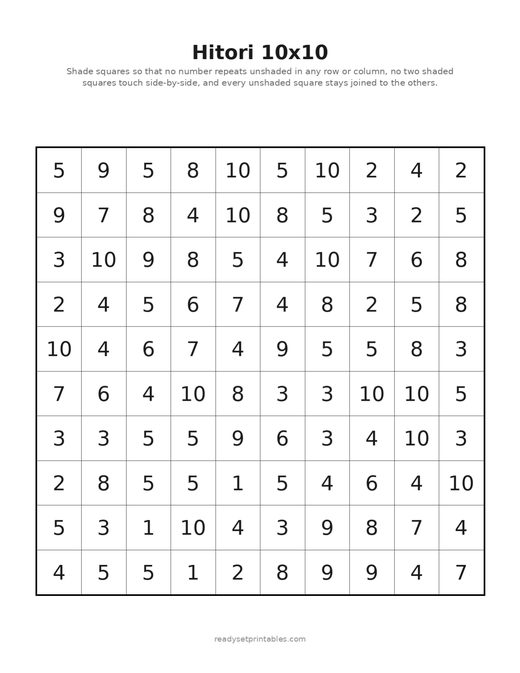 Hitori 10x10 08Download PDF ↓
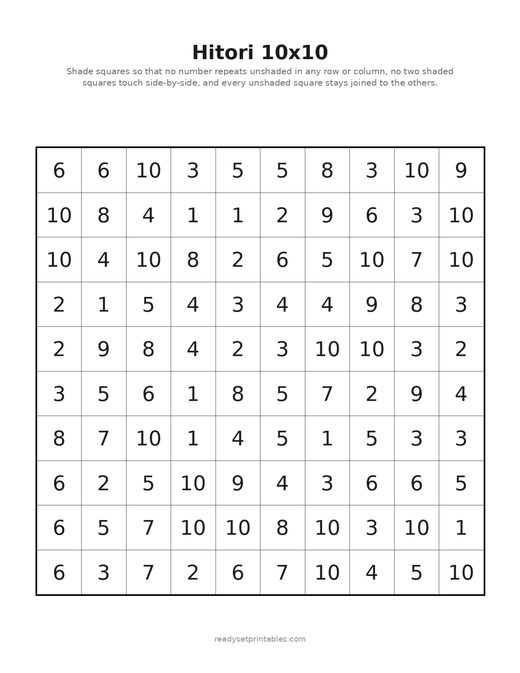 Hitori 10x10 09Download PDF ↓
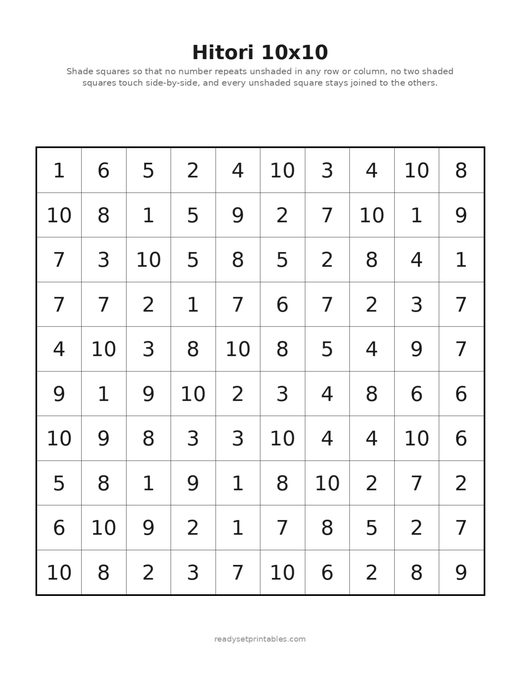 Hitori 10x10 10Download PDF ↓