Hitori Puzzles — 6x6
Free printable 6x6 hitori puzzles in PDF with answer pages. One step up from 5x5, still solvable in a few minutes. No sign-up, no email.
⬇ Download all 10 as one PDF — free, no sign-upSix by six is the friendliest hitori size for a solver who has learned the rules but not yet the patterns. Each row and column now holds six numbers, so triples and repeated pairs turn up far more often than on a 5x5, and the classic openings start to pay off. The connectivity rule also begins to bite here: shading a corner cell can quietly cut off its neighbor, and spotting that before you commit is the skill these sheets build.
One 6x6 hitori grid per page with clearly ruled cells and numbers positioned for easy shading around. Every puzzle has an answer page showing which cells are black in the finished grid. Sheets print in black and white on standard US Letter paper, one puzzle to a page, so they work as a quick warm-up or a filler activity.
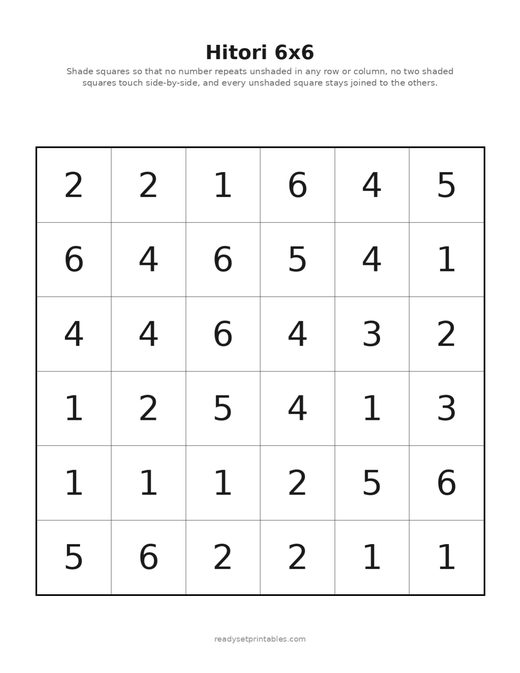 Hitori 6x6 01Download PDF ↓
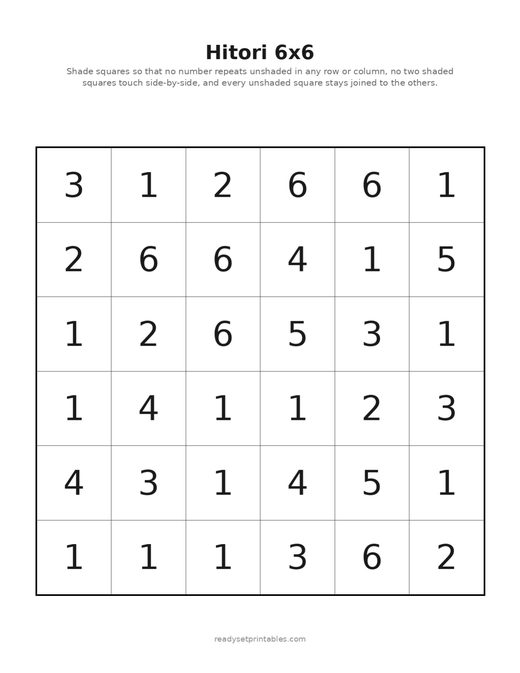 Hitori 6x6 02Download PDF ↓
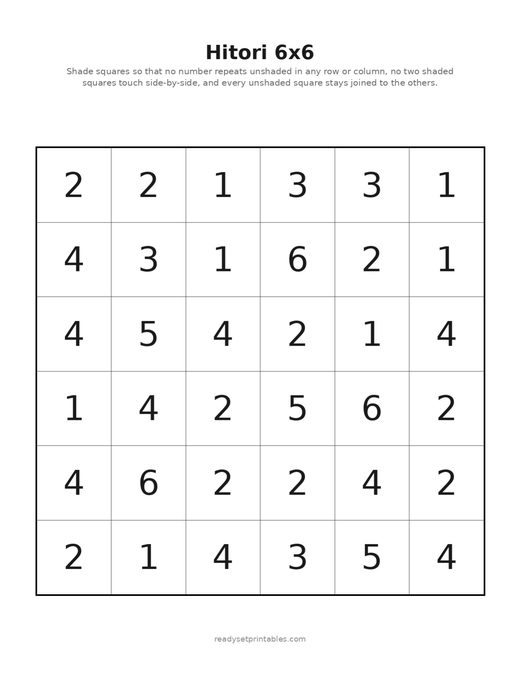 Hitori 6x6 03Download PDF ↓
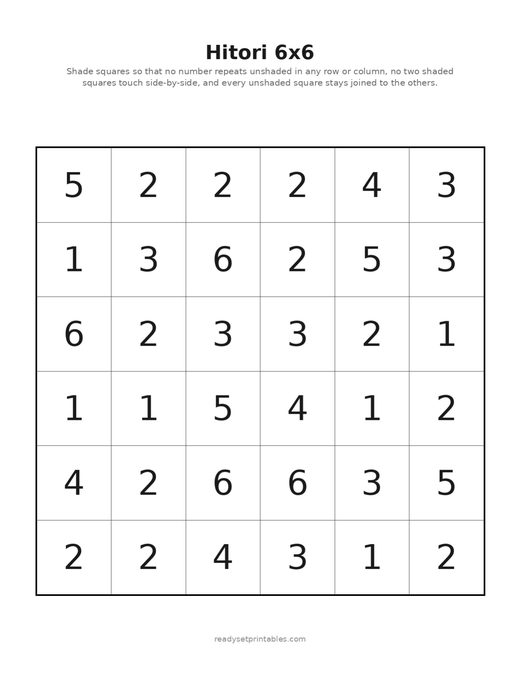 Hitori 6x6 04Download PDF ↓
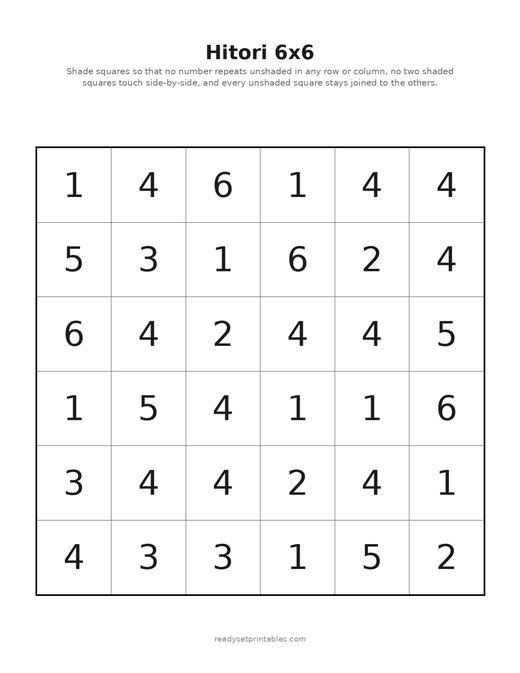 Hitori 6x6 05Download PDF ↓
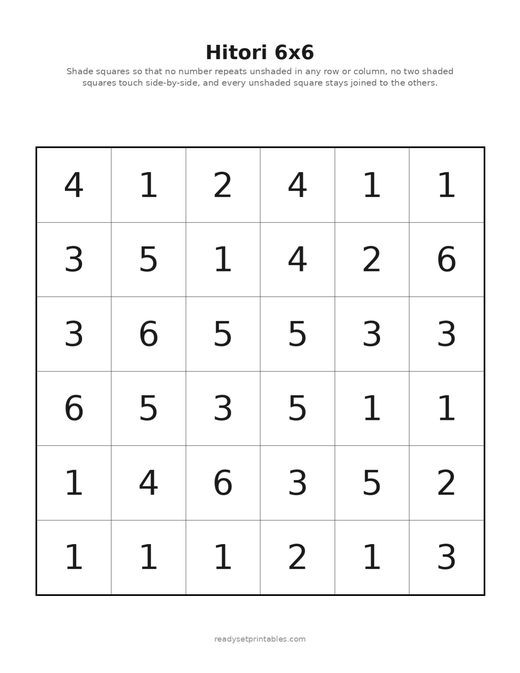 Hitori 6x6 06Download PDF ↓
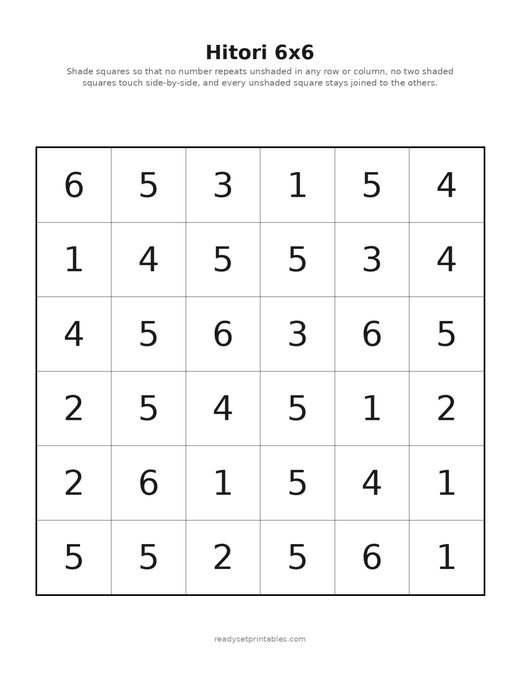 Hitori 6x6 07Download PDF ↓
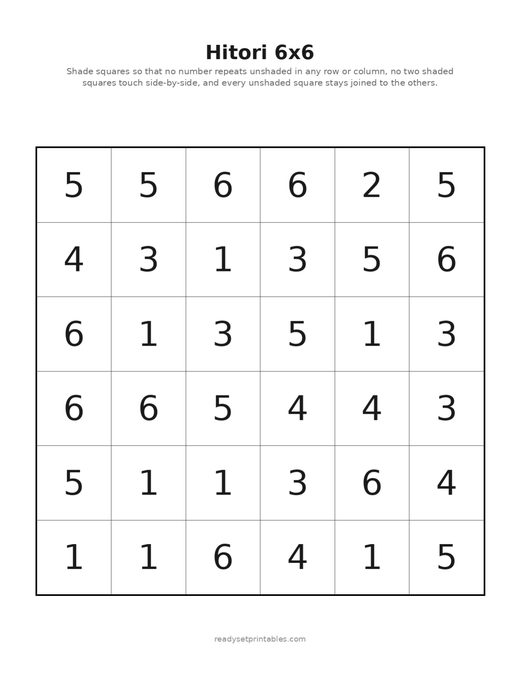 Hitori 6x6 08Download PDF ↓
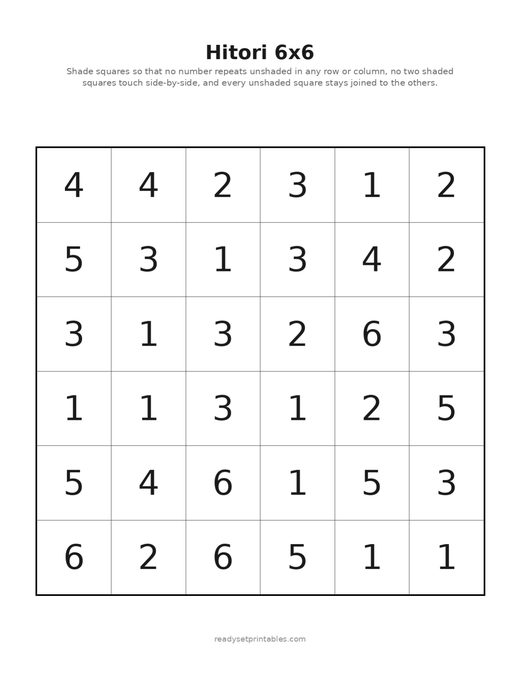 Hitori 6x6 09Download PDF ↓
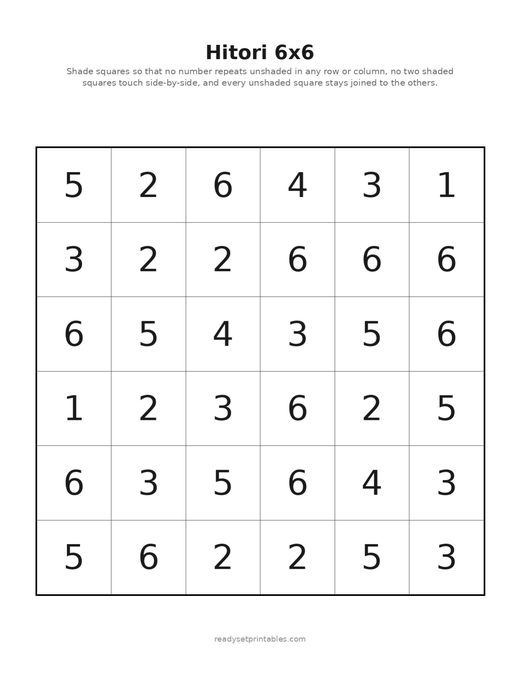 Hitori 6x6 10Download PDF ↓