Hitori Puzzles — 8x8
Free printable 8x8 hitori puzzles as PDFs with answer pages. The classic newspaper size for confident solvers. No sign-up or email needed.
⬇ Download all 10 as one PDF — free, no sign-upEight by eight is where hitori settles into its proper rhythm. There is enough grid for the shading to form long diagonal chains, and enough duplication for the opening patterns — triples, adjacent pairs, sandwiched numbers — to appear several times in the same puzzle. The finish is usually decided by connectivity rather than duplication: the numbers are all sorted out, and the last few cells are fixed purely by the need to keep the white region in one piece.
Each page holds a single 8x8 hitori grid printed with firm rule lines and evenly weighted digits, so a shaded cell reads clearly whether you fill it with pencil, pen or highlighter. Each puzzle comes with an answer page marking the shaded cells. Everything is black and white and sized for one US Letter sheet per puzzle.
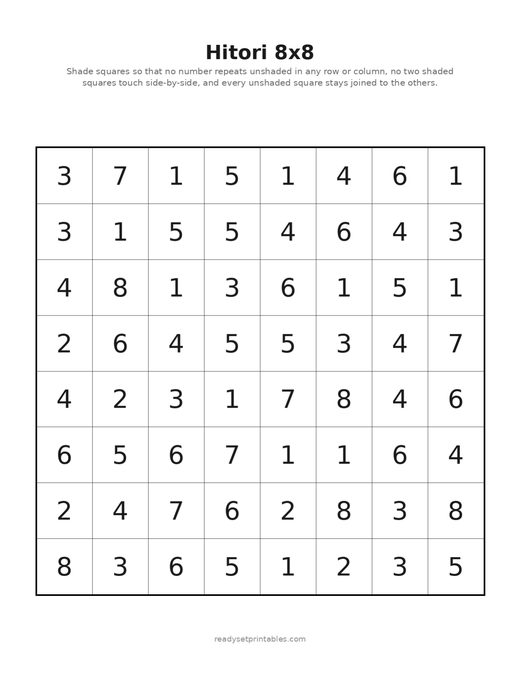 Hitori 8x8 01Download PDF ↓
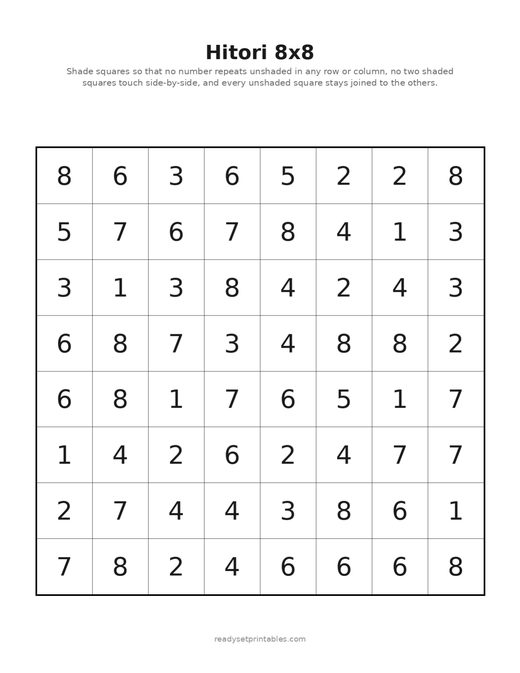 Hitori 8x8 02Download PDF ↓
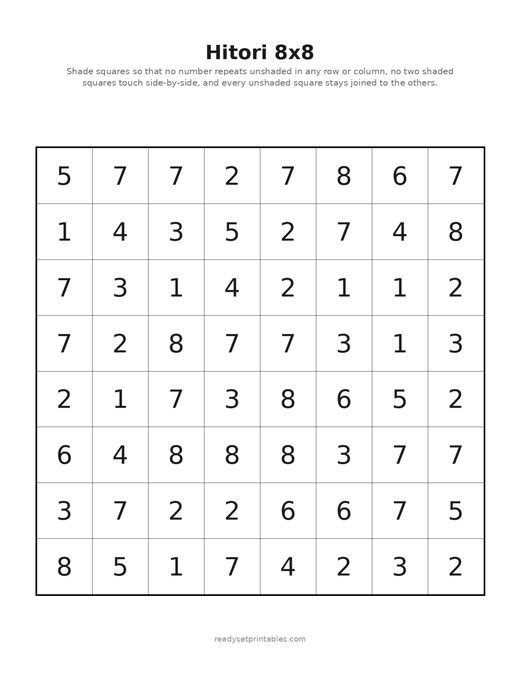 Hitori 8x8 03Download PDF ↓
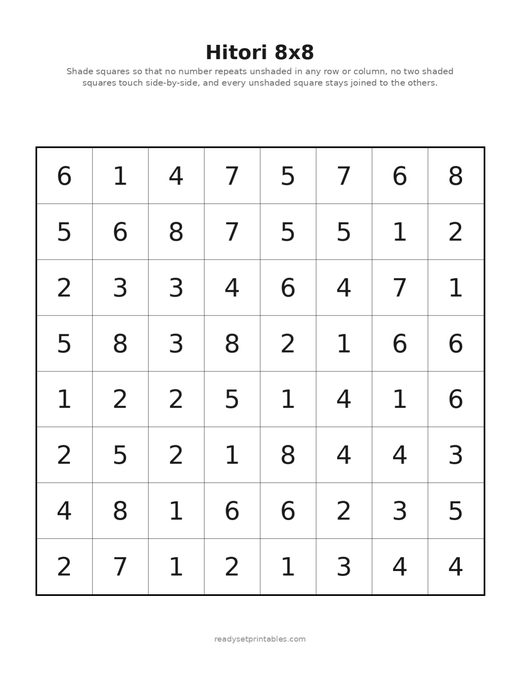 Hitori 8x8 04Download PDF ↓
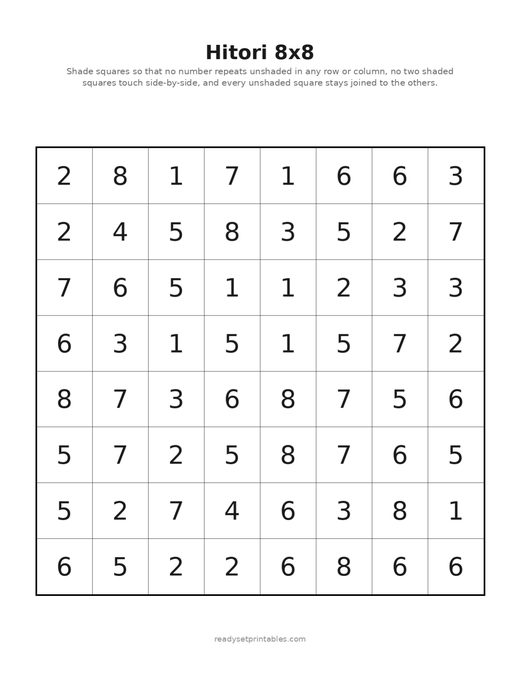 Hitori 8x8 05Download PDF ↓
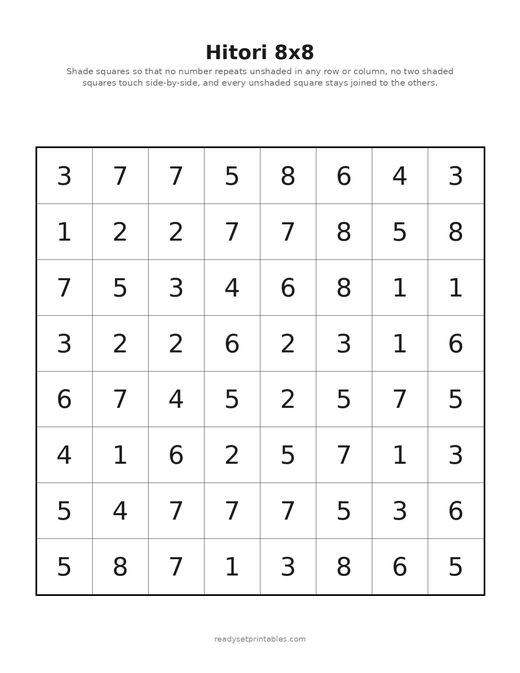 Hitori 8x8 06Download PDF ↓
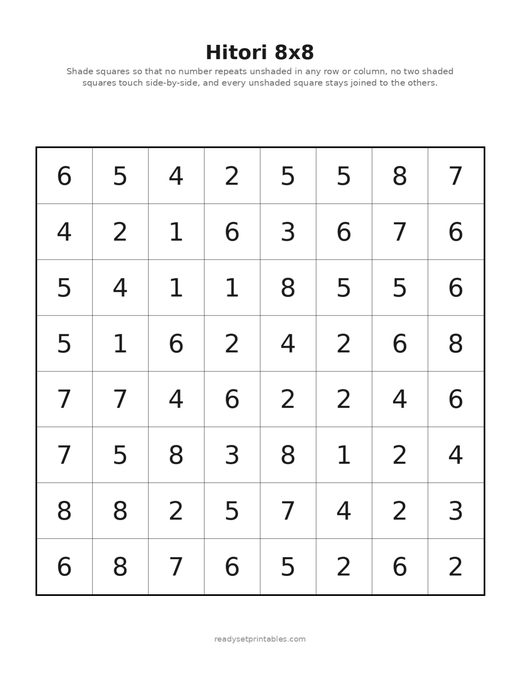 Hitori 8x8 07Download PDF ↓
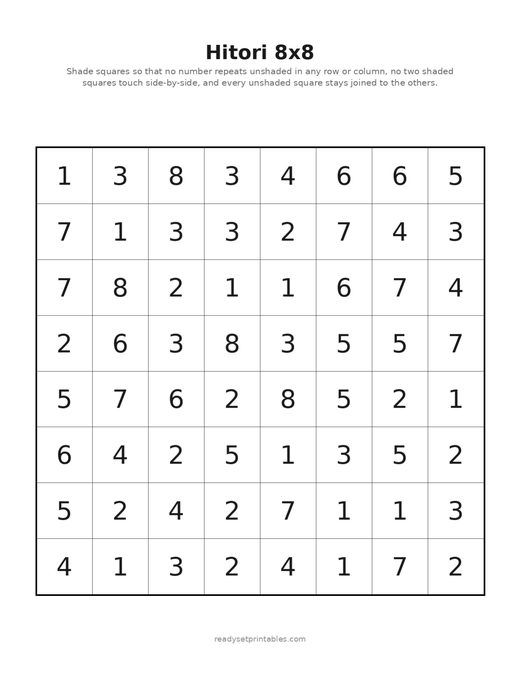 Hitori 8x8 08Download PDF ↓
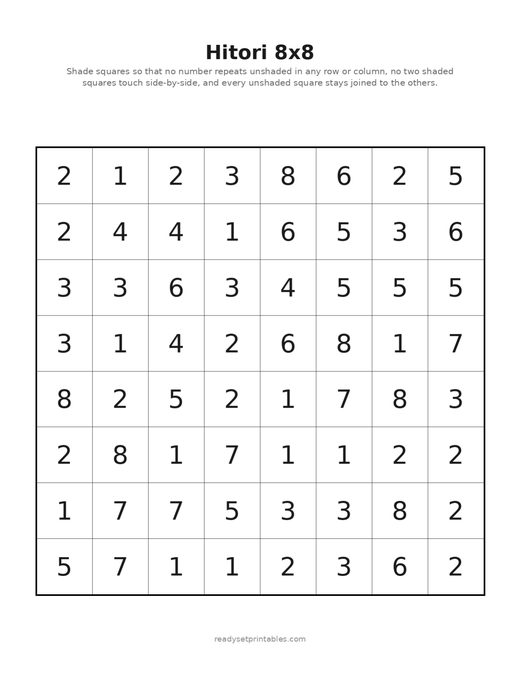 Hitori 8x8 09Download PDF ↓
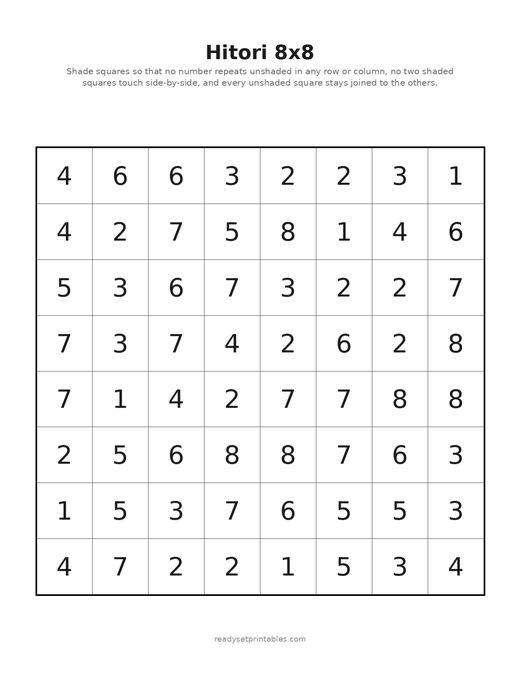 Hitori 8x8 10Download PDF ↓