Hitori Puzzles — 5x5
Free printable 5x5 hitori puzzles as PDFs with answer pages. The smallest grid size, ideal for learning the three rules. No sign-up.
⬇ Download all 10 as one PDF — free, no sign-upHitori runs backwards from most number puzzles: instead of writing numbers in, you shade them out. On a 5x5 grid the aim is to black out cells until no number appears twice in any row or column, while keeping every shaded cell isolated from other shaded cells and every white cell joined to the rest. Twenty-five cells is small enough that a wrong move shows itself within a few steps, which is exactly what you want while the three rules are still new.
Each sheet has one 5x5 hitori grid with numbers printed in a light-friendly weight, so shading a cell with pencil or marker still leaves the digit faintly visible if you need to backtrack. Cells are drawn large for easy filling. Answer pages show the finished grid with shaded cells marked. Black and white, one puzzle per US Letter page.
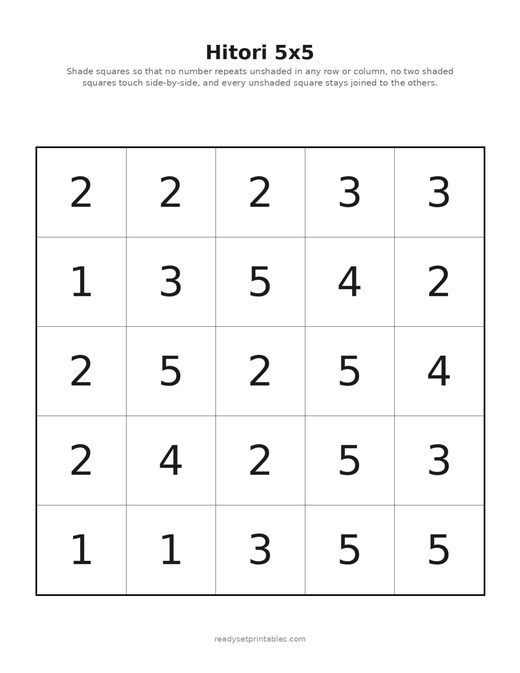 Hitori 5x5 01Download PDF ↓
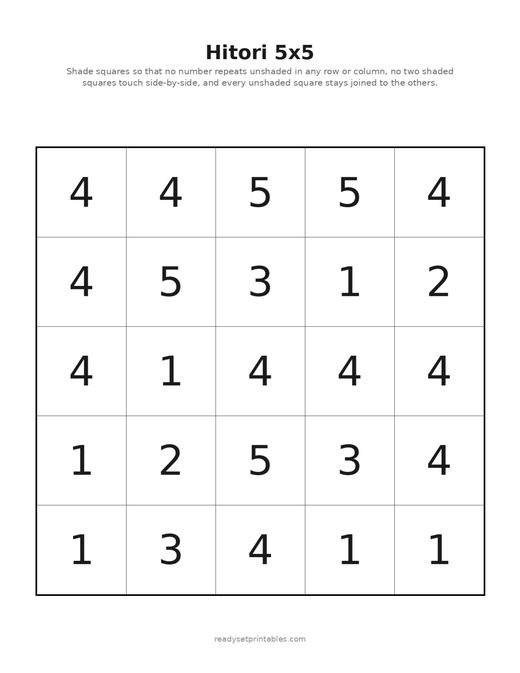 Hitori 5x5 02Download PDF ↓
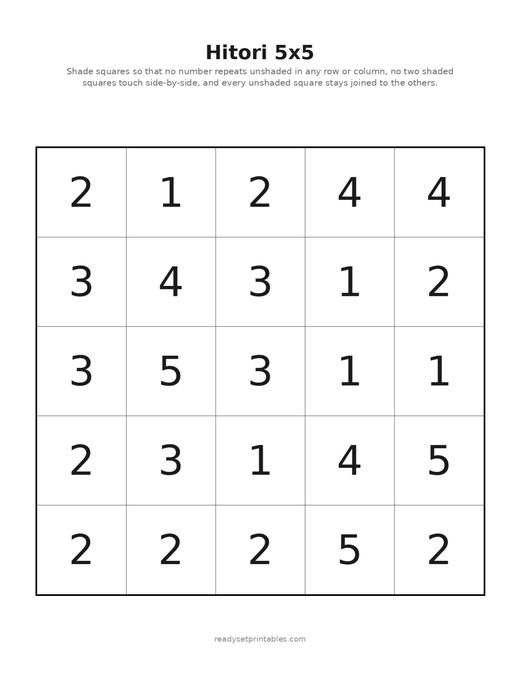 Hitori 5x5 03Download PDF ↓
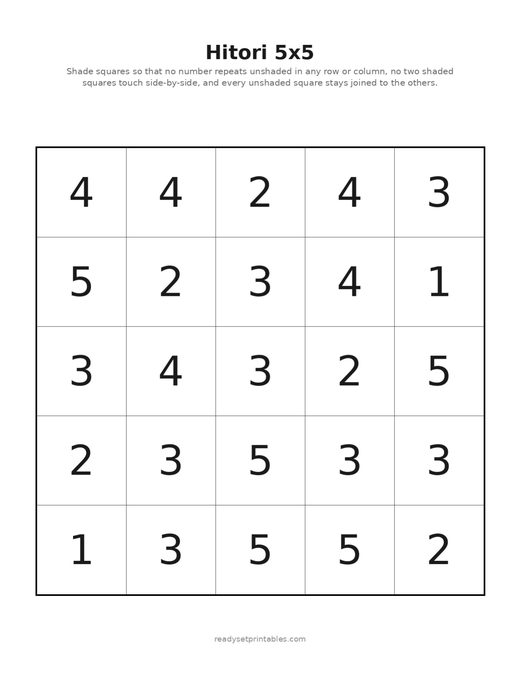 Hitori 5x5 04Download PDF ↓
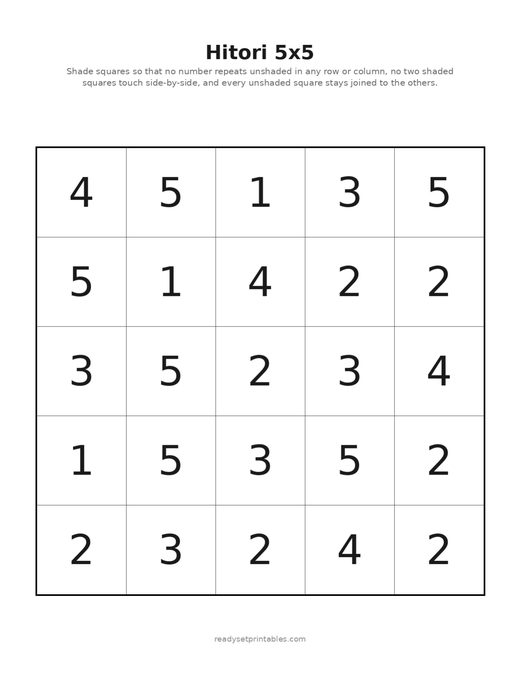 Hitori 5x5 05Download PDF ↓
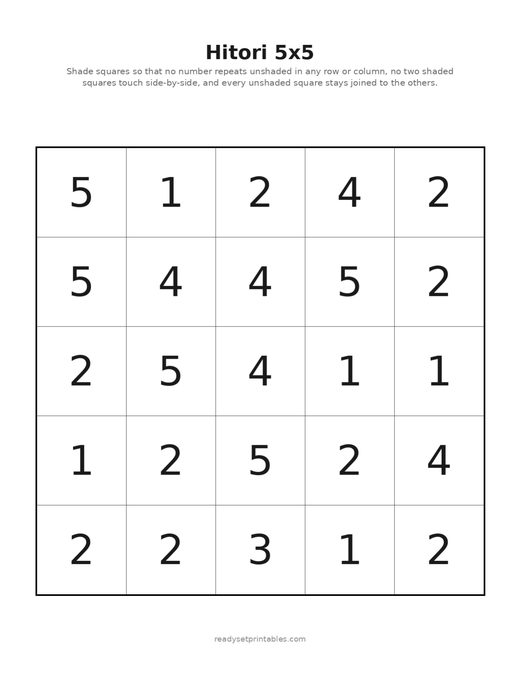 Hitori 5x5 06Download PDF ↓
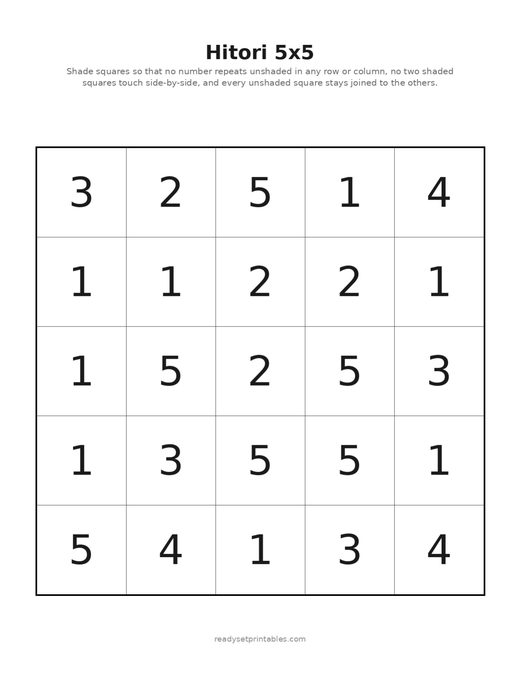 Hitori 5x5 07Download PDF ↓
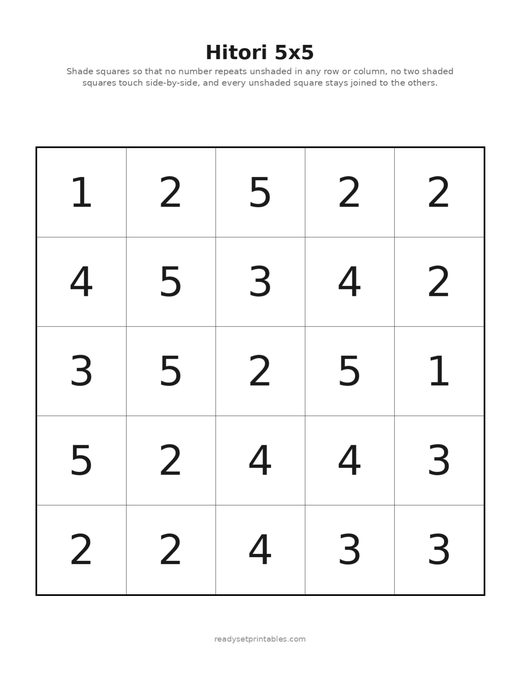 Hitori 5x5 08Download PDF ↓
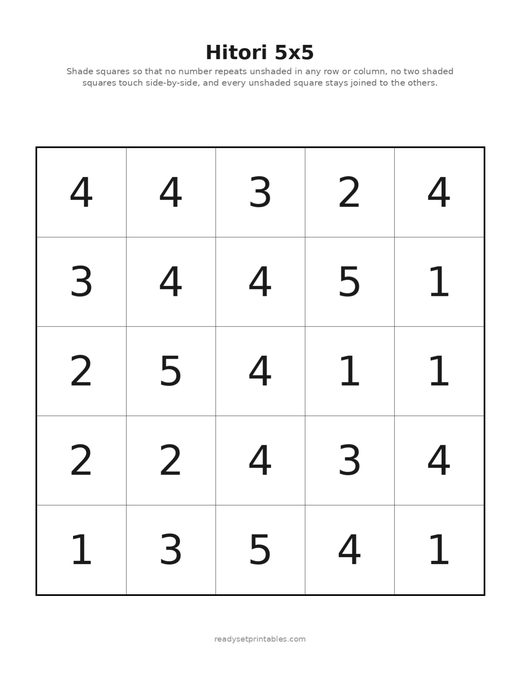 Hitori 5x5 09Download PDF ↓
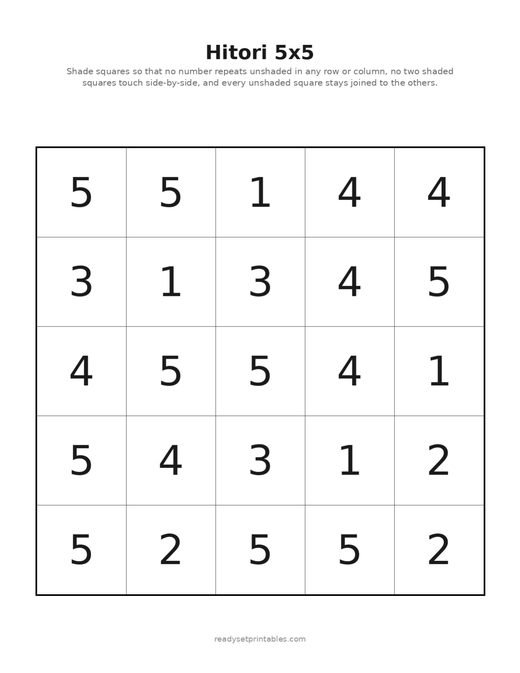 Hitori 5x5 10Download PDF ↓