Sudoku for Kids — 4x4
Free printable 4x4 sudoku for kids as PDFs with answer pages. Numbers 1 to 4 in four small boxes. No sign-up, no email.
⬇ Download all 10 as one PDF — free, no sign-upA 4x4 sudoku uses only the numbers 1 to 4, arranged so each number appears once in every row, every column and every 2x2 box. Sixteen cells is small enough that a child can hold the whole puzzle in view and see immediately why a number belongs where it does — which is the part that matters. Most children get the idea from one worked example and then solve the next few on their own, and the feeling of finishing a real sudoku without help is what brings them back to the bigger grids later.
One 4x4 sudoku per page with heavy lines marking the four 2x2 boxes so the box rule is visually obvious, and cells drawn large for young hands. Given numbers are printed in a bold weight so a child can tell them apart from their own writing. Each puzzle has an answer page. Black and white on US Letter, one puzzle per sheet.
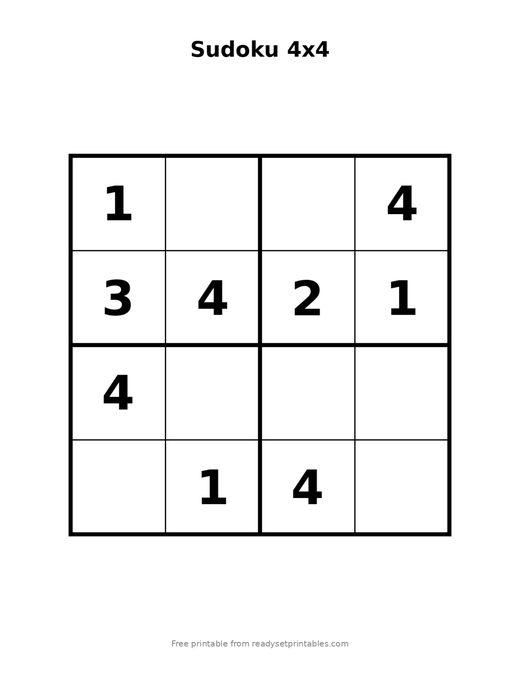 Sudoku 4x4 Easy 01Download PDF ↓
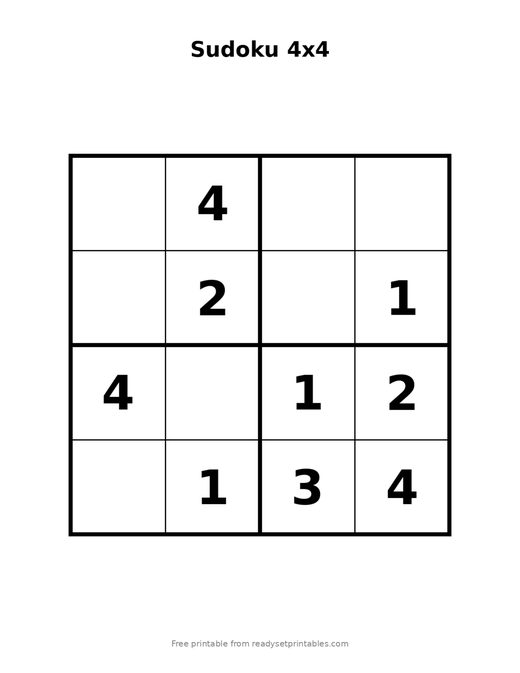 Sudoku 4x4 Easy 02Download PDF ↓
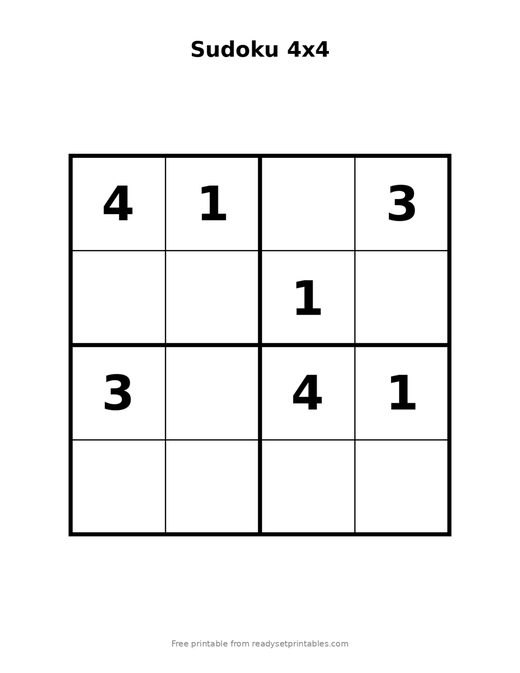 Sudoku 4x4 Easy 03Download PDF ↓
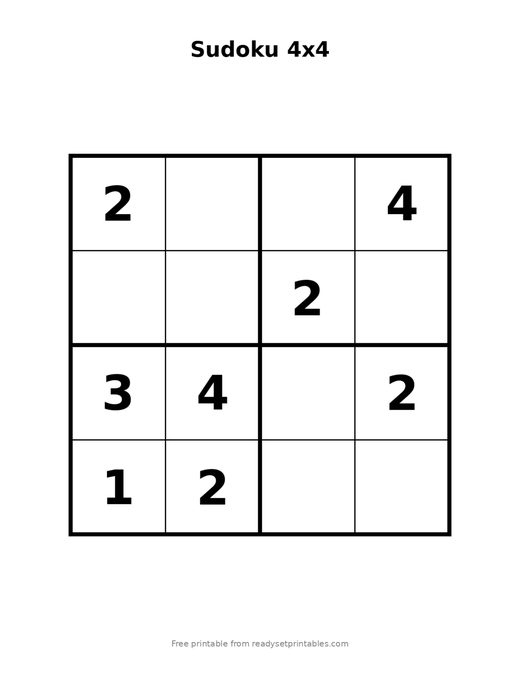 Sudoku 4x4 Easy 04Download PDF ↓
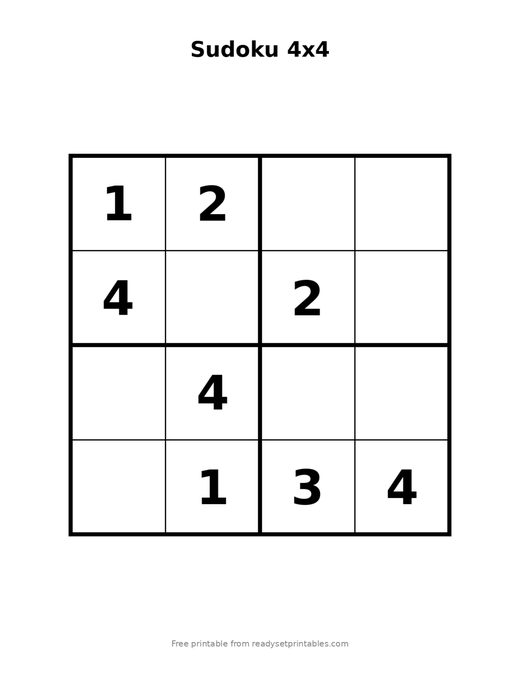 Sudoku 4x4 Easy 05Download PDF ↓
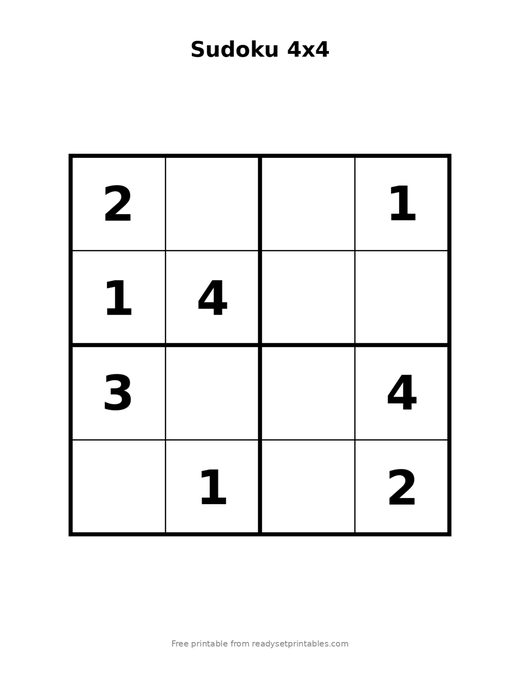 Sudoku 4x4 Easy 06Download PDF ↓
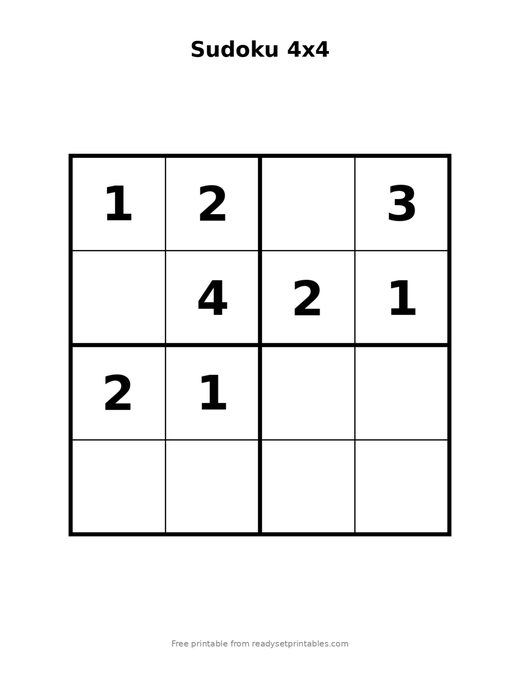 Sudoku 4x4 Easy 07Download PDF ↓
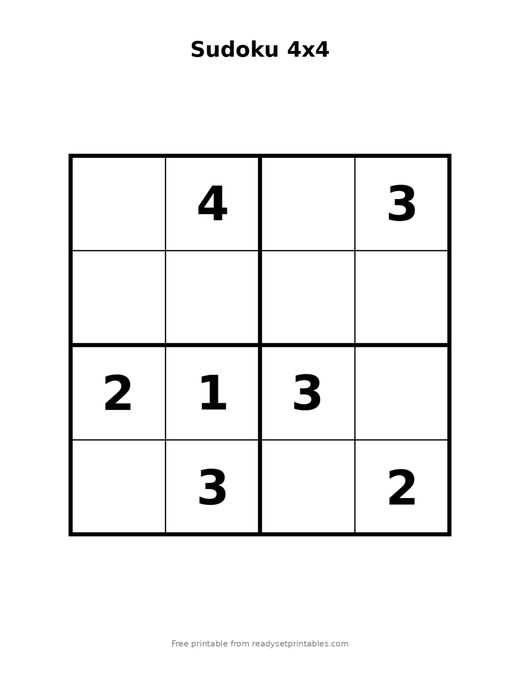 Sudoku 4x4 Easy 08Download PDF ↓
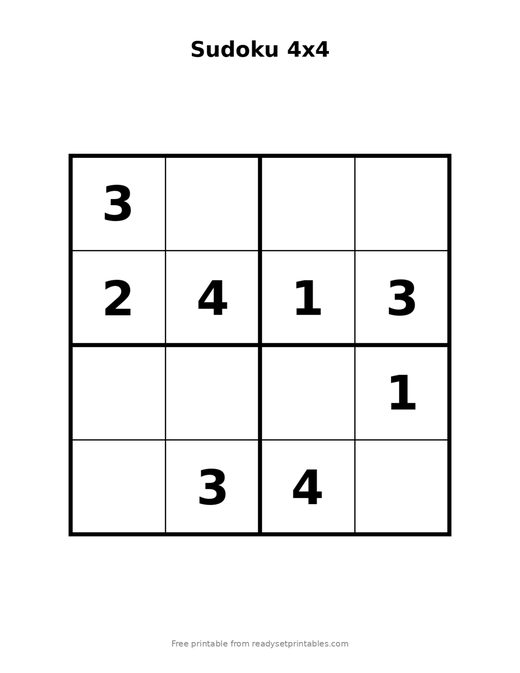 Sudoku 4x4 Easy 09Download PDF ↓
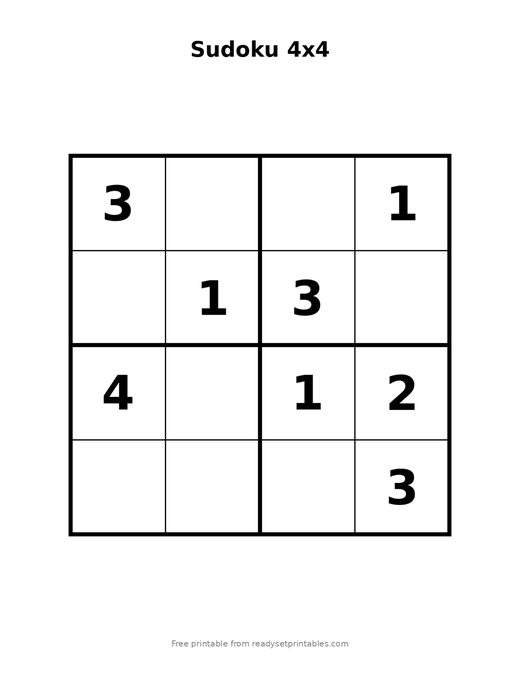 Sudoku 4x4 Easy 10Download PDF ↓