Sudoku for Kids — 6x6
Free printable 6x6 sudoku for kids as PDFs with answer pages. Numbers 1 to 6 in 2x3 boxes — the step up from 4x4. No sign-up.
⬇ Download all 10 as one PDF — free, no sign-up- Sheets
- 10 printable PDFs
- Ages / grades
- All Ages
- Answer keys
- Yes — on the last page of each PDF
- Paper
- US Letter, portrait; black and white
- Cost
- Free. No sign-up, no email, no watermark
- Use
- Print as many copies as you need for your own classroom or home. Not for resale or re-hosting
The 6x6 grid is the bridge between a child's first sudoku and the standard 9x9. It uses the numbers 1 to 6 and divides the grid into six boxes that are two cells tall and three wide, which surprises children who assume boxes must be square. That single change teaches an important habit: read the printed lines, do not guess the shape. Thirty-six cells is still small enough to finish in one go, but large enough that scanning a whole column becomes a real skill rather than a glance.
One 6x6 sudoku per page with the 2x3 boxes marked by heavier rules so the regions are unmistakable, and cells sized for comfortable writing. Given numbers are set in a distinct weight from blank cells. Every puzzle has a matching answer page with the completed grid. Printed black on white, one puzzle per US Letter page.
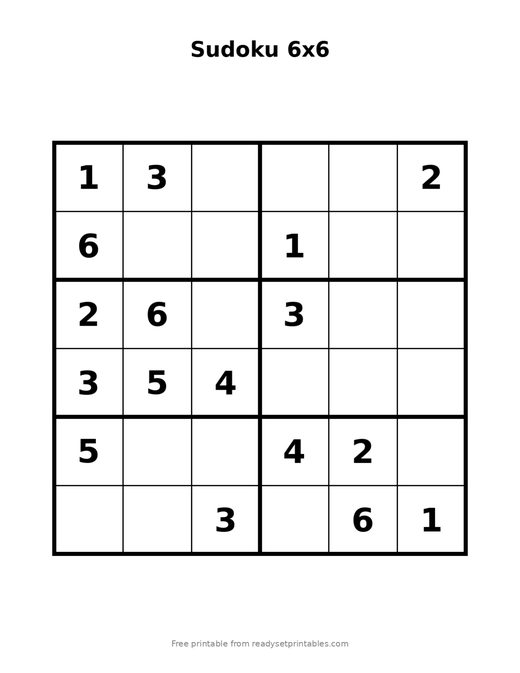 Sudoku 6x6 Easy 01Download PDF ↓
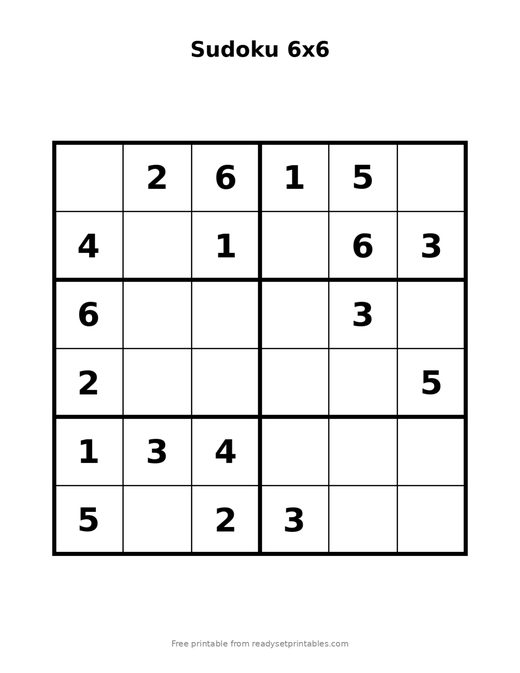 Sudoku 6x6 Easy 02Download PDF ↓
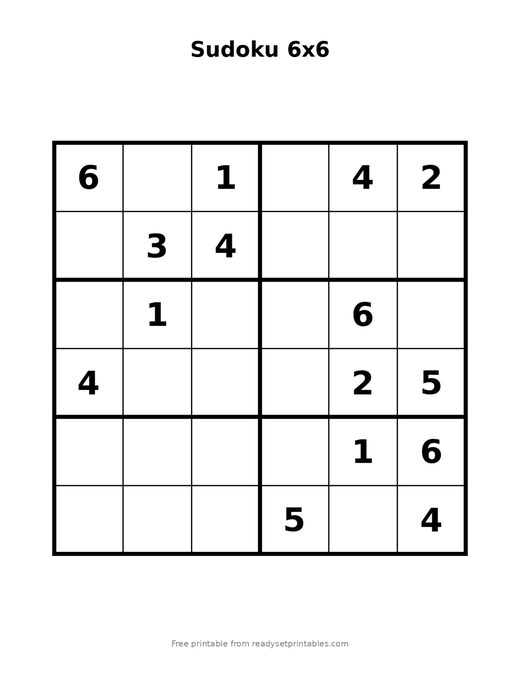 Sudoku 6x6 Easy 03Download PDF ↓
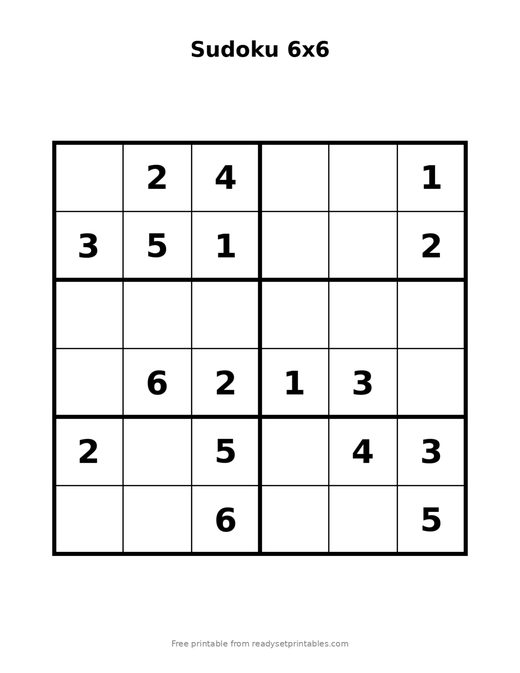 Sudoku 6x6 Easy 04Download PDF ↓
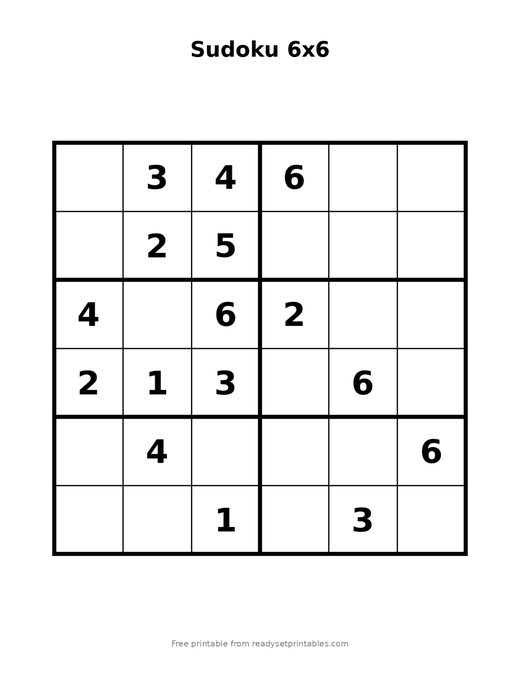 Sudoku 6x6 Easy 05Download PDF ↓
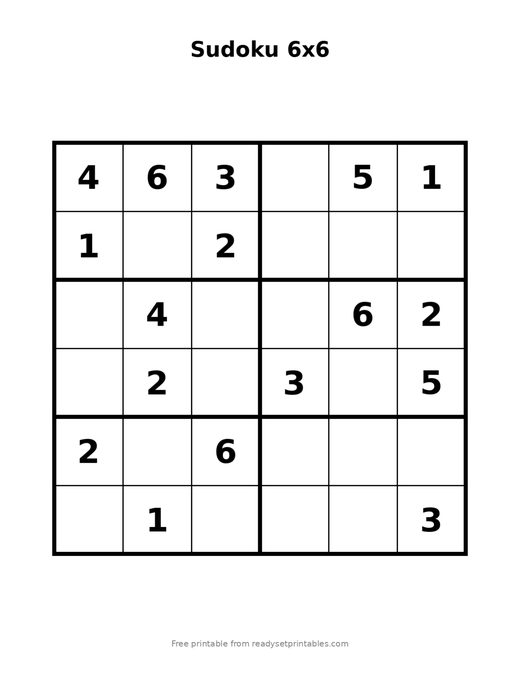 Sudoku 6x6 Easy 06Download PDF ↓
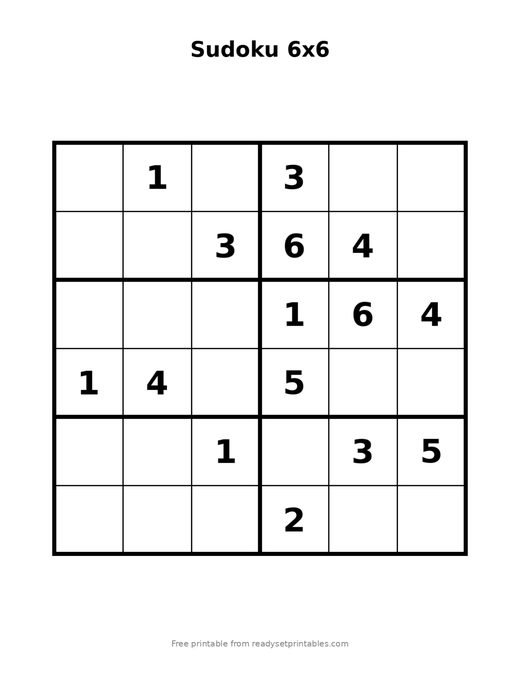 Sudoku 6x6 Easy 07Download PDF ↓
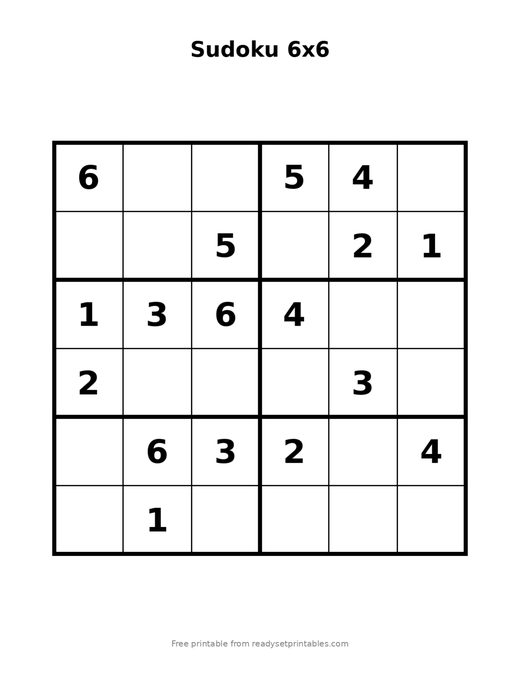 Sudoku 6x6 Easy 08Download PDF ↓
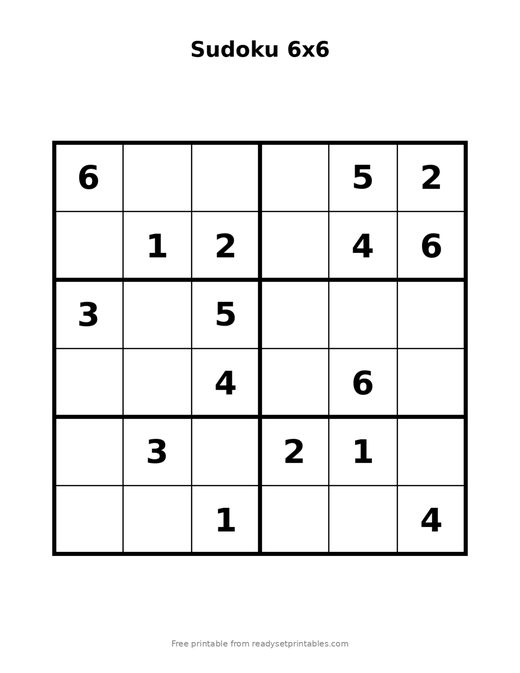 Sudoku 6x6 Easy 09Download PDF ↓
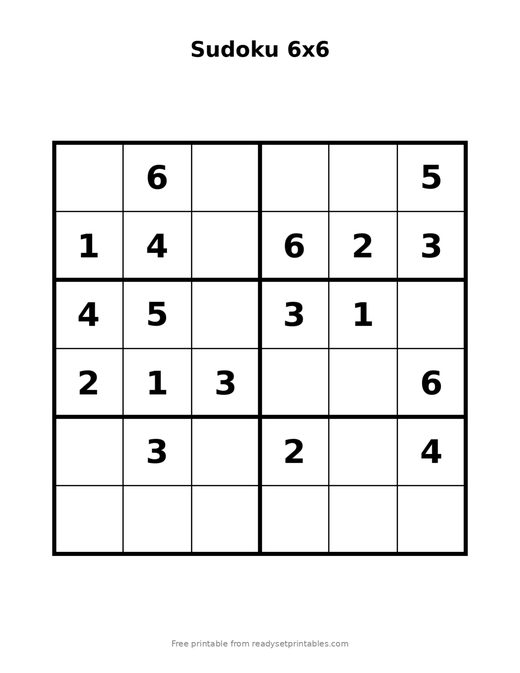 Sudoku 6x6 Easy 10Download PDF ↓